Laboratory of Atmospheric Chemistry, Paul Scherrer Institute, Villigen, Switzerland.
Indoor Air. 2019 Nov;29(6):926-942. doi: 10.1111/ina.12597. Epub 2019 Sep 17.
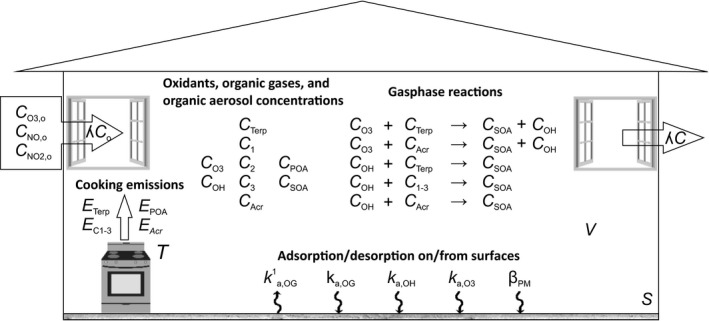
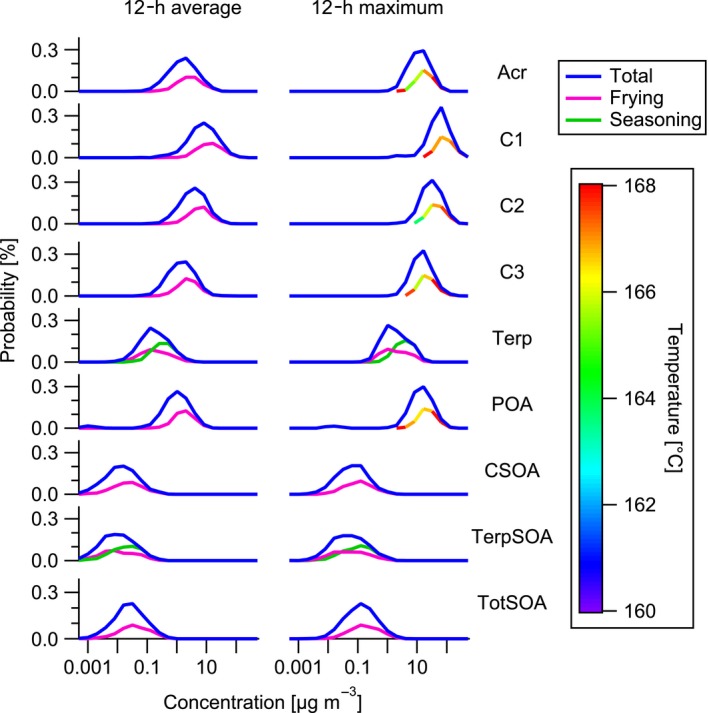
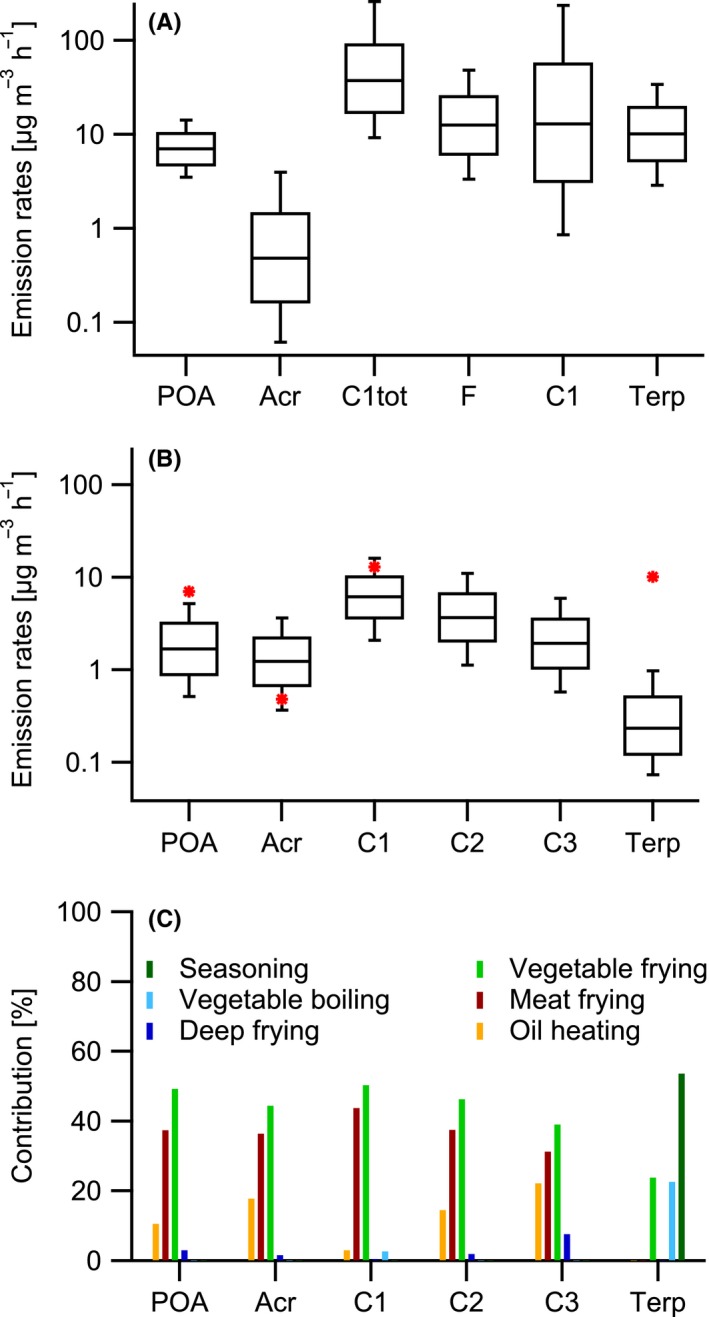
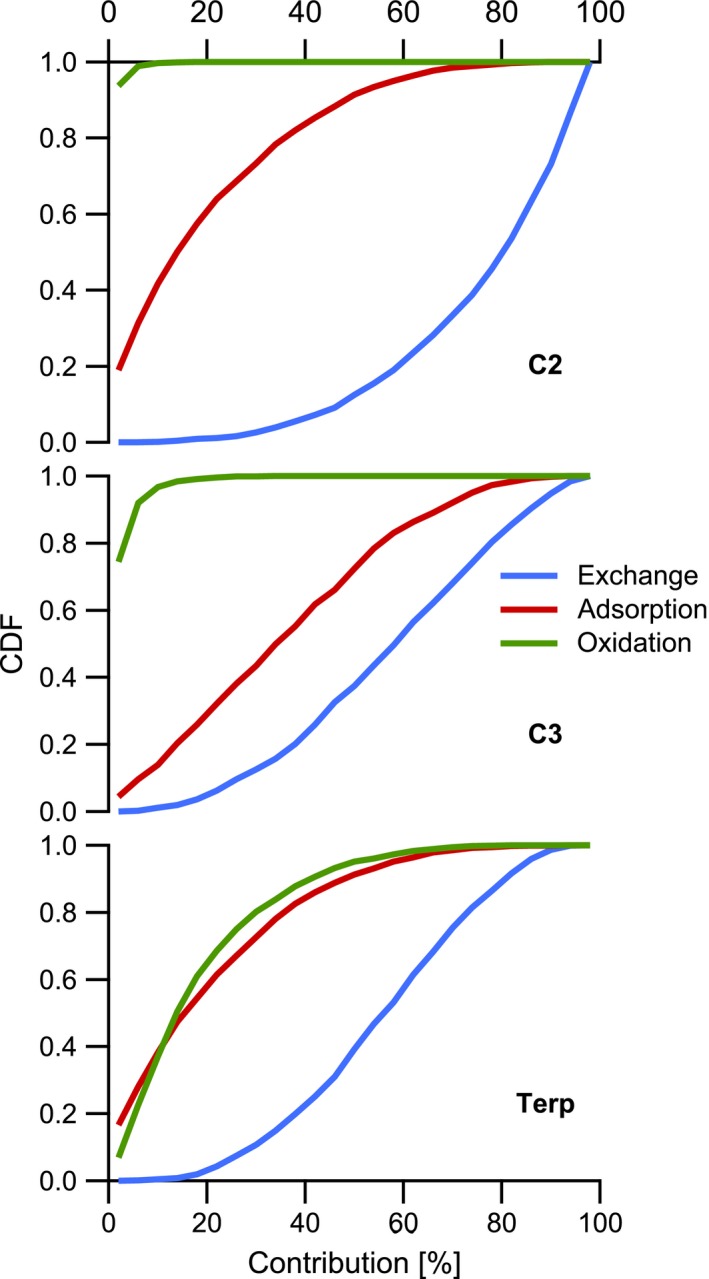
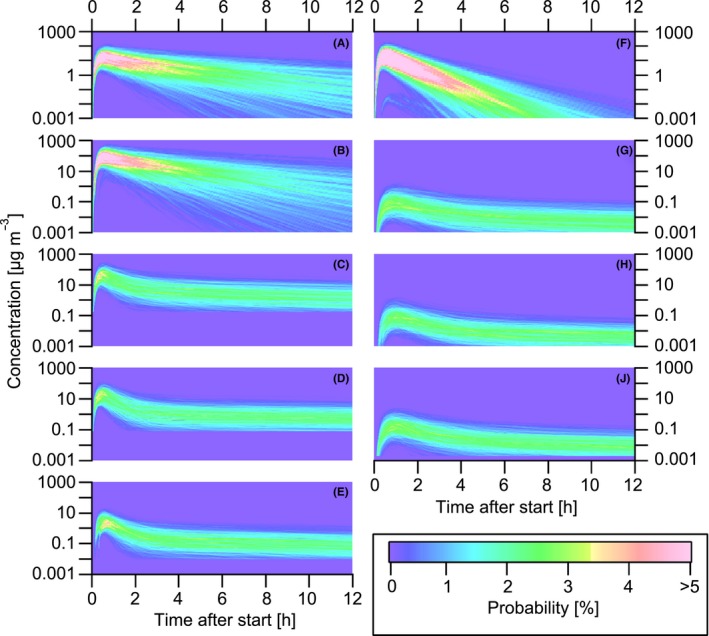
Cooking is recognized as an important source of particulate pollution in indoor and outdoor environments. We conducted more than 100 individual experiments to characterize the particulate and non-methane organic gas emissions from various cooking processes, their reaction rates, and their secondary organic aerosol yields. We used this emission data to develop a box model, for simulating the cooking emission concentrations in a typical European home and the indoor gas-phase reactions leading to secondary organic aerosol production. Our results suggest that about half of the indoor primary organic aerosol emission rates can be explained by cooking. Emission rates of larger and unsaturated aldehydes likely are dominated by cooking while the emission rates of terpenes are negligible. We found that cooking dominates the particulate and gas-phase air pollution in non-smoking European households exceeding 1000 μg m . While frying processes are the main driver of aldehyde emissions, terpenes are mostly emitted due to the use of condiments. The secondary aerosol production is negligible with around 2 μg m . Our results further show that ambient cooking organic aerosol concentrations can only be explained by super-polluters like restaurants. The model offers a comprehensive framework for identifying the main parameters controlling indoor gas- and particle-phase concentrations.
烹饪被认为是室内和室外环境中颗粒物污染的一个重要来源。我们进行了 100 多次单独的实验,以描述各种烹饪过程产生的颗粒物和非甲烷有机气体排放、它们的反应速率以及它们的二次有机气溶胶生成量。我们使用这些排放数据来开发一个箱模型,用于模拟典型的欧洲家庭中的烹饪排放浓度以及导致二次有机气溶胶生成的室内气相反应。我们的结果表明,约一半的室内初级有机气溶胶排放率可以用烹饪来解释。较大和不饱和醛的排放率可能主要由烹饪决定,而萜烯的排放率则可以忽略不计。我们发现,在不吸烟的欧洲家庭中,烹饪主导着颗粒物和气相空气污染,超过 1000μg/m³。虽然油炸过程是醛排放的主要驱动因素,但萜烯主要是由于使用调味料而排放的。二次气溶胶生成量可以忽略不计,约为 2μg/m³。我们的结果还表明,只有像餐馆这样的超级污染源才能解释环境中烹饪产生的有机气溶胶浓度。该模型提供了一个全面的框架,用于确定控制室内气相和颗粒相浓度的主要参数。