Sasada Manabu, Iyoda Takuya, Asayama Tatsufumi, Suenaga Yusuke, Sakai Shunsuke, Kase Naoya, Kodama Hiroaki, Yokoi Sana, Isohama Yoichiro, Fukai Fumio
Department of Molecular Pathophysiology, Faculty of Pharmaceutical Sciences, Tokyo University of Science, Chiba, Japan.
Translational Research Center, Research Institute of Science and Technology, Tokyo University of Science, Chiba, Japan.
Oncotarget. 2019 Aug 13;10(48):4960-4972. doi: 10.18632/oncotarget.27131.
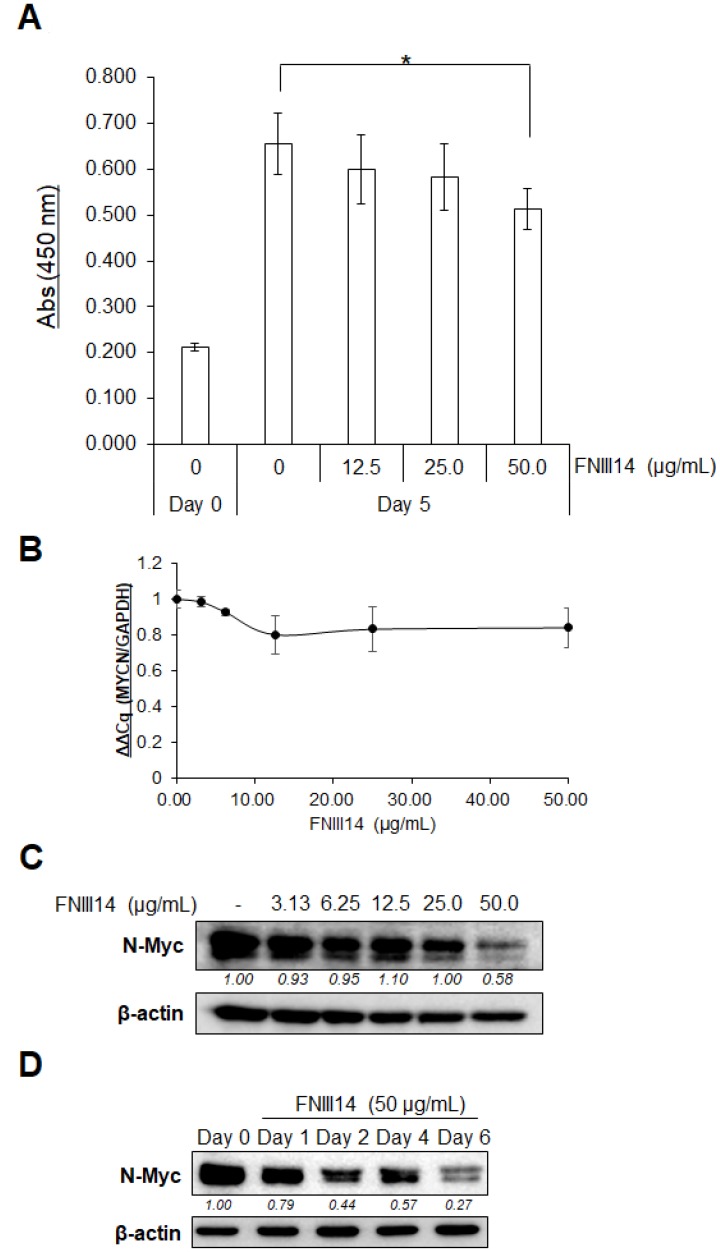
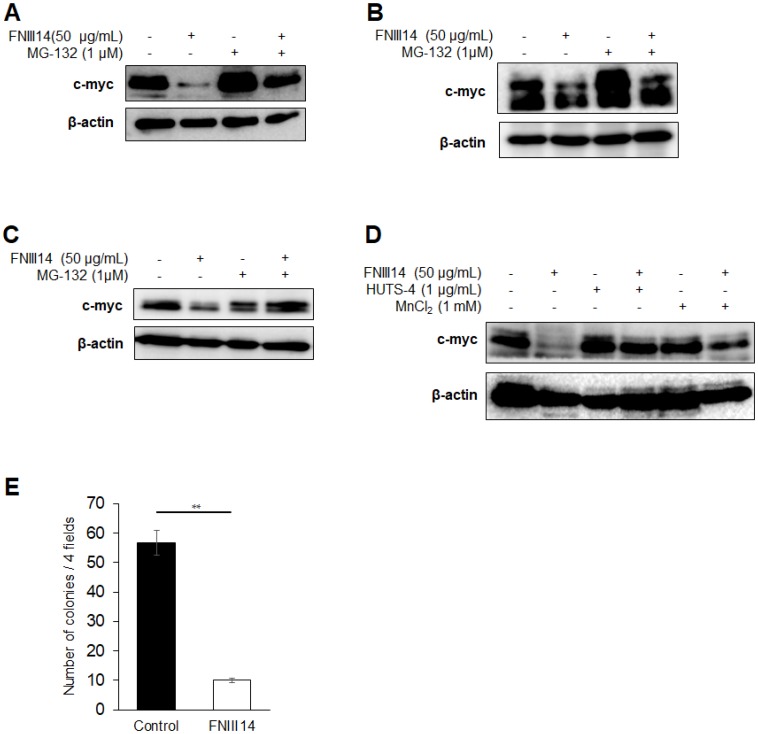
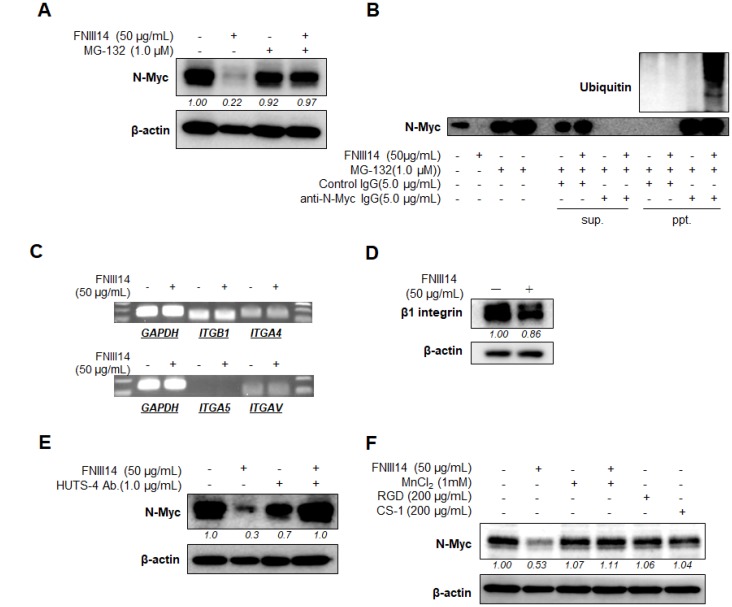
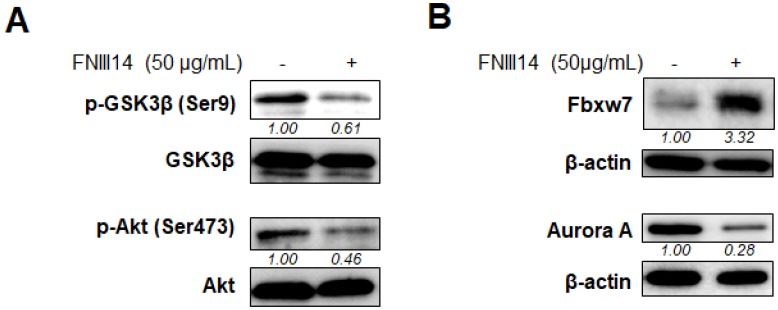
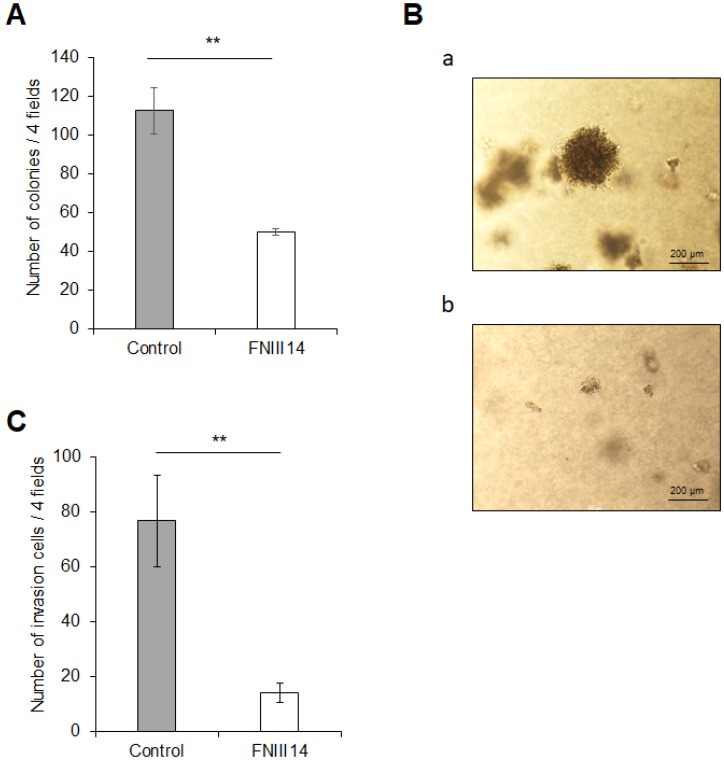
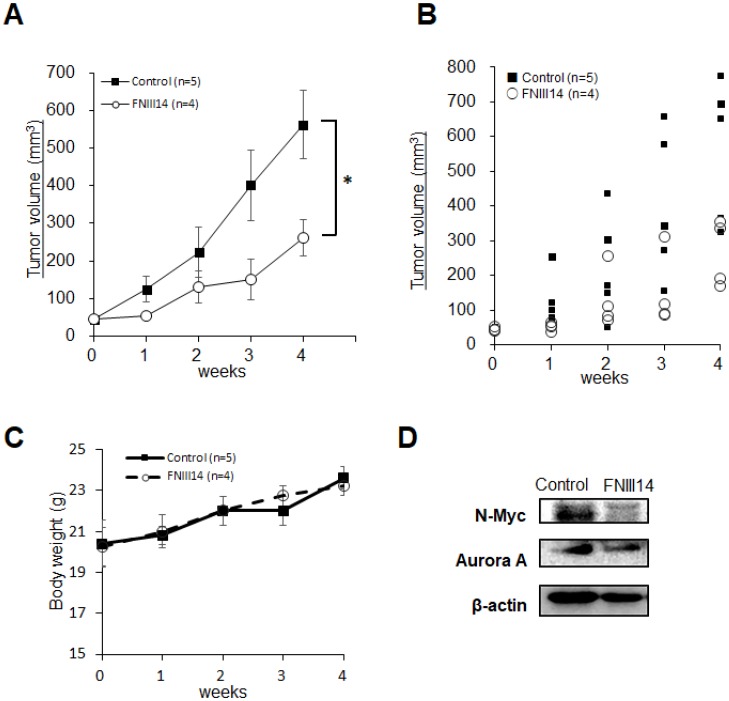
The family oncogenes (, , and ) contribute to the genesis of many human cancers. Among them, amplification of the gene and over-expression of N-Myc protein are the most reliable risk factors in neuroblastoma patients. On the other hand, we previously found that a peptide derived from fibronectin, termed FNIII14, is capable of inducing functional inactivation in β1-integrins. Here, we demonstrate that inactivation of β1-integrin by FNIII14 induced proteasomal degradation in N-Myc of neuroblastoma cells with amplification. This N-Myc degradation by FNIII14 reduced the malignant properties, including the anchorage-independent proliferation and invasive migration, of neuroblastoma cells. An experiment using a mouse xenograft model showed that the administration of FNIII14 can inhibit tumor growth, and concomitantly a remarkable decrease in N-Myc levels in tumor tissues. Of note, the activation of proteasomal degradation based on β1-integrin inactivation is applicable to another Myc family oncoprotein, c-myc, which also reverses cancer-associated properties in pancreatic cancer cells. Collectively, β1-integrin inactivation could be a new chemotherapeutic strategy for cancers with highly expressed Myc. FNIII14, which is a unique pharmacological agent able to induce β1-integrin inactivation, may be a promising drug targeting Myc oncoproteins for cancer chemotherapy.
家族癌基因(、和)在许多人类癌症的发生过程中起作用。其中,基因的扩增和N-Myc蛋白的过表达是神经母细胞瘤患者最可靠的风险因素。另一方面,我们之前发现一种源自纤连蛋白的肽,称为FNIII14,能够诱导β1整合素功能失活。在此,我们证明FNIII14诱导的β1整合素失活会导致基因扩增的神经母细胞瘤细胞中N-Myc的蛋白酶体降解。FNIII14介导的这种N-Myc降解降低了神经母细胞瘤细胞的恶性特性,包括不依赖贴壁的增殖和侵袭性迁移。使用小鼠异种移植模型的实验表明,给予FNIII14可以抑制肿瘤生长,同时肿瘤组织中N-Myc水平显著降低。值得注意的是,基于β1整合素失活的蛋白酶体降解激活也适用于另一种Myc家族癌蛋白c-myc,它同样能逆转胰腺癌细胞中与癌症相关的特性。总的来说,β1整合素失活可能是针对Myc高表达癌症的一种新的化疗策略。FNIII14作为一种能够诱导β1整合素失活的独特药理剂,可能是一种有前景的靶向Myc癌蛋白用于癌症化疗的药物。