Esposito Maria Rosaria, Aveic Sanja, Seydel Anke, Tonini Gian Paolo
Paediatric Research Institute, Fondazione Città della Speranza, Neuroblastoma Laboratory, Corso Stati Uniti, 4, Padua, 35127, Italy.
Department of Biology, University of Padua, Padua, Italy.
J Biomed Sci. 2017 Feb 8;24(1):14. doi: 10.1186/s12929-017-0319-y.
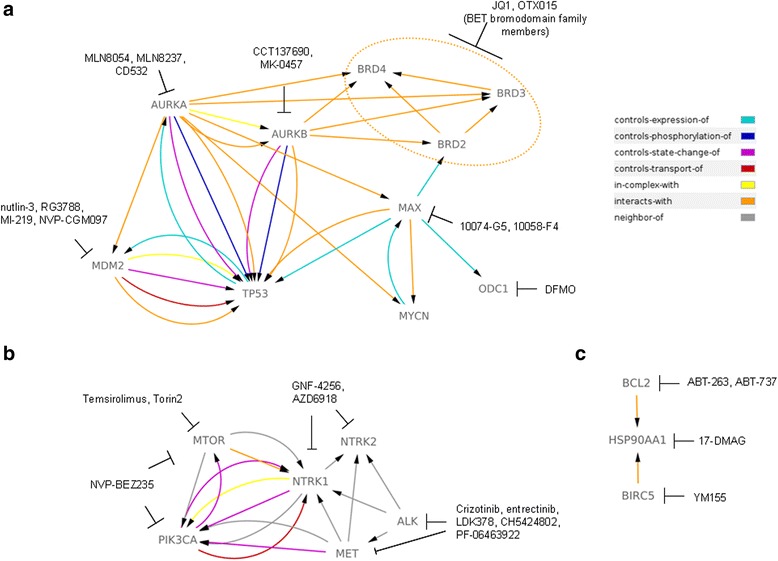
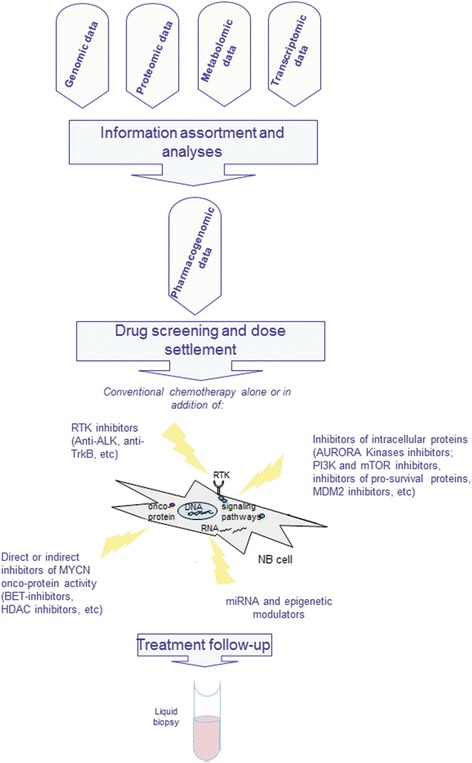
Neuroblastoma is an embryonic malignancy of early childhood originating from neural crest cells and showing heterogeneous biological, morphological, genetic and clinical characteristics. The correct stratification of neuroblastoma patients within risk groups (low, intermediate, high and ultra-high) is critical for the adequate treatment of the patients.High-throughput technologies in the Omics disciplines are leading to significant insights into the molecular pathogenesis of neuroblastoma. Nonetheless, further study of Omics data is necessary to better characterise neuroblastoma tumour biology. In the present review, we report an update of compounds that are used in preclinical tests and/or in Phase I-II trials for neuroblastoma. Furthermore, we recapitulate a number of compounds targeting proteins associated to neuroblastoma: MYCN (direct and indirect inhibitors) and downstream targets, Trk, ALK and its downstream signalling pathways. In particular, for the latter, given the frequency of ALK gene deregulation in neuroblastoma patients, we discuss on second-generation ALK inhibitors in preclinical or clinical phases developed for the treatment of neuroblastoma patients resistant to crizotinib.We summarise how Omics drive clinical trials for neuroblastoma treatment and how much the research of biological targets is useful for personalised medicine. Finally, we give an overview of the most recent druggable targets selected by Omics investigation and discuss how the Omics results can provide us additional advantages for overcoming tumour drug resistance.
神经母细胞瘤是一种儿童早期的胚胎性恶性肿瘤,起源于神经嵴细胞,具有异质性的生物学、形态学、遗传学和临床特征。对神经母细胞瘤患者进行正确的风险分组(低、中、高和超高风险)分层对于患者的充分治疗至关重要。组学学科中的高通量技术正在使人们对神经母细胞瘤的分子发病机制有重大的深入了解。尽管如此,仍有必要对组学数据进行进一步研究,以更好地表征神经母细胞瘤的肿瘤生物学特性。在本综述中,我们报告了用于神经母细胞瘤临床前试验和/或I-II期试验的化合物的最新情况。此外,我们概述了一些靶向与神经母细胞瘤相关蛋白质的化合物:MYCN(直接和间接抑制剂)及其下游靶点、Trk、ALK及其下游信号通路。特别是对于后者,鉴于ALK基因失调在神经母细胞瘤患者中的频率,我们讨论了为治疗对克唑替尼耐药的神经母细胞瘤患者而开发的临床前或临床阶段的第二代ALK抑制剂。我们总结了组学如何推动神经母细胞瘤治疗的临床试验,以及生物靶点的研究对个性化医疗有多大用处。最后,我们概述了通过组学研究选择的最新可成药靶点,并讨论了组学结果如何能为我们克服肿瘤耐药性提供额外优势。