Jung Shinae, Chung Yuhyun, Lee Yunsoo, Lee Yangsin, Cho Jin Won, Shin Eun-Joo, Kim Hyoung-Chun, Oh Young J
1Department of Systems Biology, Yonsei University College of Life Science and Biotechnology, Seoul, 03722 Korea.
2Glycosylation Network Research Center, Yonsei University, Seoul, 03722 Korea.
Cell Death Discov. 2019 Aug 19;5:130. doi: 10.1038/s41420-019-0210-6. eCollection 2019.
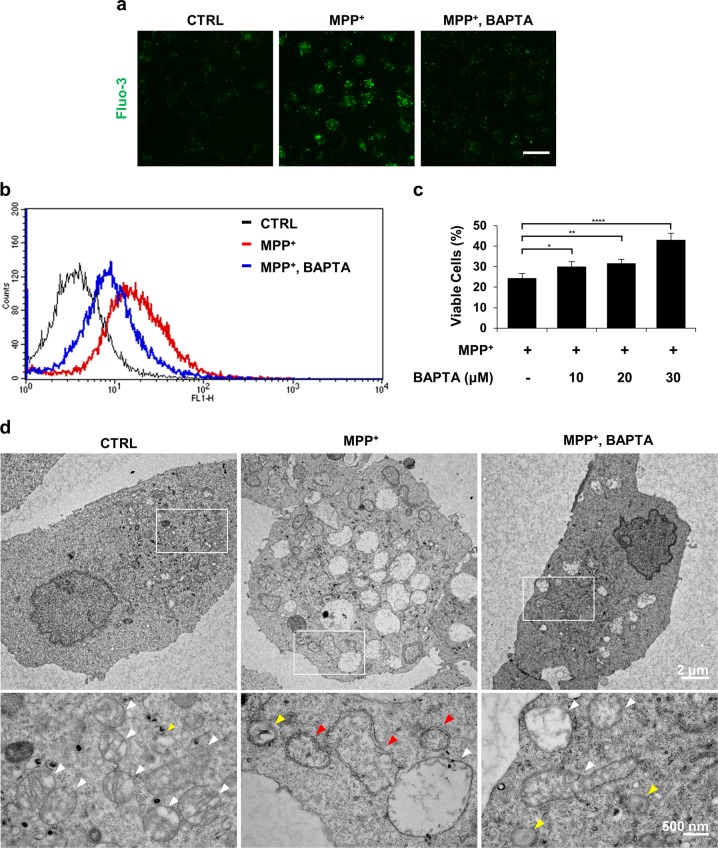
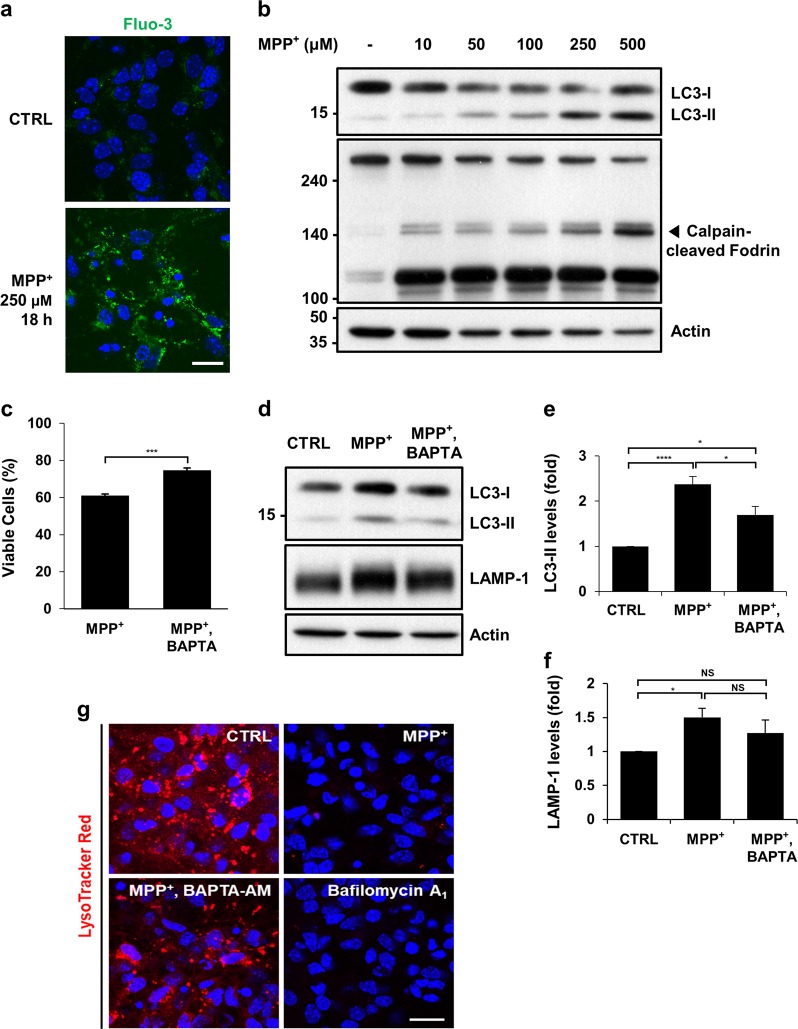
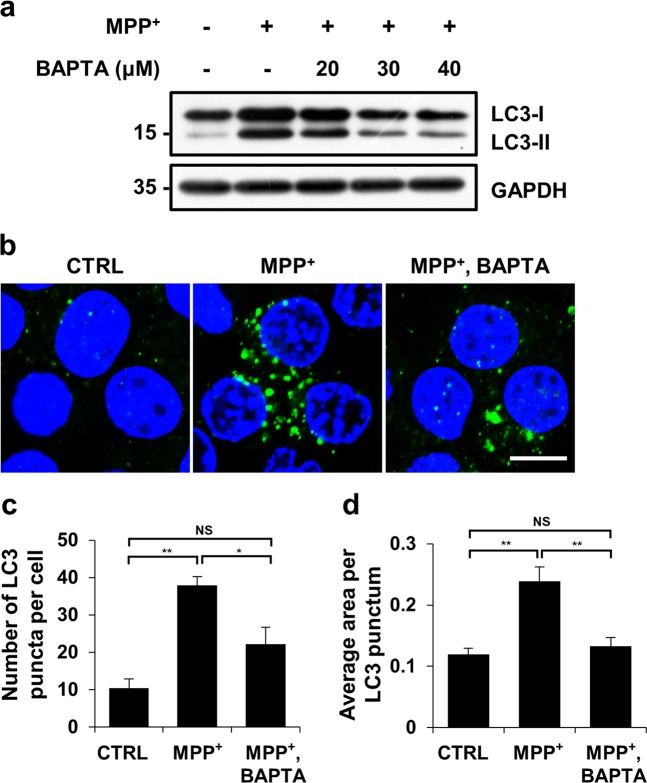
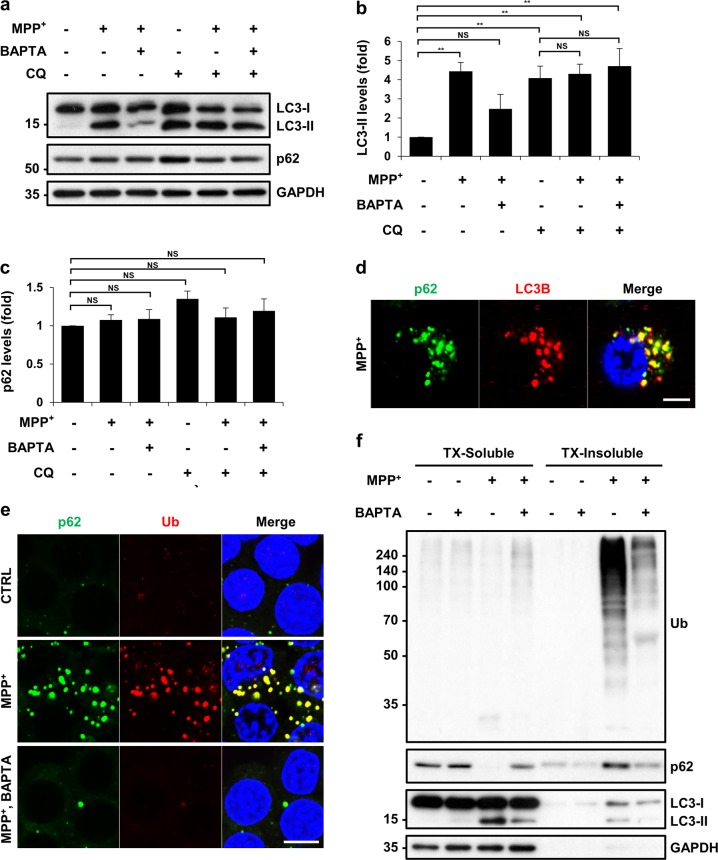
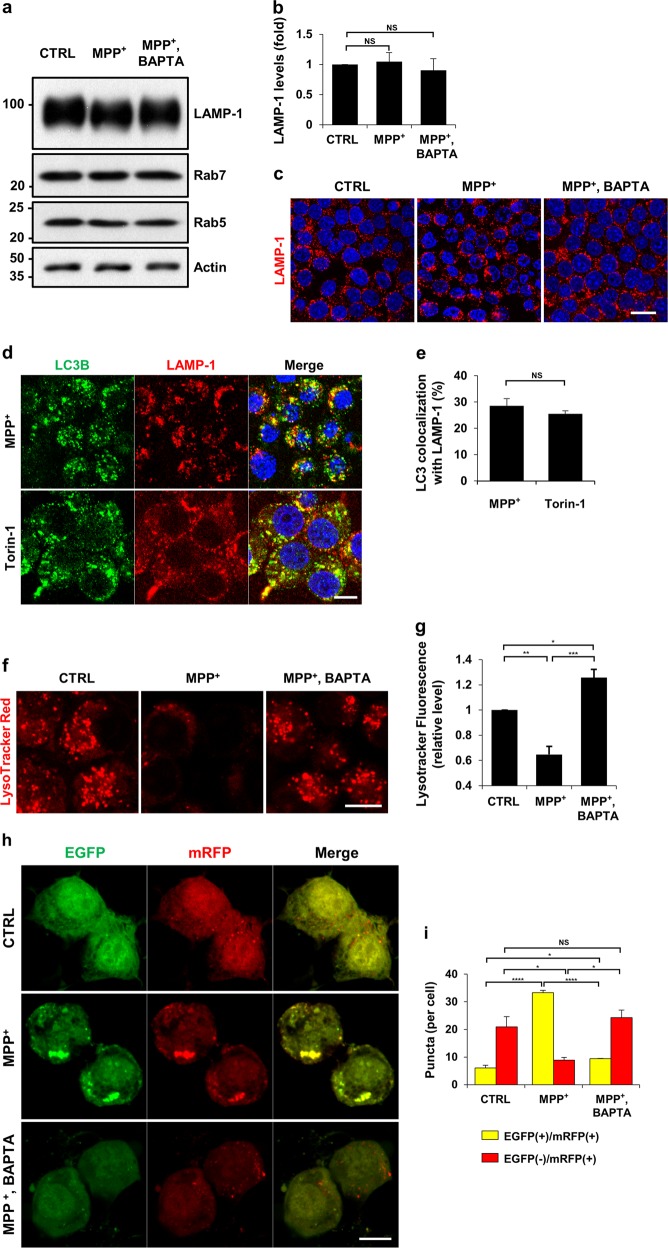
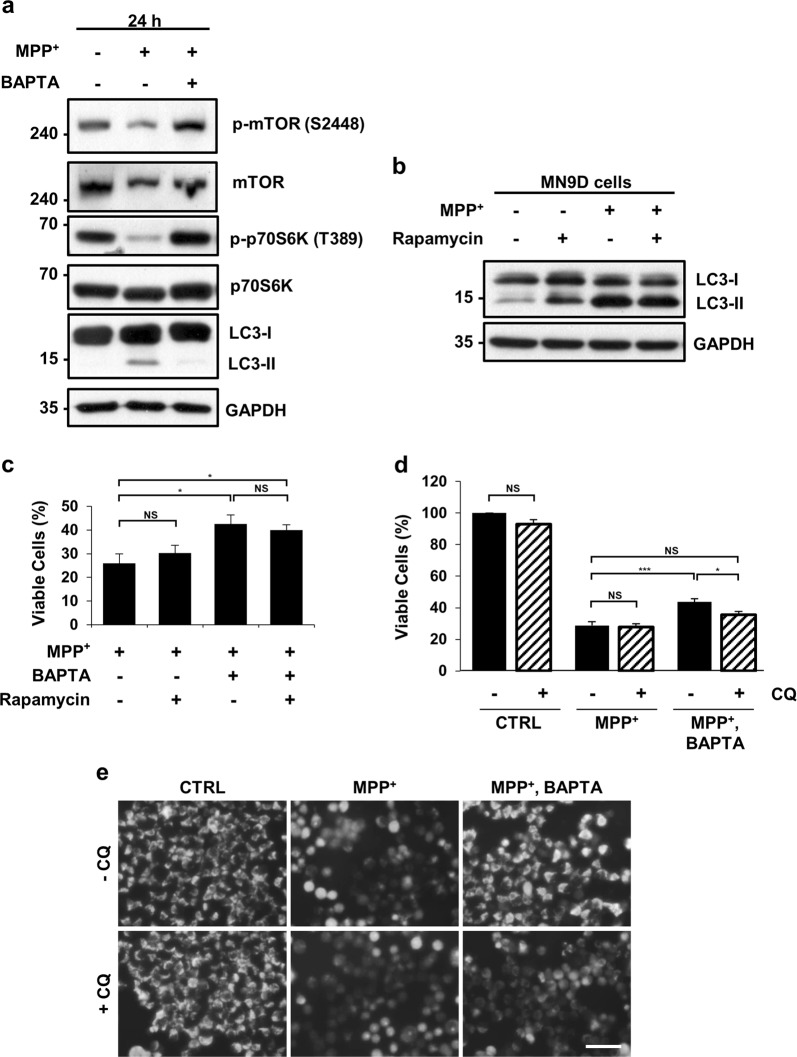
Parkinson's disease (PD) is a chronic neurodegenerative disease with no cure. Calbindin, a Ca-buffering protein, has been suggested to have a neuroprotective effect in the brain tissues of PD patients and in experimental models of PD. However, the underlying mechanisms remain elusive. Here, we report that in 1-methyl-4-phenylpyridinium (MPP)-induced culture models of PD, the buffering of cytosolic Ca by calbindin-D28 overexpression or treatment with a chemical Ca chelator reversed impaired autophagic flux, protecting cells against MPP-mediated neurotoxicity. When cytosolic Ca overload caused by MPP was ameliorated, the MPP-induced accumulation of autophagosomes decreased and the autophagic flux significantly increased. In addition, the accumulation of damaged mitochondria and p62-positive ubiquitinated protein aggregates, following MPP intoxication, was alleviated by cytosolic Ca buffering. We showed that MPP treatment suppressed autophagic degradation via raising the lysosomal pH and therefore reducing cytosolic Ca elevation restored the lysosomal pH acidity and normal autophagic flux. These results support the notion that functional lysosomes are required for Ca-mediated cell protection against MPP-mediated neurotoxicity. Thus, our data suggest a novel process in which the modulation of Ca confers neuroprotection via the autophagy-lysosome pathway. This may have implications for the pathogenesis and future therapeutic targets of PD.
帕金森病(PD)是一种无法治愈的慢性神经退行性疾病。钙结合蛋白是一种钙缓冲蛋白,已被认为在帕金森病患者的脑组织和帕金森病实验模型中具有神经保护作用。然而,其潜在机制仍不清楚。在此,我们报告,在1-甲基-4-苯基吡啶离子(MPP)诱导的帕金森病培养模型中,通过过表达钙结合蛋白-D28或用化学钙螯合剂处理来缓冲胞质钙,可逆转受损的自噬流,保护细胞免受MPP介导的神经毒性。当MPP引起的胞质钙超载得到改善时,MPP诱导的自噬体积累减少,自噬流显著增加。此外,MPP中毒后受损线粒体和p62阳性泛素化蛋白聚集体的积累通过胞质钙缓冲得到缓解。我们发现,MPP处理通过提高溶酶体pH值抑制自噬降解,因此降低胞质钙升高可恢复溶酶体pH酸性和正常自噬流。这些结果支持了功能性溶酶体是钙介导的细胞保护免受MPP介导的神经毒性所必需的这一观点。因此,我们的数据提示了一个新的过程,即钙的调节通过自噬-溶酶体途径赋予神经保护作用。这可能对帕金森病的发病机制和未来治疗靶点具有重要意义。