Department of Physical Therapy, University of Illinois , Chicago , IL , USA.
Expert Rev Med Devices. 2019 Sep;16(9):787-798. doi: 10.1080/17434440.2019.1660643. Epub 2019 Sep 6.
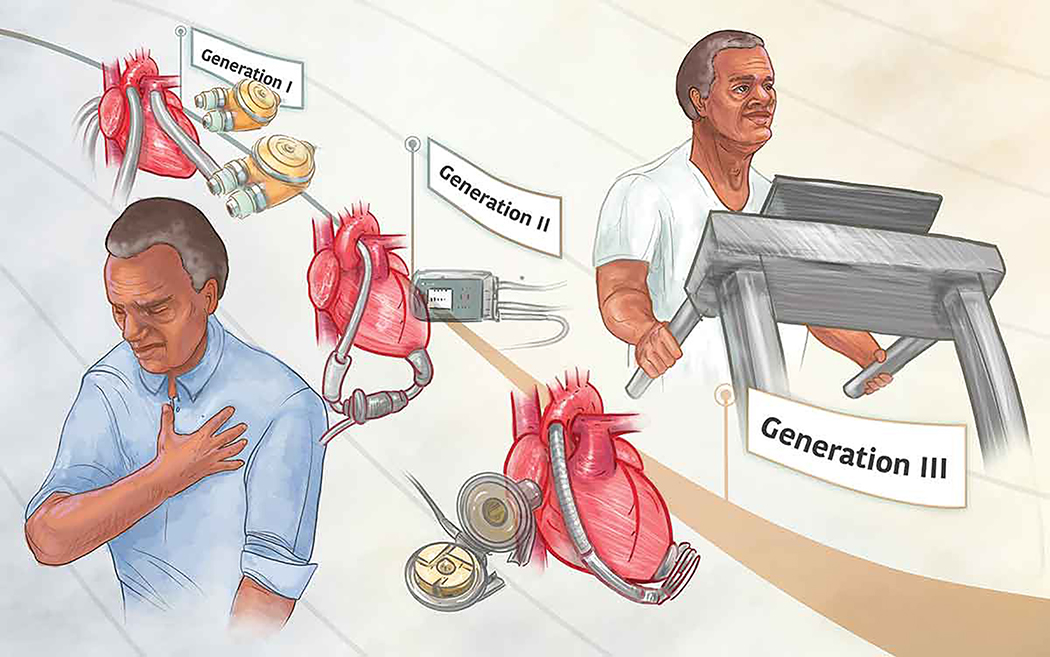
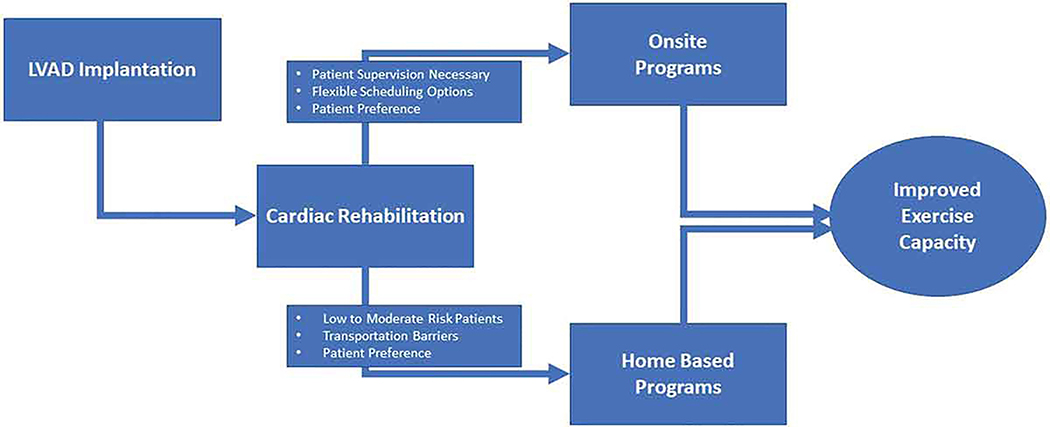
: Left ventricular assist device (LVAD) implantation has become a well-established treatment option for patients with end stage heart failure (HF) who are refractory to medical therapy. While LVADs implantation does effectively improve hemodynamic performance many patients still possess peripheral pathological adaptations often present in end-stage HF. Therefore, increased attention has been placed on investigating the effects of exercise training for patients with LVADs to improve clinical outcomes. However, the available evidence on exercise training for patients with LVADs is limited. : The purpose of this narrative review is to summarize: 1) The evolution of LVAD technology and usage; 2) The physiological responses to exercise in patients with LVADs; 3) The available evidence regarding exercise training; 4) Potential strategies to implement exercise training programs for this patient population. : The available evidence for exercise training to improve physical function and clinical outcomes for patients with LVADs is promising but limited. Future research is needed to further elucidate the ideal exercise training parameters, method of delivery for exercise training, and unique barriers and facilitators to exercise training for patients receiving LVAD implantation.
: 左心室辅助装置(LVAD)的植入已成为一种成熟的治疗选择,适用于对药物治疗无效的终末期心力衰竭(HF)患者。虽然 LVAD 植入确实有效地改善了血液动力学性能,但许多患者仍存在外周病理适应,这些适应通常存在于终末期 HF 中。因此,人们越来越关注研究 LVAD 患者的运动训练对改善临床结局的影响。然而,LVAD 患者运动训练的现有证据有限。 : 本综述的目的是总结:1)LVAD 技术的发展和应用;2)LVAD 患者运动时的生理反应;3)关于运动训练的现有证据;4)为这一患者群体实施运动训练计划的潜在策略。 : 目前有证据表明,运动训练可以改善 LVAD 患者的身体机能和临床结局,但证据有限。需要进一步的研究来阐明理想的运动训练参数、运动训练的实施方法,以及 LVAD 植入患者运动训练的独特障碍和促进因素。