Department of Medicine, Mackay Medical College, New Taipei 25244, Taiwan.
Department of Anesthesiology, Mackay Memorial Hospital, Taipei 10449, Taiwan.
Int J Mol Sci. 2019 Aug 26;20(17):4177. doi: 10.3390/ijms20174177.
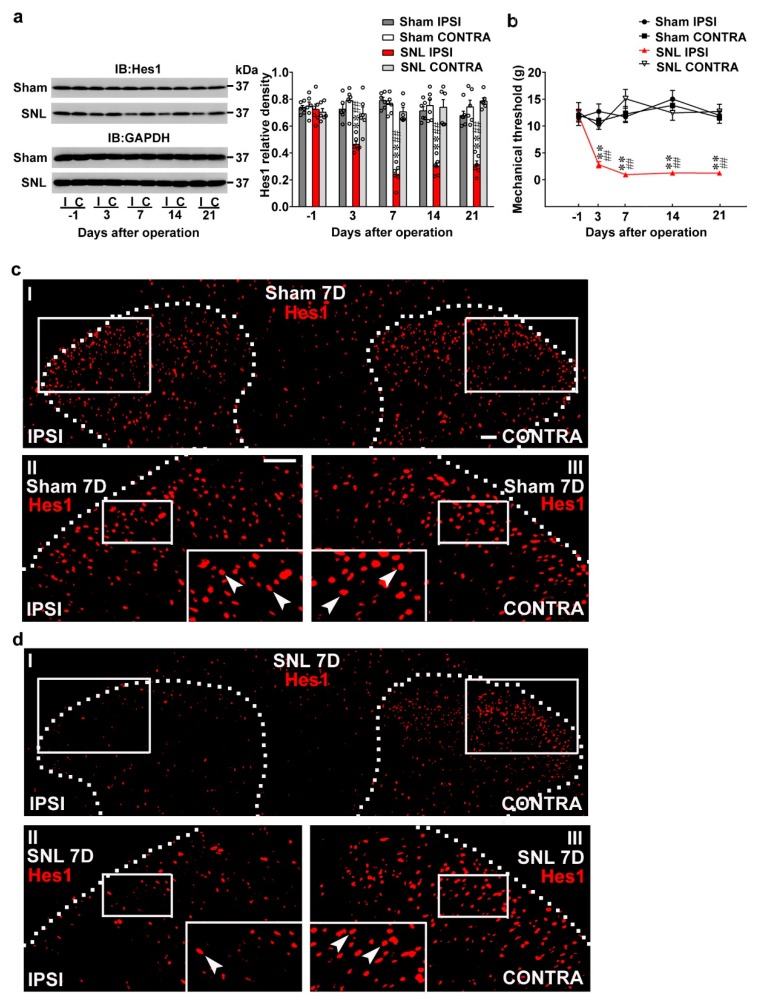
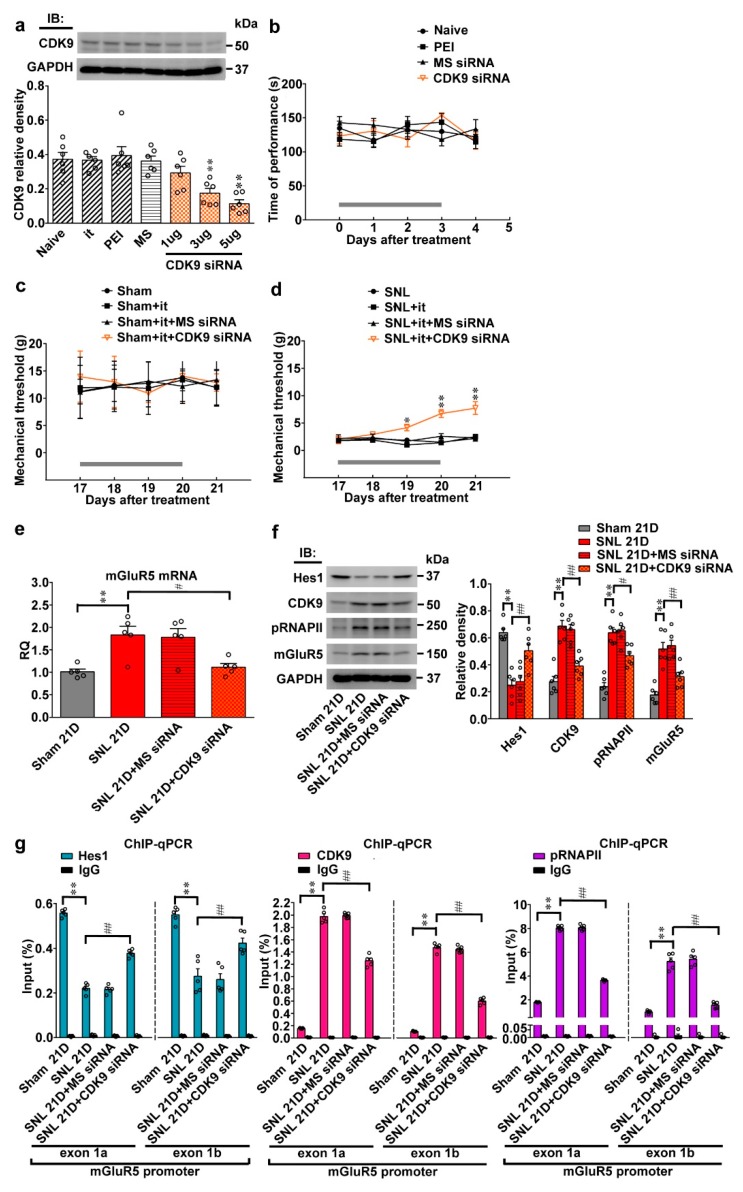
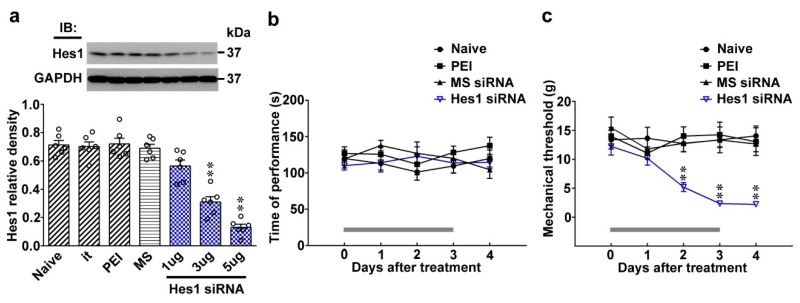
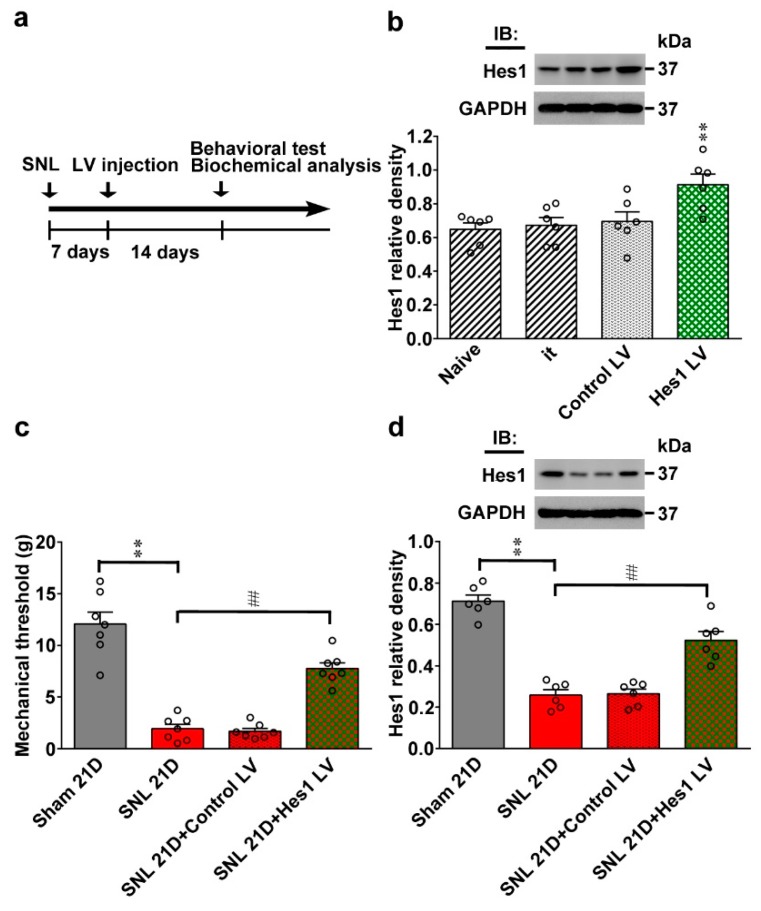
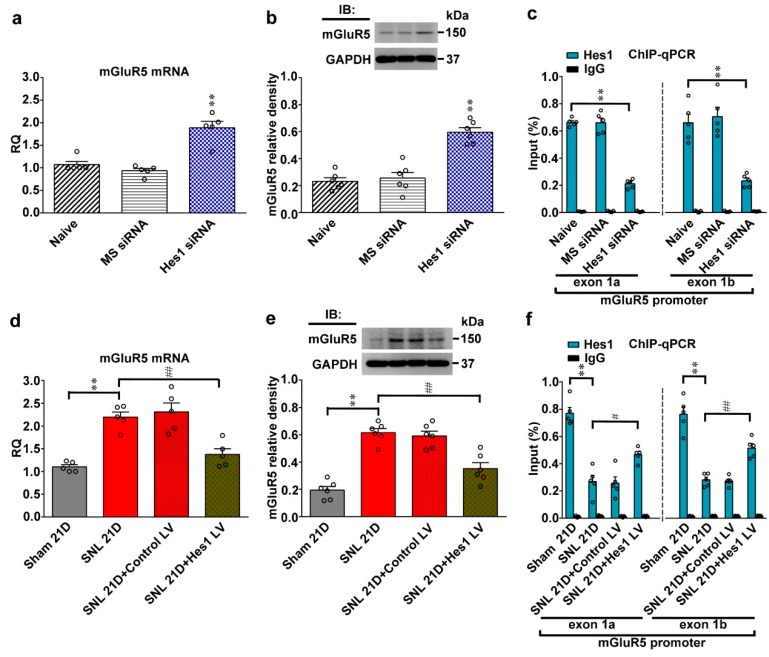
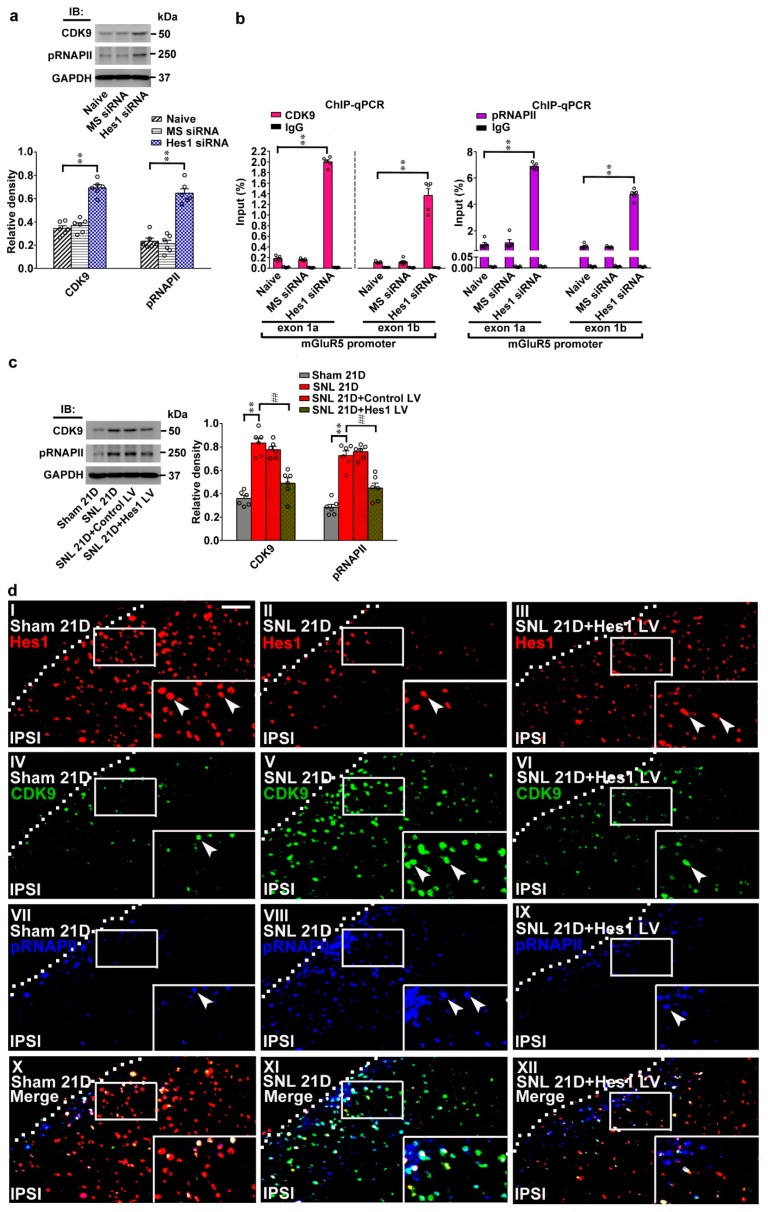
Diverse transcriptional controls in the dorsal horn have been observed in pain hypersensitivity. However, the understanding of the exact causes and mechanisms of neuropathic pain development is still fragmentary. Here, the results demonstrated nerve injury decreased the expression of spinal hairy and enhancer of split 1 (Hes1), a transcriptional repressor, and enhanced metabotropic glutamate receptor subtype 5 (mGluR5) transcription/expression, which was accompanied with behavioral allodynia. Moreover, nerve injury decreased Hes1 levels and reciprocally increased cyclin dependent kinase-9 (CDK9) levels and recruited CDK9 to phosphorylate RNA polymerase II (RNAPII) in the promoter fragments of mGluR5, thereby enhancing mGluR5 transcription/expression in the dorsal horn. These effects were also induced by intrathecally administering naïve rats with Hes1 small interfering RNA (siRNA). Conversely, Hes1 overexpression using intrathecal lentiviral vectors in nerve injury rats produced reversal of pain behavior and reversed protein expressions, phosphorylation, and coupling to the promoter segments in the dorsal horn. Collectively, the results in this study indicated nerve injury diminishes spinal Hes1-dependent suppression of CDK9-dependent RNAPII phosphorylation on the mGluR5 promoter that possibly enhances mGluR5 transcription/expression for neuropathic pain development.
在痛觉过敏中观察到背角存在多种转录控制。然而,对于神经性疼痛发展的确切原因和机制的理解仍然是零散的。在这里,研究结果表明神经损伤会降低转录阻遏物脊髓毛细胞相关增强子结合蛋白 1(Hes1)的表达,并增强代谢型谷氨酸受体 5(mGluR5)的转录/表达,从而伴随着行为性痛觉过敏。此外,神经损伤降低 Hes1 水平,同时增加周期蛋白依赖性激酶-9(CDK9)水平,并招募 CDK9 磷酸化 RNA 聚合酶 II(RNAPII)在 mGluR5 的启动子片段上,从而增强背角中的 mGluR5 转录/表达。这些效应也可以通过鞘内给予未受伤大鼠 Hes1 小干扰 RNA(siRNA)来诱导。相反,在神经损伤大鼠中使用鞘内慢病毒载体过表达 Hes1 会产生疼痛行为的逆转和蛋白表达、磷酸化和与背角启动子片段的偶联的逆转。总之,本研究的结果表明,神经损伤会减弱脊髓 Hes1 对 CDK9 依赖性 RNAPII 磷酸化的抑制作用,这可能会增强 mGluR5 的转录/表达,从而促进神经性疼痛的发展。