The Mind Research Network/LBERI, Albuquerque, New Mexico.
Department of Psychology, University of New Mexico, Albuquerque, New Mexico.
Hum Brain Mapp. 2019 Dec 15;40(18):5370-5381. doi: 10.1002/hbm.24778. Epub 2019 Aug 28.
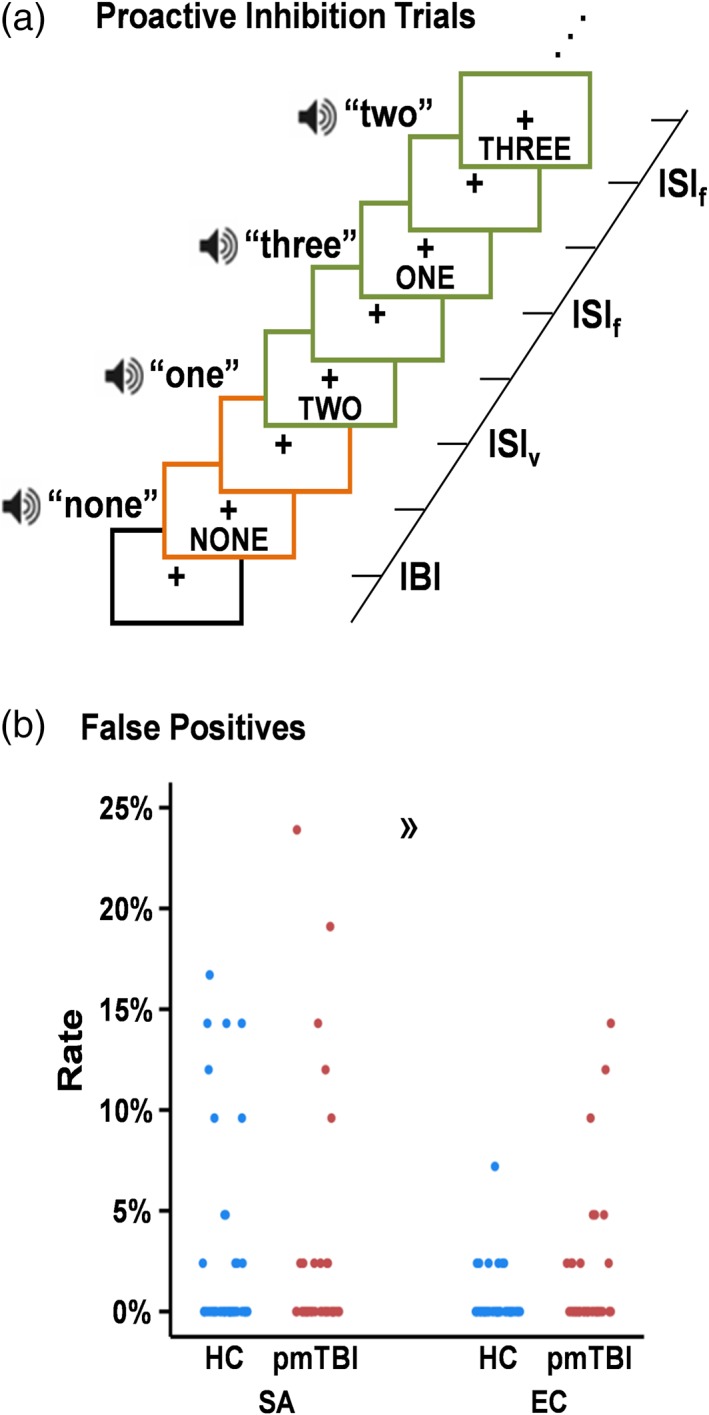
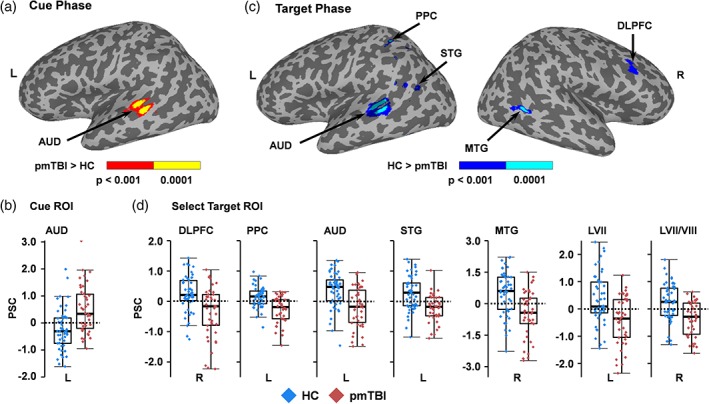
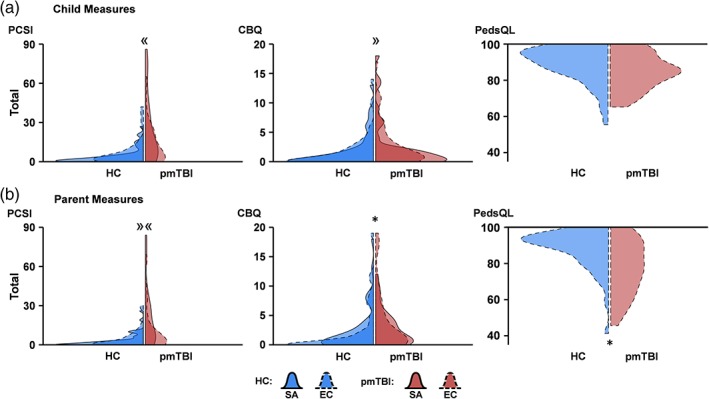
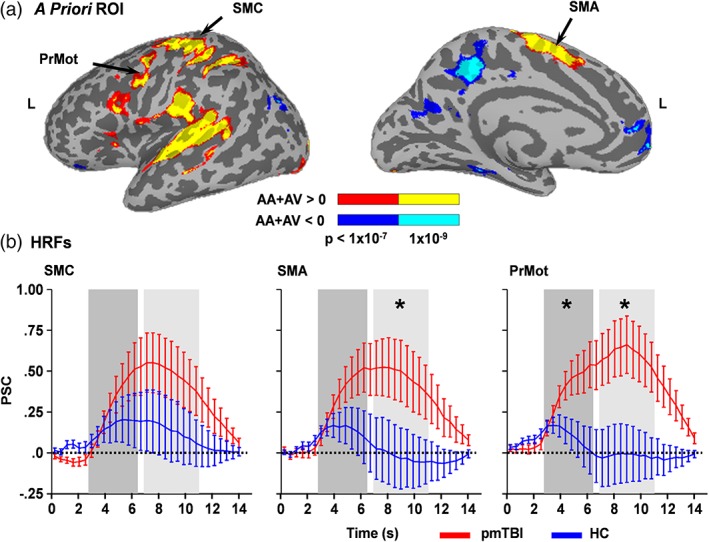
Although much attention has been generated in popular media regarding the deleterious effects of pediatric mild traumatic brain injury (pmTBI), a paucity of empirical evidence exists regarding the natural course of biological recovery. Fifty pmTBI patients (12-18 years old) were consecutively recruited from Emergency Departments and seen approximately 1 week and 4 months post-injury in this prospective cohort study. Data from 53 sex- and age-matched healthy controls (HC) were also collected. Functional magnetic resonance imaging was obtained during proactive response inhibition and at rest, in conjunction with independent measures of resting cerebral blood flow. High temporal resolution imaging enabled separate modeling of neural responses for preparation and execution of proactive response inhibition. A priori predictions of failed inhibitory responses (i.e., hyperactivation) were observed in motor circuitry (pmTBI>HC) and sensory areas sub-acutely and at 4 months post-injury. Paradoxically, pmTBI demonstrated hypoactivation (HC>pmTBI) during target processing, along with decreased activation within prefrontal cognitive control areas. Functional connectivity within motor circuitry at rest suggested that deficits were limited to engagement during the inhibitory task, whereas normal resting cerebral perfusion ruled out deficits in basal perfusion. In conclusion, current results suggest blood oxygen-level dependent deficits during inhibitory control may exceed commonly held beliefs about physiological recovery following pmTBI, potentially lasting up to 4 months post-injury.
尽管大众媒体对儿科轻度创伤性脑损伤 (pmTBI) 的有害影响产生了很大的关注,但关于生物恢复的自然过程的实证证据很少。在这项前瞻性队列研究中,连续招募了 50 名来自急诊室的 pmTBI 患者(12-18 岁),并在受伤后约 1 周和 4 个月进行随访。还收集了 53 名性别和年龄匹配的健康对照组 (HC) 的数据。在主动抑制和休息期间进行功能磁共振成像,同时进行独立的静息脑血流测量。高时间分辨率成像能够分别对主动抑制反应的准备和执行进行神经反应建模。在亚急性和受伤后 4 个月,在运动回路(pmTBI>HC)和感觉区域观察到抑制反应失败(即过度激活)的预先预测。矛盾的是,pmTBI 在目标处理期间表现出低激活(HC>pmTBI),同时前额叶认知控制区域的激活减少。静息状态下运动回路内的功能连接表明,缺陷仅限于抑制任务期间的参与,而正常的静息脑灌注排除了基础灌注的缺陷。总之,目前的结果表明,抑制控制期间的血氧水平依赖缺陷可能超过了人们普遍认为的 pmTBI 后生理恢复的信念,可能持续到受伤后 4 个月。