Discipline of Pharmaceutical Technology, School of Pharmaceutical Sciences, Universiti Sains, Malaysia, 11800, Penang Malaysia.
Department of Pharmaceutics, Faculty of Pharmacy, Bahanuddin Zakariya, Multan, Pakistan.
Int J Nanomedicine. 2019 Jul 5;14:4895-4909. doi: 10.2147/IJN.S199507. eCollection 2019.
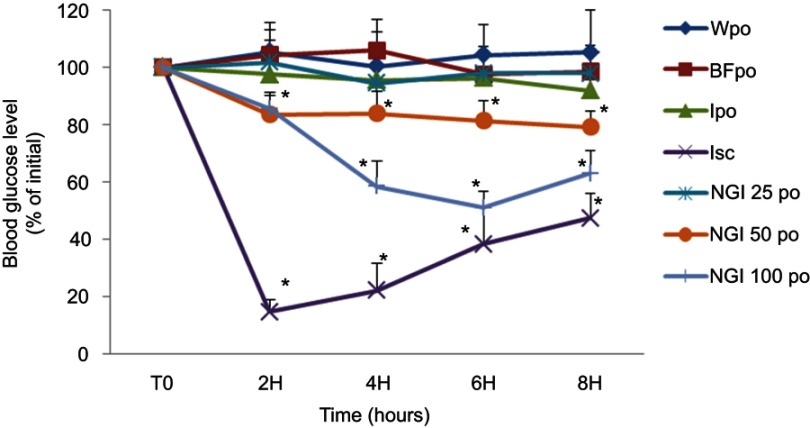
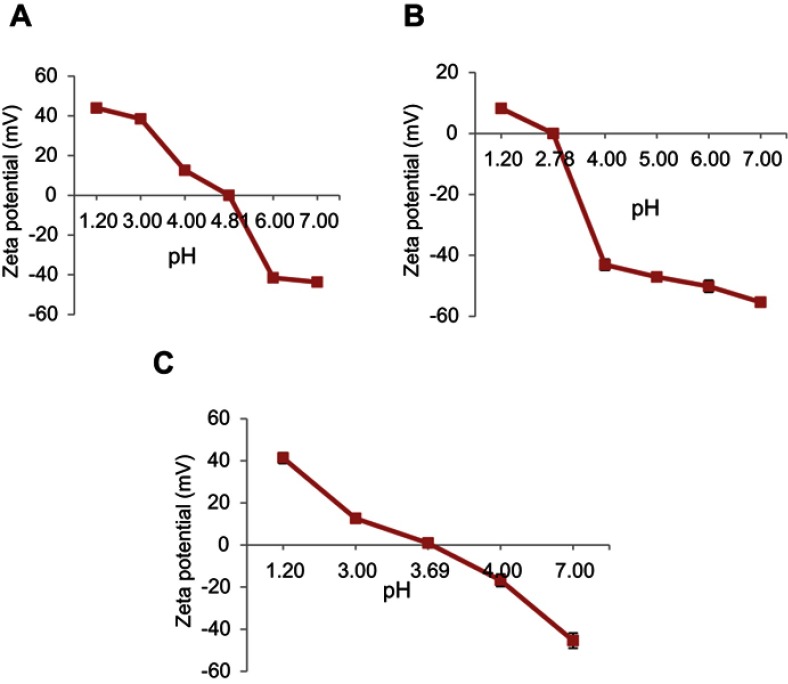
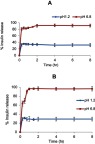
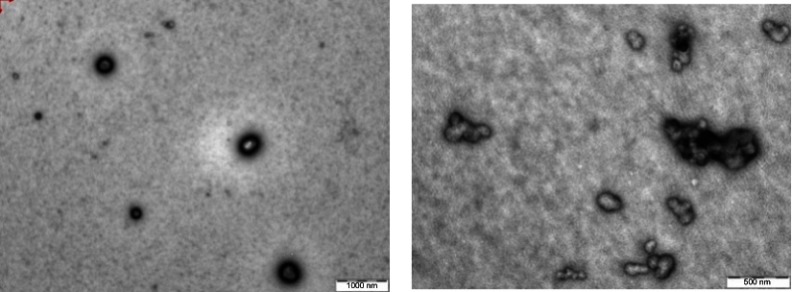
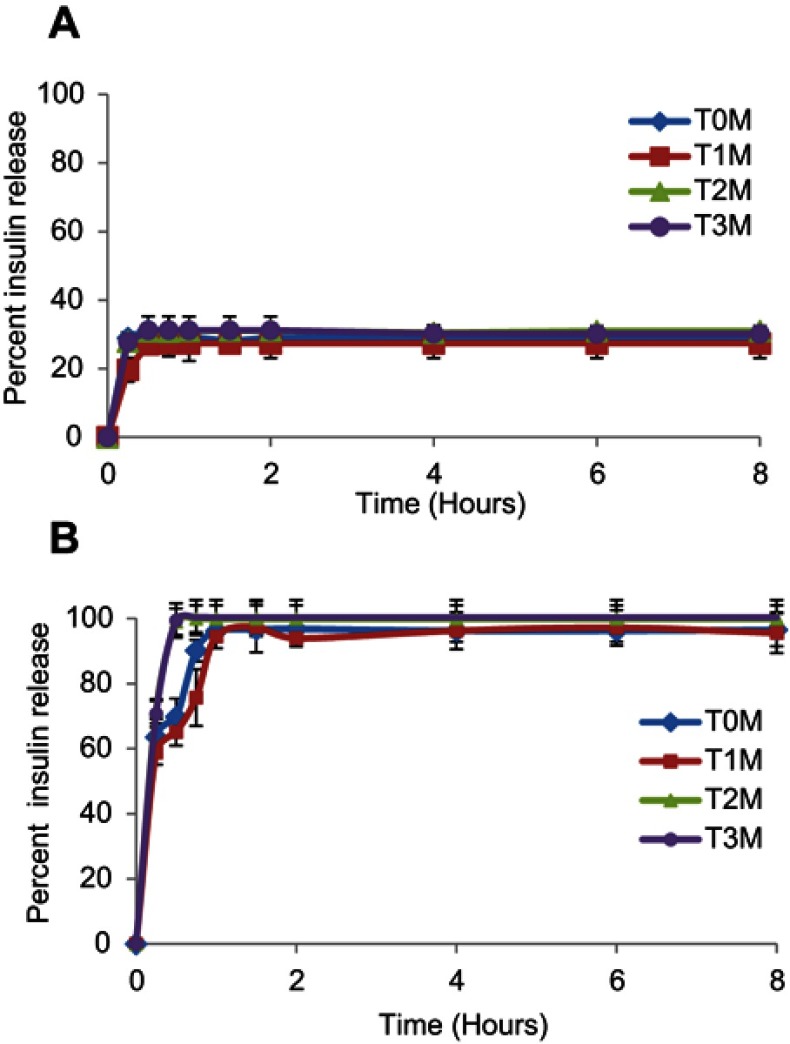
Insulin is given by injection, because when administered orally, it would be destroyed by enzymes in the digestive system, hence only about 0.1% reaches blood circulation. The purpose of the present study was to use pH sensitive polyelectrolyte methyl methacrylate (MMA)/itaconic acid (IA) nanogels as carriers in an attempt to improve absorption of insulin administered orally. Insulin (Ins) was incorporated into the MMA/IA nanogels (NGs) using the polyelectrolyte complexation (PEC) method to form Ins/NGs-PEC. Several parameters, including Ins:NGs ratio, pH, incubation time and stirring rate were optimized during preparation of InsNGs-PEC. The prepared formulations were characterized in terms of particle size (PS), polydispersity index (PdI), zeta potential (ZP) and percent entrapment efficiency (% EE). The optimized InF12 nanogels had a PS, PdI, ZP and %EE of 190.43 nm, 0.186, -16.70 mV and 85.20%, respectively. The InF12 nanogels were lyophilized in the presence of different concentrations of trehalose as cryoprotectant. The lyophilized InF12 containing 2%w/v trahalose (InF12-Tre2 nanogels) was chosen as final formulation which had a PS, PdI, ZP and %EE of 430.50 nm, 0.588, -16.50 mv and 82.10, respectively. The in vitro release of insulin from InF12-Tre2 nanogels in the SGF and SIF were 28.71% and 96.53%, respectively. The stability study conducted at 5±3°C for 3 months showed that lnF12-Tre2 nanogels were stable. The SDS-PAGE assay indicated that the primary structure of insulin in the lnF12-Tre2 nanogels was intact. The in-vivo study in the diabetic rats following oral administration of InF12-Tre2 nanogels at a dose of 100 IU/kg body weight reduced blood glucose level significantly to 51.10% after 6 hours compared to the control groups. The pH sensitive MMA/IA nanogels are potential carriers for oral delivery of insulin as they enhanced the absorption of the drug.
胰岛素通过注射给药,因为口服给药时,它会被消化系统中的酶破坏,因此只有约 0.1%到达血液循环。本研究的目的是使用 pH 敏感的聚电解质甲基丙烯酸甲酯(MMA)/衣康酸(IA)纳米凝胶作为载体,试图提高口服给予胰岛素的吸收。胰岛素(Ins)通过聚电解质络合(PEC)方法掺入 MMA/IA 纳米凝胶(NGs)中,形成 Ins/NGs-PEC。在制备 InsNGs-PEC 期间,优化了包括 Ins:NGs 比、pH、孵育时间和搅拌速度在内的几个参数。制备的制剂在粒径(PS)、多分散指数(PdI)、Zeta 电位(ZP)和包封效率(%EE)方面进行了表征。优化的 InF12 纳米凝胶的 PS、PdI、ZP 和 %EE 分别为 190.43nm、0.186、-16.70mV 和 85.20%。InF12 纳米凝胶在不同浓度海藻糖作为冷冻保护剂的存在下冻干。含有 2%w/v 海藻糖的冻干 InF12(InF12-Tre2 纳米凝胶)被选为最终配方,其 PS、PdI、ZP 和 %EE 分别为 430.50nm、0.588、-16.50mv 和 82.10%。InF12-Tre2 纳米凝胶在 SGF 和 SIF 中的胰岛素体外释放分别为 28.71%和 96.53%。在 5±3°C 下进行的 3 个月稳定性研究表明,lnF12-Tre2 纳米凝胶稳定。SDS-PAGE 分析表明,lnF12-Tre2 纳米凝胶中胰岛素的一级结构完整。在糖尿病大鼠中进行的口服给药研究表明,在 100IU/kg 体重的剂量下,lnF12-Tre2 纳米凝胶给药后 6 小时血糖水平显著降低至 51.10%,与对照组相比。pH 敏感的 MMA/IA 纳米凝胶是胰岛素口服递送的潜在载体,因为它们增强了药物的吸收。