Patutina Olga A, Miroshnichenko Svetlana K, Mironova Nadezhda L, Sen'kova Aleksandra V, Bichenkova Elena V, Clarke David J, Vlassov Valentin V, Zenkova Marina A
Laboratory of Nucleic Acids Biochemistry, Institute of Chemical Biology and Fundamental Medicine SB RAS, Novosibirsk, Russia.
School of Health Sciences, Faculty of Biology, Medicine and Health, University of Manchester, Manchester, United Kingdom.
Front Pharmacol. 2019 Aug 8;10:879. doi: 10.3389/fphar.2019.00879. eCollection 2019.
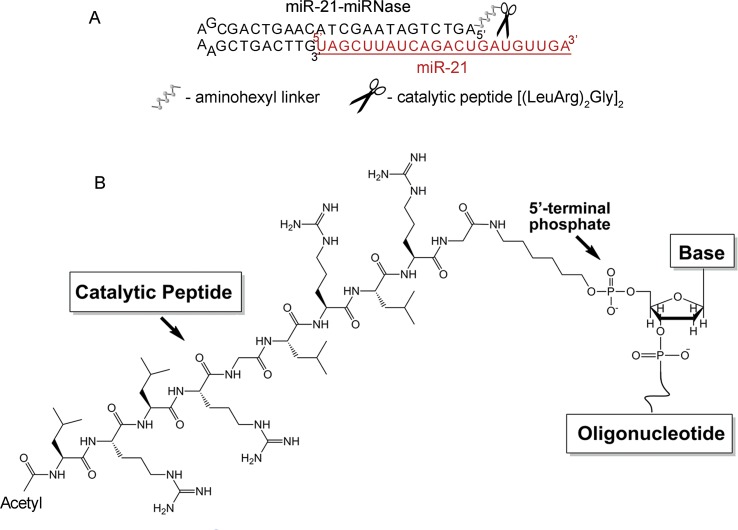
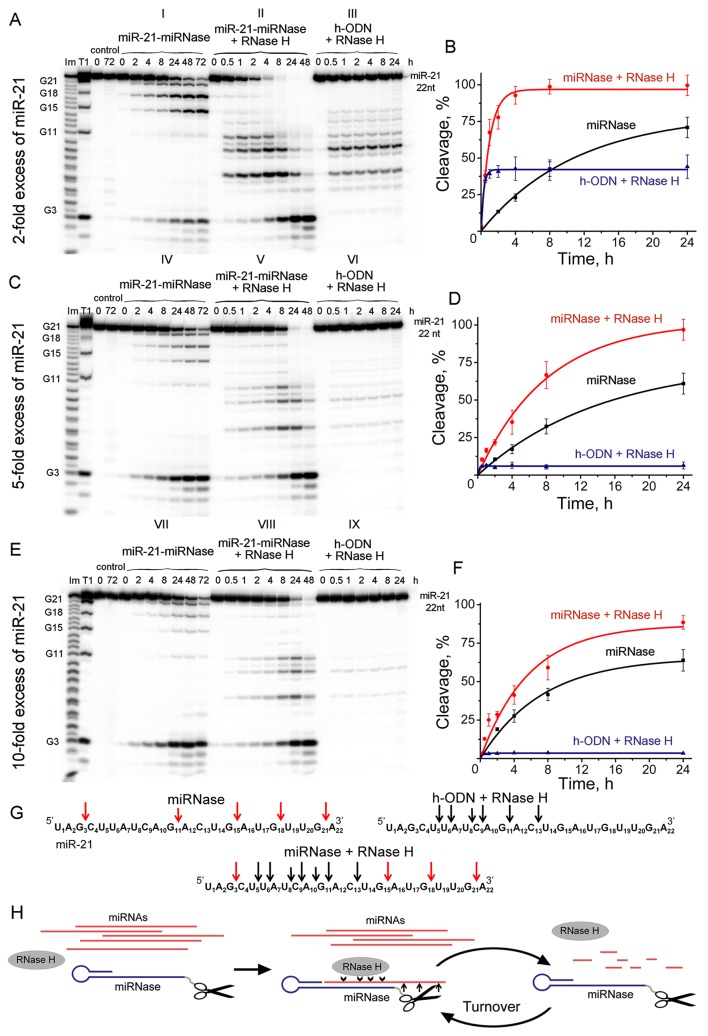
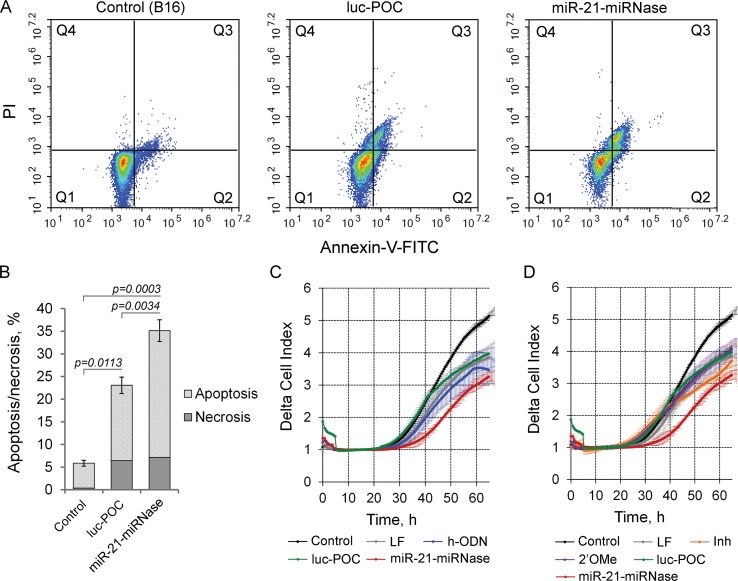
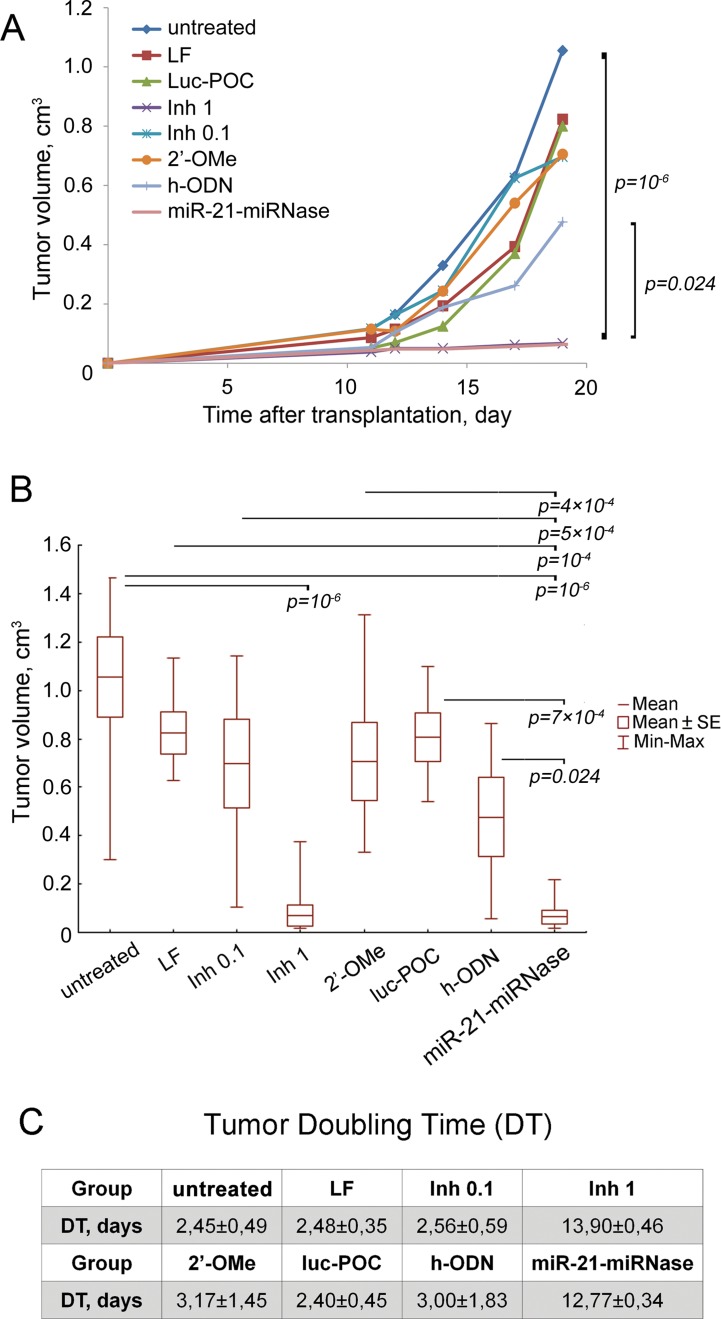
Control of the expression of oncogenic small non-coding RNAs, notably microRNAs (miRNAs), is an attractive therapeutic approach. We report a design platform for catalytic knockdown of miRNA targets with artificial, sequence-specific ribonucleases. miRNases comprise a peptide [(LeuArg)Gly] capable of RNA cleavage conjugated to the miRNA-targeted oligodeoxyribonucleotide, which becomes nuclease-resistant within the conjugate design, without resort to chemically modified nucleotides. Our data presented here showed for the first time a truly catalytic character of our miR-21-miRNase and its ability to cleave miR-21 in a multiple catalytic turnover mode. We demonstrate that miRNase targeted to miR-21 (miR-21-miRNase) knocked down malignant behavior of tumor cells, including induction of apoptosis, inhibition of cell invasiveness, and retardation of tumor growth, which persisted on transplantation into mice of tumor cells treated once with miR-21-miRNase. Crucially, we discover that the high biological activity of miR-21-miRNase can be directly related not only to its truly catalytic sequence-specific cleavage of miRNA but also to its ability to recruit the non-sequence specific RNase H found in most cells to elevate catalytic turnover further. miR-21-miRNase worked synergistically even with low levels of RNase H. Estimated degradation in the presence of RNase H exceeded 10 miRNA target molecules per hour for each miR-21-miRNase molecule, which provides the potency to minimize delivery requirements to a few molecules per cell. In contrast to the comparatively high doses required for the simple steric block of antisense oligonucleotides, truly catalytic inactivation of miRNA offers more effective, irreversible, and persistent suppression of many copy target sequences. miRNase design can be readily adapted to target other pathogenic microRNAs overexpressed in many disease states.
控制致癌性小非编码RNA,尤其是微小RNA(miRNA)的表达,是一种有吸引力的治疗方法。我们报告了一个用于用人工序列特异性核糖核酸酶催化敲低miRNA靶标的设计平台。miRNase由一种能够进行RNA切割的肽[(LeuArg)Gly]与靶向miRNA的寡脱氧核糖核苷酸偶联而成,该寡脱氧核糖核苷酸在偶联设计中变得对核酸酶具有抗性,而无需使用化学修饰的核苷酸。我们在此展示的数据首次显示了我们的miR-21-miRNase具有真正的催化特性,以及它以多催化周转模式切割miR-21的能力。我们证明,靶向miR-21的miRNase(miR-21-miRNase)可降低肿瘤细胞的恶性行为,包括诱导凋亡、抑制细胞侵袭和延缓肿瘤生长,在用miR-21-miRNase处理一次的肿瘤细胞移植到小鼠体内后,这些作用仍然存在。至关重要的是,我们发现miR-21-miRNase的高生物活性不仅与其对miRNA的真正催化序列特异性切割直接相关,还与其招募大多数细胞中发现的非序列特异性核糖核酸酶H以进一步提高催化周转的能力有关。即使在低水平的核糖核酸酶H存在下,miR-21-miRNase也能协同发挥作用。在核糖核酸酶H存在的情况下,每个miR-21-miRNase分子每小时估计降解超过10个miRNA靶标分子,这使得将递送需求降至每个细胞几个分子成为可能。与反义寡核苷酸简单的空间位阻所需的相对高剂量相比,miRNA的真正催化失活提供了对许多拷贝靶序列更有效、不可逆和持久的抑制。miRNase设计可以很容易地适应靶向许多疾病状态下过表达的其他致病性微小RNA。