Department of Chemistry, The Scripps Research Institute, 130 Scripps Way, Jupiter, Florida 33458, United States.
J Am Chem Soc. 2020 Apr 15;142(15):6970-6982. doi: 10.1021/jacs.9b13159. Epub 2020 Apr 1.
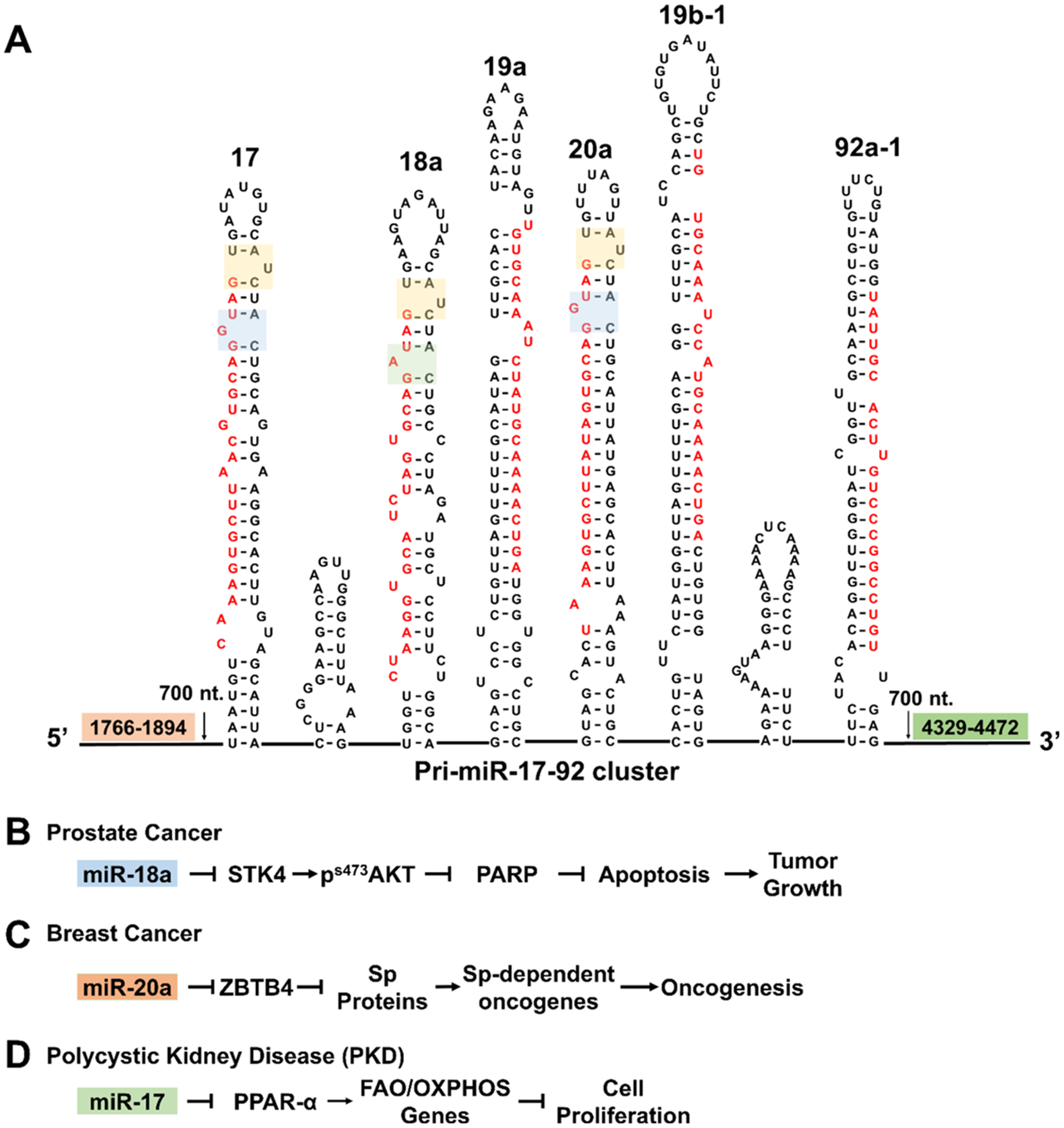
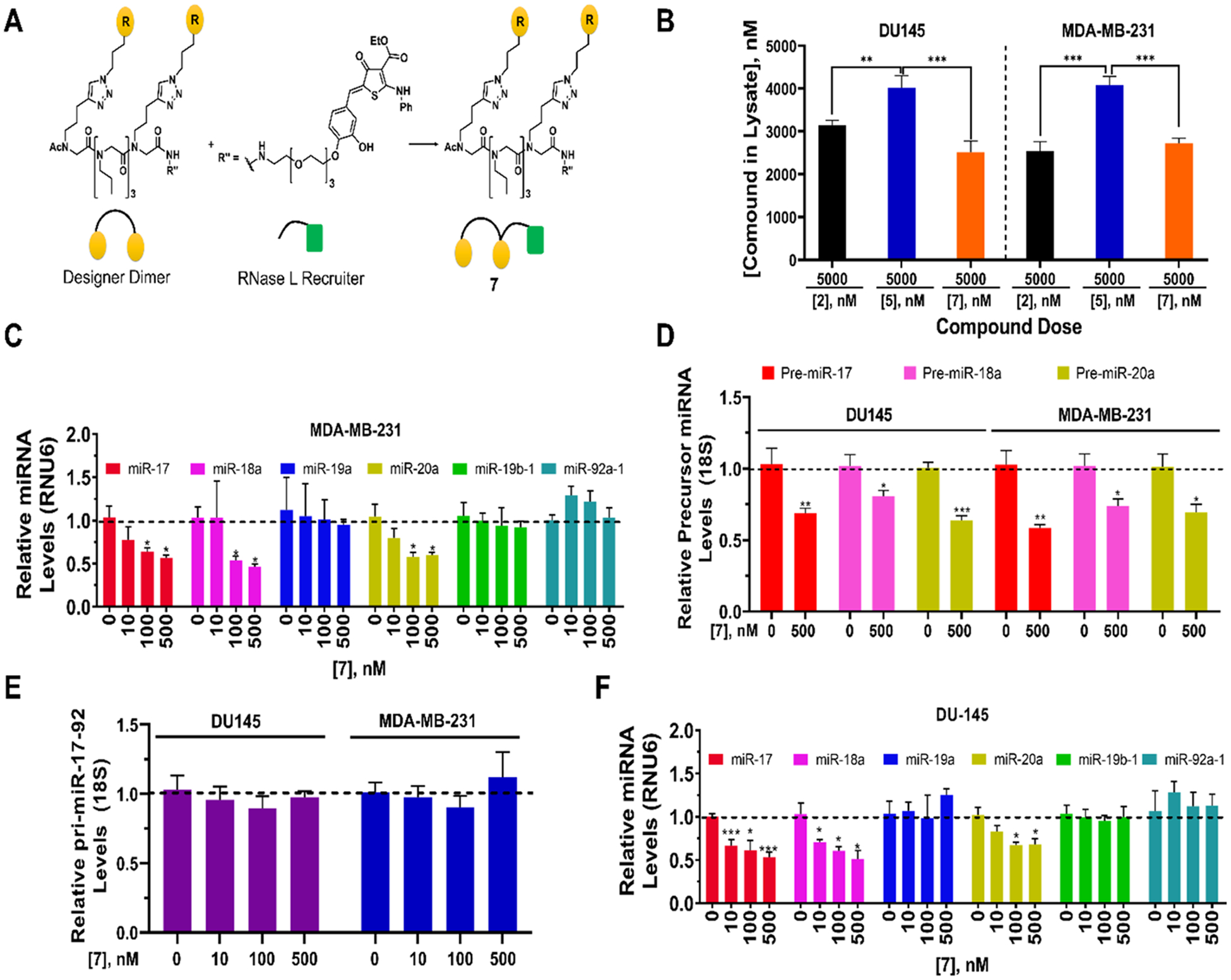
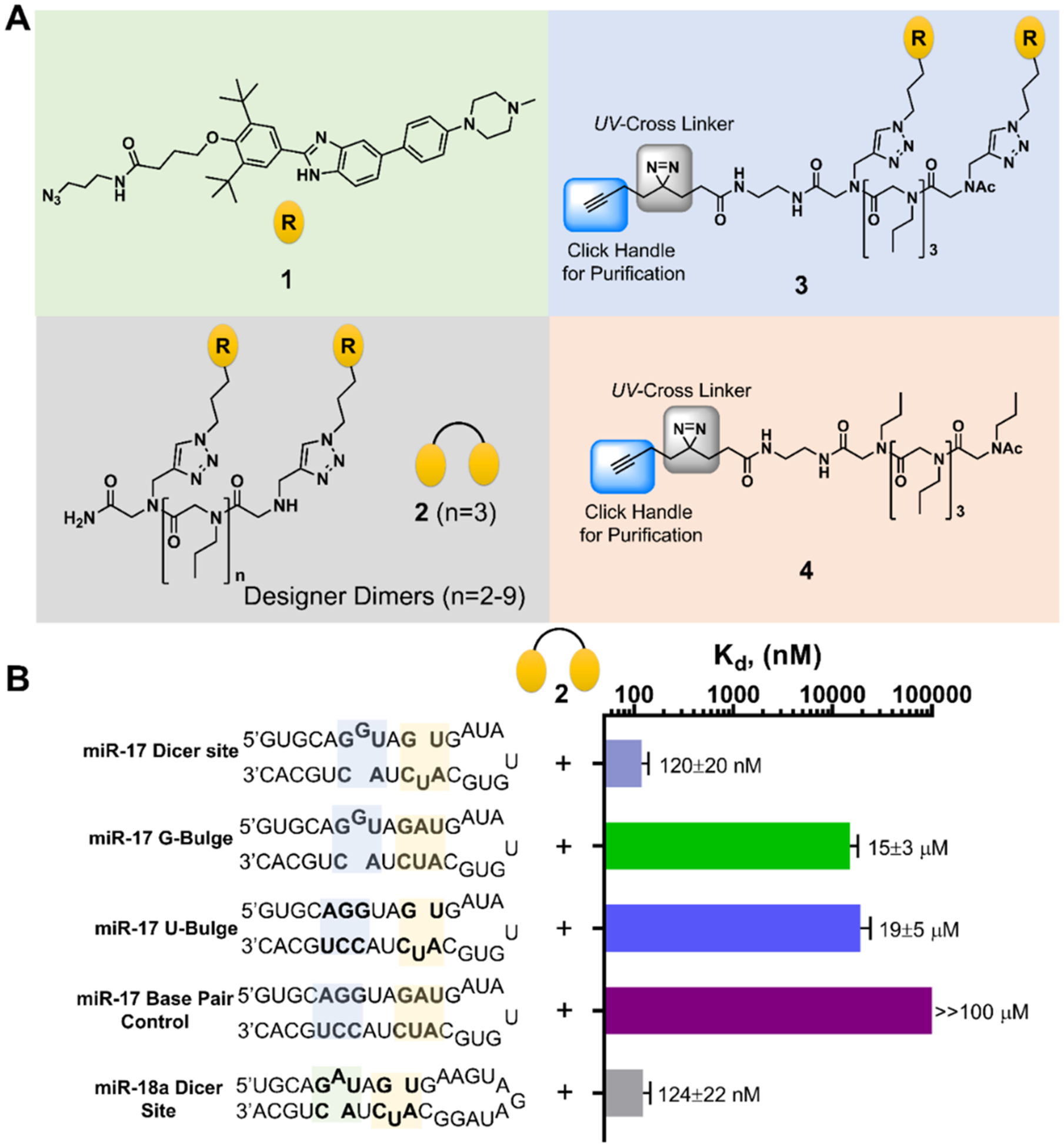
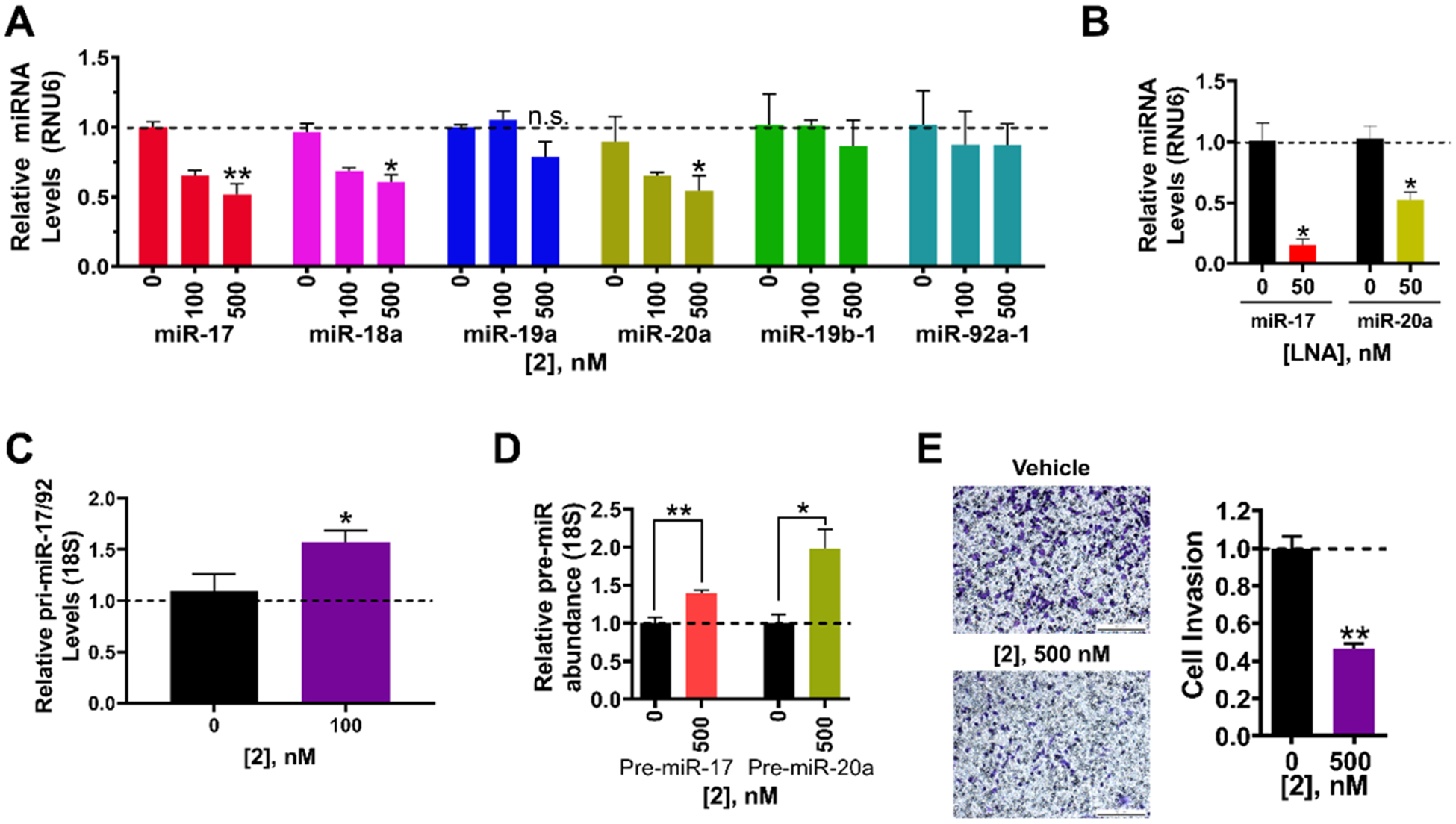
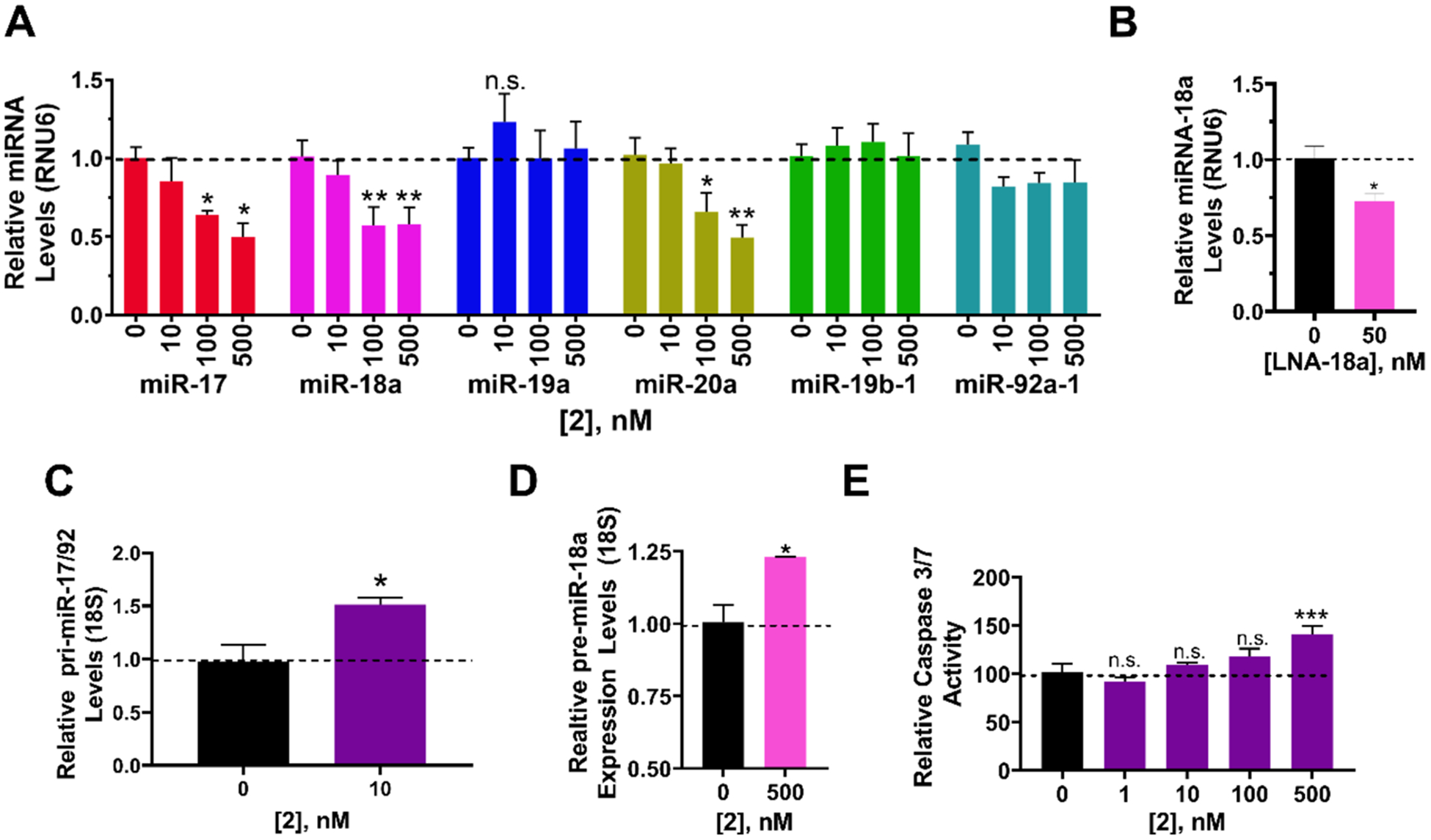
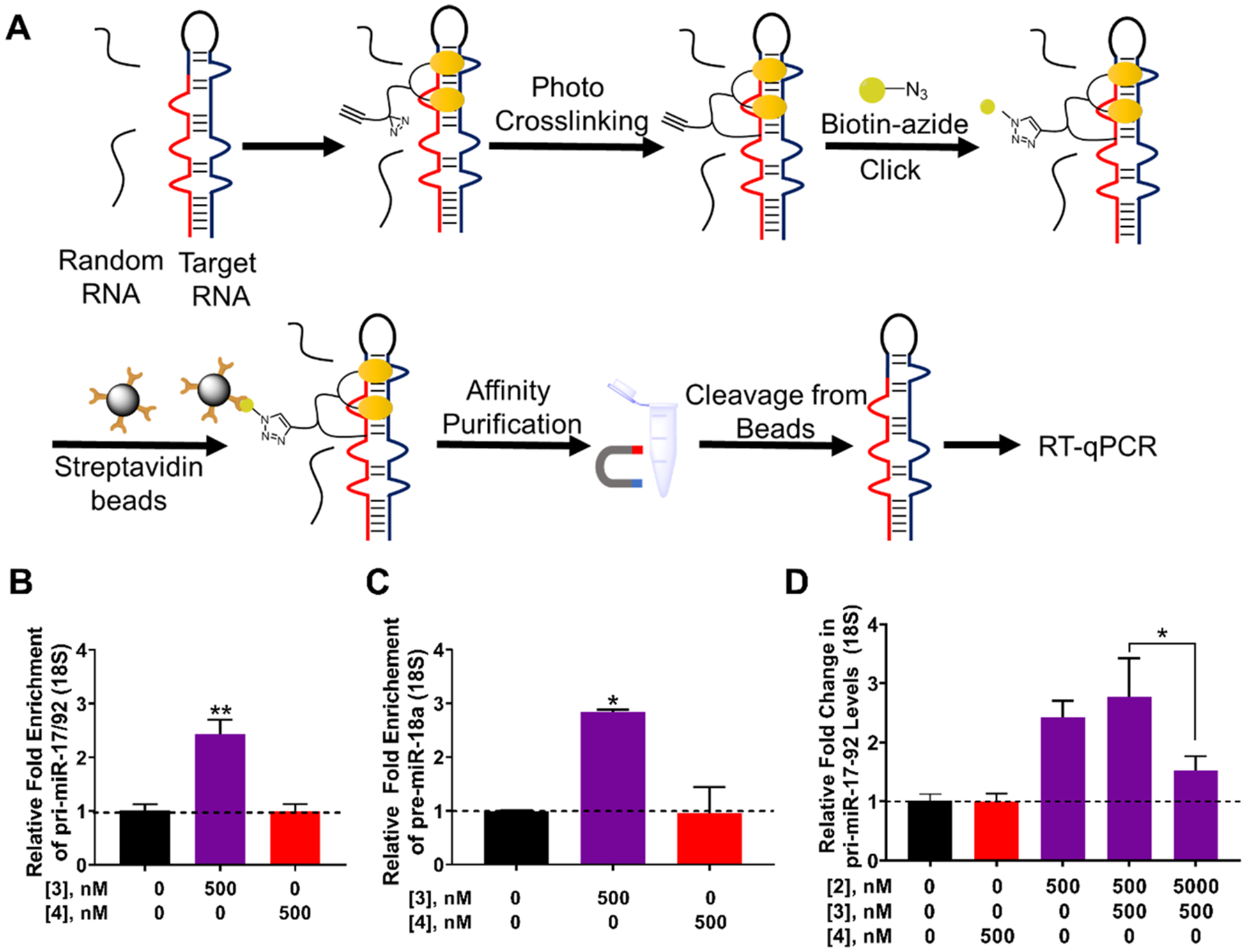
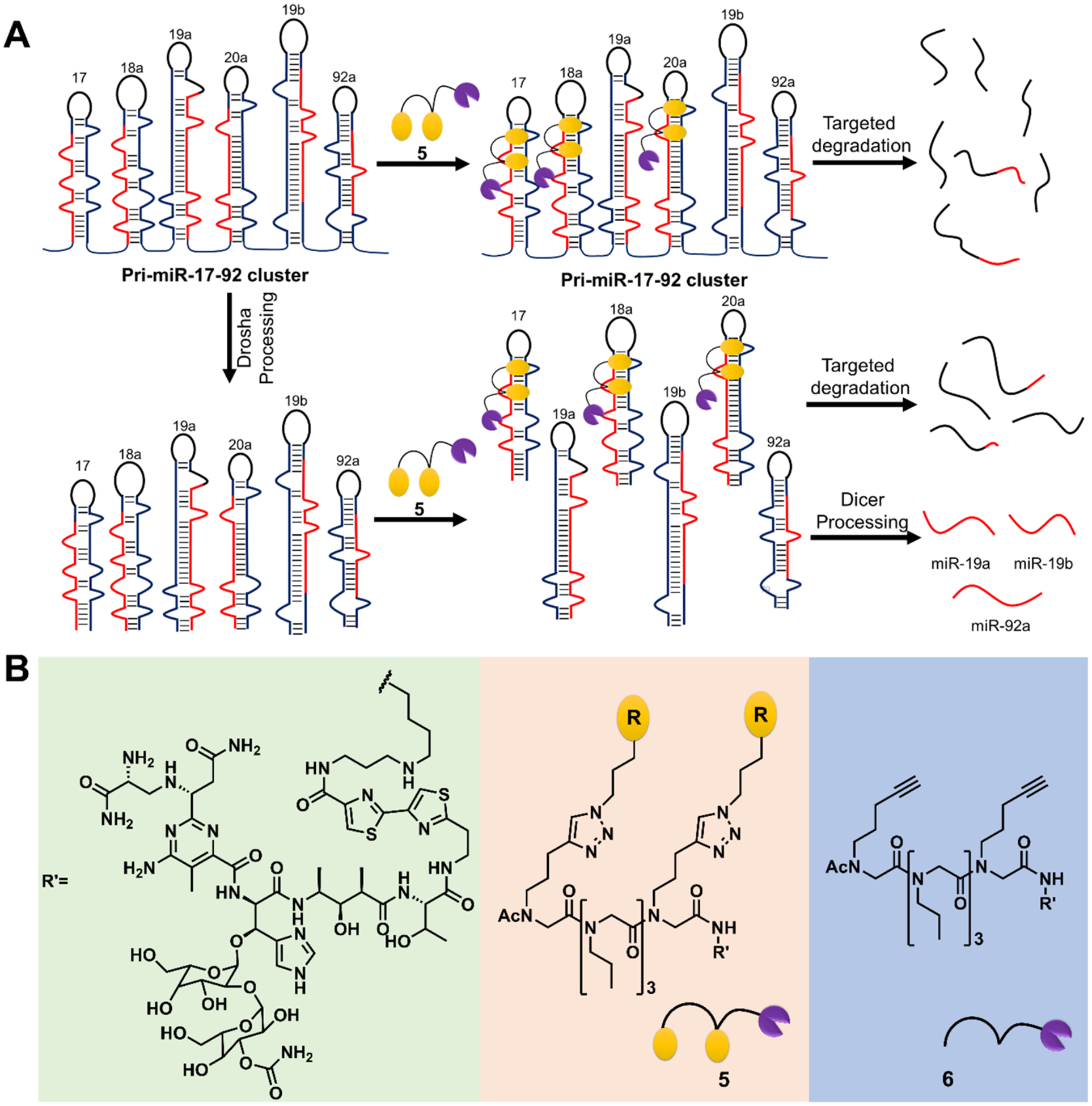
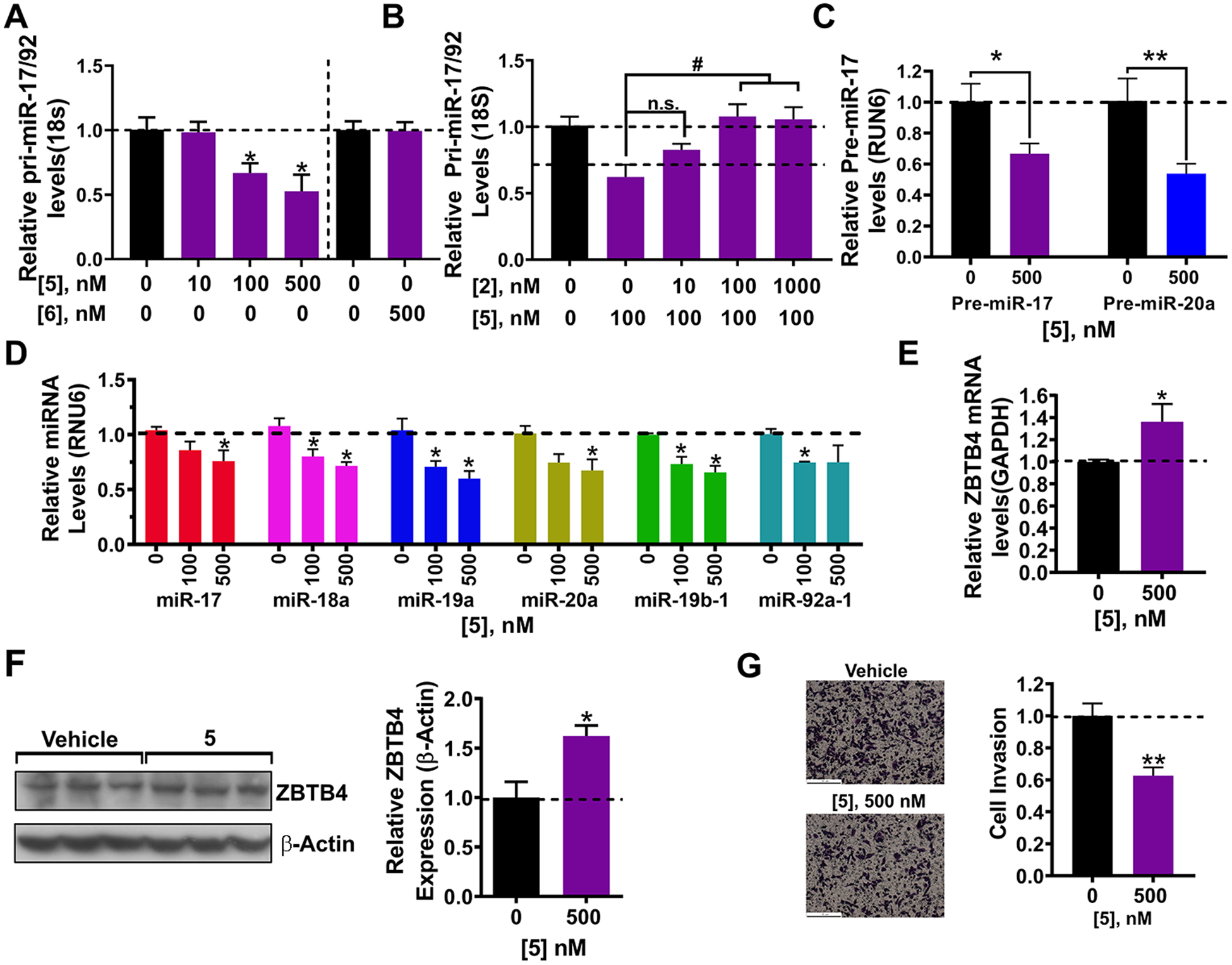
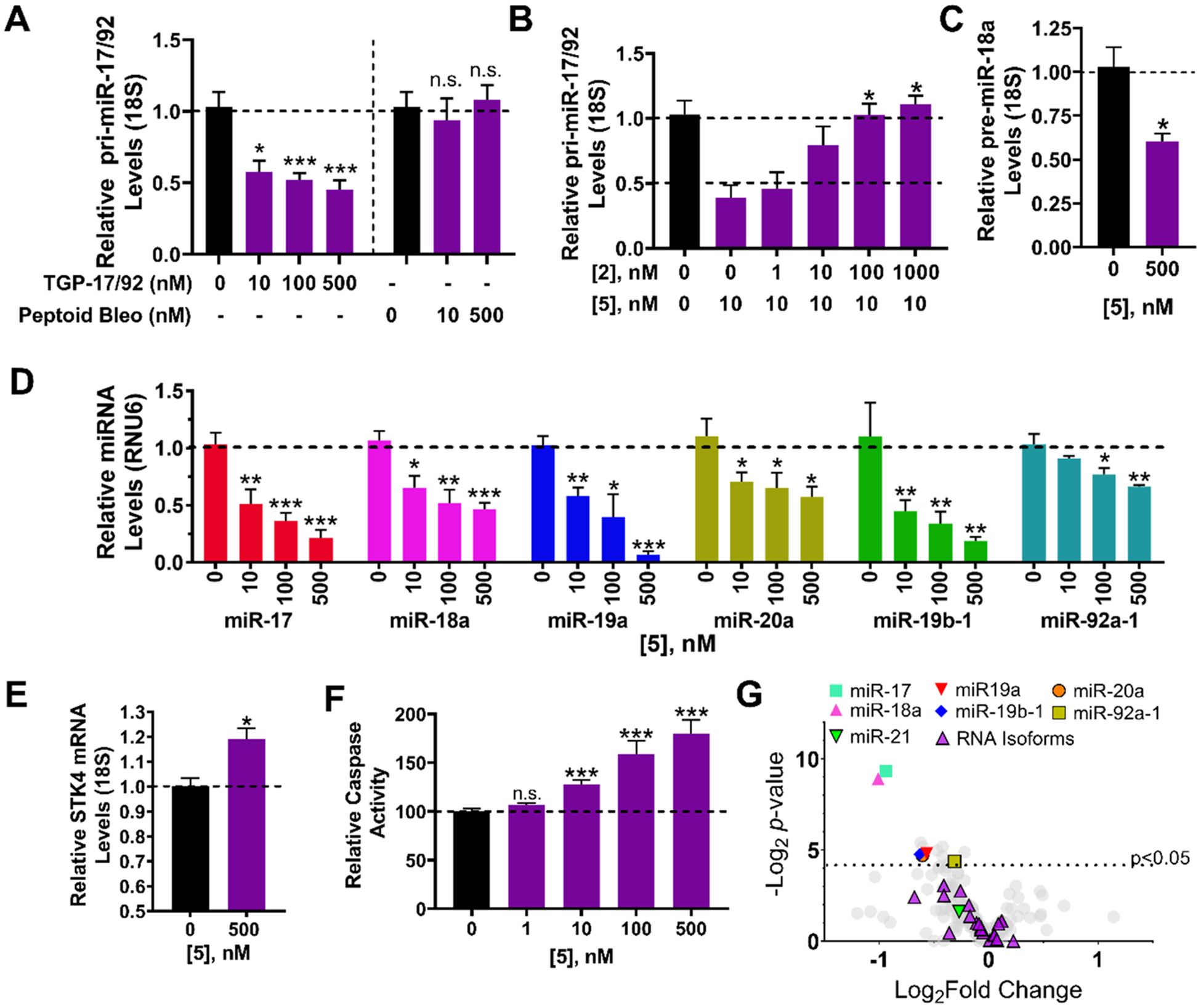
Many RNAs are processed into biologically active transcripts, the aberrant expression of which can contribute to disease phenotypes. For example, the primary microRNA-17-92 (pri-miR-17-92) cluster contains six microRNAs (miRNAs) that collectively act in several disease settings. Herein, we used sequence-based design of structure-specific ligands to target a common structure in the Dicer processing sites of three miRNAs in the cluster, miR-17, miR-18a, and miR-20a, thereby inhibiting their biogenesis. The compound was optimized to afford a dimeric molecule that binds the Dicer processing site and an adjacent bulge, affording a 100-fold increase in potency. The dimer's mode of action was then extended from simple binding to direct cleavage by conjugation to bleomycin A5 in a manner that imparts RNA-selective cleavage or to indirect cleavage by recruiting an endogenous nuclease, or a ribonuclease targeting chimera (RIBOTAC). Interestingly, the dimer-bleomycin conjugate cleaves the entire pri-miR-17-92 cluster and hence functionally inhibits all six miRNAs emanating from it. The compound selectively reduced levels of the cluster in three disease models: polycystic kidney disease, prostate cancer, and breast cancer, rescuing disease-associated phenotypes in the latter two. Further, the bleomycin conjugate exerted selective effects on the miRNome and proteome in prostate cancer cells. In contrast, the RIBOTAC only depleted levels of pre- and mature miR-17, -18a, and 20a, with no effect on the primary transcript, in accordance with the cocellular localization of RNase L, the pre-miRNA targets, and the compound. These studies demonstrate a strategy to tune RNA structure-targeting compounds to the cellular localization of the target.
许多 RNA 被加工成具有生物活性的转录本,其异常表达可能导致疾病表型。例如,主要 microRNA-17-92(pri-miR-17-92)簇包含六个 microRNA(miRNA),它们在几种疾病环境中共同发挥作用。在此,我们使用基于序列的结构特异性配体设计来靶向簇中三个 miRNA(miR-17、miR-18a 和 miR-20a)的 Dicer 加工位点的共同结构,从而抑制它们的生物发生。该化合物经过优化,得到一种二聚体分子,该分子结合 Dicer 加工位点和相邻的凸起,从而使效力提高 100 倍。然后,将二聚体的作用方式从简单结合扩展到通过与博来霉素 A5 缀合进行直接切割,从而赋予 RNA 选择性切割或通过招募内源性核酸酶或核糖核酸酶靶向嵌合体(RIBOTAC)进行间接切割。有趣的是,二聚体-博来霉素缀合物切割整个 pri-miR-17-92 簇,从而有效地抑制其衍生的六个 miRNA。该化合物在三种疾病模型中选择性地降低了该簇的水平:多囊肾病、前列腺癌和乳腺癌,挽救了后两者的疾病相关表型。此外,博来霉素缀合物对前列腺癌细胞中的 miRNome 和蛋白质组具有选择性作用。相比之下,RIBOTAC 仅耗尽了 pre-miR-17、-18a 和 20a 的水平,对初级转录物没有影响,与 RNase L、pre-miRNA 靶标和化合物的共细胞定位一致。这些研究表明了一种调节 RNA 结构靶向化合物以适应靶标细胞定位的策略。