Gan Han Ming, Szegedi Ernõ, Fersi Rabeb, Chebil Samir, Kovács László, Kawaguchi Akira, Hudson André O, Burr Thomas J, Savka Michael A
Deakin Genomics Centre, School of Life and Environmental Sciences, Deakin University, Geelong, VIC, Australia.
Centre for Integrative Ecology, School of Life and Environmental Sciences, Deakin University, Geelong, VIC, Australia.
Front Microbiol. 2019 Aug 13;10:1896. doi: 10.3389/fmicb.2019.01896. eCollection 2019.
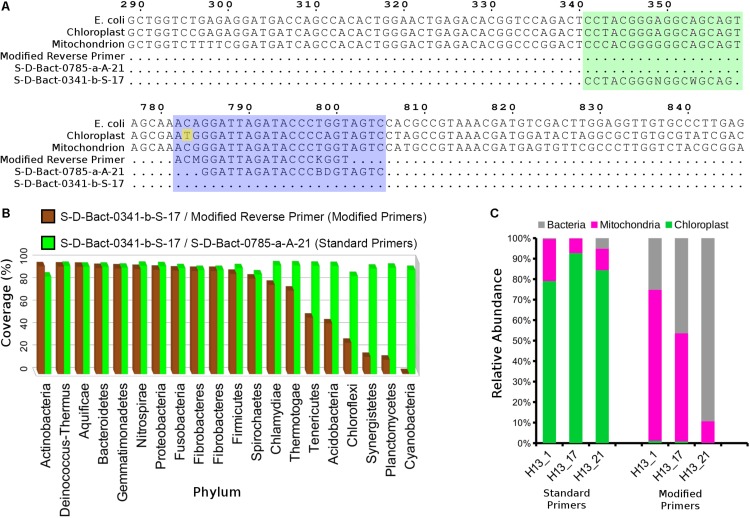
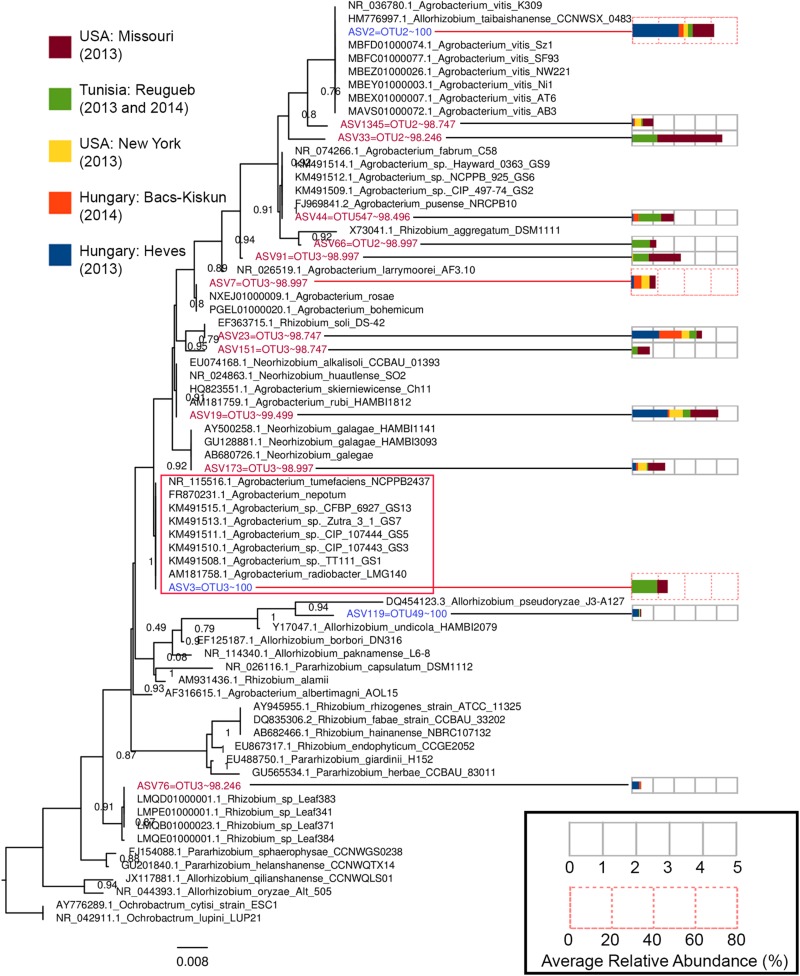
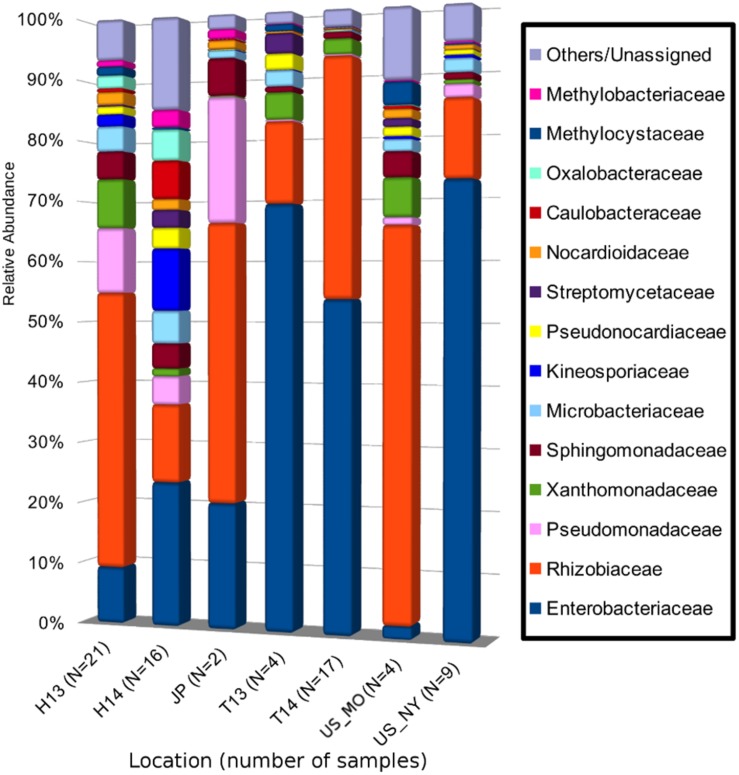
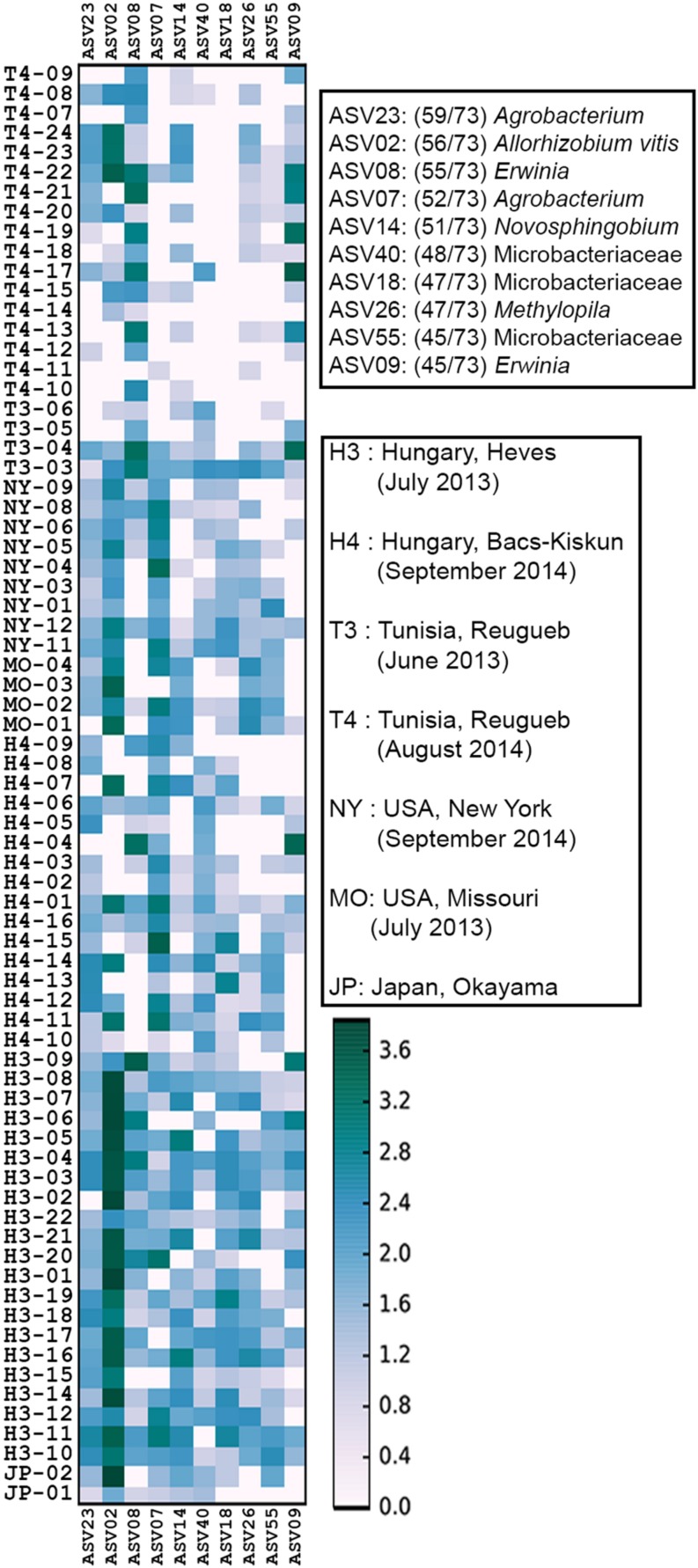
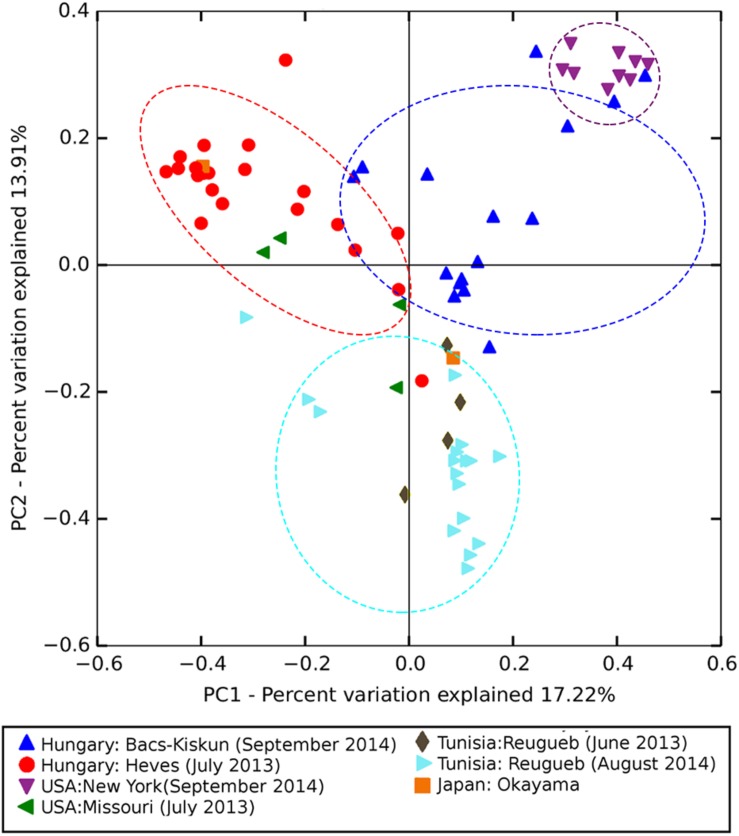
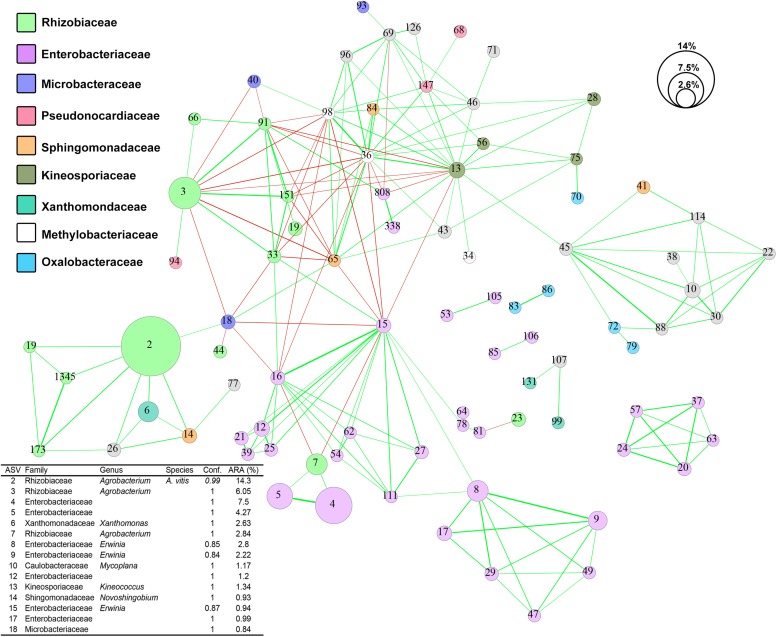
Crown gall (CG) is a globally distributed and economically important disease of grapevine and other important crop plants. The causal agent of CG is or strains that harbor a tumor-inducing plasmid (pTi). The microbial community within the CG tumor has not been widely elucidated and it is not known if certain members of this microbial community promote or inhibit CG. This study investigated the microbiotas of grapevine CG tumor tissues from seven infected vineyards located in Hungary, Japan, Tunisia, and the United States. Heavy co-amplification of grapevine chloroplast and mitochondrial ribosomal RNA genes was observed with the widely used Illumina V3-V4 16S rRNA gene primers, requiring the design of a new reverse primer to enrich for bacterial 16S rRNA from CG tumors. The operational taxonomic unit (OTU) clustering approach is not suitable for CG microbiota analysis as it collapsed several ecologically distinct species into a single OTU due to low interspecies genetic divergence. The CG microbial community assemblages were significantly different across sampling sites (ANOSIM global = 0.63, value = 0.001) with evidence of site-specific differentially abundant ASVs. The presence of in the CG microbiota is almost always accompanied by and , the latter may promote the spread of pTi plasmid by way of acyl-homoserine lactone signal production, whereas the former may take advantage of the presence of substrates associated with plant cell wall growth and repair. The technical and biological insights gained from this study will contribute to the understanding of complex interaction between the grapevine and its microbial community and may facilitate better management of CG disease in the future.
冠瘿病(CG)是一种在全球范围内分布且对葡萄和其他重要农作物具有经济重要性的病害。CG的致病因子是携带致瘤质粒(pTi)的 或 菌株。CG肿瘤内的微生物群落尚未得到广泛阐明,并且尚不清楚该微生物群落的某些成员是否促进或抑制CG。本研究调查了来自匈牙利、日本、突尼斯和美国的七个受感染葡萄园的葡萄CG肿瘤组织的微生物群。使用广泛应用的Illumina V3-V4 16S rRNA基因引物观察到葡萄叶绿体和线粒体核糖体RNA基因的大量共扩增,因此需要设计一种新的反向引物来富集CG肿瘤中的细菌16S rRNA。操作分类单元(OTU)聚类方法不适用于CG微生物群分析,因为由于种间遗传差异低,它将几个生态上不同的物种合并到一个单一的OTU中。CG微生物群落组合在不同采样地点之间存在显著差异(全局ANOSIM = 0.63,p值 = 0.001),有位点特异性差异丰富的ASV的证据。CG微生物群中 的存在几乎总是伴随着 和 ,后者可能通过酰基高丝氨酸内酯信号产生促进pTi质粒的传播,而前者可能利用与植物细胞壁生长和修复相关的底物的存在。本研究获得的技术和生物学见解将有助于理解葡萄与其微生物群落之间的复杂相互作用,并可能在未来促进对CG病害的更好管理。