Almogbel Ebtehal, Aladhadh Abdulkarim M, Almotyri Bashayer H, Alhumaid Ahmad F, Rasheed Naila
Department of Family Medicine, College of Medicine, Qassim University, Buraidah, KSA.
Royal Saudi Air Force, Ministry of Defense, KSA.
Open Access Maced J Med Sci. 2019 Jul 10;7(13):2182-2188. doi: 10.3889/oamjms.2019.571. eCollection 2019 Jul 15.
Psychological stress associated eating habits among public health have now become a global concern.
This study was undertaken to investigate the levels of psychological stress among undergraduate students of Qassim University and to explore the stress associated alterations in their eating habits.
This is a cross-sectional survey conducted on 614 undergraduate students of Qassim University, Saudi Arabia. A self-administered questionnaire was used, which included questions on socio-demography and eating habits. Level of stress was measured by a standardised questionnaire highlights the levels of non-chronic stimulation through difficulty relaxing, nervous arousal and being easily upset/agitated, irritable / over-reactive and impatient.
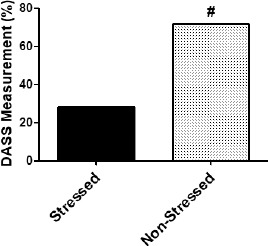
Our results show that 28.2% of total participants suffered from some extent of stress. Among stressed participants, 17.3%, 49.1%, 24.8% and 8.7% of participants suffered from mild, moderate, severe and extremely severe stress, respectively. Stressed participants were more preferred to eat junk foods such as fast foods, snacks and beverages as compared with unstressed participants (p < 0.05) and the junk food preference was increased with the increase of stress levels. Moreover, non-stressed participants preferred more healthy foods such as vegetarian food, fresh fruits as compared with stressed participants (p < 0.05). Taste and easy to access were the main reasons for the preference of junk foods by the stressed participants.
This is the first comprehensive study from Saudi Arabia to show stress associated dietary alterations in undergraduates of Qassim University. Data concluded that most of the young adults followed a healthy eating pattern, but a significant number from them were affected by stress. Therefore, specific intervention programs are strongly recommended for the reduction of stress and to improve their quality of life.
公共卫生领域中与饮食习惯相关的心理压力现已成为全球关注的问题。
本研究旨在调查卡西姆大学本科生的心理压力水平,并探讨与压力相关的饮食习惯变化。
这是一项对沙特阿拉伯卡西姆大学614名本科生进行的横断面调查。使用了一份自填式问卷,其中包括关于社会人口统计学和饮食习惯的问题。压力水平通过一份标准化问卷进行测量,该问卷通过难以放松、神经兴奋以及容易心烦/激动、易怒/反应过度和不耐烦来突出非慢性刺激的程度。
我们的结果显示,28.2%的总参与者遭受了一定程度的压力。在有压力的参与者中,分别有17.3%、49.1%、24.8%和8.7%的参与者遭受轻度、中度、重度和极重度压力。与无压力的参与者相比,有压力的参与者更倾向于食用垃圾食品,如快餐、零食和饮料(p < 0.05),并且对垃圾食品的偏好随着压力水平的增加而增加。此外,与有压力的参与者相比,无压力的参与者更喜欢食用更健康的食物,如素食、新鲜水果(p < 0.05)。味道和易于获取是有压力的参与者偏好垃圾食品的主要原因。
这是沙特阿拉伯第一项全面研究,表明卡西姆大学本科生中与压力相关的饮食变化。数据表明,大多数年轻人遵循健康的饮食模式,但其中相当一部分受到压力的影响。因此,强烈建议制定具体的干预计划以减轻压力并改善他们的生活质量。