Zhu Jing, Yuan Yi, Wang Shaozhong, Yao Zhu-Jun
State Key Laboratory of Coordination Chemistry, Jiangsu Key Laboratory of Advanced Organic Materials, School of Chemistry and Chemical Engineering, Nanjing University, Nanjing 210023, P. R. China.
ACS Omega. 2017 Aug 18;2(8):4665-4677. doi: 10.1021/acsomega.7b00749. eCollection 2017 Aug 31.
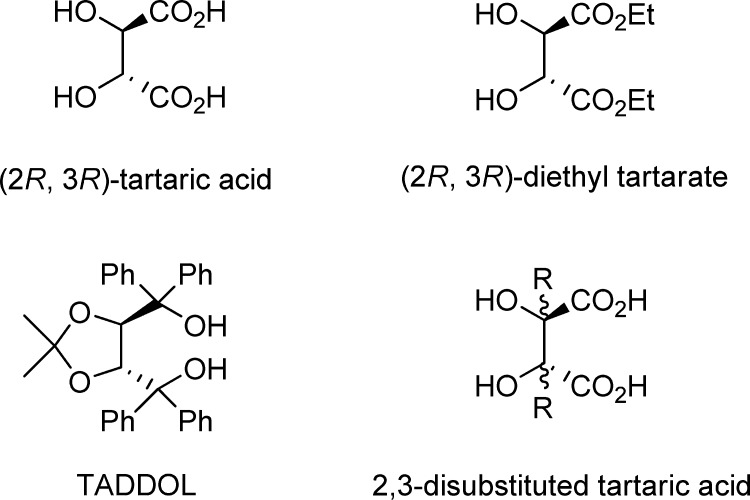
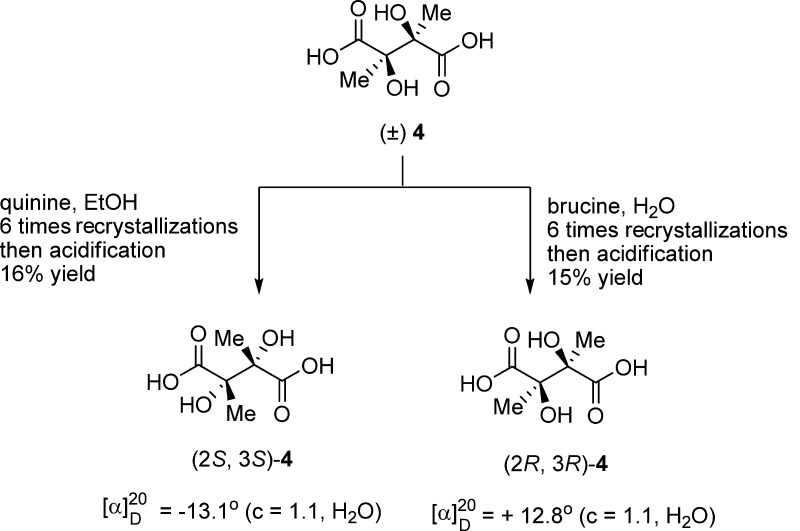
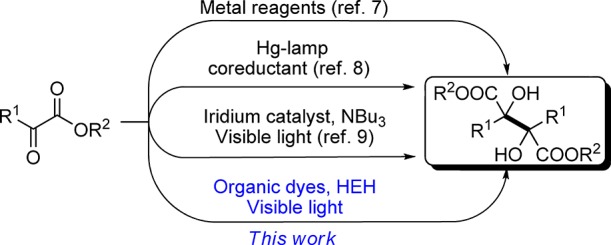
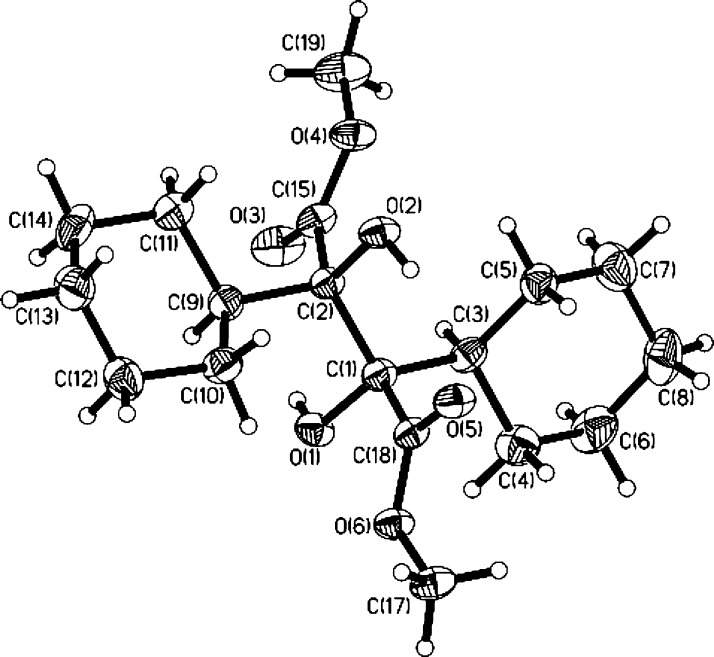
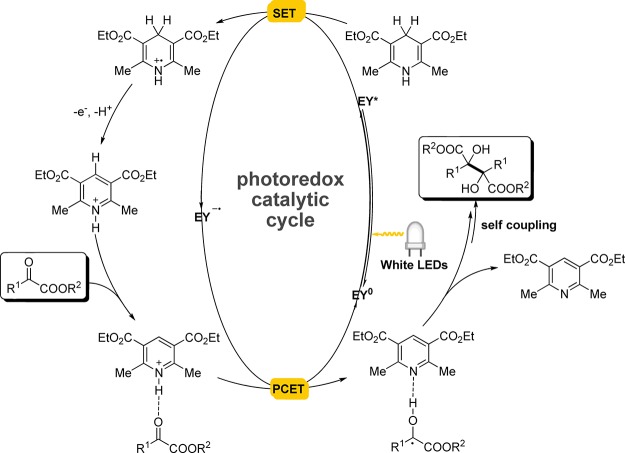
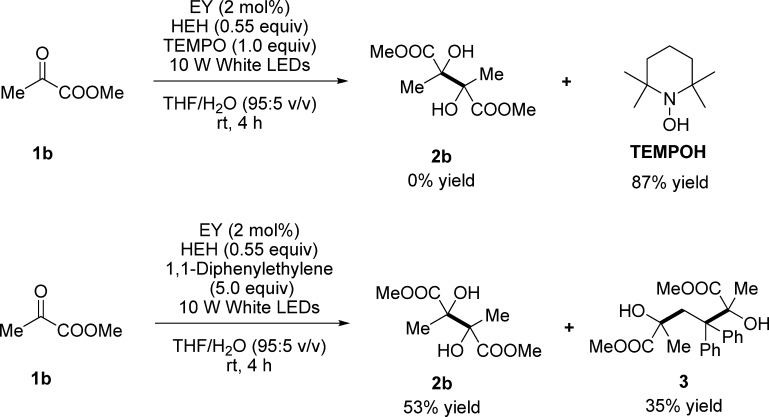
A mild transition-metal-free protocol to prepare 2,3-dialkylated tartaric acid esters has been developed by taking advantage of a visible light photoredox-catalyzed reductive dimerization of α-ketoesters with a combination of an organic dye photocatalyst and a Hantzsch-type 1,4-dihydropyridine hydrogen donor. A broad range of functional groups including cyclopropane, alkene, alkyne, 4-methoxybenzyl ether, acetal, silyl ether, carbamate, cyclic ether, cyclic thioether, bromoalkane, and -alkoxyphthalimide are well-compatible. By employing the visible light photoredox-catalyzed reductive coupling and the subsequent optical resolution, both enantioenriched diastereomers of 2,3-dialkylated tartaric acid could be acquired conveniently.
通过利用有机染料光催化剂和汉茨希型1,4 - 二氢吡啶氢供体的组合,实现了可见光光氧化还原催化的α-酮酯还原二聚反应,从而开发出一种温和的无过渡金属方法来制备2,3 - 二烷基化酒石酸酯。包括环丙烷、烯烃、炔烃、4 - 甲氧基苄基醚、缩醛、硅醚、氨基甲酸酯、环醚、环硫醚、溴代烷和烷氧基邻苯二甲酰亚胺在内的多种官能团都具有良好的兼容性。通过采用可见光光氧化还原催化的还原偶联反应以及随后的光学拆分,可以方便地获得对映体富集的2,3 - 二烷基化酒石酸的非对映异构体。