Jiang Feng, Hsieh You-Lo
Fiber and Polymer Science, University of California, Davis, California 95616, United States.
ACS Omega. 2018 Mar 26;3(3):3530-3539. doi: 10.1021/acsomega.8b00144. eCollection 2018 Mar 31.
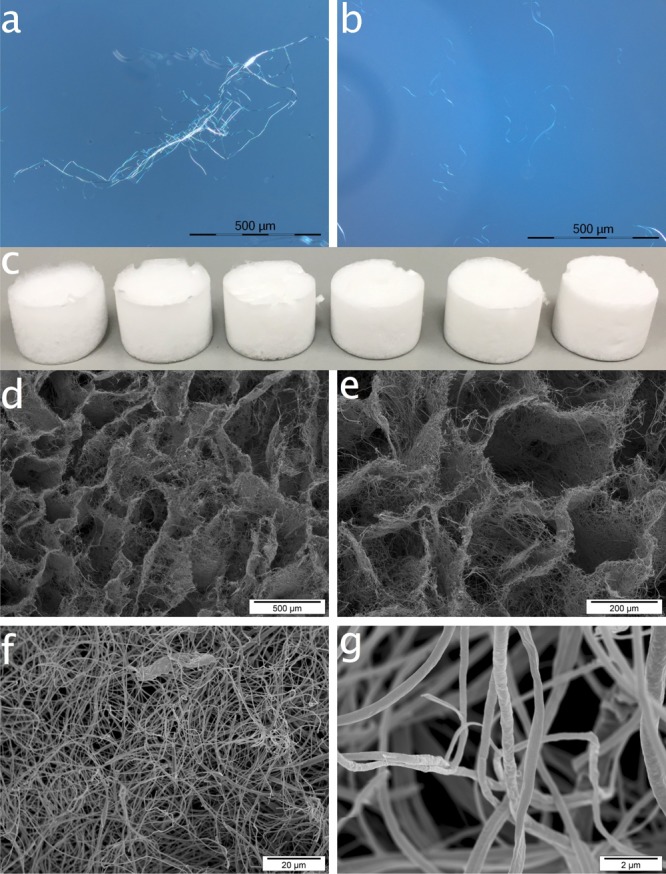
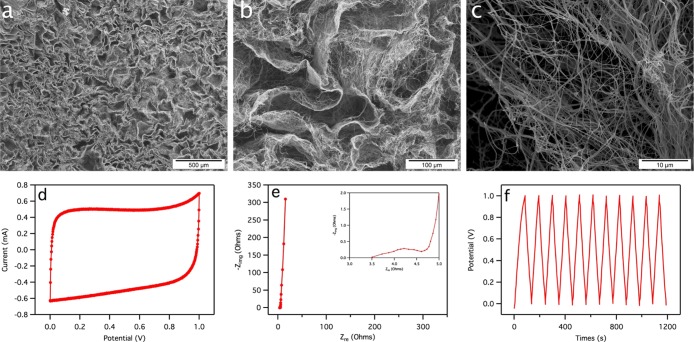
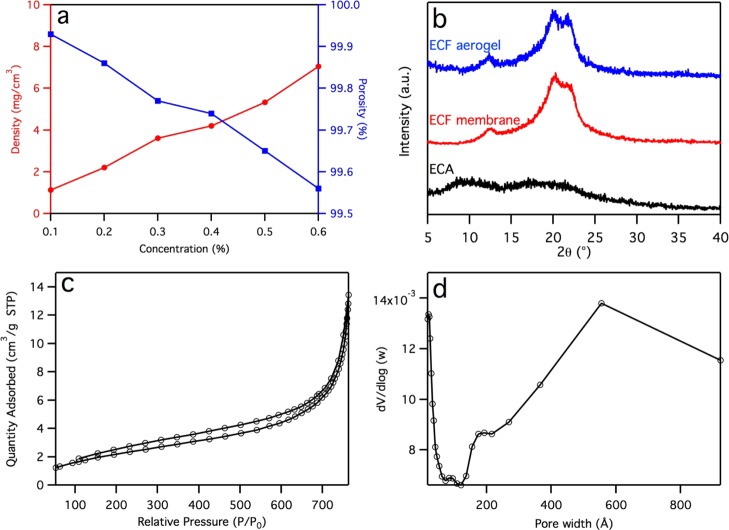
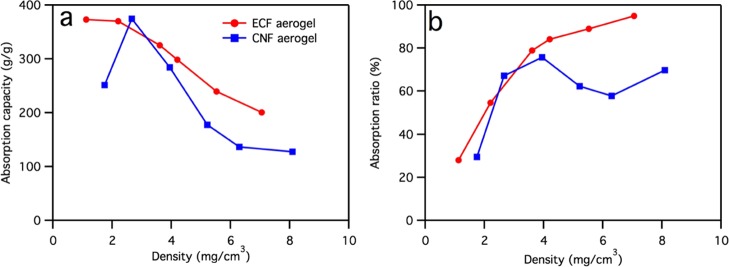
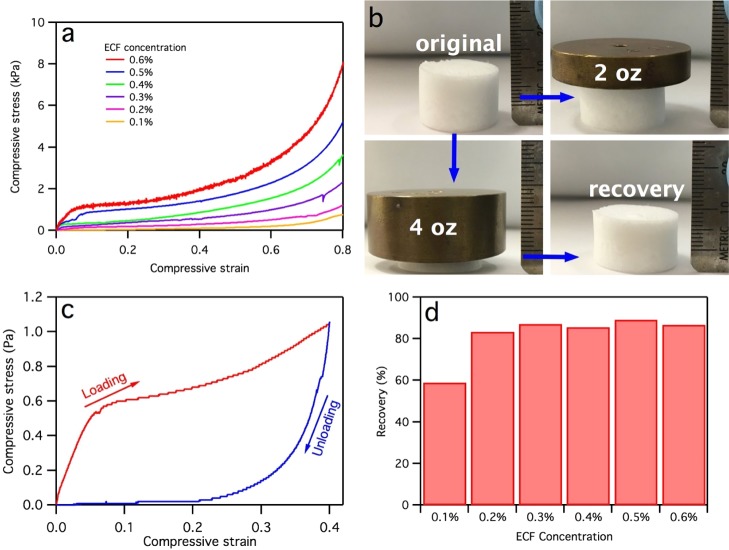
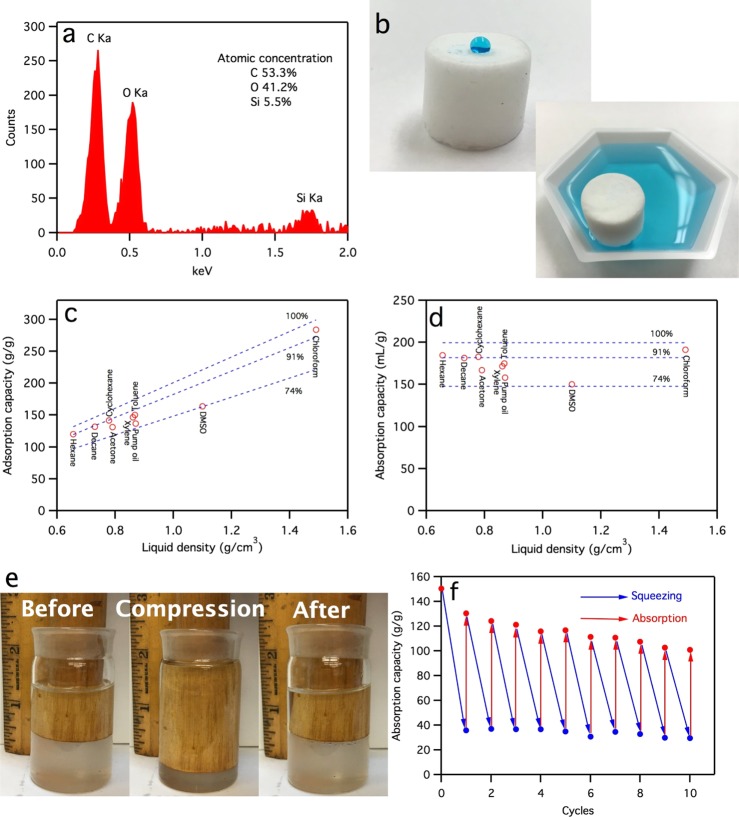
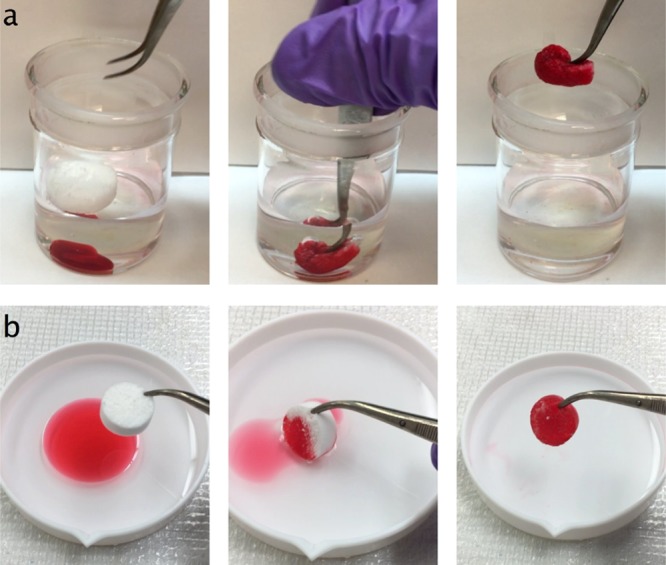
Cellulose fibrous aerogels have been fabricated by a facile and aqueous process that disintegrated electrospun cellulose fibers (ECFs) and reassembled via freezing/freeze-drying with significantly improved dry resiliency and spontaneous 89% shape recovery from ca. 70% compressive strain. Owing to the resilient and 200-300 nm wide ECFs, the cellulose fibrous aerogels exhibited excellent dual dry and wet resiliency as well as improved pore accessibility. The fibrous cellular walls interconnect the aerogel pore structure to allow extraordinary liquid absorption capacity up to 373 g/g, accounting for 95% of the theoretical absorption capacity. Both highly dry resilient and absorbent properties of the ECF aerogel are highly advantageous for hydrocarbon/oil contamination removal and for hydrocarbon/water separation applications. In addition, the ECF aerogel could be carbonized into carbon aerogel in supercapacitors for energy storage.
纤维素纤维气凝胶是通过一种简便的水相工艺制备而成的,该工艺使电纺纤维素纤维(ECFs)解体,并通过冷冻/冻干重新组装,具有显著提高的干弹性,在约70%的压缩应变下能自发恢复89%的形状。由于具有弹性且宽度为200 - 300纳米的ECFs,纤维素纤维气凝胶表现出优异的干湿弹性以及改善的孔隙可及性。纤维状的细胞壁将气凝胶的孔隙结构相互连接,使其具有高达373克/克的非凡液体吸收能力,占理论吸收能力的95%。ECF气凝胶的高干弹性和吸收性对于去除碳氢化合物/油污以及碳氢化合物/水分离应用都非常有利。此外,ECF气凝胶可以在超级电容器中碳化制成碳气凝胶用于能量存储。