Minitha Cherukutty Ramakrishnan, Anithaa Velunair Sukumaran, Subramaniam Vijayakumar, Rajendra Kumar Ramasamy Thangavelu
Advanced Materials and Devices Laboratory (AMDL), Department of Physics, Department of Physics, Department of Medical Physics, and Department of Nanoscience and Technology, Bharathiar University, Coimbatore 641 046, India.
ACS Omega. 2018 Apr 12;3(4):4105-4112. doi: 10.1021/acsomega.7b02085. eCollection 2018 Apr 30.
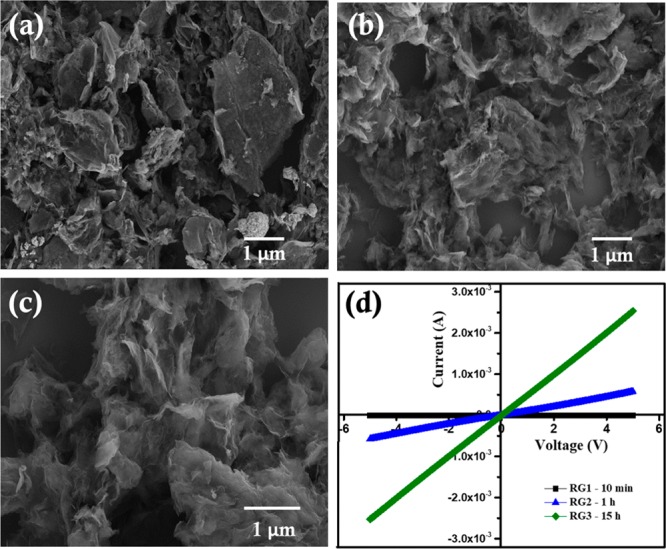
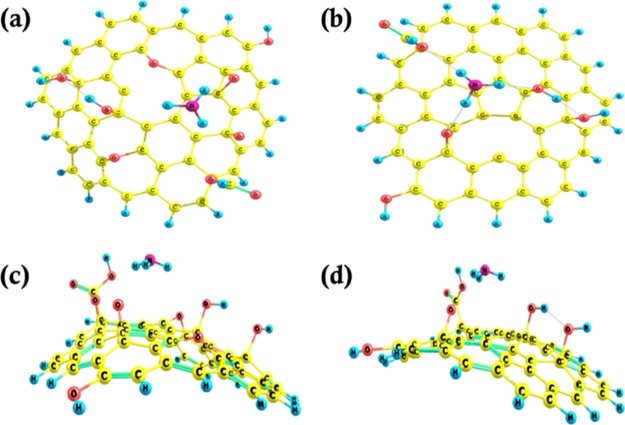
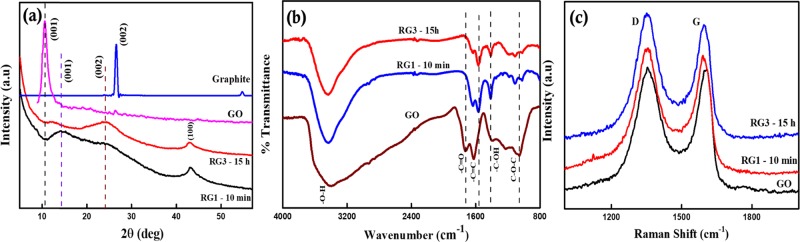
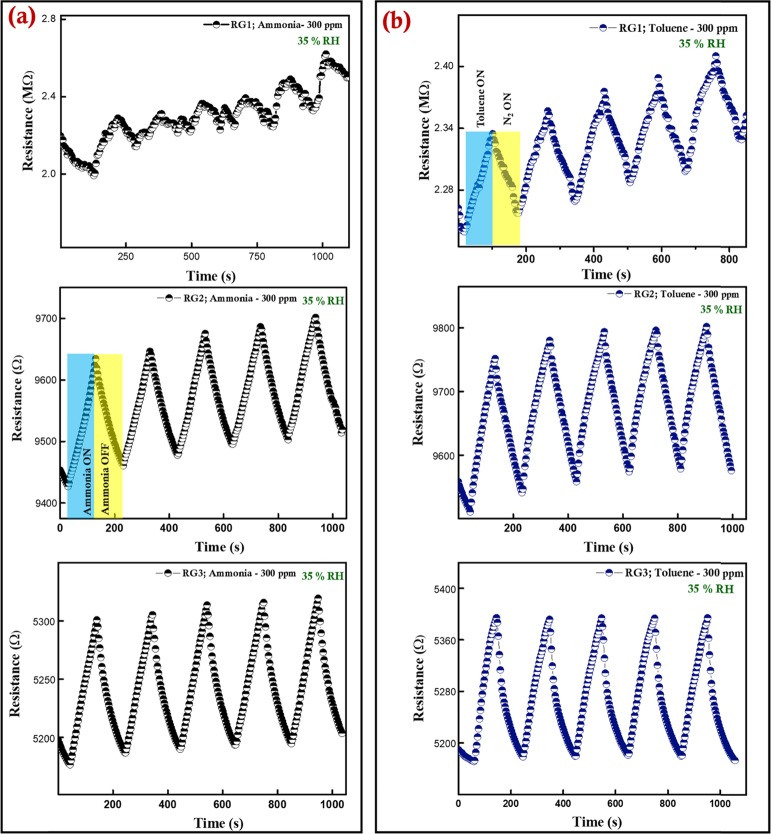
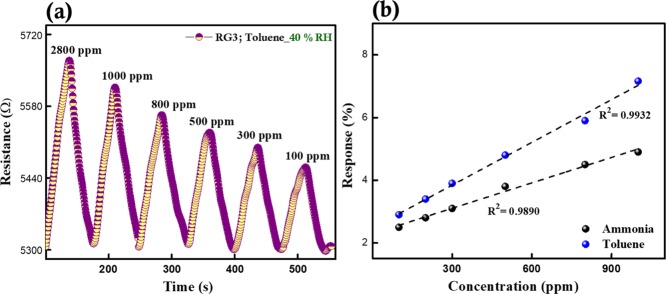
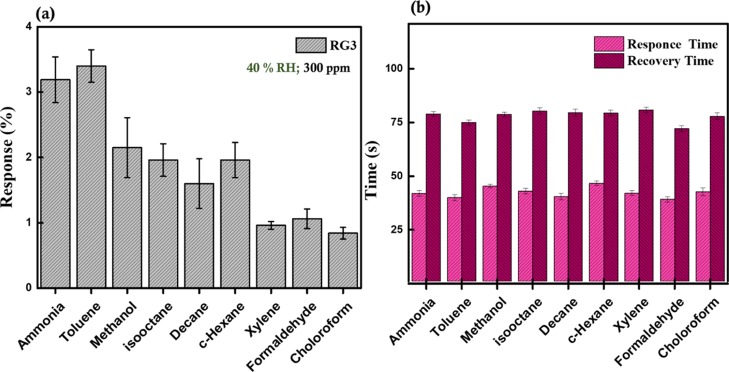
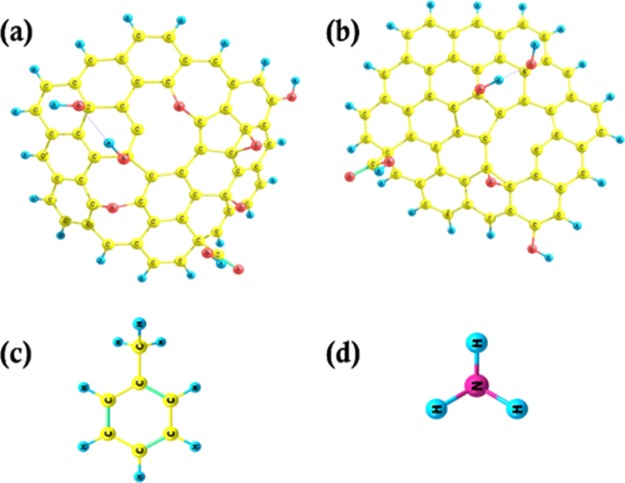
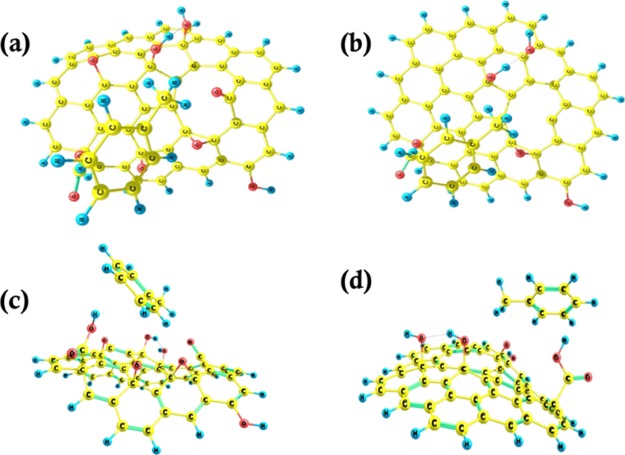
The chemically reduced graphene oxide (rGO) was prepared by the reduction of graphene oxide by hydrazine hydrate. By varying the reduction time (10 min, 1 h, and 15 h), oxygen functional groups on rGO were tremendously controlled and they were named RG1, RG2, and RG3, respectively. Here, we investigate the impact of oxygen functional groups on the detection of ammonia and toluene at room temperature. Their effect on sensing mechanism was analyzed by first-principles calculation-based density functional theory. The sensing material was fabricated, and the effect of reduction time shown improved the recovery of ammonia and toluene sensing at room temperature. Structural, morphological, and electrical characterizations were performed on both RG1 and RG3. The sensor response toward toluene vapor of 300 ppm was found to vary 4.4, 2.5, and 3.8% for RG1, RG2, and RG3, respectively. Though RG1 shows higher sensing response with poor recovery, RG3 exhibited complete desorption of toluene after the sensing process with response and recovery times of approximately 40 and 75 s, respectively. The complete recovery of toluene molecules on RG3 is due to the generation of new sites after the reduction of oxygen functionalities on its surface. It could be suggested that these sites provided anchor to ammonia and toluene molecules and good recovery under N purge. Both theoretical and experimental studies revealed that tuning the oxygen functional groups on rGO could play a vital role in the detection of volatile organic compounds (VOCs) on rGO sheets and was discussed in detail. This study could provoke knowledge about rGO-based sensor dependency with oxygen functional groups and shed light on effective monitoring of VOCs under ambient conditions for air quality monitoring applications.
通过水合肼还原氧化石墨烯制备了化学还原氧化石墨烯(rGO)。通过改变还原时间(10分钟、1小时和15小时),极大地控制了rGO上的氧官能团,并分别将它们命名为RG1、RG2和RG3。在此,我们研究了氧官能团对室温下氨和甲苯检测的影响。通过基于第一性原理计算的密度泛函理论分析了它们对传感机制的影响。制备了传感材料,结果表明还原时间的影响改善了室温下氨和甲苯传感的恢复情况。对RG1和RG3都进行了结构、形态和电学表征。发现对于300 ppm的甲苯蒸气,RG1、RG2和RG3的传感器响应分别变化4.4%、2.5%和3.8%。虽然RG1显示出较高的传感响应但恢复较差,RG3在传感过程后甲苯完全解吸,响应时间和恢复时间分别约为40秒和75秒。RG3上甲苯分子的完全恢复是由于其表面氧官能团还原后产生了新的位点。可以认为这些位点为氨和甲苯分子提供了锚定作用,并且在氮气吹扫下具有良好的恢复性能。理论和实验研究都表明,调节rGO上的氧官能团在rGO片上挥发性有机化合物(VOCs)的检测中可以发挥至关重要的作用,并对此进行了详细讨论。这项研究可以激发关于基于rGO的传感器对氧官能团的依赖性的知识,并为环境条件下空气质量监测应用中有效监测VOCs提供启示。