Santmarti Alba, Teh Jia Wei, Lee Koon-Yang
Department of Aeronautics, Imperial College London, South Kensington Campus, SW7 2AZ London, U.K.
ACS Omega. 2019 Jun 6;4(6):9896-9903. doi: 10.1021/acsomega.9b00388. eCollection 2019 Jun 30.
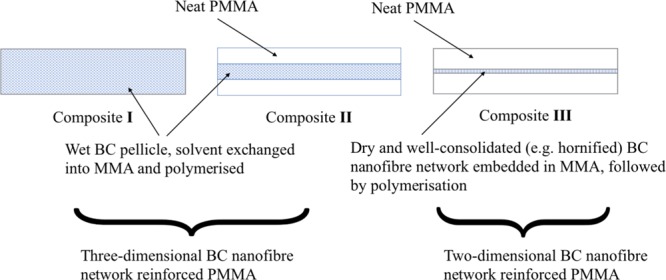
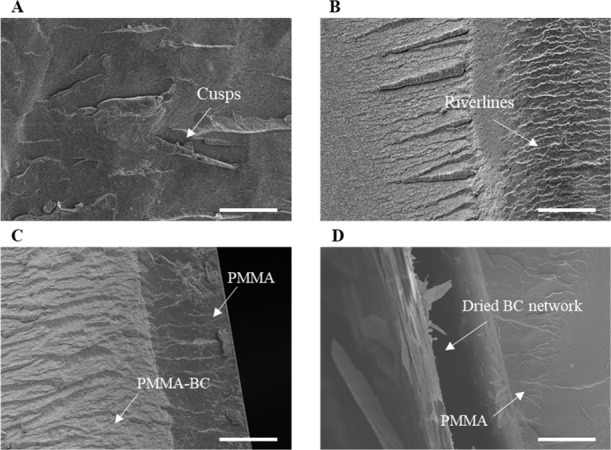
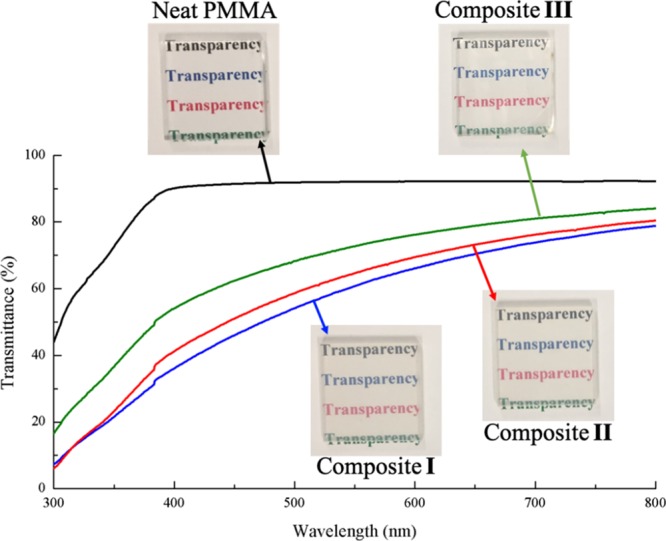
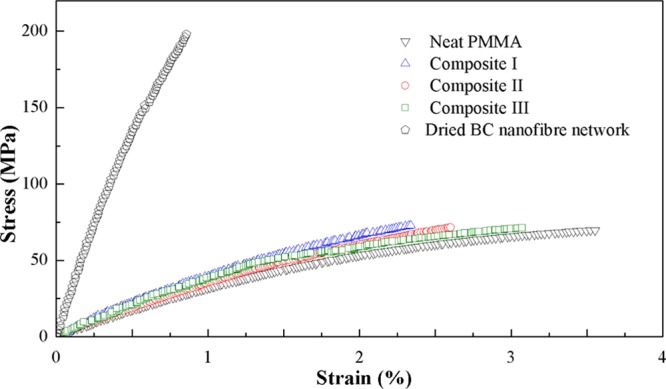
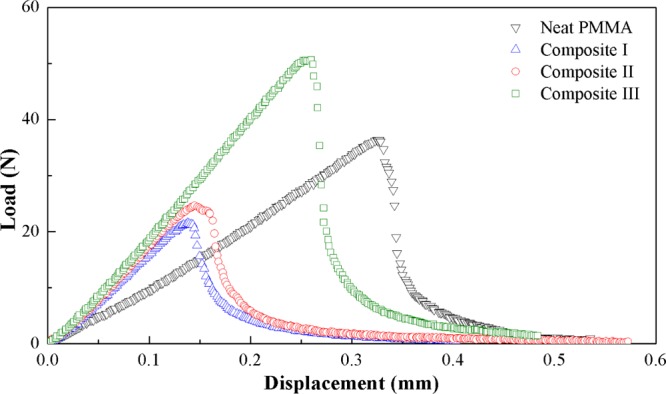
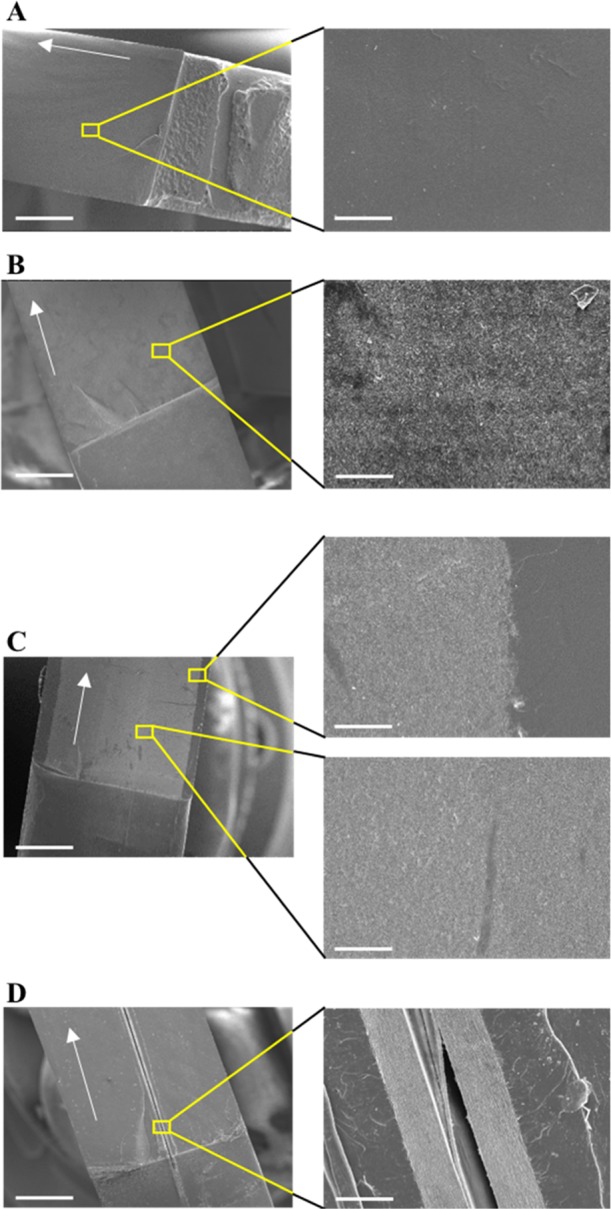
Cellulose nanofibers are often explored as biobased reinforcement for the production of high-performance composite materials. In this work, we fabricated transparent poly(methyl methacrylate) (PMMA) composites consisting of two-dimensional and three-dimensional bacterial cellulose (BC) nanofiber networks. Three different composite designs consisting of 1 vol % BC loading were fabricated and studied: (i) composites with a three-dimensional BC nanofiber network embedded uniformly throughout the PMMA matrix; (ii) sandwich-structured construction consisting of three-dimensional BC-PMMA sandwiched between two neat PMMA sheets; and (iii) dried and well-consolidated two-dimensional BC nanofiber network embedded in a PMMA matrix. All fabricated model BC-PMMA composites were found to be optically transparent, but PMMA composites consisting of the two-dimensional BC nanofiber network possessed higher light transmittance (73% @550 nm) compared to the three-dimensional BC nanofiber network counterparts (63% @550 nm). This is due to the higher specific surface area of the three-dimensional BC nanofiber network, which led to more light scattering. Nevertheless, it was found that both two-dimensional and three-dimensional BC nanofiber networks serve as excellent stiffening agents for PMMA matrix, improving the tensile modulus of the resulting composites by up to 30%. However, no improvement in tensile strength was observed. The use of three-dimensional BC nanofiber network led to matrix embrittlement, reducing the tensile strain-at-failure, fracture resistance, and Charpy impact strength of the resulting BC-PMMA composites. When the BC nanofiber network was used as two-dimensional reinforcement, cracks were observed to propagate through the debonding of BC nanofiber network, leading to higher fracture toughness and Charpy impact strength. These novel findings could open up further opportunities in the design of novel optically transparent polymeric composite laminates based on the two-dimensional BC nanofiber network for impact protection.
纤维素纳米纤维常被用作生物基增强材料,用于生产高性能复合材料。在本研究中,我们制备了由二维和三维细菌纤维素(BC)纳米纤维网络组成的透明聚甲基丙烯酸甲酯(PMMA)复合材料。制备并研究了三种不同的复合材料设计,BC含量均为1体积%:(i)三维BC纳米纤维网络均匀嵌入整个PMMA基体中的复合材料;(ii)由三维BC-PMMA夹在两个纯PMMA片材之间组成的三明治结构;(iii)干燥且固结良好的二维BC纳米纤维网络嵌入PMMA基体中。所有制备的BC-PMMA模型复合材料均为光学透明,但由二维BC纳米纤维网络组成的PMMA复合材料相比三维BC纳米纤维网络对应的复合材料具有更高的透光率(550nm处为73%)(550nm处为63%)。这是由于三维BC纳米纤维网络具有更高的比表面积,导致更多的光散射。然而,发现二维和三维BC纳米纤维网络均是PMMA基体的优异增强剂,使所得复合材料的拉伸模量提高了30%。然而,未观察到拉伸强度的提高。使用三维BC纳米纤维网络导致基体脆化,降低了所得BC-PMMA复合材料的断裂拉伸应变、抗断裂性和夏比冲击强度。当BC纳米纤维网络用作二维增强材料时,观察到裂纹通过BC纳米纤维网络的脱粘扩展,导致更高的断裂韧性和夏比冲击强度。这些新发现可能为基于二维BC纳米纤维网络设计用于冲击防护的新型光学透明聚合物复合层压板开辟更多机会。