Oliver-Ortega Helena, Geng Shiyu, Espinach Francesc Xavier, Oksman Kristiina, Vilaseca Fabiola
Group LEPAMAP, Department of Chemical Engineering, University of Girona, EPS. Ed. PI. C/ Maria Aurelia Capmany 61, 17003 Girona, Spain.
Division of Materials Science, Department of Engineering Sciences and Mathematics, Luleå University of Technology, SE 97187 Luleå, Sweden.
Polymers (Basel). 2021 Feb 23;13(4):664. doi: 10.3390/polym13040664.
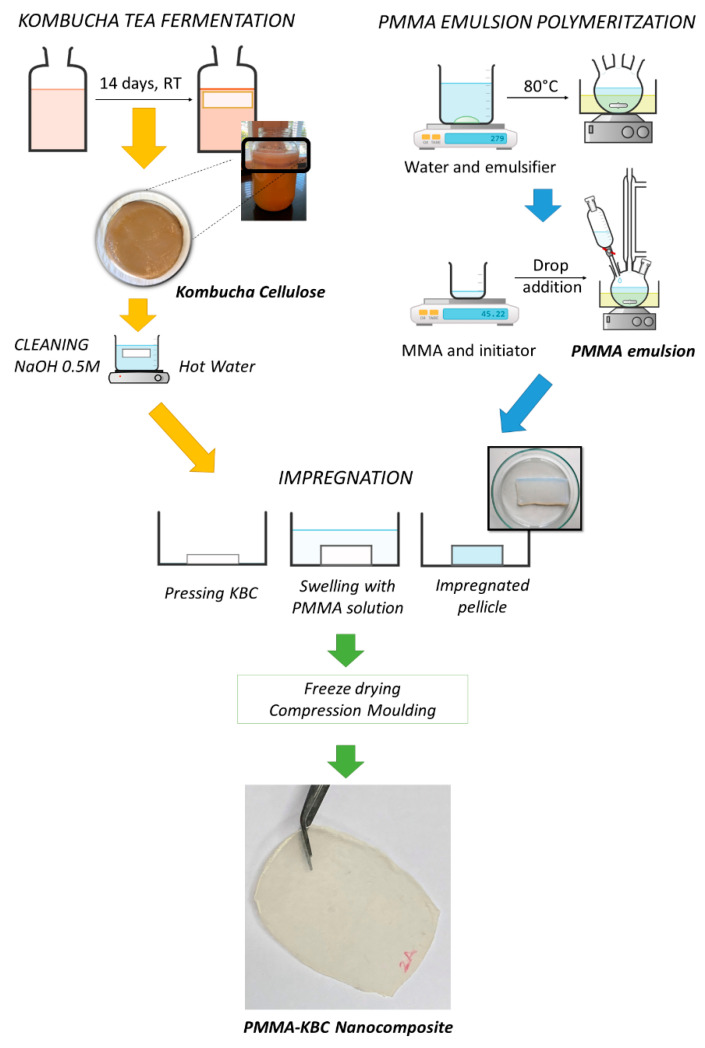
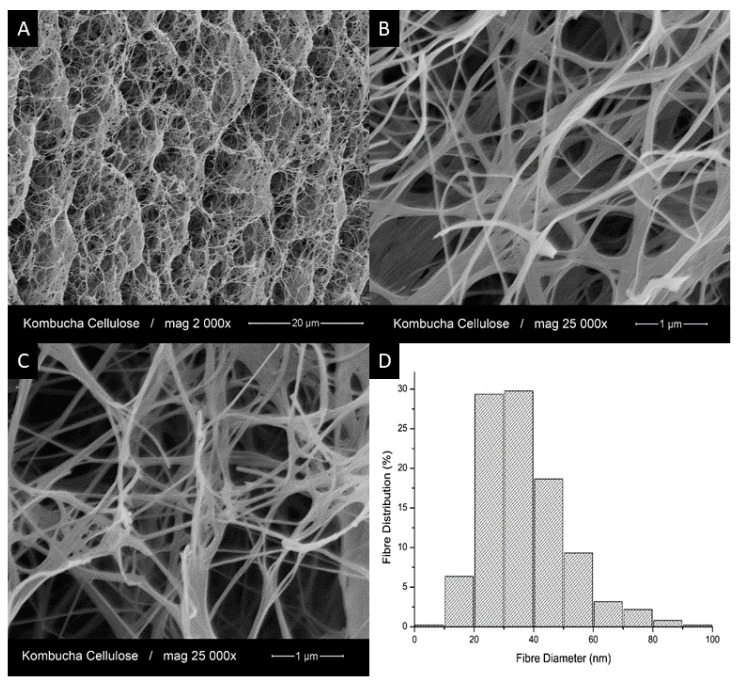
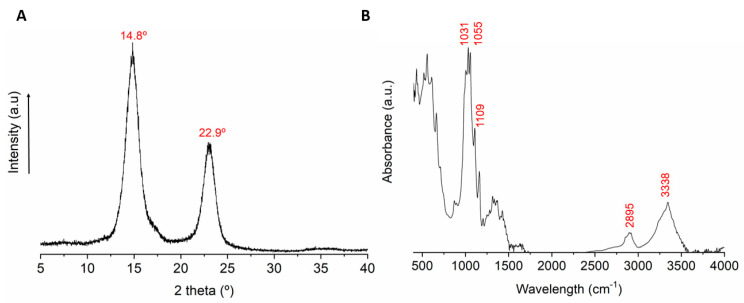
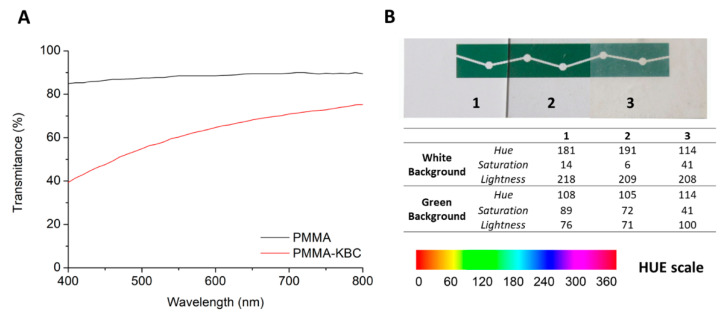
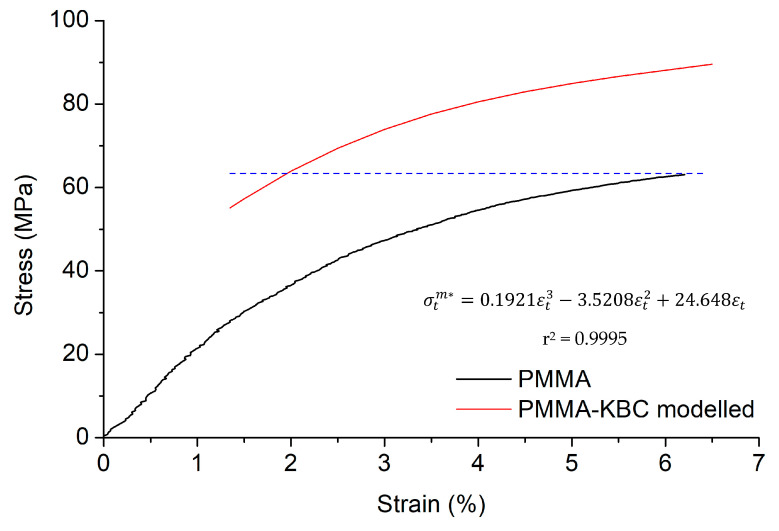
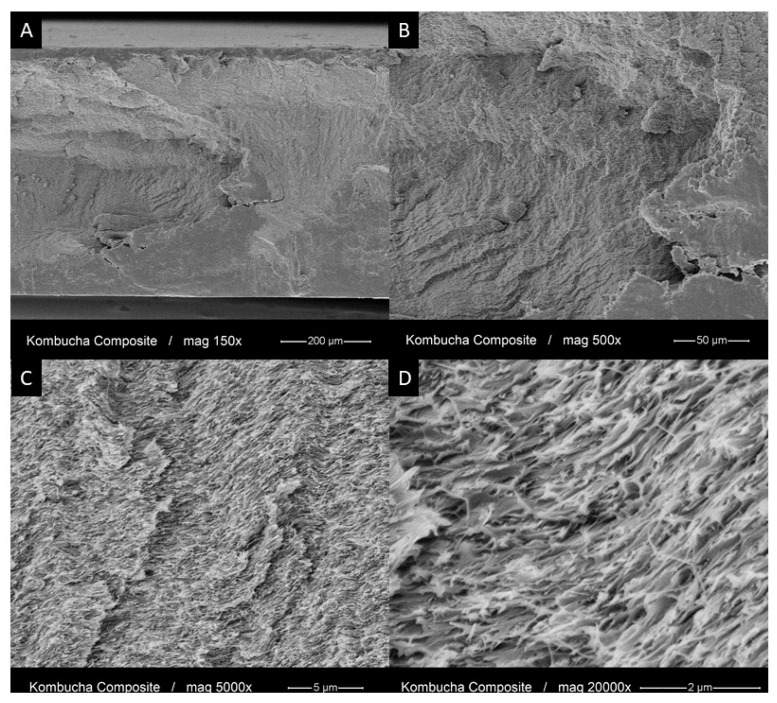
The use of bio-based residues is one of the key indicators towards sustainable development goals. In this work, bacterial cellulose, a residue from the fermentation of kombucha tea, was tested as a reinforcing nanofiber network in an emulsion-polymerized poly(methyl methacrylate) (PMMA) matrix. The use of the nanofiber network is facilitating the formation of nanocomposites with well-dispersed nanofibers without using organic solvents or expensive methodologies. Moreover, the bacterial cellulose network structure can serve as a template for the emulsion polymerization of PMMA. The morphology, size, crystallinity, water uptake, and mechanical properties of the kombucha bacterial cellulose (KBC) network were studied. The results showed that KBC nanofibril diameters were ranging between 20-40 nm and the KBC was highly crystalline, >90%. The 3D network was lightweight and porous material, having a density of only 0.014 g/cm. Furthermore, the compressed KBC network had very good mechanical properties, the E-modulus was 8 GPa, and the tensile strength was 172 MPa. The prepared nanocomposites with a KBC concentration of 8 wt.% were translucent with uniform structure confirmed with scanning electron microscopy study, and furthermore, the KBC network was homogeneously impregnated with the PMMA matrix. The mechanical testing of the nanocomposite showed high stiffness compared to the neat PMMA. A simple simulation of the tensile strength was used to understand the limited strain and strength given by the bacterial cellulose network. The excellent properties of the final material demonstrate the capability of a residue of kombucha fermentation as an excellent nanofiber template for use in polymer nanocomposites.
使用生物基残留物是实现可持续发展目标的关键指标之一。在这项工作中,对来自红茶菌发酵残留物的细菌纤维素作为增强纳米纤维网络在乳液聚合聚甲基丙烯酸甲酯(PMMA)基体中进行了测试。纳米纤维网络的使用有助于形成纳米复合材料,其中纳米纤维分散良好,且无需使用有机溶剂或昂贵的方法。此外,细菌纤维素网络结构可作为PMMA乳液聚合的模板。研究了红茶菌细菌纤维素(KBC)网络的形态、尺寸、结晶度、吸水性和力学性能。结果表明,KBC纳米纤维直径在20-40nm之间,且KBC结晶度很高,>90%。三维网络是轻质多孔材料,密度仅为0.014g/cm。此外,压缩后的KBC网络具有非常好的力学性能,弹性模量为8GPa,拉伸强度为172MPa。制备的KBC浓度为8wt.%的纳米复合材料是半透明的,结构均匀,扫描电子显微镜研究证实了这一点,此外,KBC网络被PMMA基体均匀浸渍。与纯PMMA相比,纳米复合材料的力学测试显示出高刚度。通过简单的拉伸强度模拟来了解细菌纤维素网络给出的有限应变和强度。最终材料的优异性能证明了红茶菌发酵残留物作为聚合物纳米复合材料中优异纳米纤维模板的能力。