Toulouse Jacynthe L, Yachnin Brahm J, Ruediger Edward H, Deon Daniel, Gagnon Marc, Saint-Jacques Kévin, Ebert Maximilian C C J C, Forge Delphine, Bastien Dominic, Colin Damien Y, Vanden Eynde Jean Jacques, Marinier Anne, Berghuis Albert M, Pelletier Joelle N
Département de Biochimie, Institute for Research in Immunology and Cancer (IRIC), and Département de Chimie, Université de Montréal, Montreal H3C 3J7, Quebec, Canada.
PROTEO, the Québec Network for Research on Protein, Function, Engineering and Applications, Quebec G1V 0A6, Canada.
ACS Omega. 2019 Jun 10;4(6):10056-10069. doi: 10.1021/acsomega.9b00640. eCollection 2019 Jun 30.
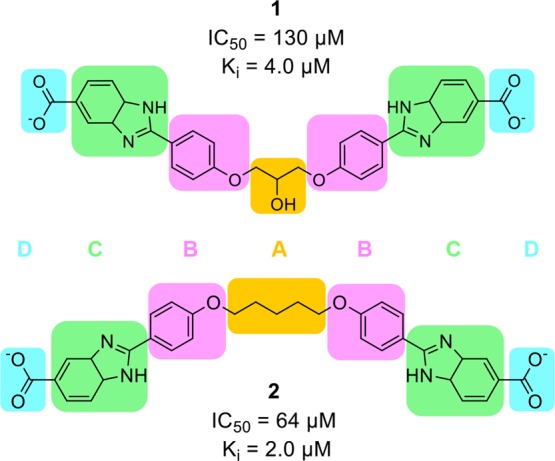
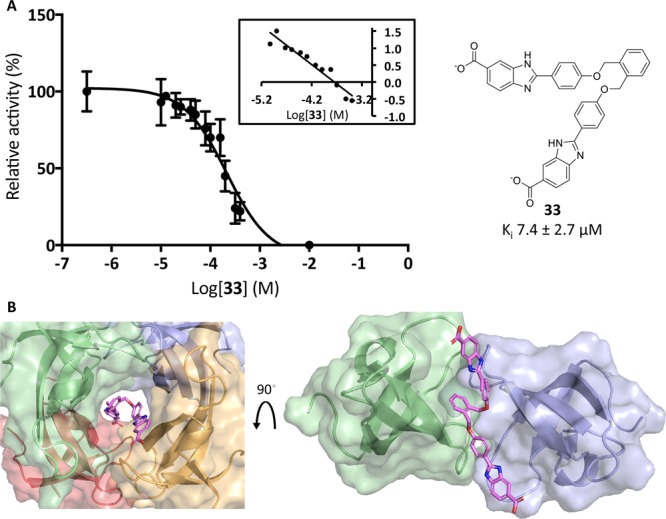
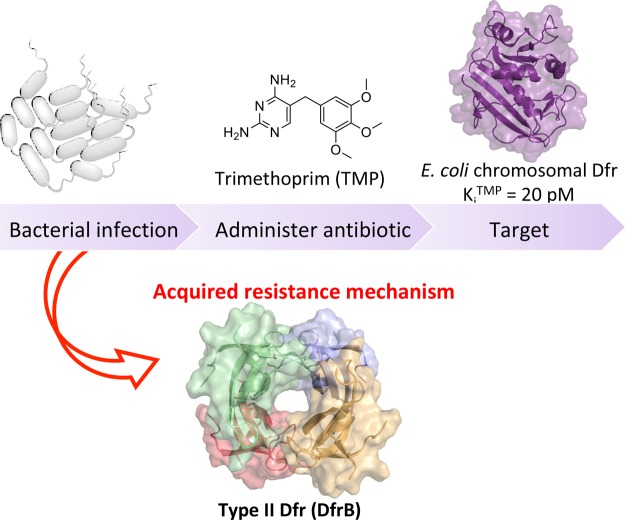
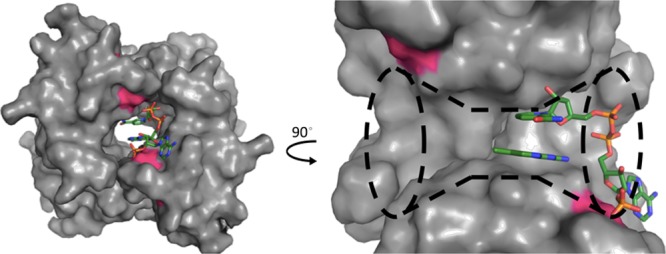
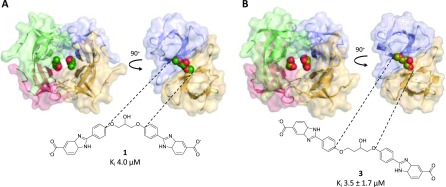
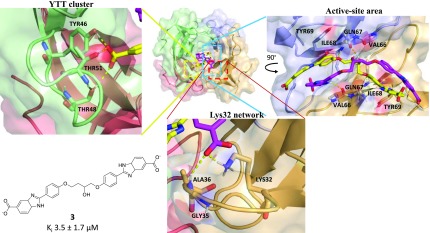
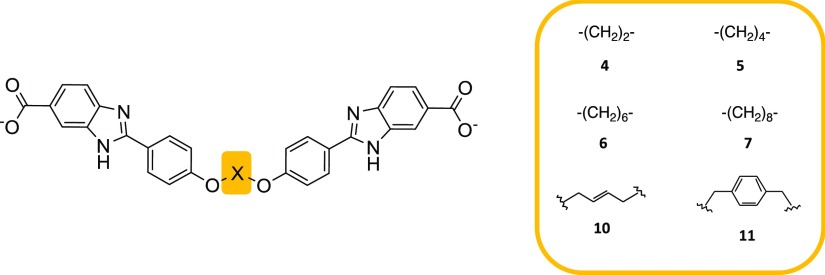
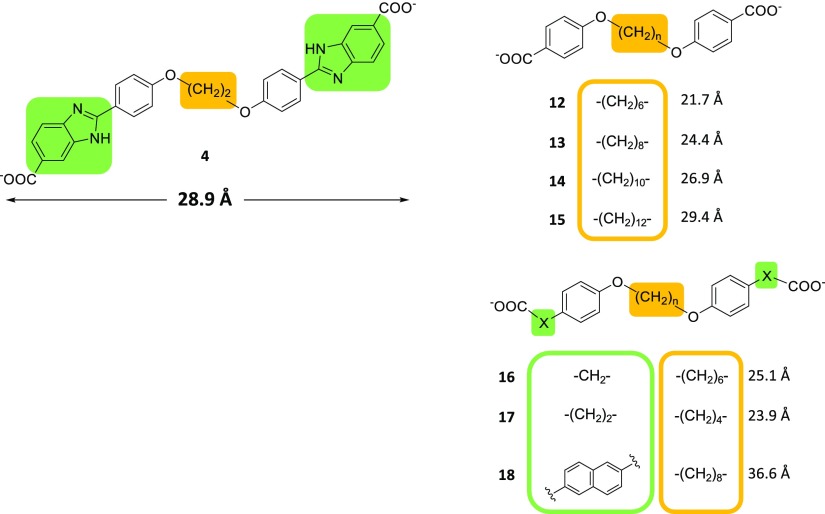
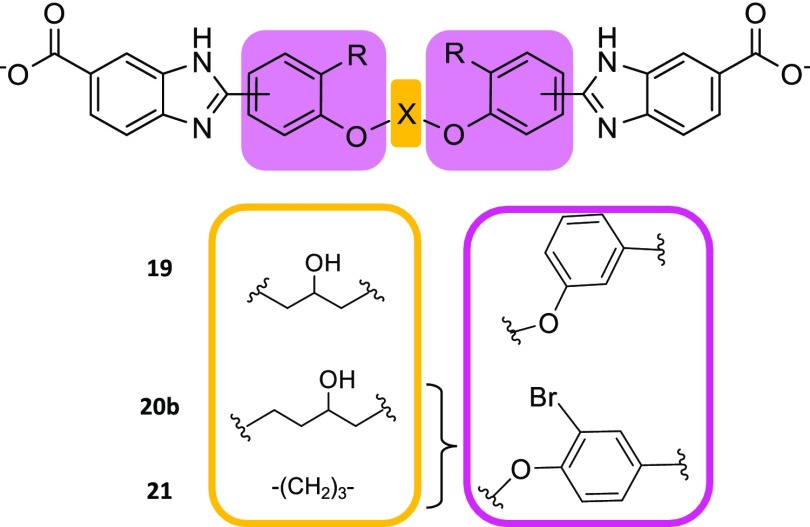
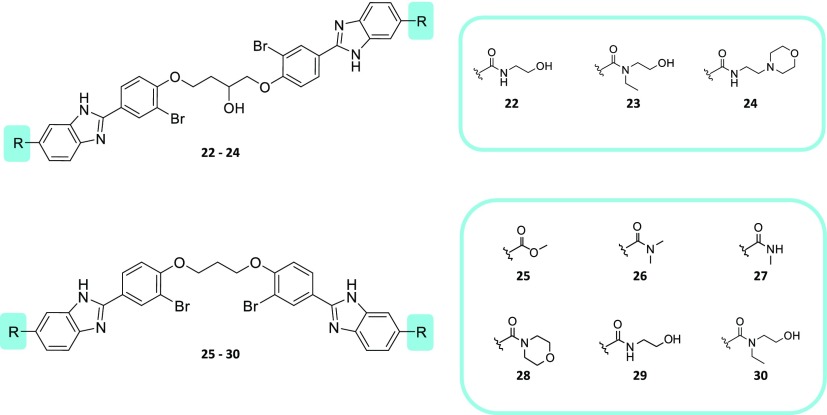
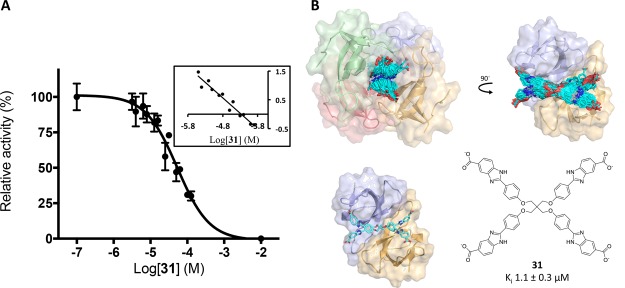
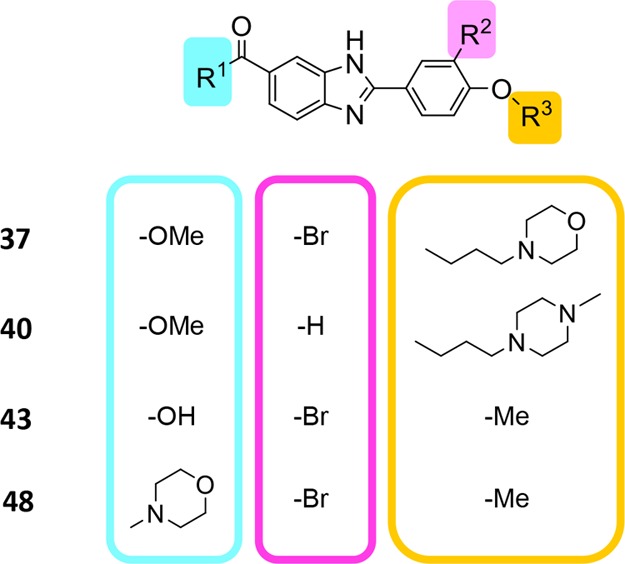
The worldwide use of the broad-spectrum antimicrobial trimethoprim (TMP) has induced the rise of TMP-resistant microorganisms. In addition to resistance-causing mutations of the microbial chromosomal dihydrofolate reductase (Dfr), the evolutionarily and structurally unrelated type II Dfrs (DfrBs) have been identified in TMP-resistant microorganisms. DfrBs are intrinsically TMP-resistant and allow bacterial proliferation when the microbial chromosomal Dfr is TMP-inhibited, making these enzymes important targets for inhibitor development. Furthermore, DfrBs occur in multiresistance plasmids, potentially accelerating their dissemination. We previously reported symmetrical bisbenzimidazoles that are the first selective inhibitors of the only well-characterized DfrB, DfrB1. Here, their diversification provides a new series of inhibitors ( = 1.7-12.0 μM). Our results reveal two prominent features: terminal carboxylates and inhibitor length allow the establishment of essential interactions with DfrB1. Two crystal structures demonstrate the simultaneous binding of two inhibitor molecules in the symmetrical active site. Observations of those dimeric inhibitors inspired the design of monomeric analogues, binding in a single copy yet offering similar inhibition potency ( = 1.1 and 7.4 μM). Inhibition of a second member of the DfrB family, DfrB4, suggests the generality of these inhibitors. These results provide key insights into inhibition of the highly TMP-resistant DfrBs, opening avenues to downstream development of antibiotics for combatting this emergent source of resistance.
广谱抗菌剂甲氧苄啶(TMP)在全球范围内的使用导致了耐TMP微生物的出现。除了微生物染色体二氢叶酸还原酶(Dfr)的耐药性突变外,在耐TMP微生物中还发现了进化和结构上无关的II型Dfr(DfrBs)。DfrBs具有内在的TMP抗性,当微生物染色体Dfr被TMP抑制时,它们能使细菌增殖,这使得这些酶成为抑制剂开发的重要靶点。此外,DfrBs存在于多重耐药质粒中,可能会加速它们的传播。我们之前报道了对称双苯并咪唑类化合物,它们是唯一已被充分表征的DfrB即DfrB1的首批选择性抑制剂。在此,它们的多样化产生了一系列新的抑制剂(IC₅₀ = 1.7 - 12.0 μM)。我们的结果揭示了两个突出特征:末端羧酸盐和抑制剂长度允许与DfrB1建立必要的相互作用。两个晶体结构表明两个抑制剂分子在对称活性位点同时结合。对那些二聚体抑制剂的观察启发了单体类似物的设计,它们以单拷贝形式结合但具有相似的抑制效力(IC₅₀ = 1.1和7.4 μM)。对DfrB家族的第二个成员DfrB4的抑制表明了这些抑制剂的通用性。这些结果为抑制高度耐TMP的DfrBs提供了关键见解,为对抗这种新出现的耐药源的抗生素下游开发开辟了道路。