Yoo Donghyuck, Jung Eunkyeong, Noh Joungyoun, Hyun Hyejin, Seon Semee, Hong Seri, Kim Dongin, Lee Dongwon
Department of BIN Convergence Technology and Department of Polymer Nano Science and Technology, Chonbuk National University, Backjedaero 567, Jeonju 54896, Republic of Korea.
Department of Pharmaceutical Sciences, Texas A&M University, College Station, Texas 77843, United States.
ACS Omega. 2019 Jun 10;4(6):10070-10077. doi: 10.1021/acsomega.9b00140. eCollection 2019 Jun 30.
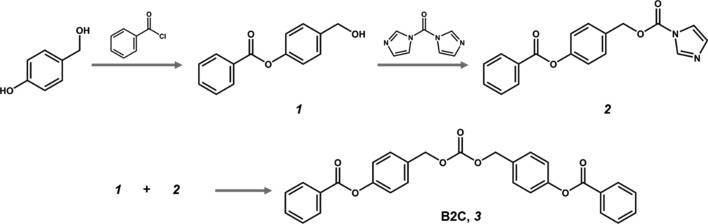
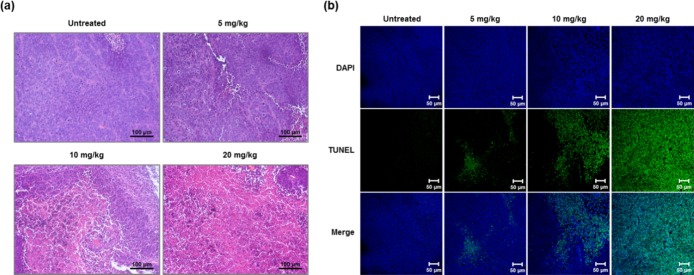
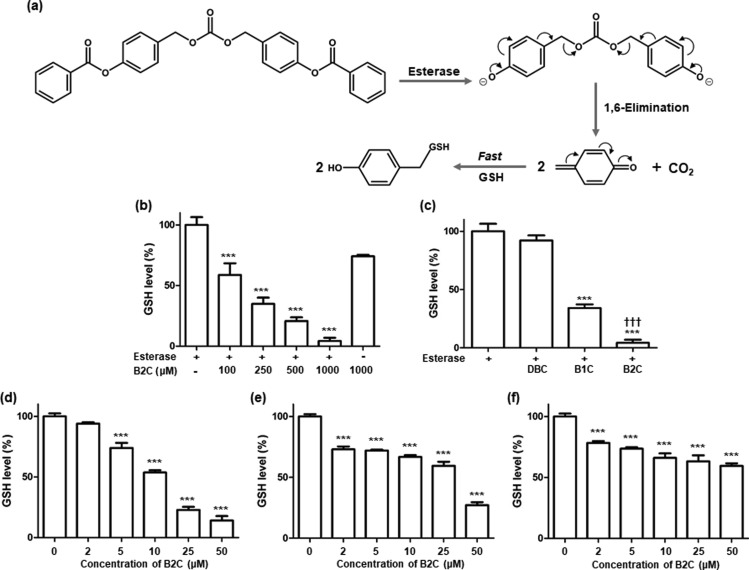
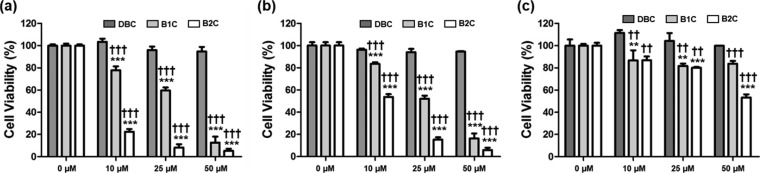
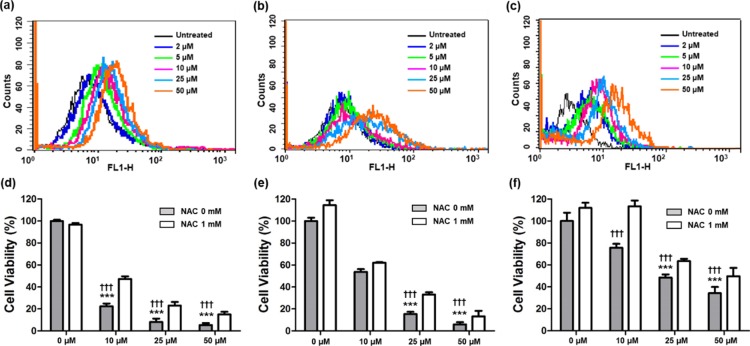
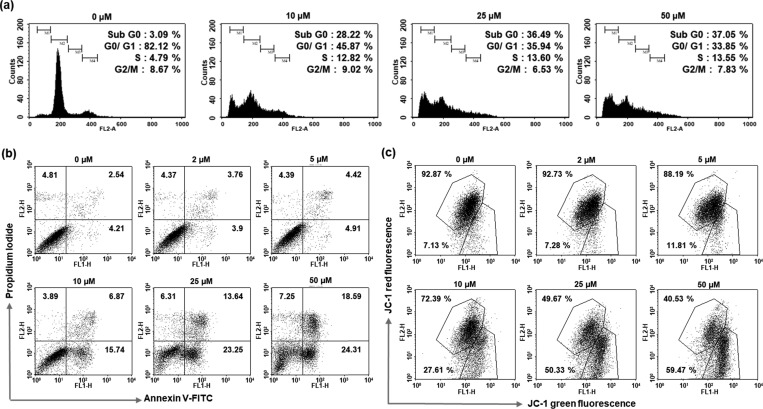
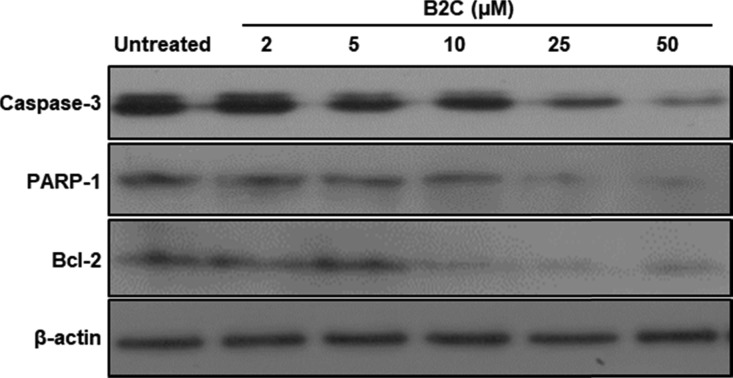
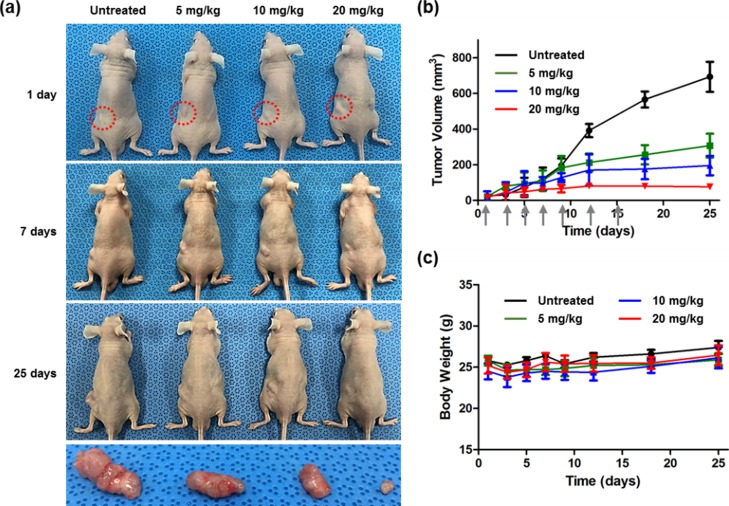
A main challenge in the development of anticancer drugs that eradicate cancer cells specifically with minimal toxicity to normal cells is to identify the cancer-specific properties. Cancer cells sustain a higher level of reactive oxygen species, owing to metabolic and signaling aberrations and unrestrained growth. Cancer cells are also furnished with a powerful reducing environment, owing to the overproduction of antioxidants such as glutathione (GSH). Therefore, the altered redox balance is probably the most prevailing property of cancer cells distinct from normal cells, which could serve as a plausible therapeutic target. In this work, we developed a GSH-depleting pro-oxidant, benzoyloxy dibenzyl carbonate, termed B2C, which is capable of rapidly declining GSH and elevating oxidative stress to a threshold level above which cancer cells cannot survive. B2C was designed to release quinone methide (QM) that rapidly depletes GSH through esterase-mediated hydrolysis. B2C was able to rapidly deplete GSH and induce an overwhelming level of oxidative stress in cancer cells, leading to mitochondrial disruption, activation of procaspase-3 and PARP-1, and cleavage of Bcl-2. In the study of tumor xenograft models, intravenously injected B2C caused apoptotic cell death in tumors and significantly suppressed tumor growth. These findings provide a new insight into the design of more effective anticancer drugs, which exploit altered redox balance in cancer cells.
开发能特异性根除癌细胞且对正常细胞毒性最小的抗癌药物面临的一个主要挑战是确定癌症特异性特性。由于代谢和信号异常以及不受控制的生长,癌细胞维持着较高水平的活性氧。由于谷胱甘肽(GSH)等抗氧化剂的过量产生,癌细胞还具有强大的还原环境。因此,氧化还原平衡的改变可能是癌细胞区别于正常细胞的最普遍特性,这可能是一个合理的治疗靶点。在这项工作中,我们开发了一种消耗GSH的促氧化剂,苯甲酰氧基二苄基碳酸酯,称为B2C,它能够迅速降低GSH并将氧化应激提高到癌细胞无法存活的阈值水平。B2C被设计用于释放醌甲基化物(QM),通过酯酶介导的水解迅速消耗GSH。B2C能够迅速消耗GSH并在癌细胞中诱导压倒性水平的氧化应激,导致线粒体破坏、procaspase-3和PARP-1的激活以及Bcl-2的裂解。在肿瘤异种移植模型的研究中,静脉注射B2C导致肿瘤细胞凋亡死亡并显著抑制肿瘤生长。这些发现为设计更有效的抗癌药物提供了新的见解,这些药物利用癌细胞中改变的氧化还原平衡。