Olson Mark A, Legler Patricia M, Zabetakis Daniel, Turner Kendrick B, Anderson George P, Goldman Ellen R
Systems and Structural Biology Division, USAMRIID, Frederick, Maryland 21702, United States.
Center for Bio/Molecular Science and Engineering, Naval Research Laboratory, 4555 Overlook Avenue SW, Washington, District of Columbia 20375, United States.
ACS Omega. 2019 Jun 17;4(6):10444-10454. doi: 10.1021/acsomega.9b00730. eCollection 2019 Jun 30.
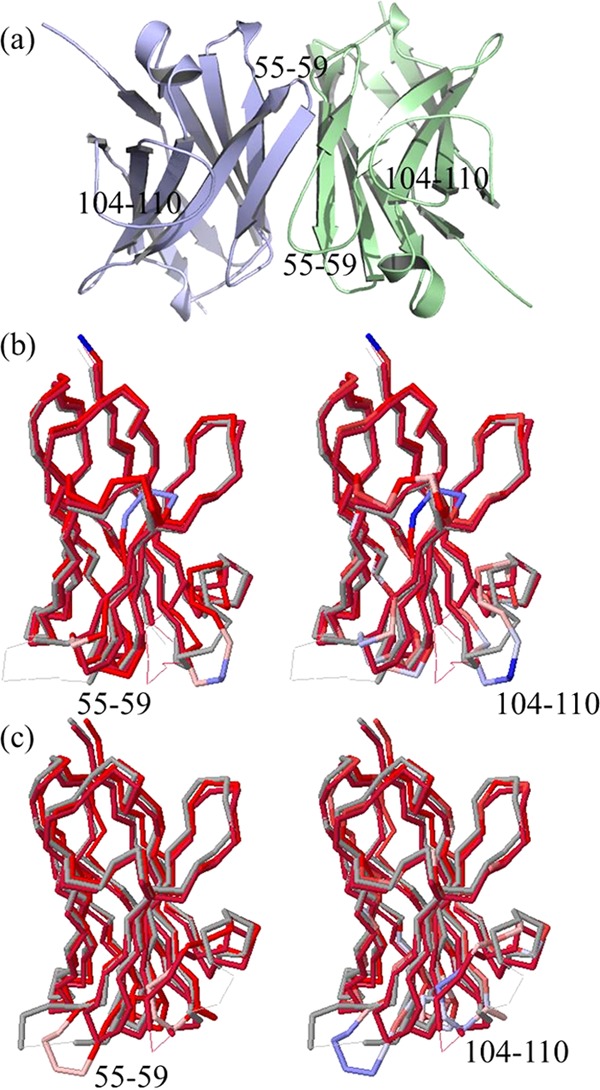
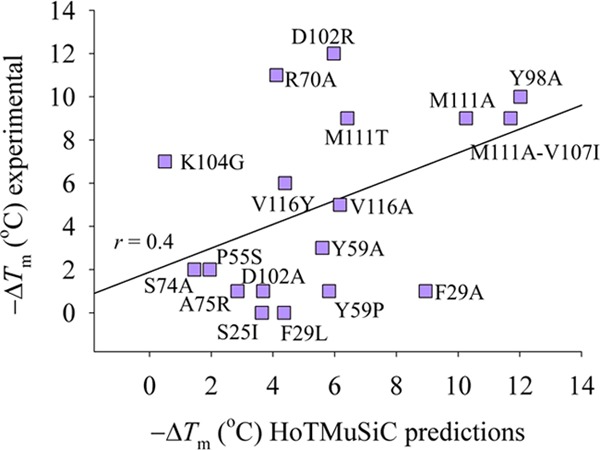
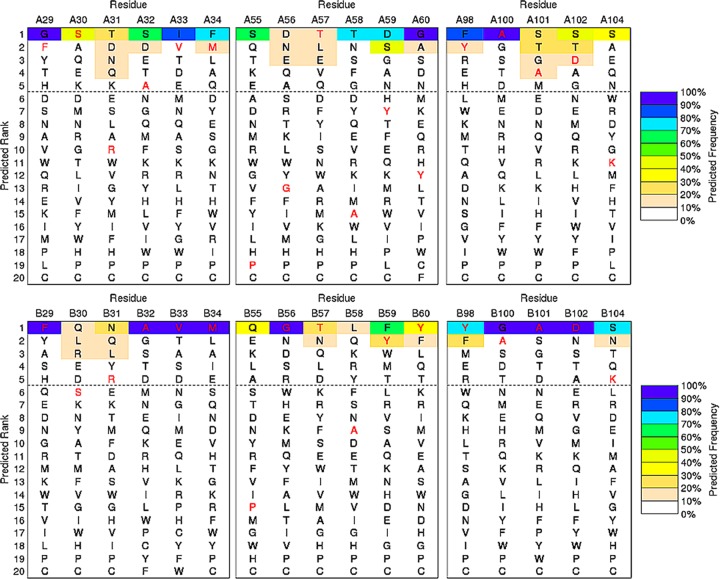
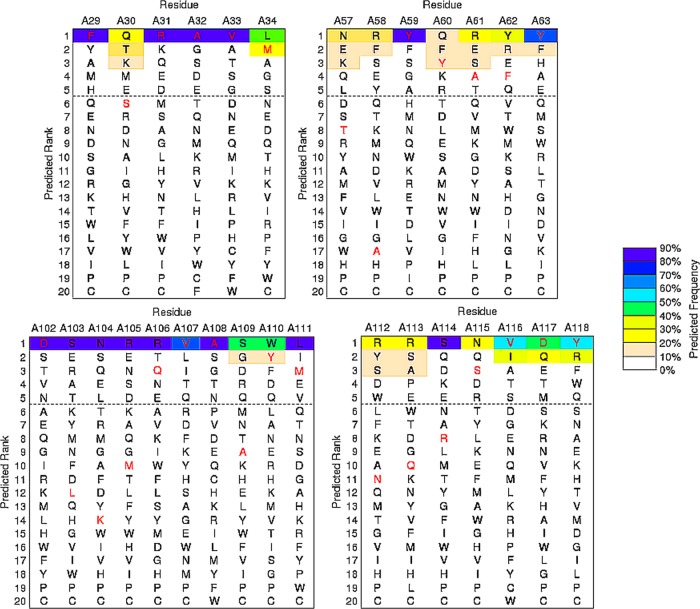
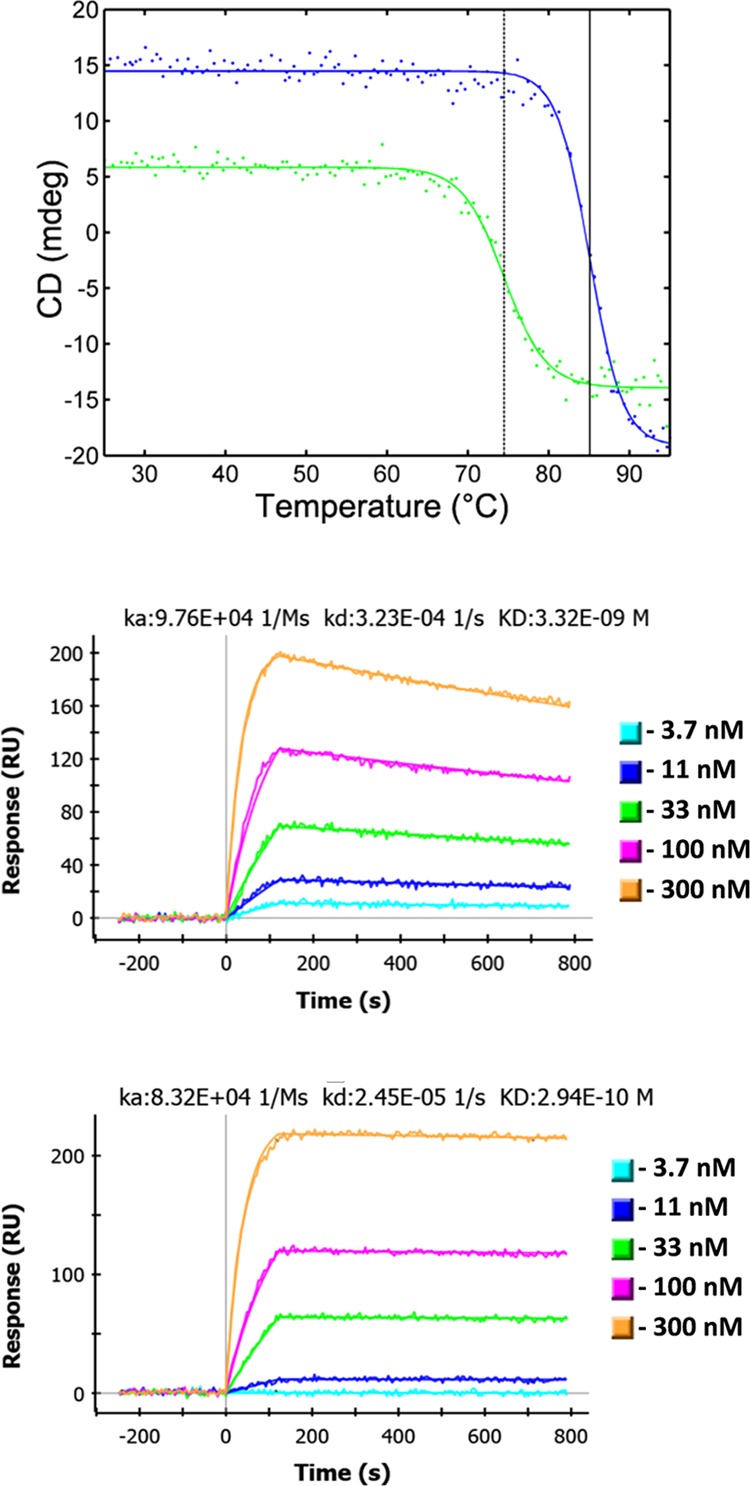
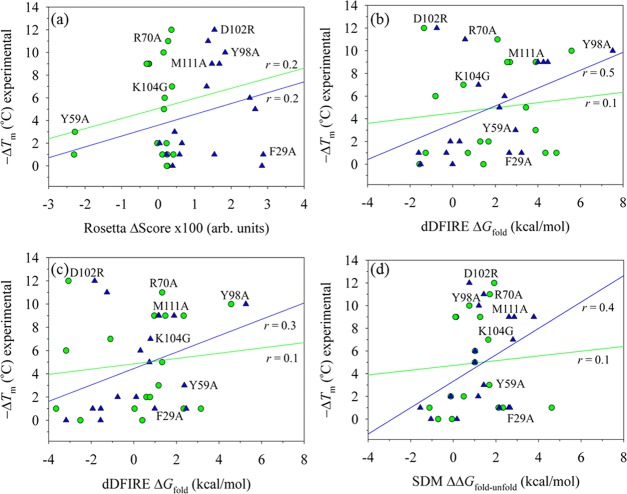
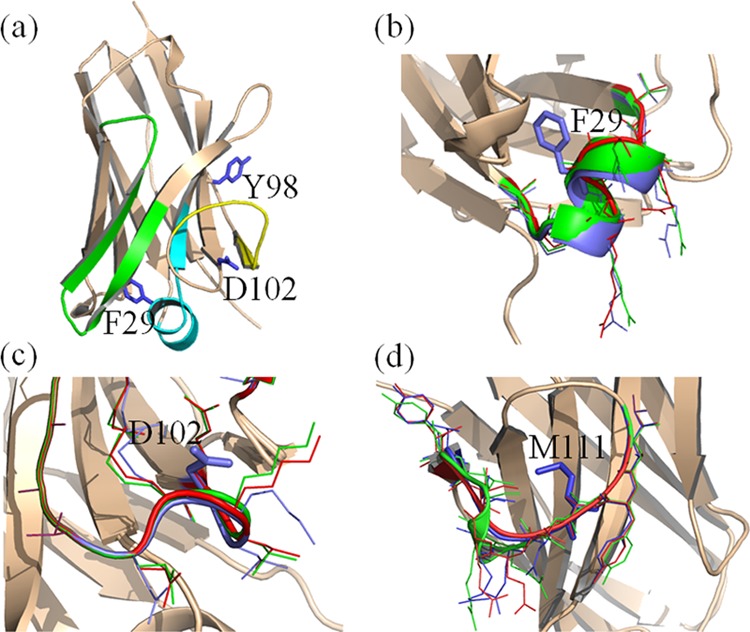
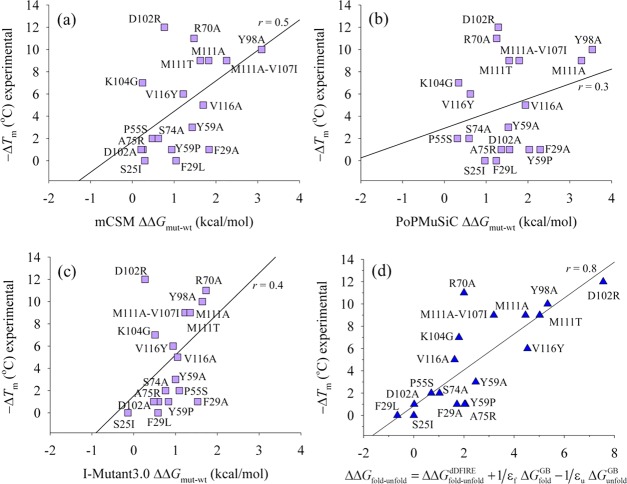
The sequence fitness of a llama single-domain antibody with an unusually high thermal stability is explored by a combined computational and experimental study. Starting with the X-ray crystallographic structure, RosettaBackrub simulations were applied to model sequence-structure tolerance profiles and identify key substitution sites. From the model calculations, an experimental site-directed mutagenesis was used to produce a panel of mutants, and their melting temperatures were determined by thermal denaturation. The results reveal a sequence fitness of an excess stability of approximately 12 °C, a value taken from a decrease in the melting temperature of an electrostatic charge-reversal substitution in the CRD3 without a deleterious effect on the binding affinity to the antigen. The tolerance for the disruption of antigen recognition without loss in the thermal stability was demonstrated by the introduction of a proline in place of a tyrosine in the CDR2, producing a mutant that eliminated binding. To further assist the sequence design and the selection of engineered single-domain antibodies, an assessment of different computational strategies is provided of their accuracy in the detection of substitution "hot spots" in the sequence tolerance landscape.
通过计算和实验相结合的研究,探索了具有异常高的热稳定性的骆驼单域抗体的序列适应性。从X射线晶体学结构开始,应用RosettaBackrub模拟来构建序列-结构耐受性图谱并识别关键取代位点。根据模型计算,通过实验性的定点诱变产生一组突变体,并通过热变性测定它们的解链温度。结果显示,序列适应性表现为额外约12°C的稳定性,该值取自CRD3中静电电荷反转取代的解链温度降低,且对与抗原的结合亲和力没有有害影响。通过在CDR2中用脯氨酸取代酪氨酸来证明在不损失热稳定性的情况下对抗原识别破坏的耐受性,产生了一个消除结合的突变体。为了进一步辅助工程化单域抗体的序列设计和选择,评估了不同计算策略在序列耐受性图谱中检测取代“热点”的准确性。