Bogireddy Naveen Kumar Reddy, Barba Victor, Agarwal Vivechana
Centro de Investigación en Ingeniería y Ciencias Aplicadas, UAEM, Av. Univ. 1001, Col. Chamilpa, Cuernavaca, Morelos 62209, Mexico.
Centro de Investigaciones Químicas-IICBA, Universidad Autónoma Del Estado de Morelos, Av. Universidad 1001, Col. Chamilpa, Cuernavaca, Morelos CP 62209, Mexico.
ACS Omega. 2019 Jun 20;4(6):10702-10713. doi: 10.1021/acsomega.9b00858. eCollection 2019 Jun 30.
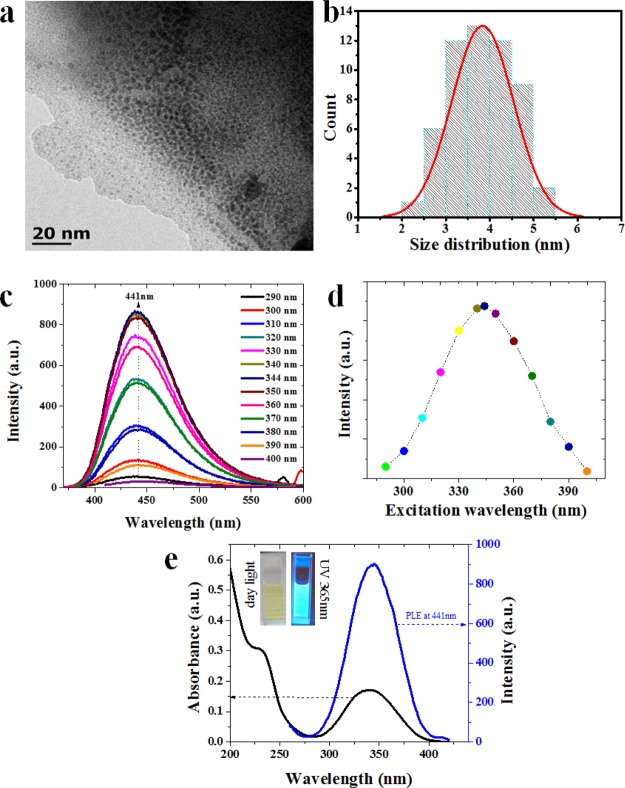
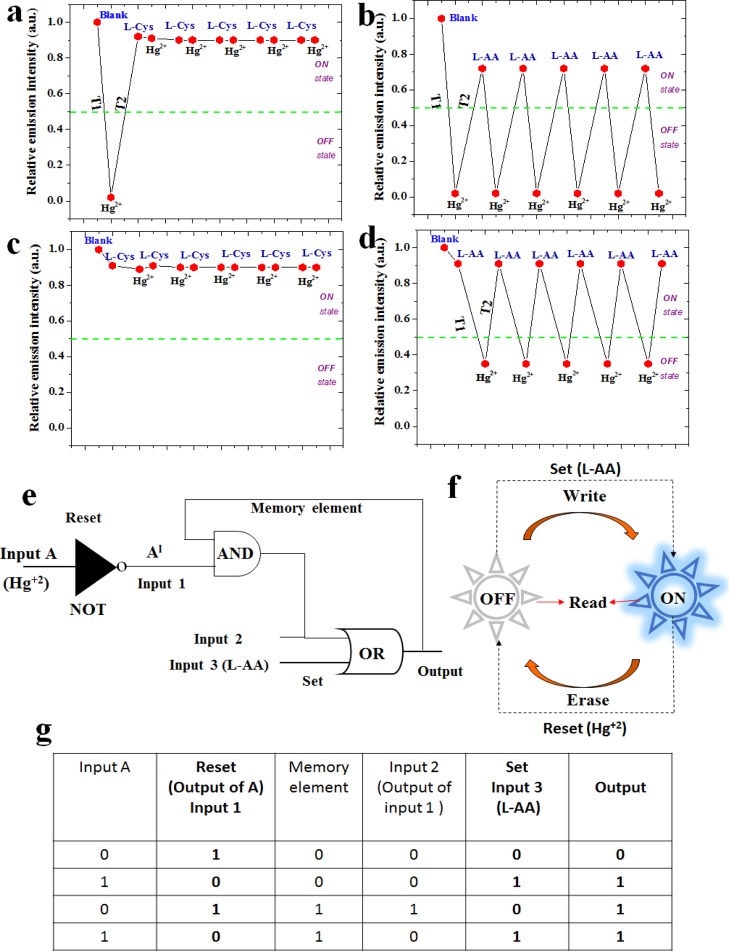
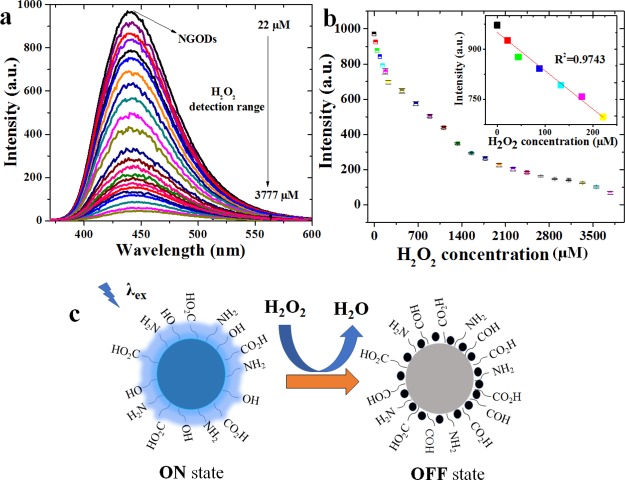
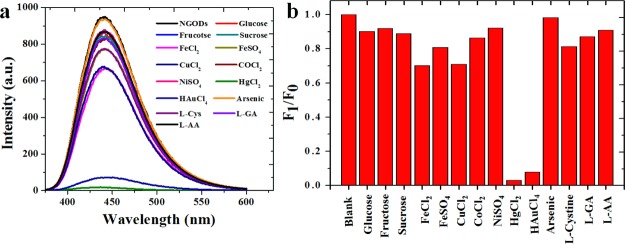
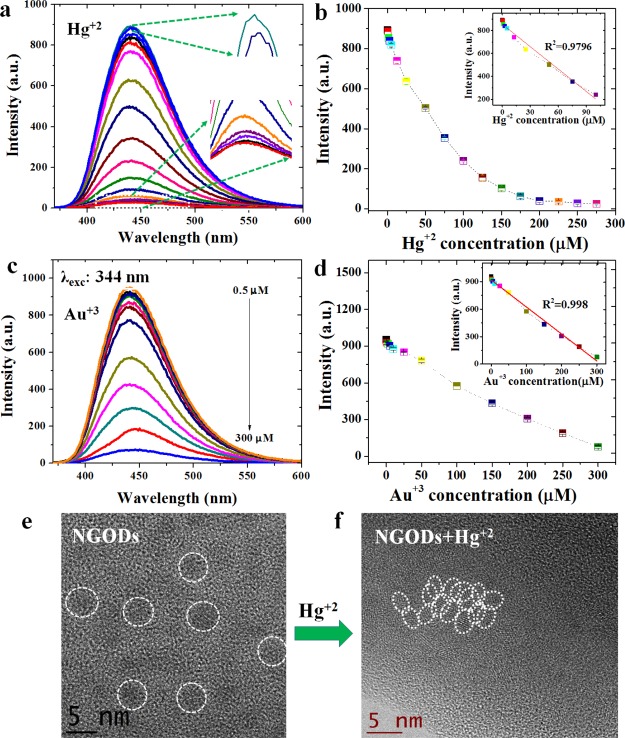
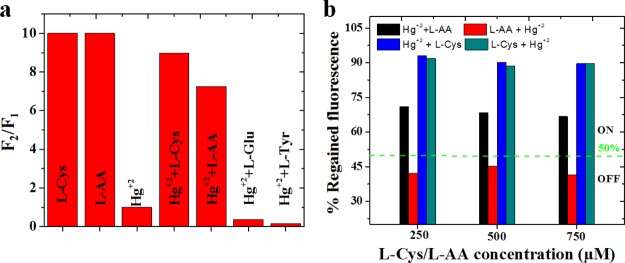
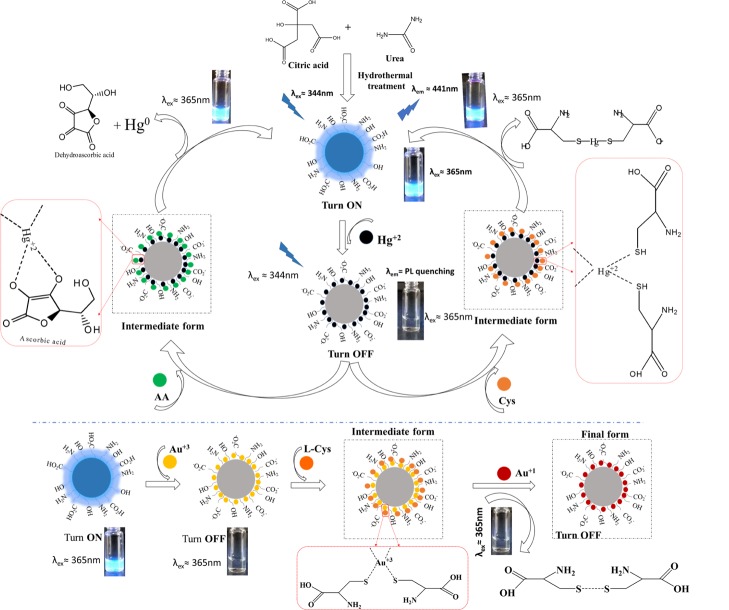
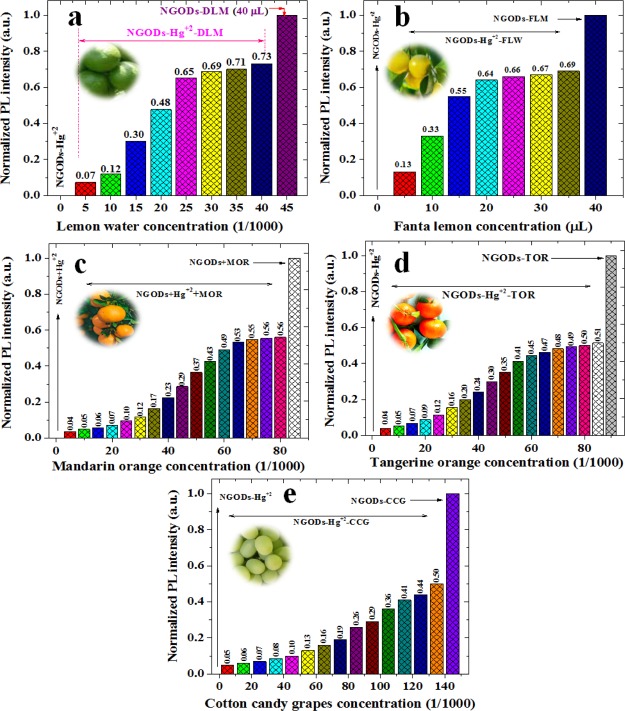
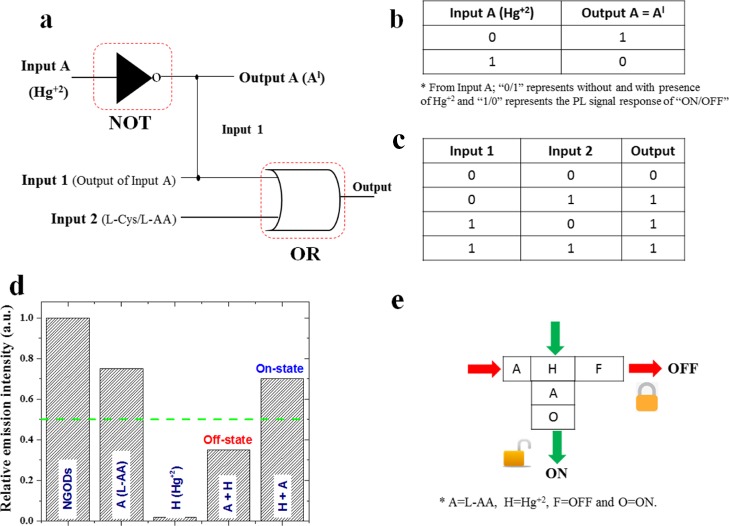
Fluorescent nitrogen-doped graphene oxide dots (NGODs) have been demonstrated as an on-off nanosensor for the detection of Hg, Au, and HO. As compared to l-cystine, where the luminescence signal recovery results from the detachment of Hg from the NGODs, signal recovery through l-ascorbic acid (turn-off-on model) has been attributed to the reduction of Hg to Hg. The sustainable recovery of the photoluminescence signal is demonstrated using common citrus fruits containing vitamin C (l-AA), suggesting a promising practical usage of this sensing system. Additionally, the sensitivity of NGOD- and AA-originated signal recovery from the Hg(II)-NGODs mixture has been successfully tested in Hg ion-spiked tap water from three different places. Mimic devices were executed and verified on the basis of characteristic spectral changes, and the possible utility of this system in electronic security and memory element devices has also been demonstrated. Considering an easy synthesis process and excellent performance of NGODs, this investigation opens up new opportunities for preparing high-quality fluorescent NGODs to meet the requirements of many applications.
荧光氮掺杂氧化石墨烯量子点(NGODs)已被证明是一种用于检测汞、金和羟基自由基的开关型纳米传感器。与l-胱氨酸相比,l-胱氨酸的发光信号恢复是由于汞从NGODs上脱离,而通过l-抗坏血酸实现的信号恢复(关-开模型)则归因于汞被还原为汞。使用含有维生素C(l-AA)的常见柑橘类水果证明了光致发光信号的可持续恢复,这表明该传感系统具有广阔的实际应用前景。此外,已成功在来自三个不同地方的加汞离子的自来水中测试了NGODs和AA引发的汞(II)-NGODs混合物信号恢复的灵敏度。基于特征光谱变化制作并验证了模拟装置,还证明了该系统在电子安全和存储元件装置中的潜在用途。考虑到NGODs简单的合成过程和优异的性能,这项研究为制备高质量荧光NGODs以满足许多应用的需求开辟了新的机会。