1Department of Physiology, Nanjing Medical University, 101 Longmian Avenue, Jiangning District, Nanjing, 211166 Jiangsu China.
2Jiangsu Key Lab of Cancer Biomarkers, Prevention and Treatment, Collaborative Innovation Center for Personalized Cancer Medicine, Nanjing Medical University, 101 Longmian Avenue, Jiangning District, Nanjing, 211166 Jiangsu China.
Cell Mol Biol Lett. 2019 Aug 22;24:55. doi: 10.1186/s11658-019-0180-y. eCollection 2019.
Hypoxia, a major condition associated with the tumor microenvironment, stimulates the migration of cancer cells. SOX2 is a powerful transcription factor that shows higher expression in several cancers, however, its role in hypoxia-induced breast cancer cell migration remains largely elusive.
The human breast cancer cell lines MDA-MB-231 and MDA-MB-468 were cultured under hypoxic conditions. The cell migration rate was determined using the wound-healing and transwell assays. The protein levels of SOX2, NEDD9 and HIF-1α were evaluated via western blotting analysis. The NEDD9 mRNA levels were evaluated using qPCR. The activation of Rac1 was detected with the pulldown assay. The binding of SOX2 to the NEDD9 promoter was checked using the luciferase reporter assay. We also transfected breast cancer cells with specific siRNA for SOX2, NEDD9 or the Rac1 inactive mutant (T17 N) to investigate the role of SOX2, NEDD9 and Rac1 in the response to hypoxia.
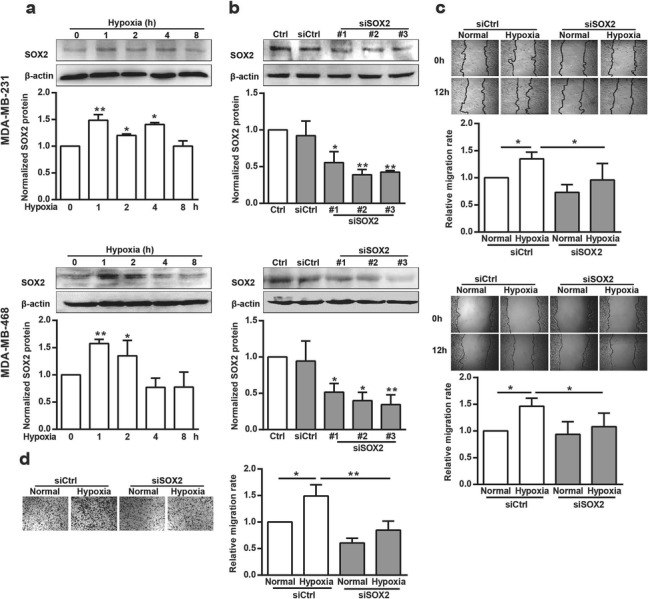
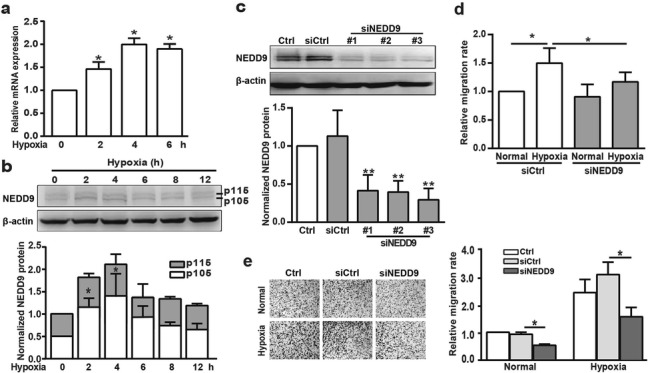
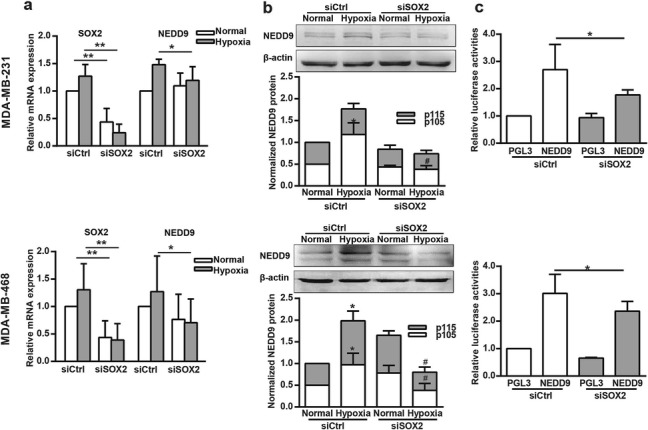
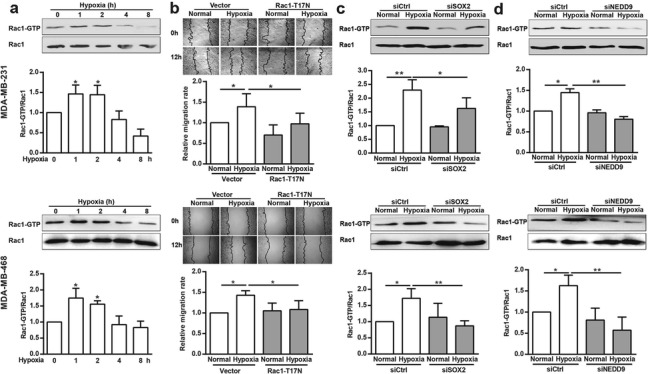
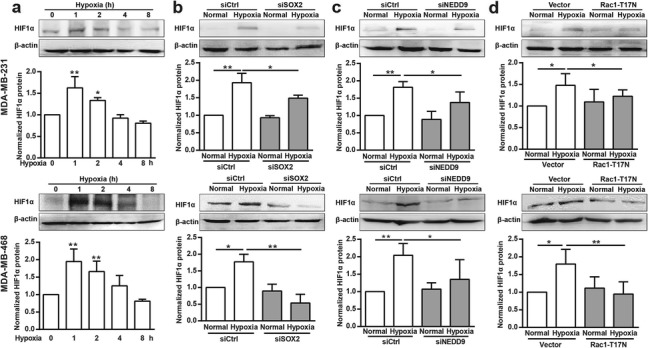
Hypoxia markedly increased SOX2 protein levels in a time-dependent manner. SiRNA-mediated disruption of SOX2 inhibited cell migration under hypoxic conditions. Hypoxia also significantly augmented the NEDD9 mRNA and protein levels. Interestingly, SOX2 is a positive transcriptional regulator of NEDD9. Knockdown of SOX2 inhibited hypoxia-induced NEDD9 mRNA and protein expressions. Furthermore, hypoxia-induced upregulation of Rac1 activity and HIF-1α expression was attenuated by SOX2 or NEDD9 silencing, and Rac1-T17 N abolished HIF-1α expression as well as cell migration in cells subjected to hypoxia.
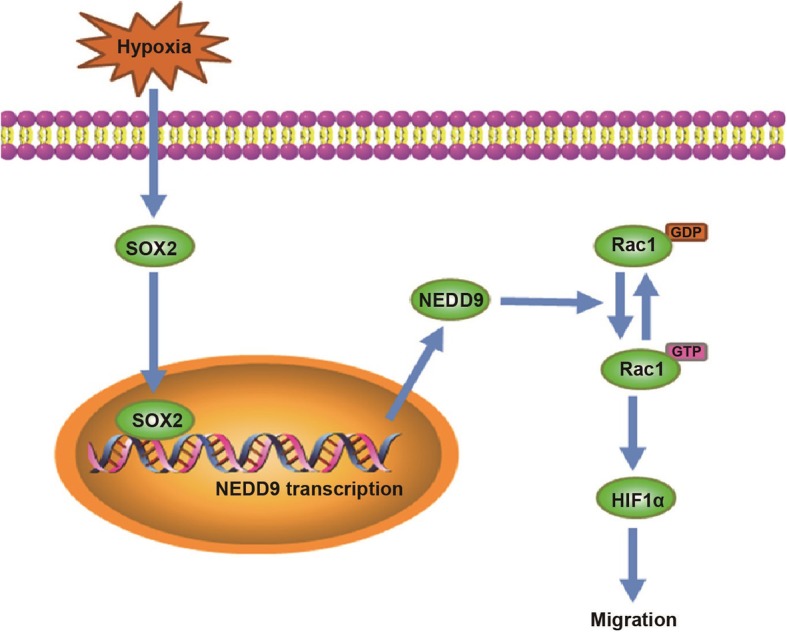
Our results highlight the essential role of SOX2 in breast cancer cell motility. The upregulation of SOX2 under hypoxic conditions may facilitate NEDD9 transcription and expression, and subsequent activation of Rac1 and HIF-1α expression. This could accelerate breast cancer cell migration.
缺氧是肿瘤微环境中一种主要的情况,它会刺激癌细胞的迁移。SOX2 是一种强大的转录因子,在几种癌症中表达水平较高,但它在缺氧诱导的乳腺癌细胞迁移中的作用在很大程度上仍不清楚。
将人乳腺癌细胞系 MDA-MB-231 和 MDA-MB-468 在缺氧条件下培养。通过划痕愈合和 Transwell 实验测定细胞迁移率。通过 Western blot 分析评估 SOX2、NEDD9 和 HIF-1α 的蛋白水平。通过 qPCR 评估 NEDD9 mRNA 水平。通过下拉实验检测 Rac1 的激活。使用荧光素酶报告基因检测试剂盒检测 SOX2 与 NEDD9 启动子的结合。我们还将特异性的 SOX2、NEDD9 或 Rac1 失活突变体(T17N)的 siRNA 转染到乳腺癌细胞中,以研究 SOX2、NEDD9 和 Rac1 在缺氧反应中的作用。
缺氧以时间依赖性方式显著增加 SOX2 蛋白水平。SOX2 的 siRNA 介导的敲低抑制了缺氧条件下的细胞迁移。缺氧还显著增加了 NEDD9 的 mRNA 和蛋白水平。有趣的是,SOX2 是 NEDD9 的正向转录调节因子。SOX2 的敲低抑制了缺氧诱导的 NEDD9 mRNA 和蛋白表达。此外,SOX2 或 NEDD9 的沉默减弱了缺氧诱导的 Rac1 活性和 HIF-1α 表达的上调,而 Rac1-T17N 则消除了 HIF-1α 的表达以及缺氧条件下细胞的迁移。
我们的结果强调了 SOX2 在乳腺癌细胞迁移中的重要作用。缺氧条件下 SOX2 的上调可能促进了 NEDD9 的转录和表达,以及随后的 Rac1 和 HIF-1α 表达的激活。这可能加速了乳腺癌细胞的迁移。