Centre for Cancer Biomarkers CCBIO, and Gade Laboratory for Pathology, Department of Clinical Medicine, University of Bergen, Bergen, Norway.
Department of Pathology, Haukeland University Hospital, Bergen, Norway.
J Pathol Clin Res. 2019 Oct;5(4):272-286. doi: 10.1002/cjp2.142. Epub 2019 Oct 1.
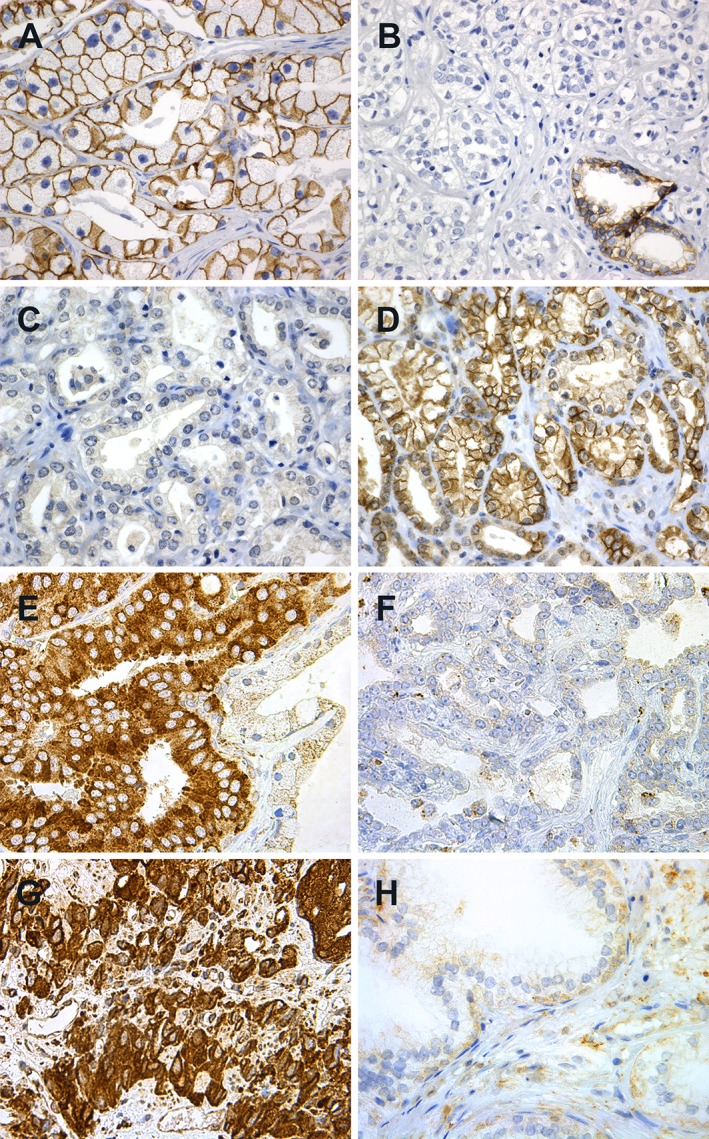
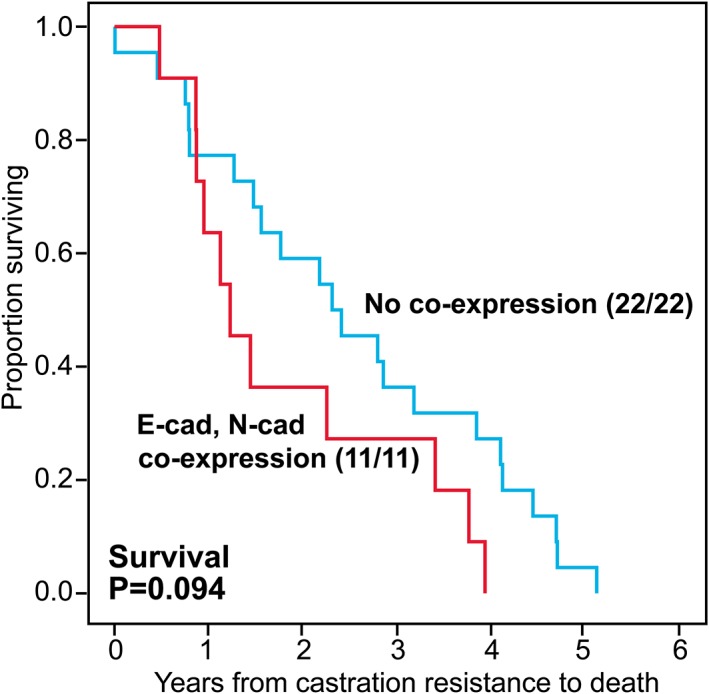
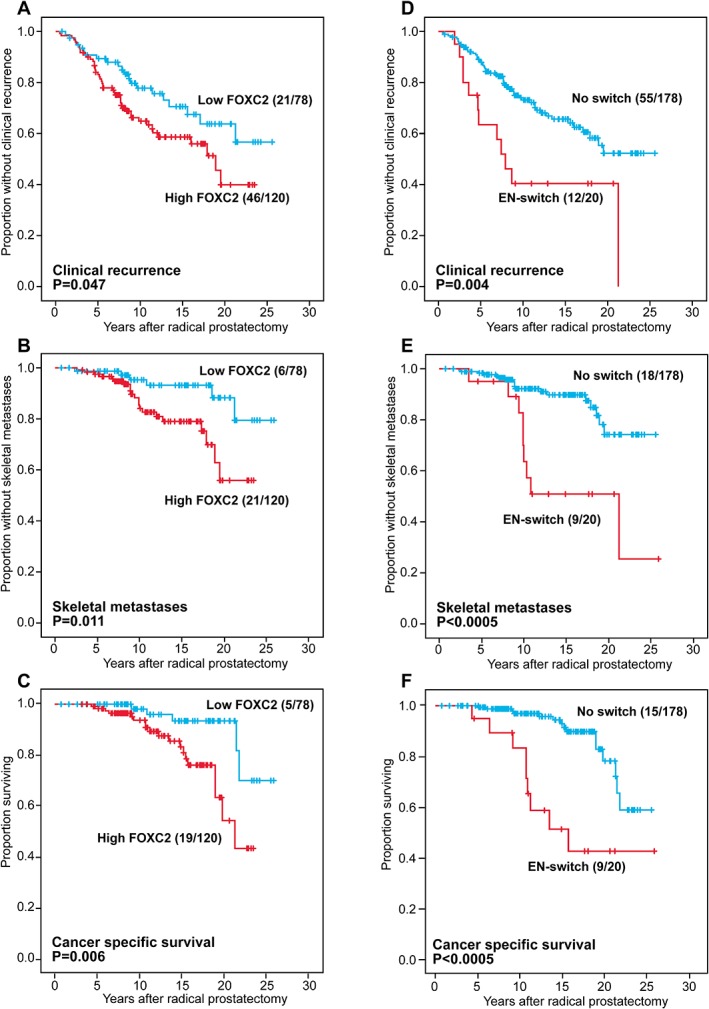
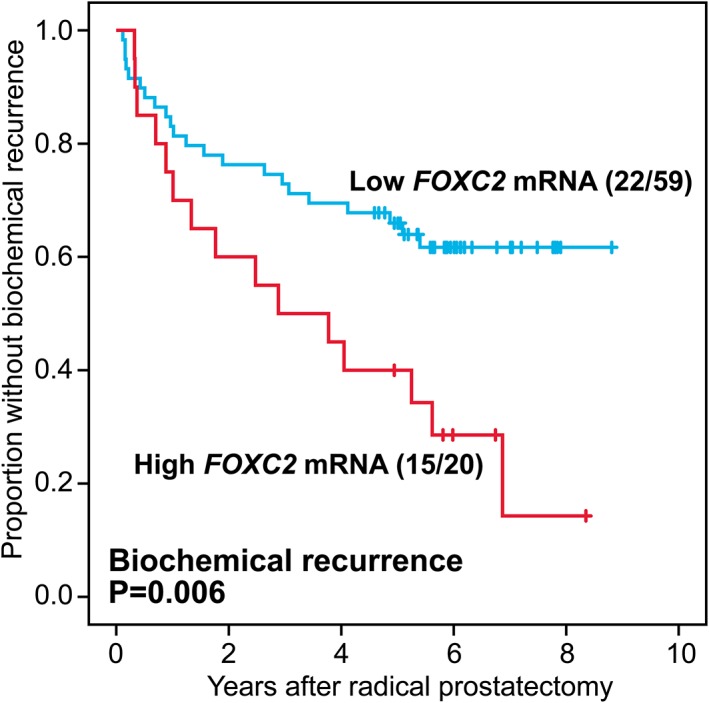
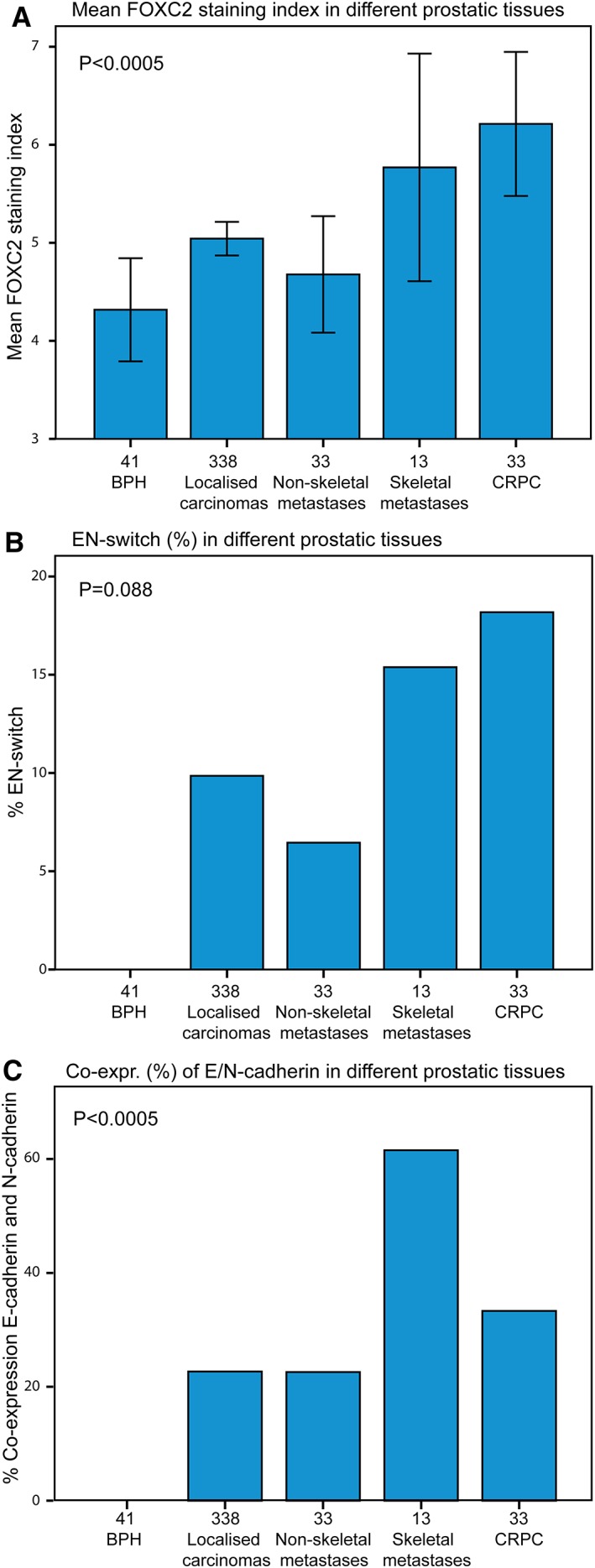
Epithelial-mesenchymal transition (EMT) is important for tumour cell invasion and metastasis and is a feature of aggressive carcinomas. EMT is characterised by reduced E-cadherin and increased N-cadherin expression (EN-switch), and increased expression of the EMT-regulating transcription factor Forkhead box protein C2 (FOXC2) has been associated with progression and poor prognosis in various malignancies. FOXC2 was recently highlighted as a novel therapy target in prostate cancer, but survival data on FOXC2 are lacking. This study evaluates the expression of FOXC2, E-cadherin and N-cadherin in different prostatic tissues focusing on EMT, clinico-pathological phenotype, recurrence and patient survival. Tissue microarray sections from 338 radical prostatectomies (1986-2007) with long and complete follow-up, 33 castration resistant prostate cancers, 33 non-skeletal metastases, 13 skeletal metastases and 41 prostatic hyperplasias were stained immunohistochemically for FOXC2, E-cadherin and N-cadherin. FOXC2 was strongly expressed in primary carcinomas, including castration resistant tumours and metastatic lesions as compared to benign prostatic hyperplasia. A hybrid epithelial-mesenchymal phenotype, with co-expression of E-cadherin and N-cadherin, was found in the majority of skeletal metastases and in a substantial proportion of castration resistant tumours. In localised carcinomas, the EN-switch was associated with adverse clinico-pathological variables, such as extra-prostatic extension, high pathological stage and lymph node infiltration. In univariate survival analyses of the clinically important, large subgroup of 199 patients with Gleason score 7, high FOXC2 expression and EN-switching were significantly associated with shorter time to clinical recurrence, skeletal metastases and cancer specific death. In multivariate Cox' survival analysis, high FOXC2 and the EN-switch, together with Gleason grade group (GG3 versus GG2), were independent predictors of time to these end-points. High FOXC2 gene expression (mRNA) was also related to patient outcome, validating our immunohistochemical findings. FOXC2 and factors signifying EMT or its intermediate states may prove important as biomarkers for aggressive disease and are potential novel therapy targets in prostate cancer.
上皮-间充质转化(EMT)对于肿瘤细胞的侵袭和转移很重要,是侵袭性癌的特征之一。EMT 的特征是 E-钙黏蛋白减少和 N-钙黏蛋白表达增加(EN 转换),并且 EMT 调节转录因子叉头框蛋白 C2(FOXC2)的表达增加与各种恶性肿瘤的进展和预后不良有关。FOXC2 最近被强调为前列腺癌的新治疗靶点,但缺乏 FOXC2 的生存数据。本研究评估了 FOXC2、E-钙黏蛋白和 N-钙黏蛋白在不同前列腺组织中的表达,重点关注 EMT、临床病理表型、复发和患者生存。使用组织微阵列对 338 例根治性前列腺切除术(1986-2007 年)的组织切片进行免疫组织化学染色,这些患者具有长期和完整的随访、33 例去势抵抗性前列腺癌、33 例非骨转移、13 例骨转移和 41 例前列腺增生。FOXC2、E-钙黏蛋白和 N-钙黏蛋白在原发性癌中强烈表达,包括去势抵抗性肿瘤和转移性病变,与良性前列腺增生相比。在大多数骨转移和相当一部分去势抵抗性肿瘤中发现了混合上皮-间充质表型,同时表达 E-钙黏蛋白和 N-钙黏蛋白。在局限性癌中,EN 转换与不良的临床病理变量相关,如前列腺外延伸、高病理分期和淋巴结浸润。在具有临床意义的 199 例 Gleason 评分 7 的患者的大型亚组的单变量生存分析中,高 FOXC2 表达和 EN 转换与较短的临床复发、骨转移和癌症特异性死亡时间显著相关。在多变量 Cox 生存分析中,高 FOXC2 和 EN 转换以及 Gleason 分级组(GG3 与 GG2)是这些终点的独立预测因子。FOXC2 高基因表达(mRNA)也与患者预后相关,验证了我们的免疫组织化学发现。FOXC2 和标志 EMT 或其中间状态的因素可能被证明是侵袭性疾病的重要生物标志物,并且是前列腺癌的潜在新治疗靶点。