Redford Melissa A
Linguistics Department, University of Oregon, Eugene.
J Speech Lang Hear Res. 2019 Aug 29;62(8S):2946-2962. doi: 10.1044/2019_JSLHR-S-CSMC7-18-0130.
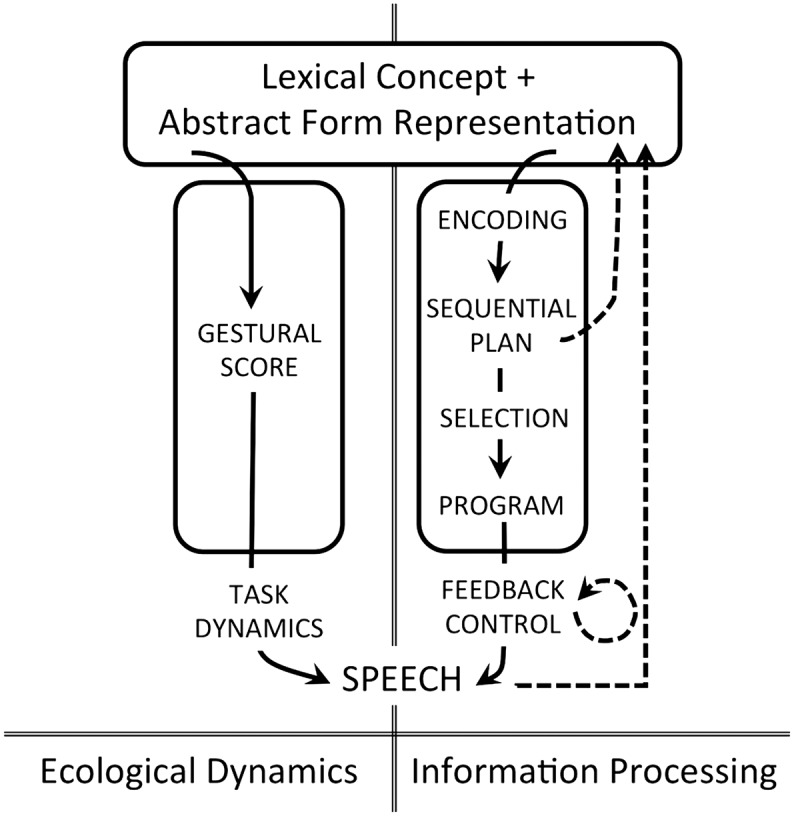
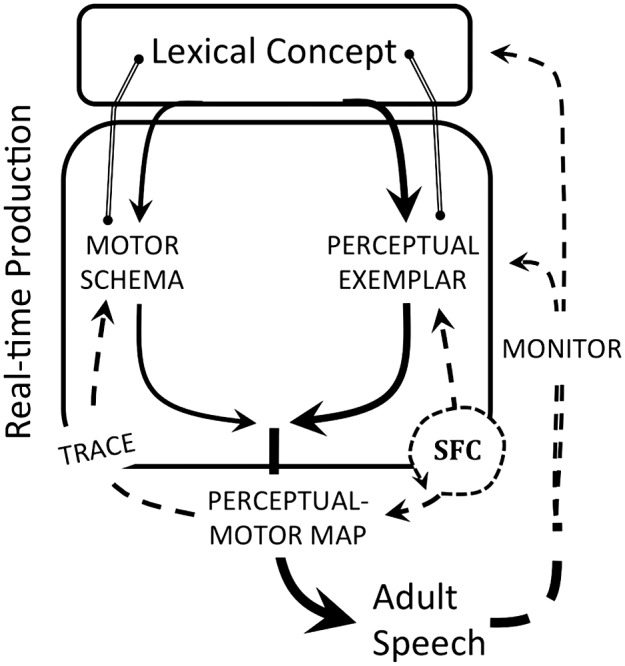
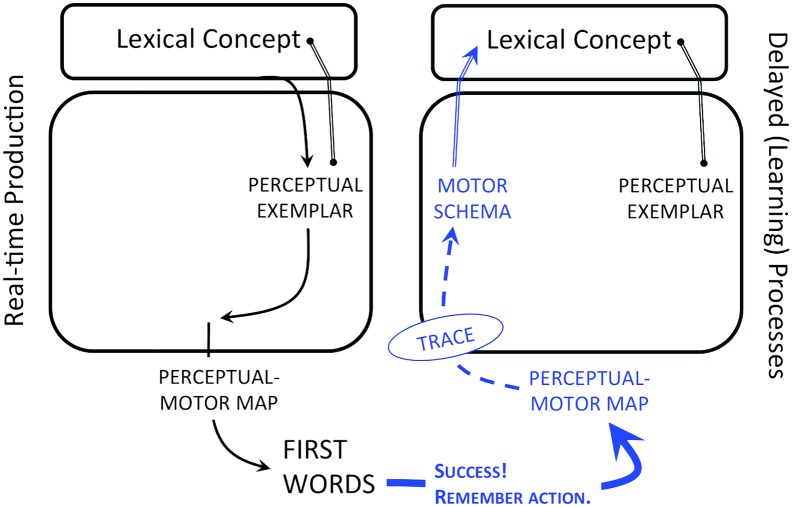
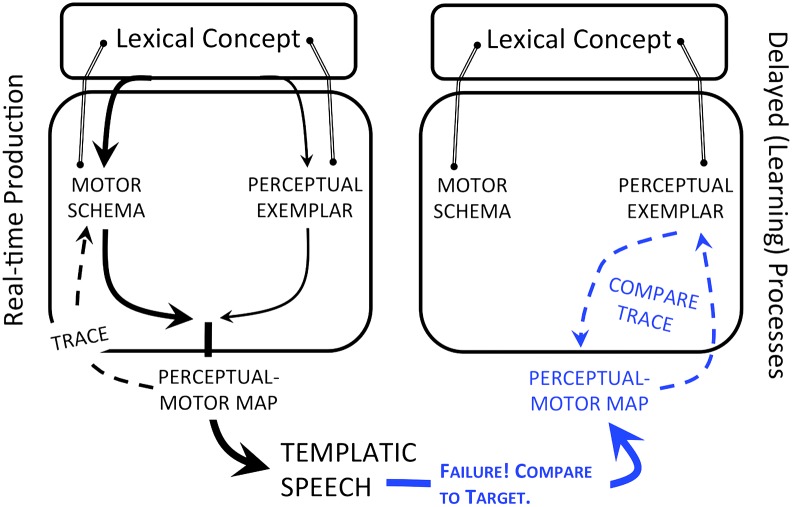
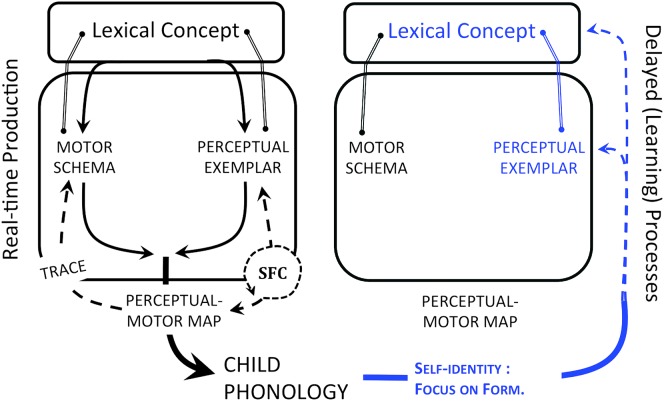
Purpose Current approaches to speech production aim to explain adult behavior and so make assumptions that, when taken to their logical conclusion, fail to adequately account for development. This failure is problematic if adult behavior can be understood to emerge from the developmental process. This problem motivates the proposal of a developmentally sensitive theory of speech production. The working hypothesis, which structures the theory, is that feedforward representations and processes mature earlier than central feedback control processes in speech production. Method Theoretical assumptions that underpin the 2 major approaches to adult speech production are reviewed. Strengths and weaknesses are evaluated with respect to developmental patterns. A developmental approach is then pursued. The strengths of existing theories are borrowed, and the ideas are resynthesized under the working hypothesis. The speech production process is then reimagined in developmental stages, with each stage building on the previous one. Conclusion The resulting theory proposes that speech production relies on conceptually linked representations that are information-reduced holistic perceptual and motoric forms, constituting the phonological aspect of a system that is acquired with the lexicon. These forms are referred to as exemplars and schemas, respectively. When a particular exemplar and schema are activated with the selection of a particular lexical concept, their forms are used to define unique trajectories through an endogenous perceptual-motor space that guides implementation. This space is not linguistic, reflecting its origin in the prespeech period. Central feedback control over production emerges with failures in communication and the development of a self-concept.
目的 当前的言语产生研究方法旨在解释成人的行为,因此做出的假设在逻辑推导下无法充分解释发展过程。如果成人行为可被理解为从发展过程中产生,那么这种失败就会成为问题。这一问题促使人们提出一种对发展敏感的言语产生理论。构建该理论的工作假设是,在言语产生中,前馈表征和过程比中央反馈控制过程成熟得更早。方法 回顾了支撑成人言语产生两种主要方法的理论假设。根据发展模式评估了其优缺点。然后采用一种发展性方法。借鉴现有理论的优点,并在工作假设下重新整合这些观点。接着将言语产生过程重新设想为不同的发展阶段,每个阶段都建立在前一个阶段的基础上。结论 由此产生的理论提出,言语产生依赖于概念上相联系的表征,这些表征是信息简化的整体感知和运动形式,构成了与词汇一起习得的系统的语音方面。这些形式分别被称为范例和图式。当通过选择特定的词汇概念激活特定的范例和图式时,它们的形式被用来定义通过一个内源性感知 - 运动空间的独特轨迹,该空间指导言语的实施。这个空间不是语言性的,反映了它在言语前阶段的起源。对言语产生的中央反馈控制随着沟通失败和自我概念的发展而出现。