Laboratory of Molecular Virology, International Centre for Genetic Engineering and Biotechnology (ICGEB), Trieste, Italy.
The Pirbright Institute, Ash Road, Pirbright, Woking, Surrey, GU24 0NF, United Kingdom.
Nat Commun. 2019 Aug 29;10(1):3889. doi: 10.1038/s41467-019-11663-2.
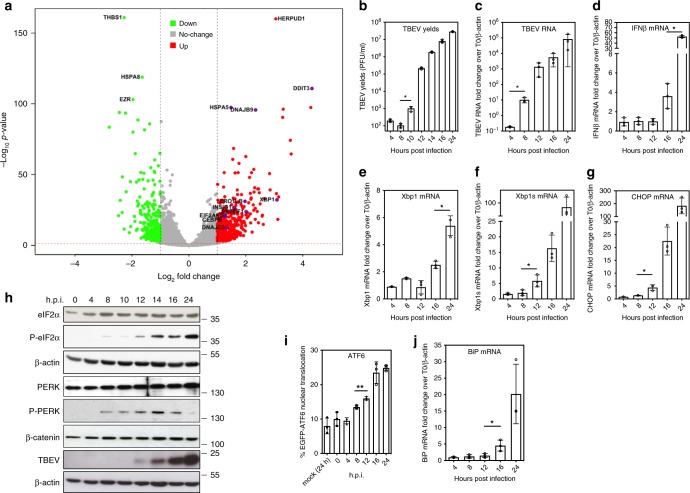
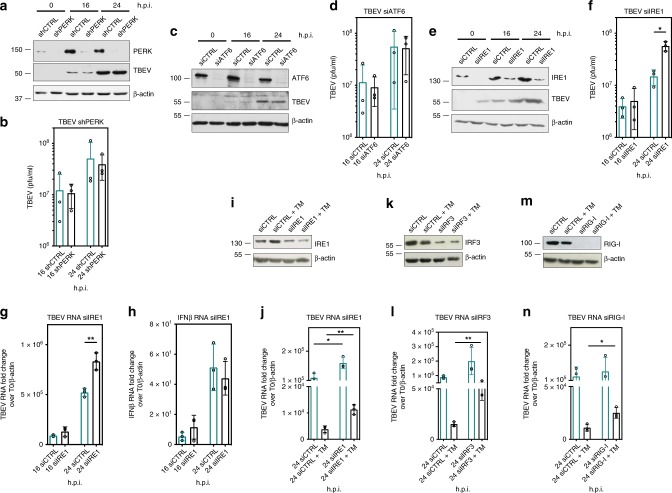
The innate response to a pathogen is critical in determining the outcome of the infection. However, the interplay of different cellular responses that are activated following viral infection and their contribution to innate antiviral signalling has not been clearly established. This work shows that flaviviruses, including Dengue, Zika, West Nile and Tick-borne encephalitis viruses, activate the unfolded protein response before transcription of interferon regulatory factor 3 induced genes. Infection in conditions of unfolded protein response priming leads to early activation of innate antiviral responses and cell intrinsic inhibition of viral replication, which is interferon regulatory factor 3 dependent. These results demonstrate that the unfolded protein response is not only a physiological reaction of the cell to viral infection, but also synergizes with pattern recognition sensing to mount a potent antiviral response.
机体对病原体的先天反应对于确定感染的结果至关重要。然而,病毒感染后激活的不同细胞反应的相互作用及其对先天抗病毒信号转导的贡献尚不清楚。本研究表明,黄病毒(包括登革热病毒、寨卡病毒、西尼罗河病毒和蜱传脑炎病毒)在诱导干扰素调节因子 3 基因转录之前激活未折叠蛋白反应。在未折叠蛋白反应引发的条件下感染会导致先天抗病毒反应的早期激活和细胞内病毒复制的抑制,这依赖于干扰素调节因子 3。这些结果表明,未折叠蛋白反应不仅是细胞对病毒感染的生理反应,而且还与模式识别感应协同作用,以产生有效的抗病毒反应。