Wu Lanqin, Lin Yingying, Feng Jinan, Qi Yuanlin, Wang Xinrui, Lin Qiaofa, Shi Wanyan, Zheng Enrun, Wang Wei, Hou Zhenzhu, Lin Hanbin, Yu Cheng, He Yan, Xu Yan, Yang Hong, Lin Ling, Li Lisheng
1The School of Basic Medical Sciences, Fujian Medical University, Minhou, Fuzhou China.
2State Key Laboratory for Medical Genomics, Shanghai Institute of Hematology, Rui Jin Hospital Affiliated to School of Medicine, Shanghai Jiao Tong University, Shanghai, China.
Cancer Cell Int. 2019 Aug 27;19:222. doi: 10.1186/s12935-019-0936-5. eCollection 2019.
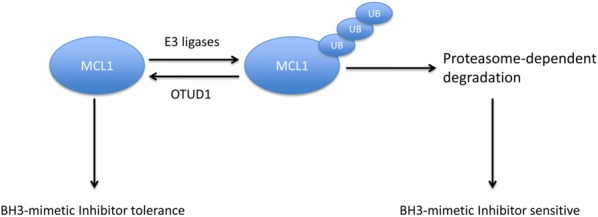
Myeloid cell leukaemia 1 (MCL1) is a pro-survival Bcl-2 family protein that plays important roles in cell survival, proliferation, differentiation and tumourigenesis. MCL1 is a fast-turnover protein that is degraded via an ubiquitination/proteasome-dependent mechanism. Although several E3 ligases have been discovered to promote the ubiquitination of MCL1, the deubiquitinating enzyme (DUB) that regulates its stability requires further investigation.
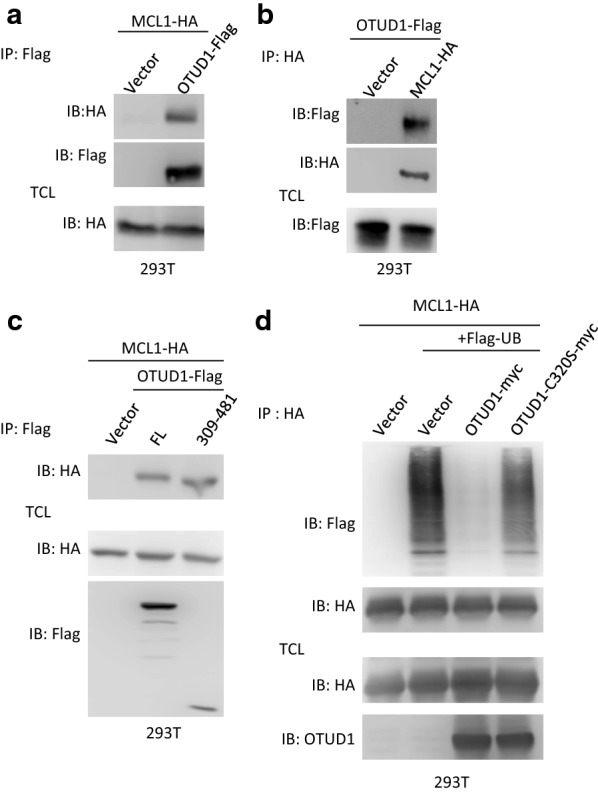
The immunoprecipitation was used to determine the interaction between OTUD1 and MCL1. The ubiquitination assays was performed to determine the regulation of MCL1 by OTUD1. The cell viability was used to determine the regulation of BH3-mimetic inhibitor induced cell death by OTUD1. The survival analysis was used to determine the relationship between OTUD1 expression levels and the survival rate of cancer patients.
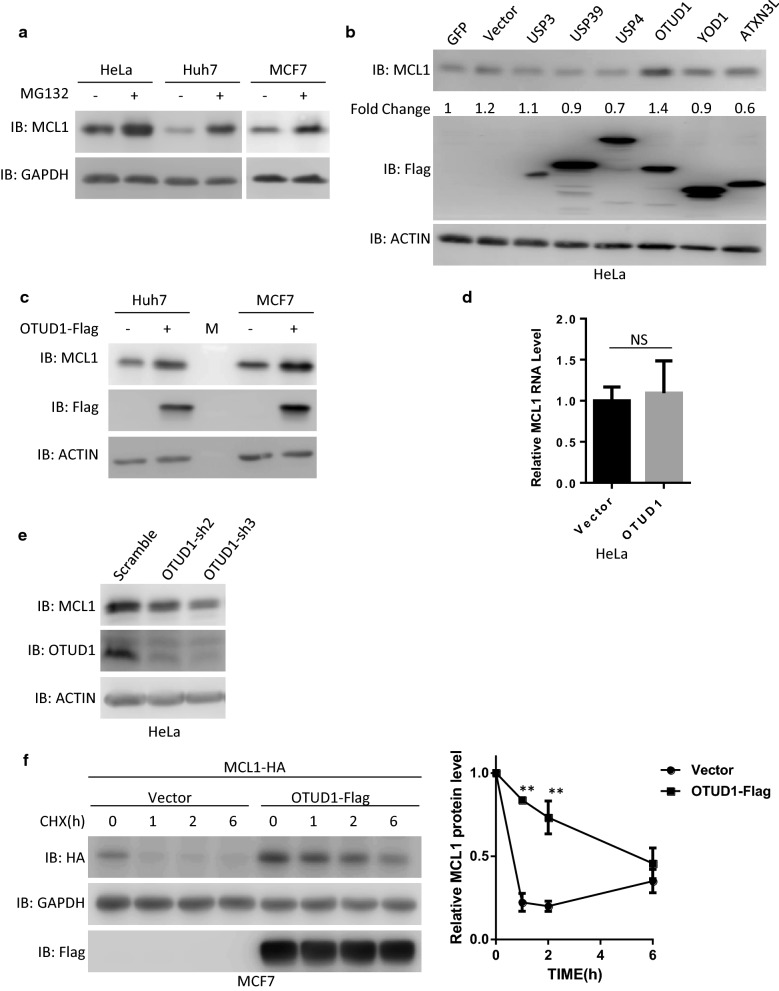
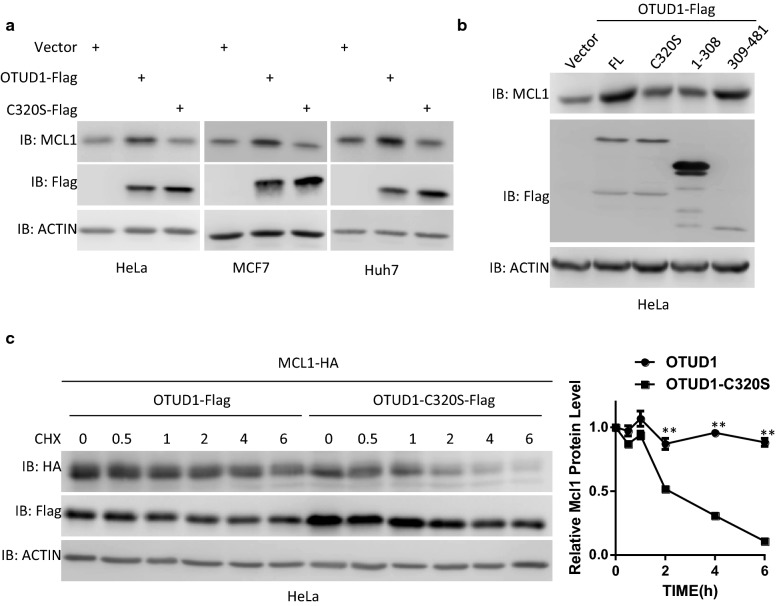
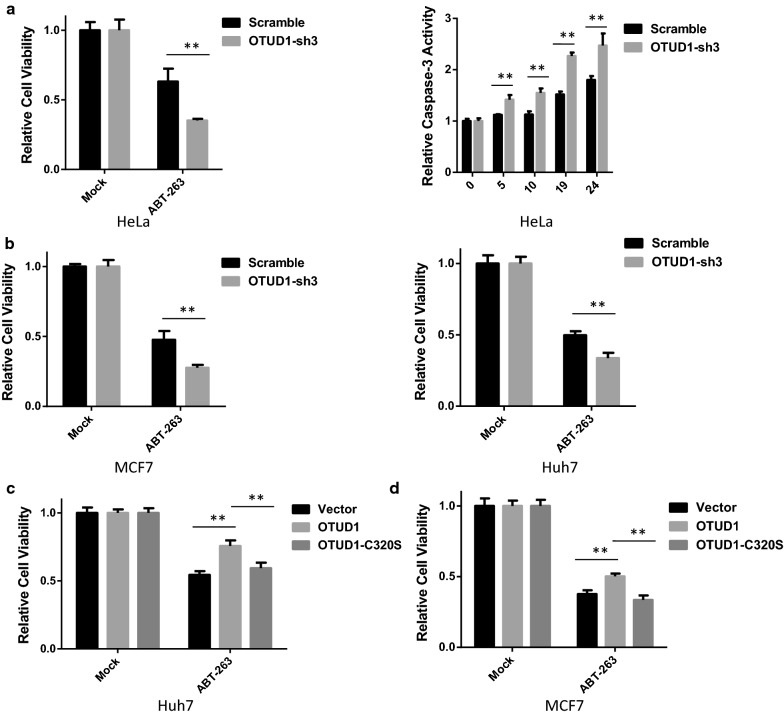
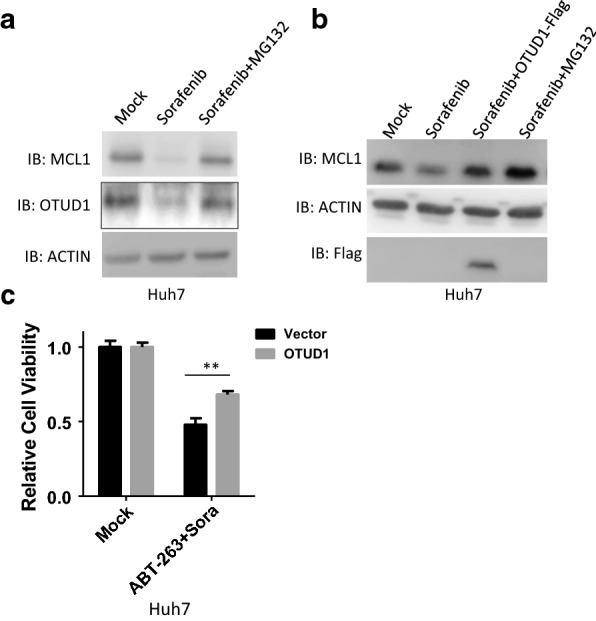
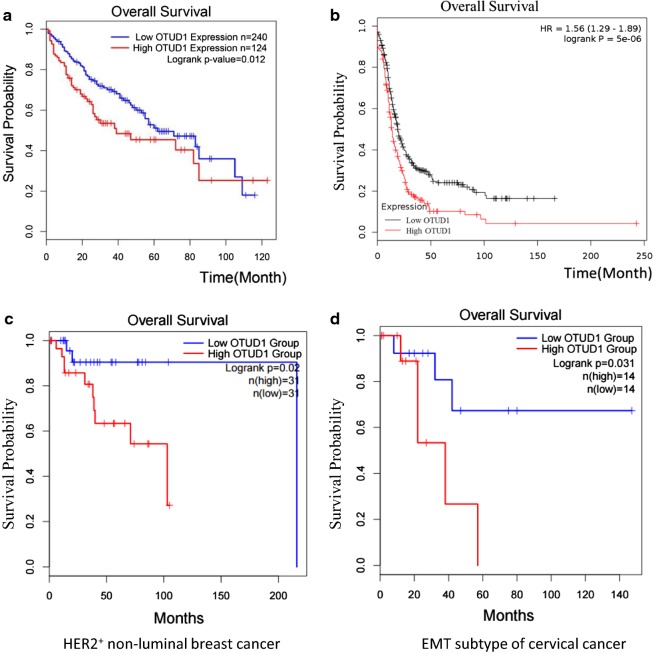
By screening a DUB expression library, we determined that the deubiquitinating enzyme OTUD1 regulates MCL1 protein stability in an enzymatic-activity dependent manner. OTUD1 interacts with MCL1 and promotes its deubiquitination. Knockdown of OTUD1 increases the sensitivity of tumour cells to the BH3-mimetic inhibitor ABT-263, while overexpression of OTUD1 increases tumour cell tolerance of ABT-263. Furthermore, bioinformatics analysis data reveal that OTUD1 is a negative prognostic factor for liver cancer, ovarian cancer and specific subtypes of breast and cervical cancer.
The deubiquitinating enzyme OTUD1 antagonizes BH3-mimetic inhibitor induced cell death through regulating the stability of the MCL1 protein. Thus, OTUD1 could be considered as a therapeutic target for curing these cancers.
髓样细胞白血病 1(MCL1)是一种促生存的 Bcl-2 家族蛋白,在细胞存活、增殖、分化和肿瘤发生中发挥重要作用。MCL1 是一种周转迅速的蛋白,通过泛素化/蛋白酶体依赖性机制降解。尽管已发现几种 E3 连接酶可促进 MCL1 的泛素化,但调节其稳定性的去泛素化酶(DUB)仍需进一步研究。
采用免疫沉淀法确定 OTUD1 与 MCL1 之间的相互作用。进行泛素化测定以确定 OTUD1 对 MCL1 的调节作用。采用细胞活力测定法确定 OTUD1 对 BH3 模拟物抑制剂诱导的细胞死亡的调节作用。采用生存分析确定 OTUD1 表达水平与癌症患者生存率之间的关系。
通过筛选 DUB 表达文库,我们确定去泛素化酶 OTUD1 以酶活性依赖的方式调节 MCL1 蛋白的稳定性。OTUD1 与 MCL1 相互作用并促进其去泛素化。敲低 OTUD1 可增加肿瘤细胞对 BH3 模拟物抑制剂 ABT-263 的敏感性,而 OTUD1 的过表达则增加肿瘤细胞对 ABT-263 的耐受性。此外,生物信息学分析数据显示,OTUD1 是肝癌、卵巢癌以及乳腺癌和宫颈癌特定亚型的不良预后因素。
去泛素化酶 OTUD1 通过调节 MCL1 蛋白的稳定性拮抗 BH3 模拟物抑制剂诱导的细胞死亡。因此,OTUD1 可被视为治疗这些癌症靶点。