Oikawa Daisuke, Shimizu Kouhei, Tokunaga Fuminori
Department of Medical Biochemistry, Graduate School of Medicine, Osaka Metropolitan University, Osaka 545-8585, Japan.
Antioxidants (Basel). 2023 Feb 1;12(2):350. doi: 10.3390/antiox12020350.
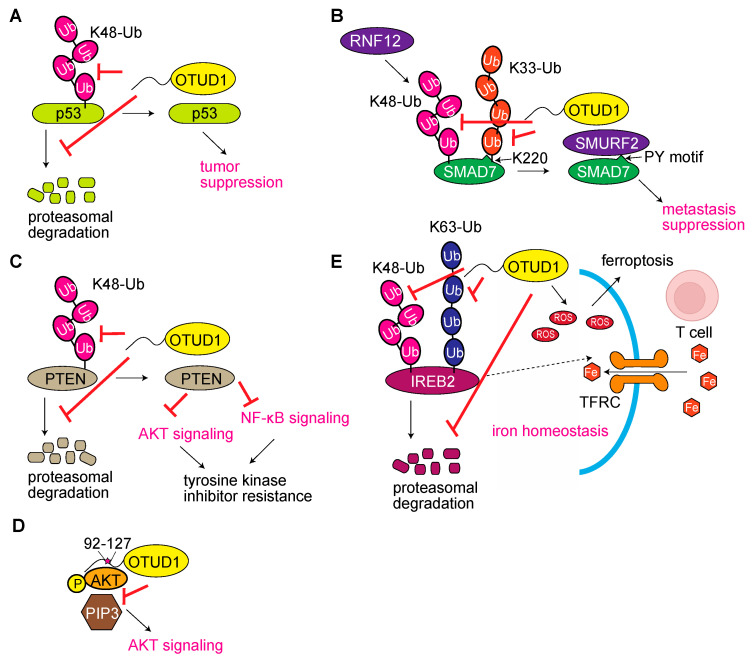
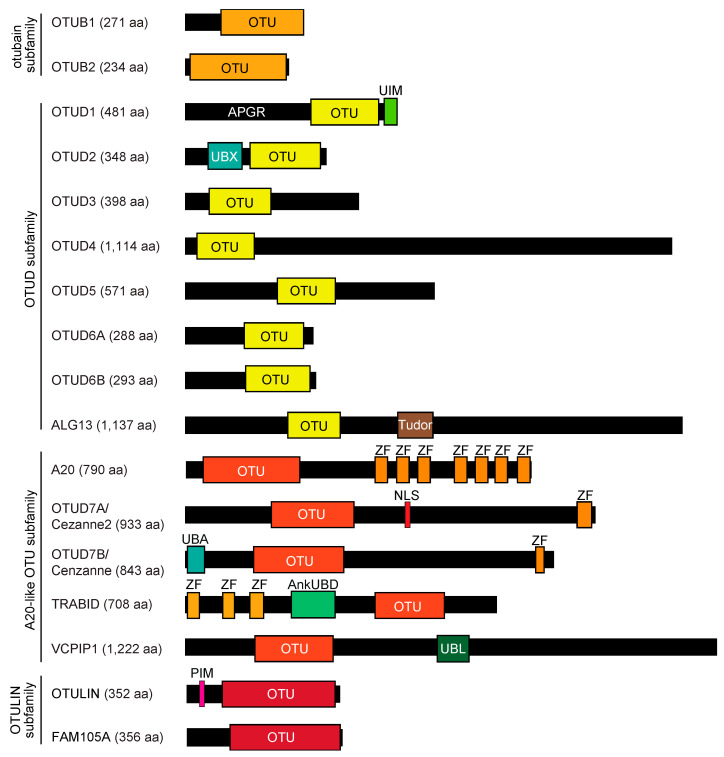
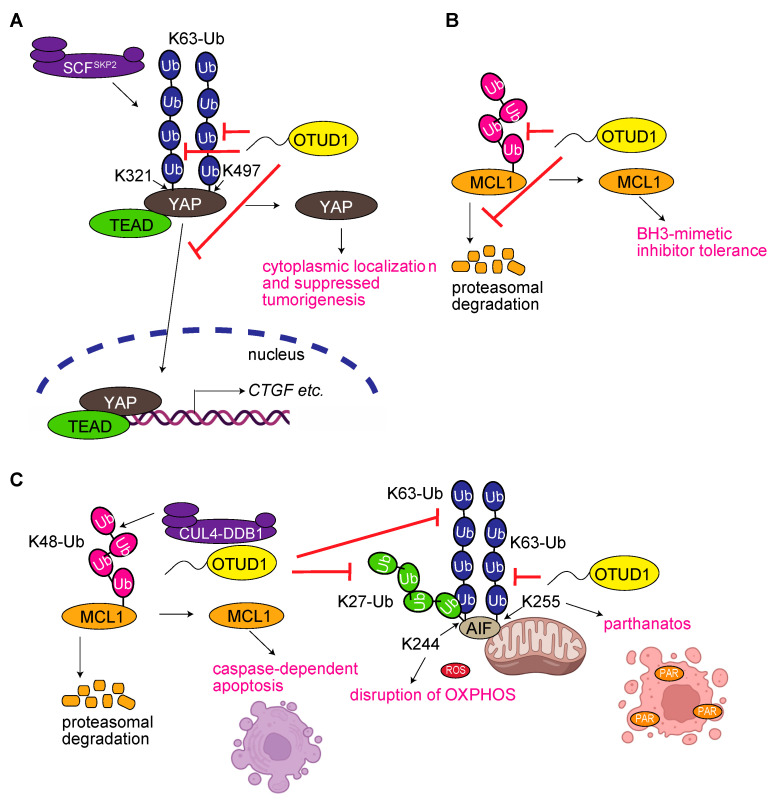
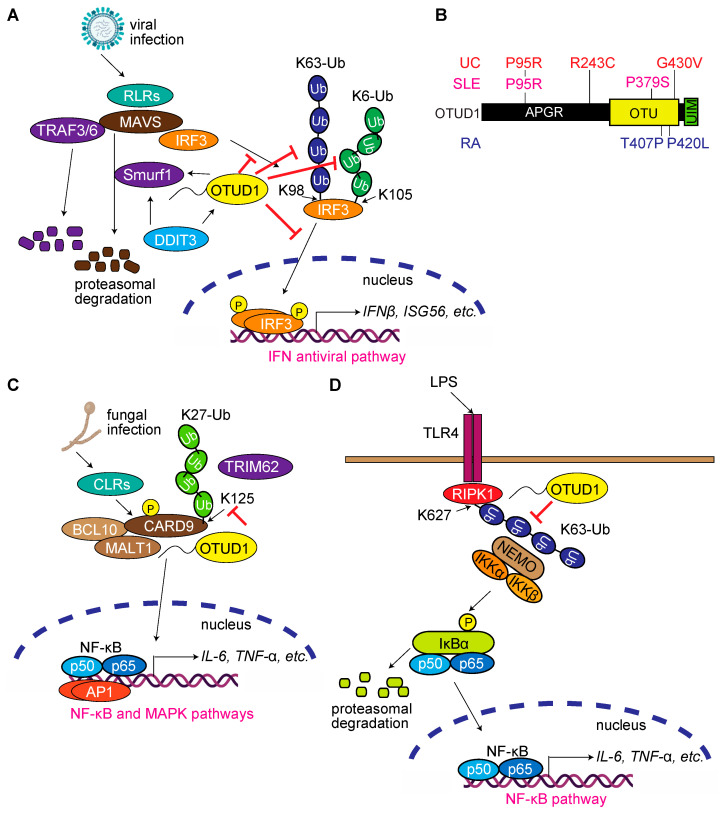
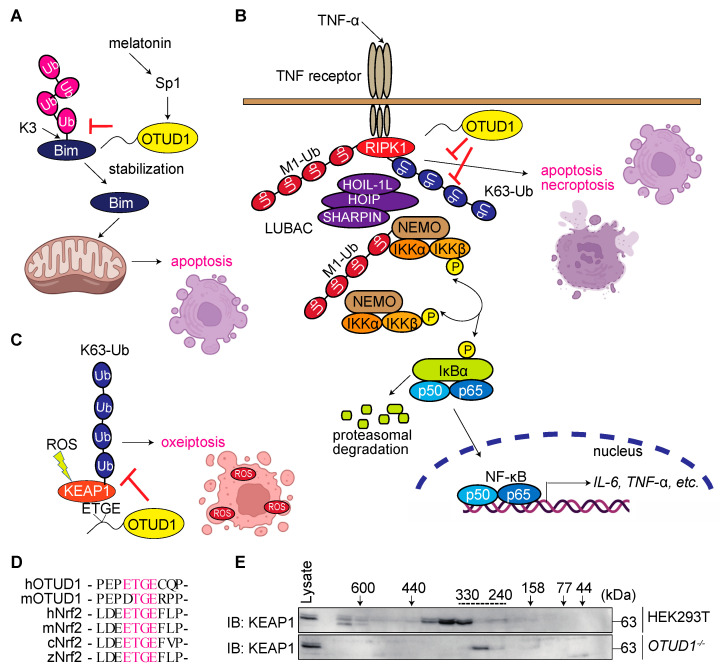
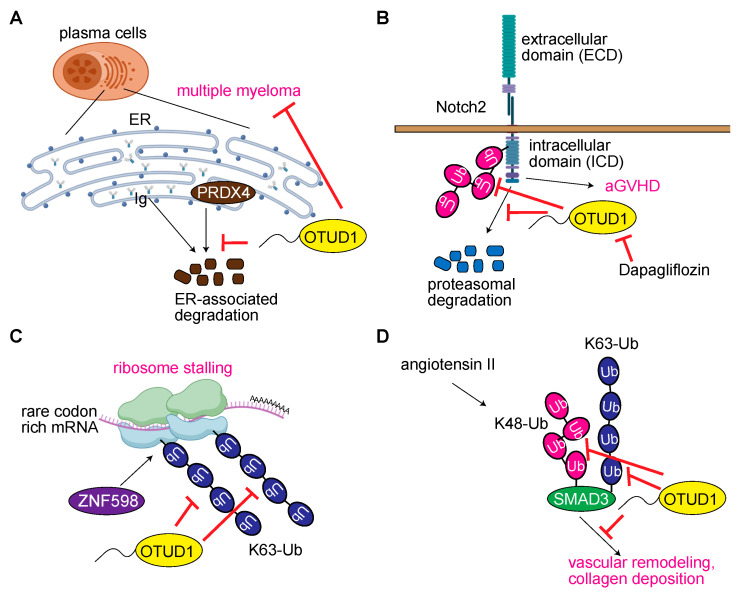
Protein ubiquitination, which is catalyzed by ubiquitin-activating enzymes, ubiquitin-conjugating enzymes, and ubiquitin ligases, is a crucial post-translational modification to regulate numerous cellular functions in a spatio-temporal-specific manner. The human genome encodes ~100 deubiquitinating enzymes (DUBs), which antagonistically regulate the ubiquitin system. OTUD1, an ovarian tumor protease (OTU) family DUB, has an N-terminal-disordered alanine-, proline-, glycine-rich region (APGR), a catalytic OTU domain, and a ubiquitin-interacting motif (UIM). OTUD1 preferentially hydrolyzes lysine-63-linked ubiquitin chains in vitro; however, recent studies indicate that OTUD1 cleaves various ubiquitin linkages, and is involved in the regulation of multiple cellular functions. Thus, OTUD1 predominantly functions as a tumor suppressor by targeting p53, SMAD7, PTEN, AKT, IREB2, YAP, MCL1, and AIF. Furthermore, OTUD1 regulates antiviral signaling, innate and acquired immune responses, and cell death pathways. Similar to Nrf2, OTUD1 contains a KEAP1-binding ETGE motif in its APGR and regulates the reactive oxygen species (ROS)-mediated oxidative stress response and cell death. Importantly, in addition to its association with various cancers, including multiple myeloma, OTUD1 is involved in acute graft-versus-host disease and autoimmune diseases such as systemic lupus erythematosus, rheumatoid arthritis, and ulcerative colitis. Thus, OTUD1 is an important DUB as a therapeutic target for a variety of diseases.
蛋白质泛素化由泛素激活酶、泛素结合酶和泛素连接酶催化,是一种关键的翻译后修饰,以时空特异性方式调节众多细胞功能。人类基因组编码约100种去泛素化酶(DUB),它们对泛素系统起拮抗调节作用。OTUD1是一种卵巢肿瘤蛋白酶(OTU)家族的DUB,具有一个N端无序的富含丙氨酸、脯氨酸和甘氨酸的区域(APGR)、一个催化性OTU结构域和一个泛素相互作用基序(UIM)。OTUD1在体外优先水解赖氨酸63连接的泛素链;然而,最近的研究表明,OTUD1能切割各种泛素连接,并参与多种细胞功能的调节。因此,OTUD1主要通过靶向p53、SMAD7、PTEN、AKT、IREB2、YAP、MCL1和AIF发挥肿瘤抑制作用。此外,OTUD1调节抗病毒信号传导、先天性和获得性免疫反应以及细胞死亡途径。与Nrf2类似,OTUD1在其APGR中含有一个与KEAP1结合的ETGE基序,并调节活性氧(ROS)介导的氧化应激反应和细胞死亡。重要的是,除了与包括多发性骨髓瘤在内的多种癌症相关外,OTUD1还参与急性移植物抗宿主病和自身免疫性疾病,如系统性红斑狼疮、类风湿性关节炎和溃疡性结肠炎。因此,OTUD1作为多种疾病的治疗靶点,是一种重要的DUB。