Stewart S K
Department of Bioengineering, Imperial College London, United Kingdom.
Malays Orthop J. 2019 Jul;13(2):1-10. doi: 10.5704/MOJ.1907.001.
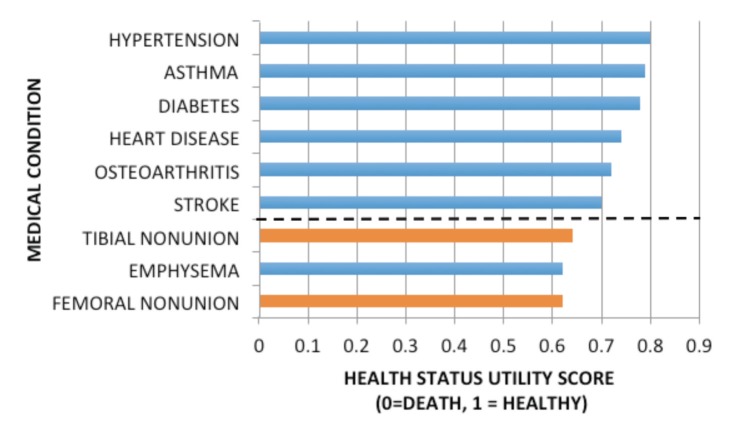
Non-union of bone following fracture is an orthopaedic condition with a high morbidity and clinical burden. Despite its estimated global prevalence of nine million annually, the limit of bone regeneration therapy still results in patients living with pain, a reduced quality of life and associated psychological, social and financial repercussions. This review provides an overview of the current epidemiological and aetiological data, and highlights where the clinical challenges in treating non-union lie. Current treatment strategies are discussed as well as promising future research foci. Development in biotechnologies to treat non-union provides exciting scope for more effective treatment for this debilitating condition.
骨折后骨不连是一种发病率高且临床负担重的骨科疾病。尽管据估计全球每年有900万人患病,但骨再生治疗的局限性仍导致患者饱受疼痛折磨,生活质量下降,并产生相关的心理、社会和经济影响。本综述概述了当前的流行病学和病因学数据,并强调了治疗骨不连的临床挑战所在。文中讨论了当前的治疗策略以及未来有前景的研究重点。治疗骨不连的生物技术发展为有效治疗这种使人衰弱的疾病提供了令人兴奋的空间。