Dipartimento di Chimica, Università degli Studi di Milano, via Golgi 19, 20133, Milano, Italy.
Université Grenoble Alpes, CNRS, CEA, Institut de Biologie Structurale, 38044, Grenoble, France.
Chemistry. 2019 Nov 18;25(64):14659-14668. doi: 10.1002/chem.201903391. Epub 2019 Oct 18.
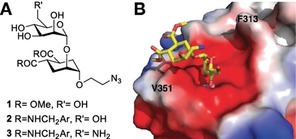
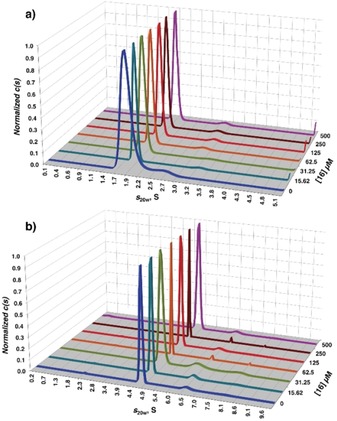
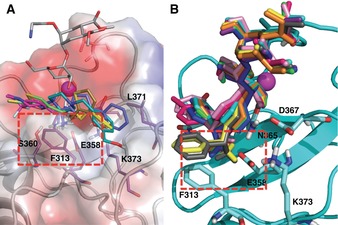
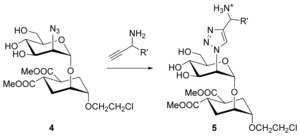
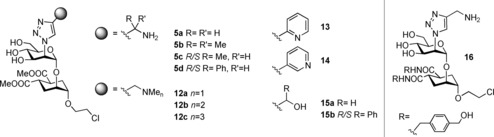
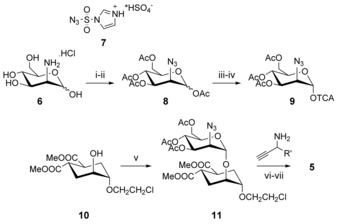
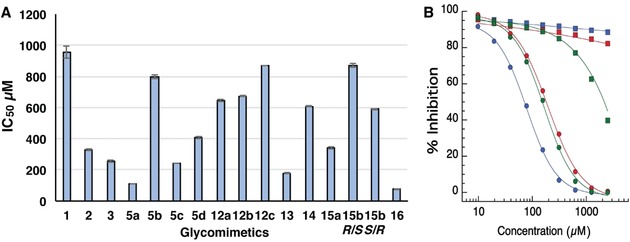
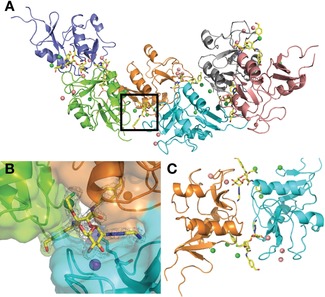
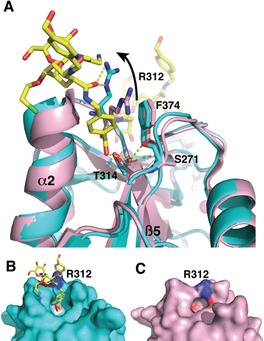
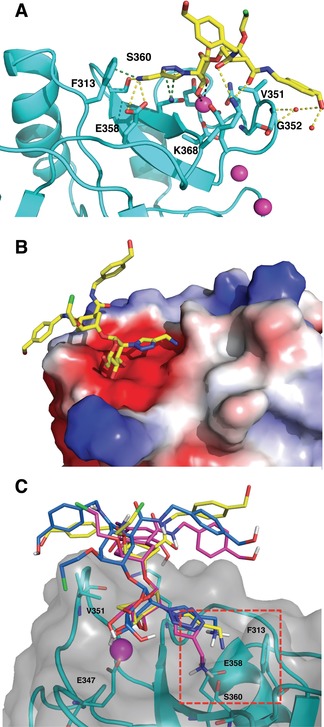
Chemical modification of pseudo-dimannoside ligands guided by fragment-based design allowed for the exploitation of an ammonium-binding region in the vicinity of the mannose-binding site of DC-SIGN, leading to the synthesis of a glycomimetic antagonist (compound 16) of unprecedented affinity and selectivity against the related lectin langerin. Here, the computational design of pseudo-dimannoside derivatives as DC-SIGN ligands, their synthesis, their evaluation as DC-SIGN selective antagonists, the biophysical characterization of the DC-SIGN/16 complex, and the structural basis for the ligand activity are presented. On the way to the characterization of this ligand, an unusual bridging interaction within the crystals shed light on the plasticity and potential secondary binding sites within the DC-SIGN carbohydrate recognition domain.
基于片段设计的假二甘露糖苷配体的化学修饰使得能够利用 DC-SIGN 附近甘露糖结合位点附近的铵结合区域,从而合成了一种前所未有的对相关凝集素 langerin 具有亲和力和选择性的糖模拟物拮抗剂(化合物 16)。在这里,作为 DC-SIGN 配体的假二甘露糖苷衍生物的计算设计、它们的合成、作为 DC-SIGN 选择性拮抗剂的评估、DC-SIGN/16 复合物的生物物理特性以及配体活性的结构基础被呈现。在对该配体进行表征的过程中,晶体中一种不寻常的桥接相互作用揭示了 DC-SIGN 碳水化合物识别域的可塑性和潜在的次级结合位点。