School of Basic Medical Sciences, Anhui Medical University, Hefei, China.
Biopharmaceutical Research Institute, Anhui Medical University, Hefei, China.
Hepatology. 2020 Apr;71(4):1262-1278. doi: 10.1002/hep.30917. Epub 2020 Jan 26.
Endoplasmic reticulum (ER) stress is associated with liver inflammation and hepatocellular carcinoma (HCC). However, how ER stress links inflammation and HCC remains obscure. Mesencephalic astrocyte-derived neurotrophic factor (MANF) is an ER stress-inducible secretion protein that inhibits inflammation by interacting with the key subunit of nuclear factor kappa light chain enhancer of activated B cells (NF-κB) p65. We hypothesized that MANF may play a key role in linking ER stress and inflammation in HCC.
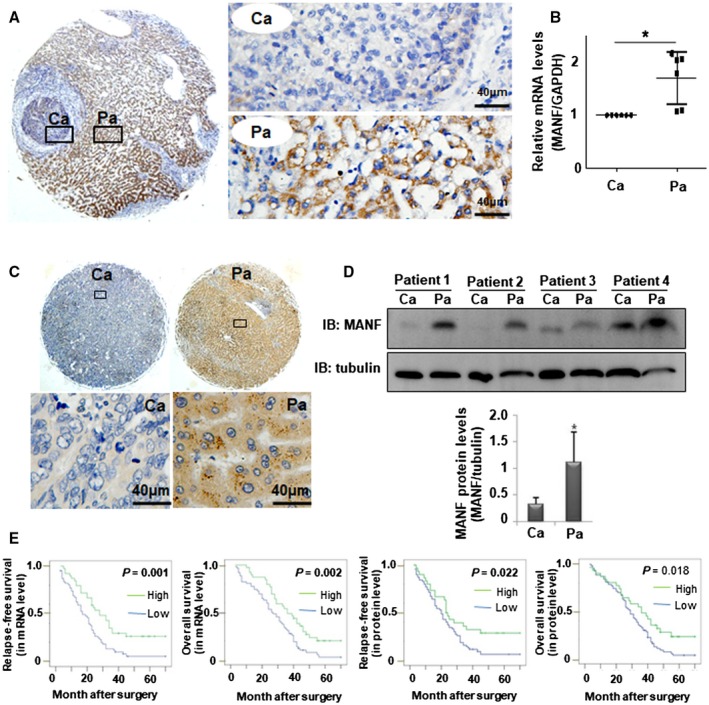
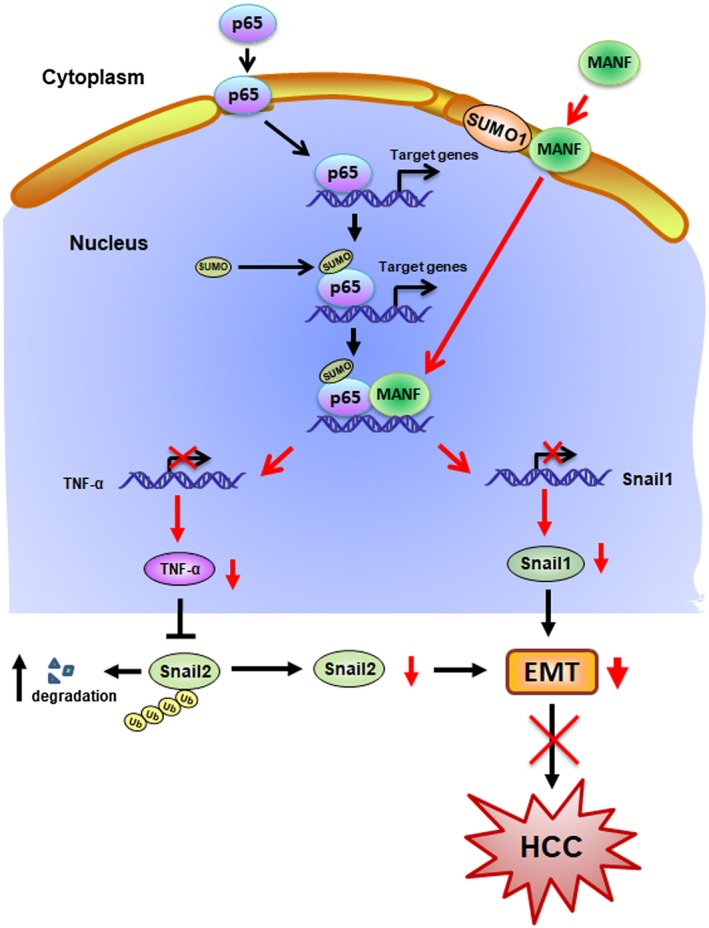
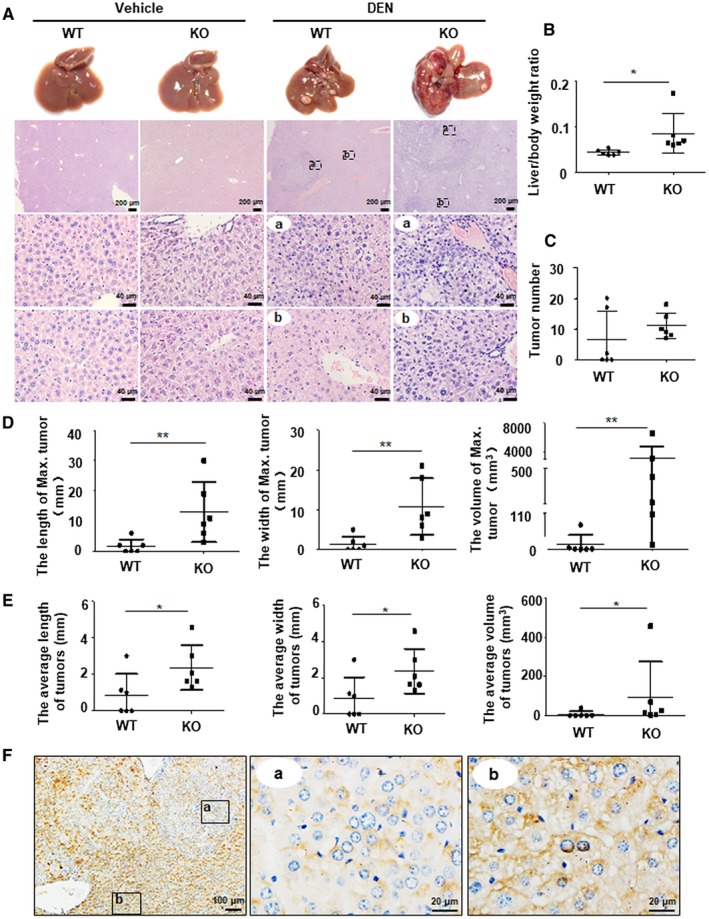
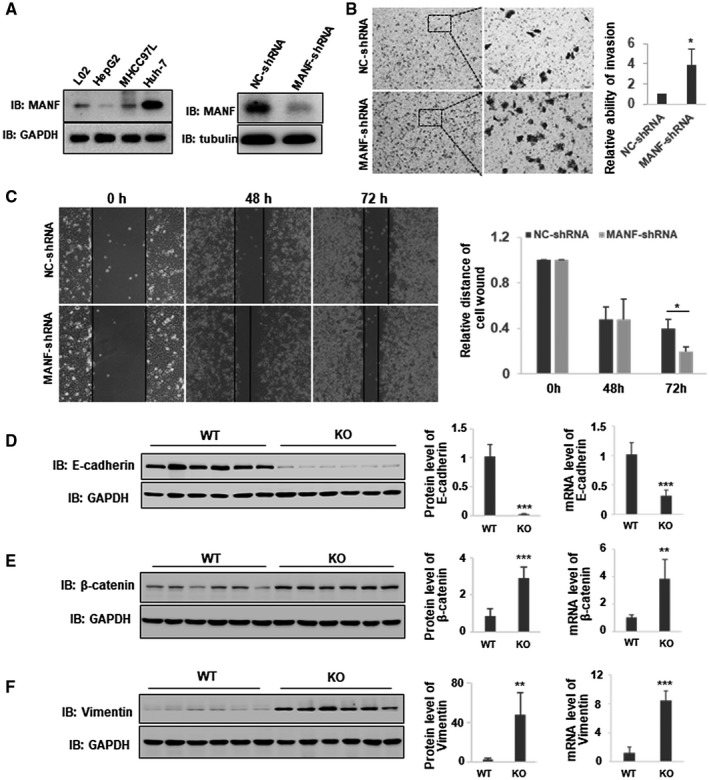
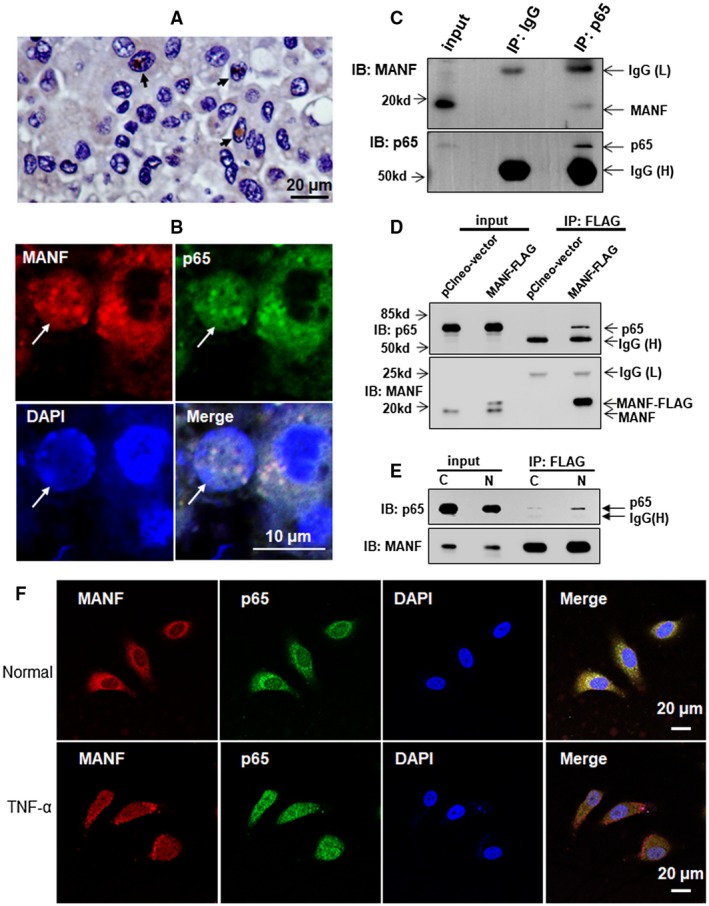
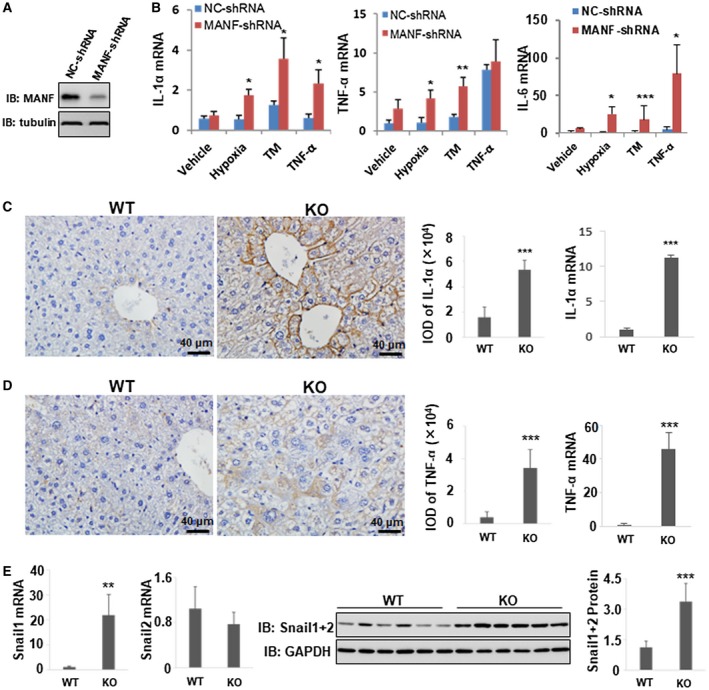
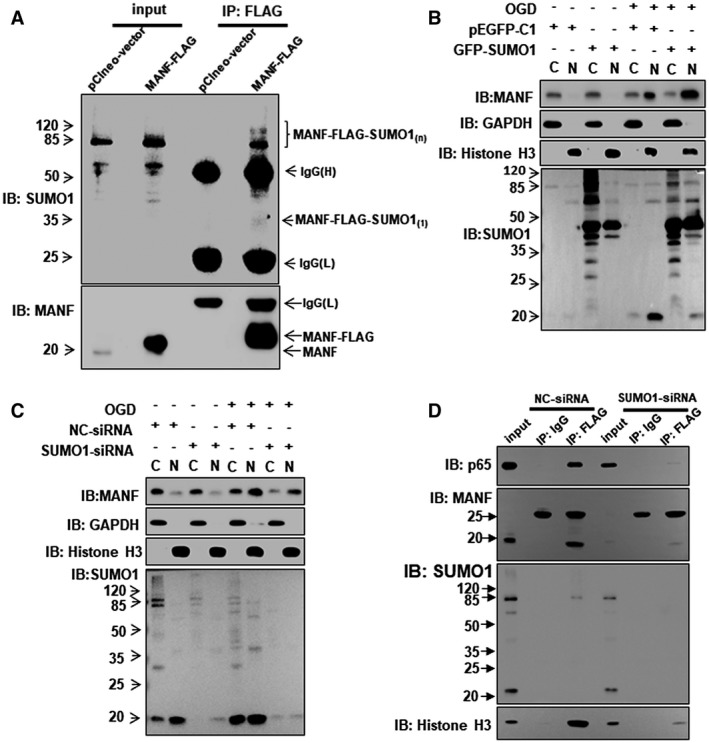
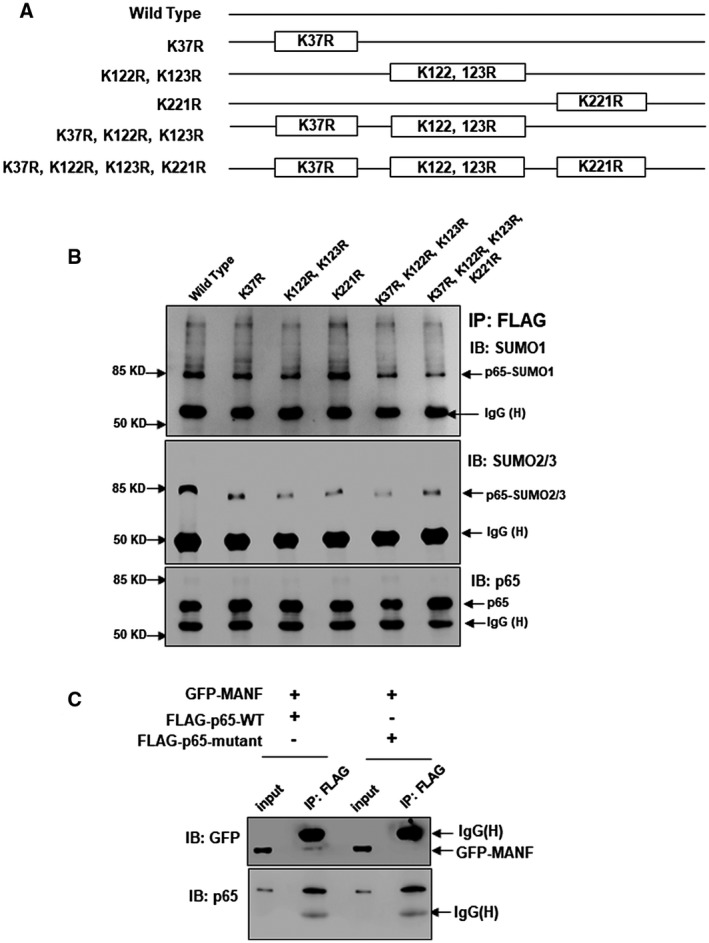
Here, we found that MANF mRNA and protein levels were lower in HCC tissues versus adjacent noncancer tissues. Patients with high levels of MANF had better relapse-free survival and overall survival rates than those with low levels. MANF levels were also associated with the status of liver cirrhosis, advanced tumor-node-metastasis (TNM) stage, and tumor size. In vitro experiments revealed that MANF suppressed the migration and invasion of hepatoma cells. Hepatocyte-specific deletion of MANF accelerated N-nitrosodiethylamine (DEN)-induced HCC by up-regulating Snail1+2 levels and promoting epithelial-mesenchymal transition (EMT). MANF appeared in the nuclei and was colocalized with p65 in HCC tissues and in tumor necrosis factor alpha (TNF-α)-treated hepatoma cells. The interaction of p65 and MANF was also confirmed by coimmunoprecipitation experiments. Consistently, knockdown of MANF up-regulated NF-κB downstream target genes TNF-α, interleukin (IL)-6 and IL-1α expression in vitro and in vivo. Finally, small ubiquitin-related modifier 1 (SUMO1) promoted MANF nuclear translocation and enhanced the interaction of MANF and p65. Mutation of p65 motifs for SUMOylation abolished the interaction of p65 and MANF.
MANF plays an important role in linking ER stress and liver inflammation by inhibiting the NF-κB/Snail signal pathway in EMT and HCC progression. Therefore, MANF may be a cancer suppressor and a potential therapeutic target for HCC.
内质网(ER)应激与肝脏炎症和肝细胞癌(HCC)有关。然而,内质网应激如何与炎症和 HCC 相关联仍不清楚。中脑星形胶质细胞衍生的神经营养因子(MANF)是一种 ER 应激诱导的分泌蛋白,通过与核因子 kappa 轻链增强子的关键亚基 B 细胞(NF-κB)p65 相互作用来抑制炎症。我们假设 MANF 可能在连接 ER 应激和 HCC 中的炎症中发挥关键作用。
在这里,我们发现 MANF mRNA 和蛋白水平在 HCC 组织中低于相邻非癌组织。MANF 水平高的患者比 MANF 水平低的患者无复发生存率和总生存率更好。MANF 水平也与肝硬化状态、晚期肿瘤-淋巴结-转移(TNM)分期和肿瘤大小有关。体外实验表明,MANF 抑制肝癌细胞的迁移和侵袭。肝细胞特异性敲除 MANF 通过上调 Snail1+2 水平并促进上皮-间充质转化(EMT)加速 N-亚硝二乙胺(DEN)诱导的 HCC。MANF 出现在细胞核中,并与 HCC 组织中和肿瘤坏死因子-α(TNF-α)处理的肝癌细胞中的 p65 共定位。共免疫沉淀实验也证实了 p65 和 MANF 的相互作用。一致地,MANF 的敲低上调了 TNF-α、白细胞介素(IL)-6 和 IL-1α在体外和体内的 NF-κB 下游靶基因的表达。最后,小泛素相关修饰物 1(SUMO1)促进 MANF 核易位并增强 MANF 和 p65 的相互作用。p65 用于 SUMO 化的模体突变消除了 p65 和 MANF 的相互作用。
MANF 通过抑制 EMT 和 HCC 进展中的 NF-κB/Snail 信号通路,在连接 ER 应激和肝脏炎症方面发挥重要作用。因此,MANF 可能是一种癌症抑制因子和 HCC 的潜在治疗靶点。