Center of Clinical Immunology, Center for Mental and Neurological Disorders and Diseases, the Third Affiliated Hospital of Sun Yat-sen University, Guangzhou, People's Republic of China.
Department of Neurology, Center for Mental and Neurological Disorders and Diseases, the Third Affiliated Hospital of Sun Yat-sen University, 600 Tianhe Road, Guangzhou, 510630, Guangdong, China.
J Neuroinflammation. 2019 Aug 31;16(1):175. doi: 10.1186/s12974-019-1557-6.
Regulation of neural inflammation is considered as a vital therapeutic target in ischemic stroke. All-trans retinoic acid (atRA), a potent immune modulator, has raised interest in the field of stroke therapy. However, the immunological mechanisms for atRA-mediated neuroprotection remain elusive. The current study evaluated the impact of atRA on post-stroke neural inflammation and elucidated the mechanisms involved in the regulation of related neutrophil functions.
atRA was prophylactically administered to mice 1 day before transient middle cerebral artery occlusion (tMCAO, 1 h) and repeated daily immediately after reperfusion for 3 days. Stroke outcomes, neutrophil polarization, and formation of neutrophil extracellular traps (NETs) in the stroke lesion were assessed. Neutrophil depletion was induced with anti-Ly6G antibodies. Primary neutrophil cultures were used to explore the mechanisms of atRA treatment.
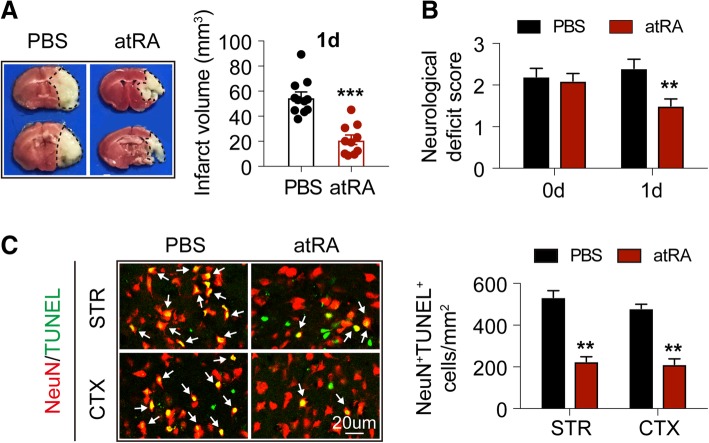
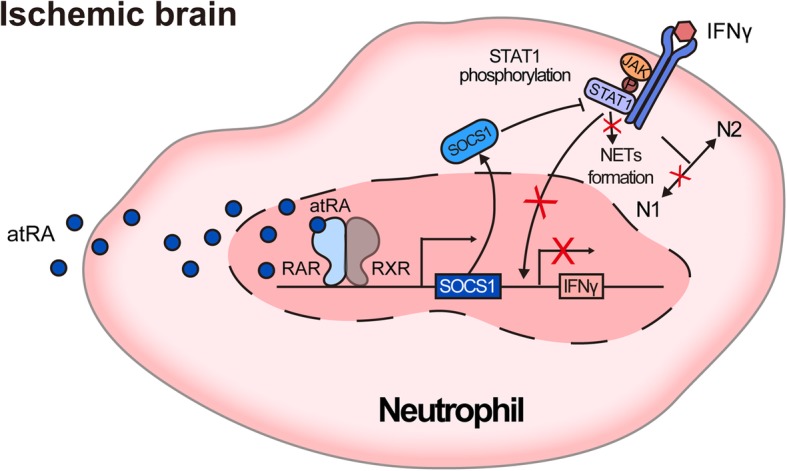
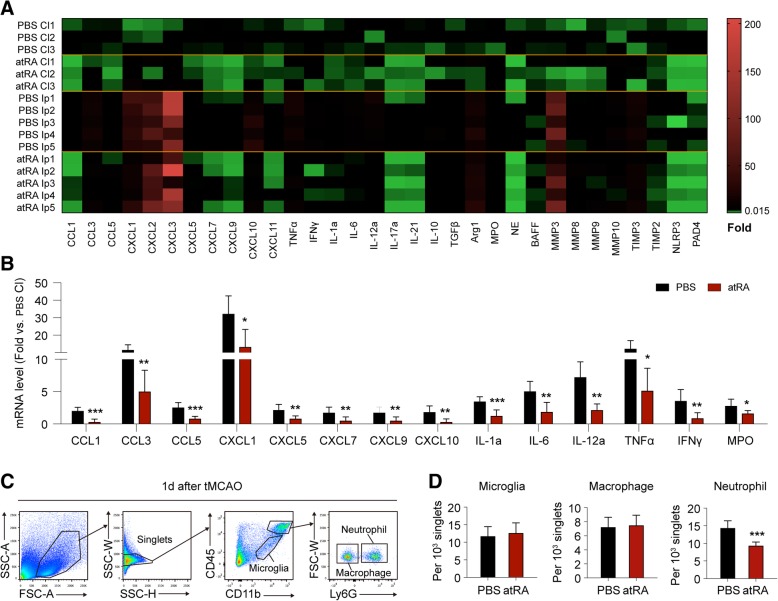
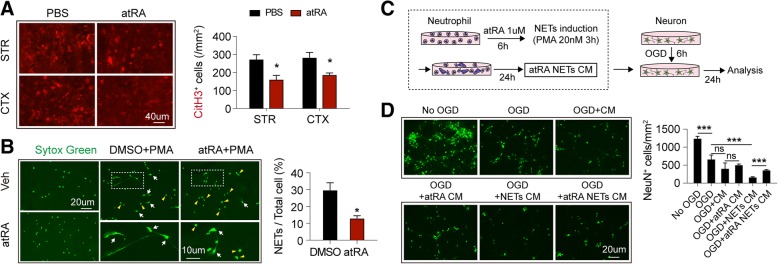
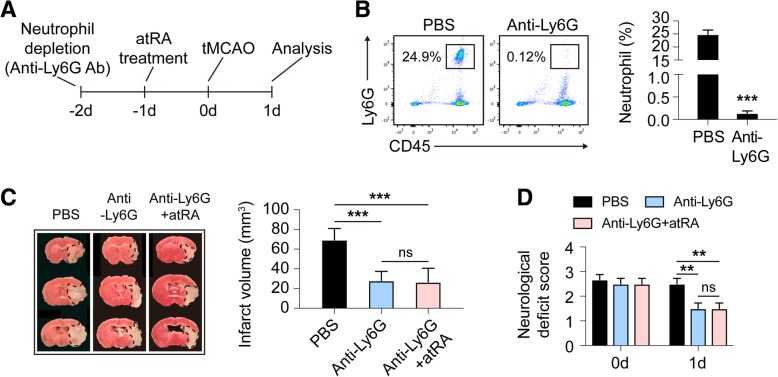
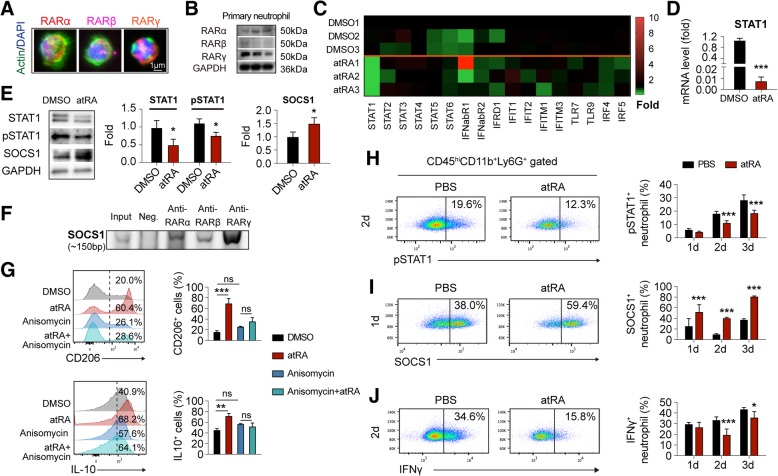
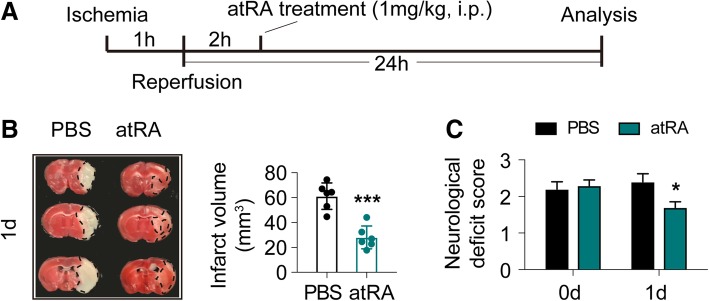
Prophylactic atRA treatment reduced infarct volumes and neurological deficits at 1 day after tMCAO. Post-stroke neural inflammation was attenuated and neutrophil accumulation in lesion was downregulated. atRA treatment skewed neutrophil toward N2 phenotype which facilitated its clearance by macrophage and inhibited NETs formation. The functions of neutrophil were indispensable in the protective effects of atRA and were associated with suppression to STAT1 signaling by atRA. Administration of atRA after stroke still provided efficient protection to cerebral ischemia.
atRA displays potent therapeutic efficacy in ischemic stroke by attenuating neural inflammation. Treatment of atRA impeded neutrophil accumulation, favored N2 polarization, and forbade NETs formation in ischemic lesion. STAT1 signaling played a decisive role in the mechanisms of atRA-afforded regulation to neutrophil.
神经炎症的调节被认为是缺血性中风治疗的重要靶点。全反式视黄酸(atRA)作为一种有效的免疫调节剂,在中风治疗领域引起了广泛关注。然而,atRA 介导的神经保护的免疫机制仍不清楚。本研究评估了 atRA 对中风后神经炎症的影响,并阐明了调节相关中性粒细胞功能的机制。
在短暂性大脑中动脉闭塞(tMCAO,1 小时)前 1 天预防性给予 atRA,再灌注后立即每天重复给药,持续 3 天。评估中风结果、中性粒细胞极化和中风病灶中中性粒细胞细胞外陷阱(NETs)的形成。用抗 Ly6G 抗体诱导中性粒细胞耗竭。使用原代中性粒细胞培养物来探索 atRA 治疗的机制。
预防性 atRA 治疗可减少 tMCAO 后 1 天的梗死体积和神经功能缺损。中风后的神经炎症减轻,病灶中的中性粒细胞聚集减少。atRA 治疗使中性粒细胞向 N2 表型倾斜,这有助于巨噬细胞清除,并抑制 NETs 的形成。中性粒细胞的功能在 atRA 的保护作用中是不可或缺的,并且与 atRA 对 STAT1 信号的抑制有关。中风后给予 atRA 仍能为脑缺血提供有效的保护。
atRA 通过减轻神经炎症在缺血性中风中显示出强大的治疗效果。atRA 的治疗阻碍了中性粒细胞的聚集,有利于 N2 极化,并阻止了缺血病灶中 NETs 的形成。STAT1 信号在 atRA 调节中性粒细胞的机制中起决定性作用。