Department of Pediatrics, Center for Host Defense, Inflammation, and Lung Disease Research, The Pennsylvania State University College of Medicine, Hershey, PA, United States.
Departments of Pharmacology and Biochemistry and Molecular Biology, Institute for Personalized Medicine, The Pennsylvania State University College of Medicine, Hershey, PA, United States.
Front Immunol. 2019 Aug 16;10:1960. doi: 10.3389/fimmu.2019.01960. eCollection 2019.
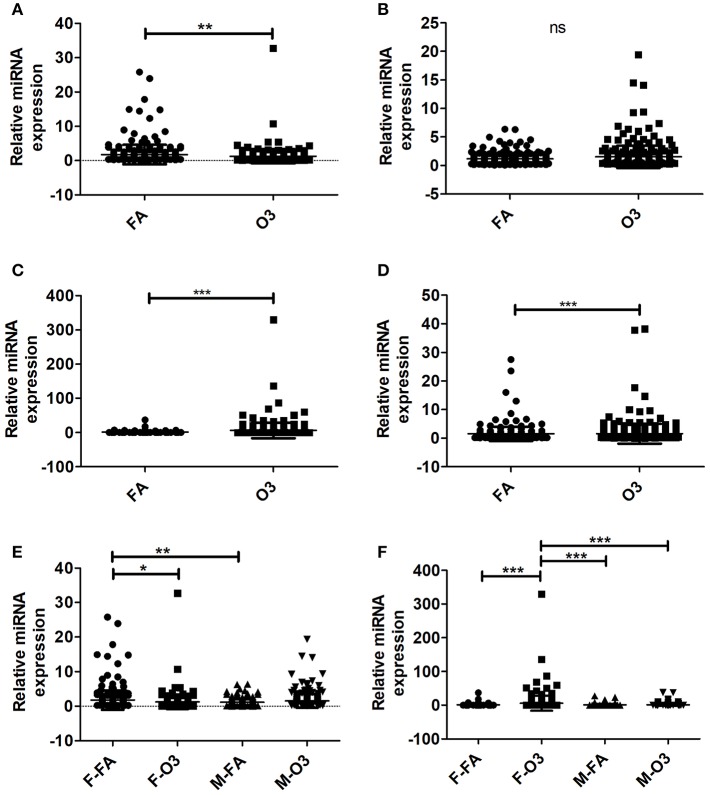
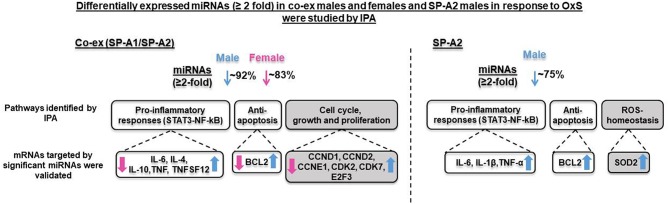
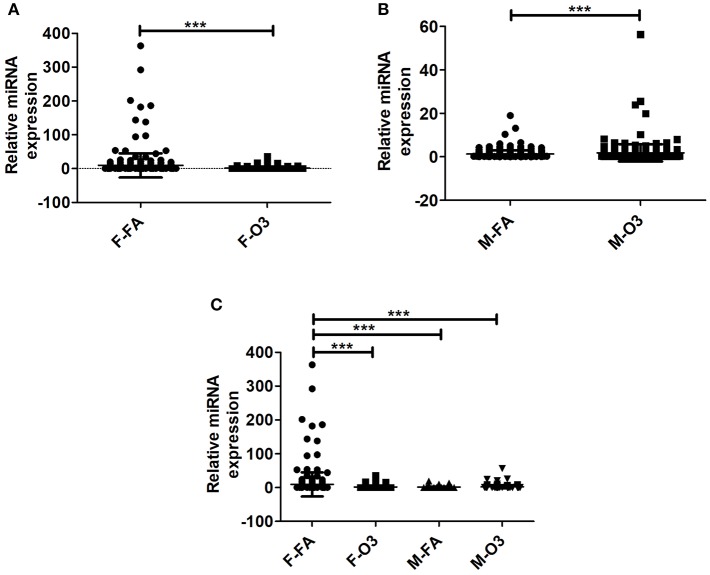
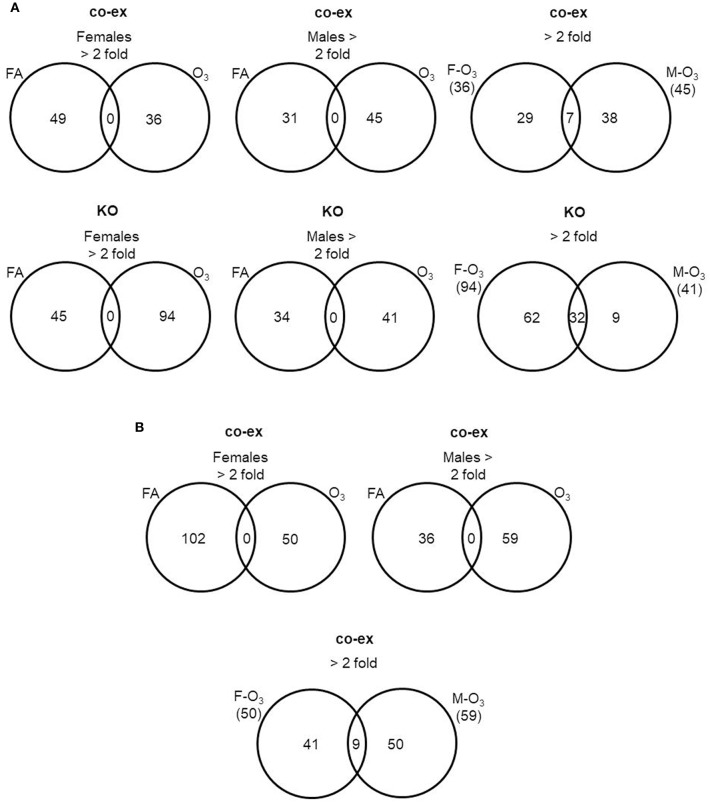
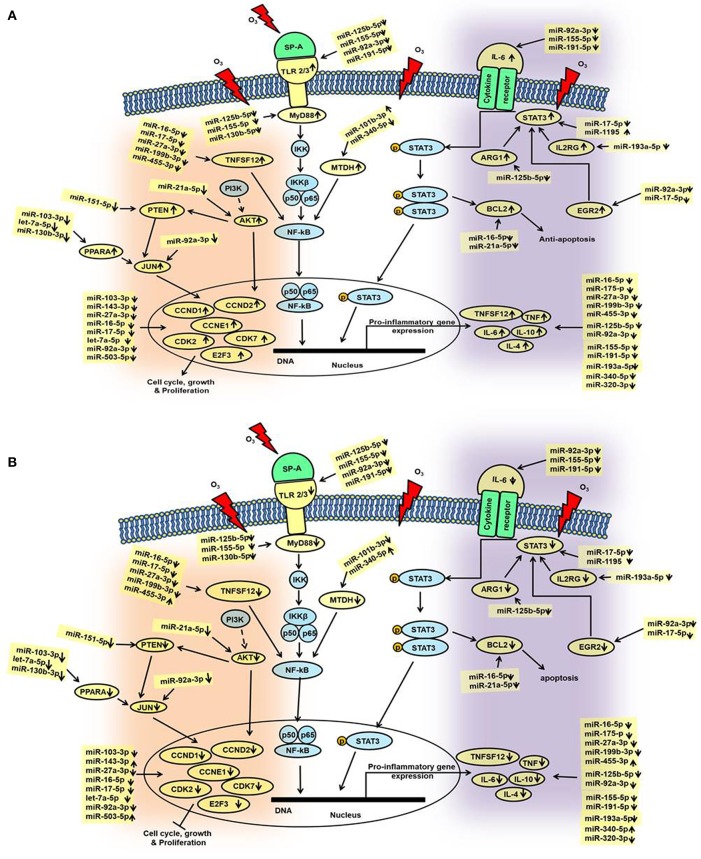
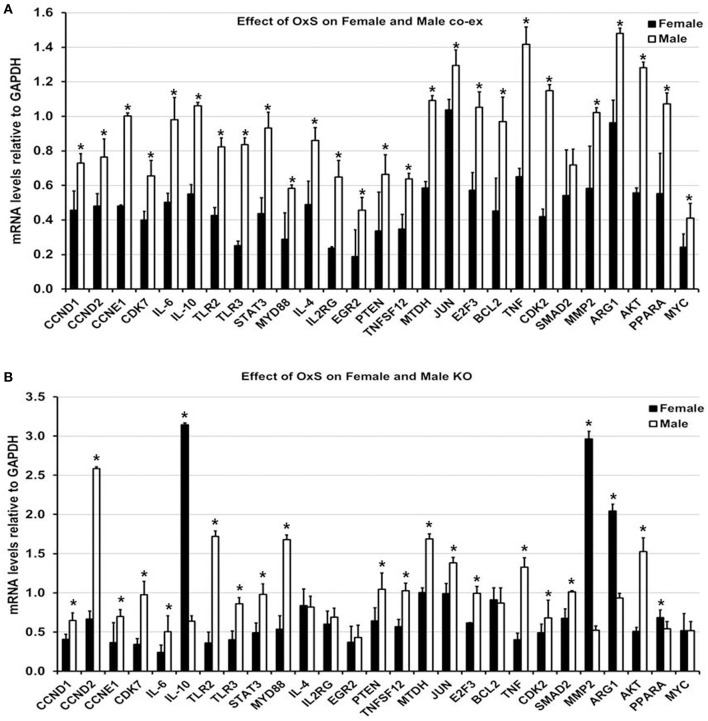
In humans there are two surfactant protein A (SP-A) functional genes and encoding innate immune molecules, SP-A1 and SP-A2, respectively, with numerous genetic variants each. SP-A interacts and regulates many of the functions of alveolar macrophages (AM). It is shown that SP-A variants differ in their ability to regulate the AM miRNome in response to oxidative stress (OxS). Because humans have both SP-A gene products, we were interested to determine the combined effect of co-expressed SP-A1/SP-A2 (co-ex) in response to ozone (O) induced OxS on AM miRNome. Human transgenic (hTG) mice, carrying both SP-A1/SP-A2 (6A/1A, co-ex) and SP-A- KO were utilized. The hTG and KO mice were exposed to filtered air (FA) or O and miRNA levels were measured after AM isolation with or without normalization to KO. We found: (i) The AM miRNome of co-ex males and females in response to OxS to be largely downregulated after normalization to KO, but after Bonferroni multiple comparison analysis only in females the AM miRNome remained significantly different compared to control (FA); (ii) The targets of the significantly changed miRNAs were downregulated in females and upregulated in males; (iii) Several of the validated mRNA targets were involved in pro-inflammatory response, anti-apoptosis, cell cycle, cellular growth and proliferation; (iv) The AM of SP-A2 male, shown, previously to have major effect on the male AM miRNome in response to OxS, shared similarities with the co-ex, namely in pathways involved in the pro-inflammatory response and anti-apoptosis but also exhibited differences with the cell-cycle, growth, and proliferation pathway being involved in co-ex and ROS homeostasis in SP-A2 male. We speculate that the presence of both gene products vs. single gene products differentially impact the AM responses in males and females in response to OxS.
在人类中,有两个表面活性剂蛋白 A (SP-A) 功能基因和 ,分别编码先天免疫分子 SP-A1 和 SP-A2,每个基因都有许多遗传变异。SP-A 相互作用并调节肺泡巨噬细胞 (AM) 的许多功能。研究表明,SP-A 变体在调节 AM 微小 RNA 组对氧化应激 (OxS) 的反应方面存在差异。由于人类具有两种 SP-A 基因产物,我们有兴趣确定在对臭氧 (O) 诱导的 OxS 反应中,共表达的 SP-A1/SP-A2 (co-ex) 的联合作用对 AM 微小 RNA 组的影响。我们使用携带 SP-A1/SP-A2 (6A/1A, co-ex) 和 SP-A-KO 的人转基因 (hTG) 小鼠。hTG 和 KO 小鼠分别暴露于过滤空气 (FA) 或 O 中,在 AM 分离后测量微小 RNA 水平,或在与 KO 归一化后进行测量。我们发现:(i) 在 OxS 反应中,雄性和雌性 co-ex 的 AM 微小 RNA 组在与 KO 归一化后,大部分被下调,但经过 Bonferroni 多重比较分析,只有雌性的 AM 微小 RNA 组与对照 (FA) 仍有显著差异;(ii) 显著变化的微小 RNA 的靶标在雌性中下调,在雄性中上调;(iii) 几个验证的 mRNA 靶标参与了促炎反应、抗凋亡、细胞周期、细胞生长和增殖;(iv) 之前研究表明,SP-A2 雄性中的 AM 对 OxS 反应中的雄性 AM 微小 RNA 组有主要影响,与 co-ex 有相似之处,即在涉及促炎反应和抗凋亡的途径中,但也存在差异,细胞周期、生长和增殖途径在 co-ex 中涉及,SP-A2 雄性中的 ROS 稳态也涉及。我们推测,两种基因产物的存在与单一基因产物的存在,对雄性和雌性 AM 对 OxS 的反应有不同的影响。