Department of Molecular Cellular and Developmental Biology, University of Michigan, Ann Arbor, Michigan, United States of America.
Department of Biology, Department of Genetics, Integrative Program for Biological and Genome Sciences, University of North Carolina at Chapel Hill, Chapel Hill, North Carolina, United States of America.
PLoS Biol. 2019 Sep 3;17(9):e3000378. doi: 10.1371/journal.pbio.3000378. eCollection 2019 Sep.
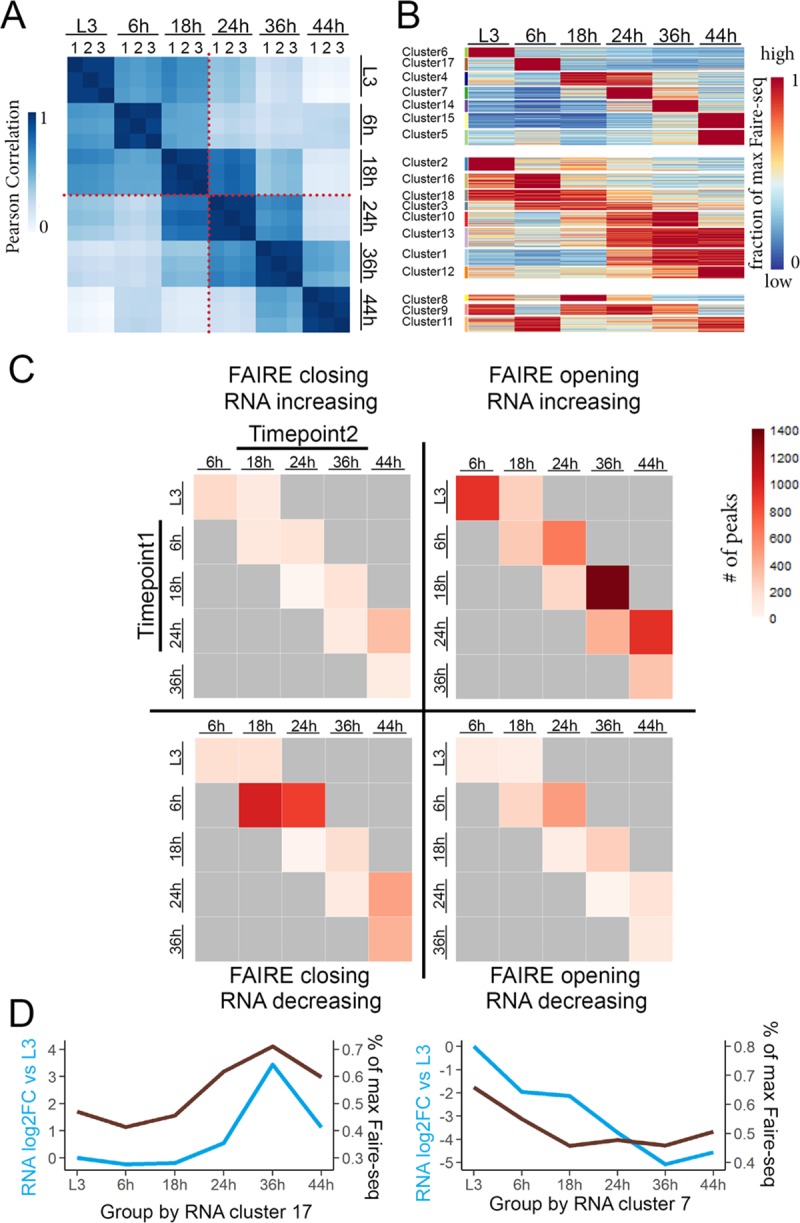
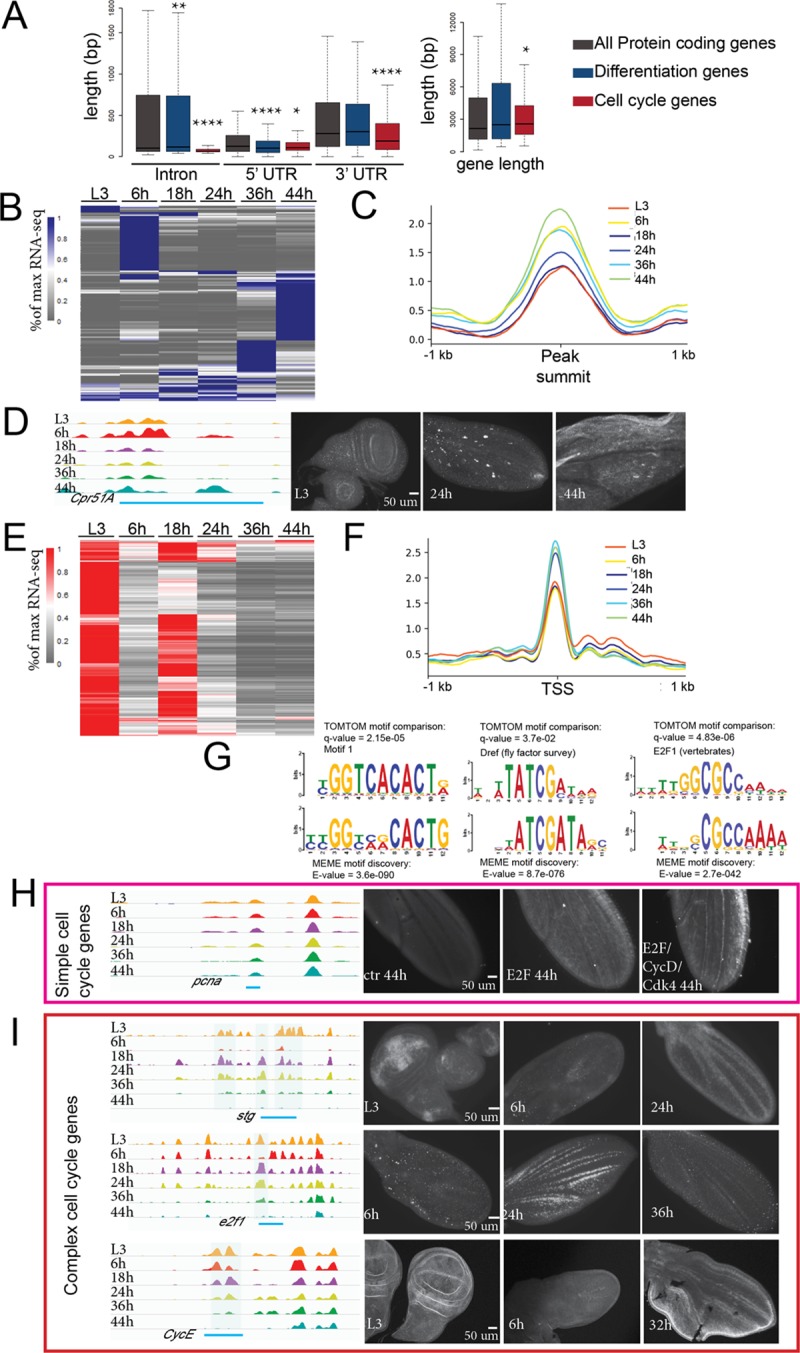
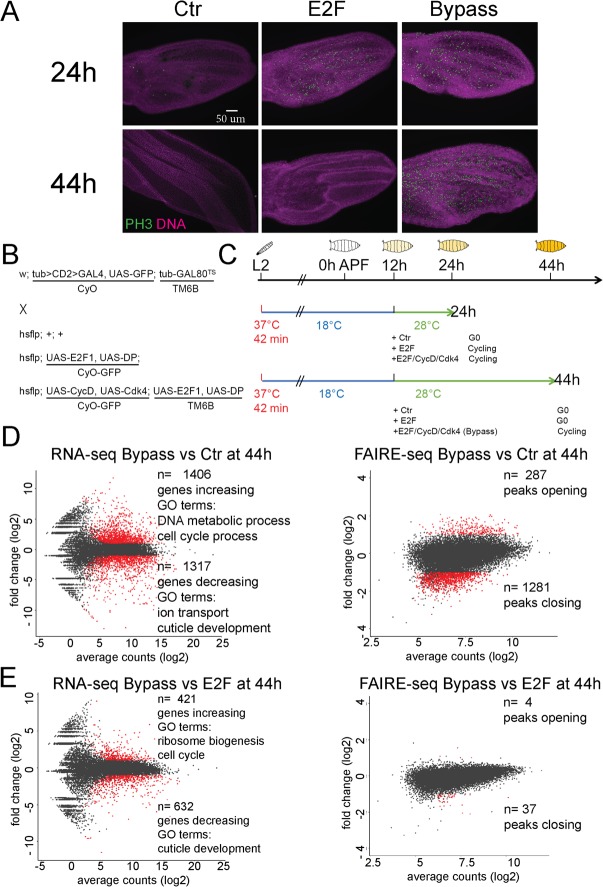
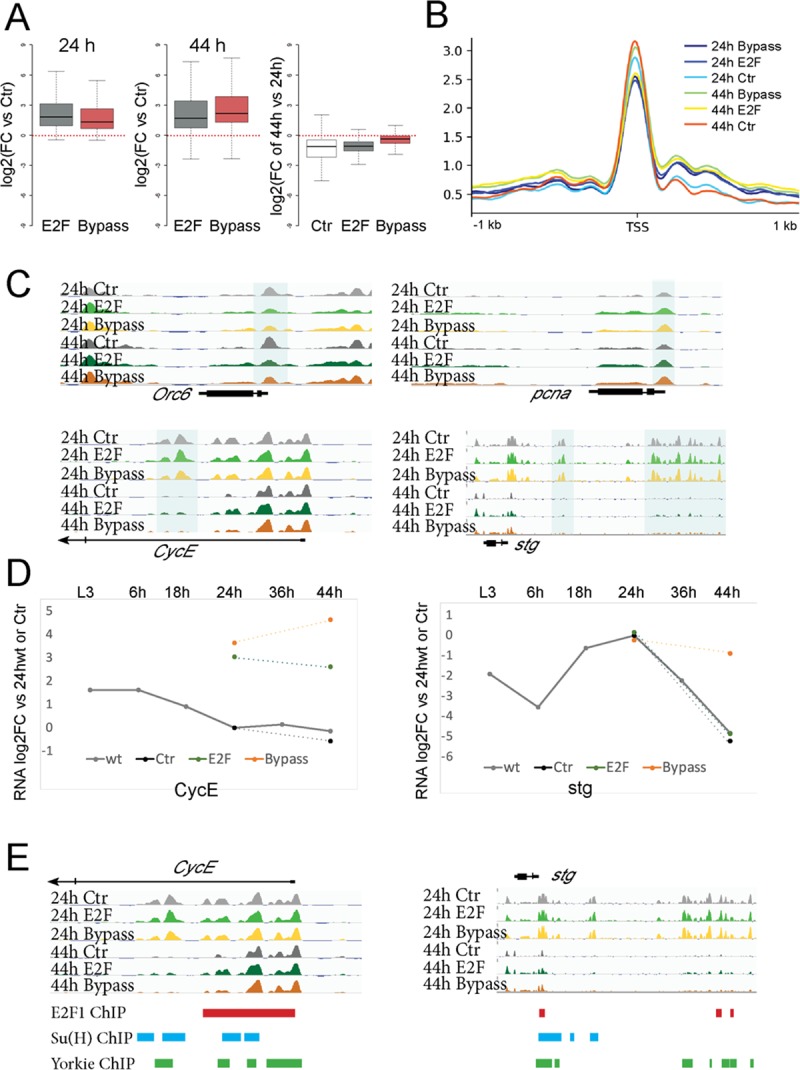
During terminal differentiation, most cells exit the cell cycle and enter into a prolonged or permanent G0 in which they are refractory to mitogenic signals. Entry into G0 is usually initiated through the repression of cell cycle gene expression by formation of a transcriptional repressor complex called dimerization partner (DP), retinoblastoma (RB)-like, E2F and MuvB (DREAM). However, when DREAM repressive function is compromised during terminal differentiation, additional unknown mechanisms act to stably repress cycling and ensure robust cell cycle exit. Here, we provide evidence that developmentally programmed, temporal changes in chromatin accessibility at a small subset of critical cell cycle genes act to enforce cell cycle exit during terminal differentiation in the Drosophila melanogaster wing. We show that during terminal differentiation, chromatin closes at a set of pupal wing enhancers for the key rate-limiting cell cycle regulators Cyclin E (cycE), E2F transcription factor 1 (e2f1), and string (stg). This closing coincides with wing cells entering a robust postmitotic state that is strongly refractory to cell cycle reactivation, and the regions that close contain known binding sites for effectors of mitogenic signaling pathways such as Yorkie and Notch. When cell cycle exit is genetically disrupted, chromatin accessibility at cell cycle genes remains unaffected, and the closing of distal enhancers at cycE, e2f1, and stg proceeds independent of the cell cycling status. Instead, disruption of cell cycle exit leads to changes in accessibility and expression of a subset of hormone-induced transcription factors involved in the progression of terminal differentiation. Our results uncover a mechanism that acts as a cell cycle-independent timer to limit the response to mitogenic signaling and aberrant cycling in terminally differentiating tissues. In addition, we provide a new molecular description of the cross talk between cell cycle exit and terminal differentiation during metamorphosis.
在终末分化过程中,大多数细胞退出细胞周期并进入长时间或永久性的 G0 期,在此期间它们对有丝分裂信号无反应。G0 的进入通常是通过转录抑制复合物的形成来启动的,该复合物称为二聚化伙伴 (DP)、视网膜母细胞瘤 (RB) 样、E2F 和 MuvB (DREAM)。然而,在终末分化过程中 DREAM 抑制功能受到损害时,会有其他未知机制来稳定抑制细胞周期并确保细胞周期退出。在这里,我们提供的证据表明,在 Drosophila melanogaster 翅膀的终末分化过程中,发育编程的、关键细胞周期基因的染色质可及性的时间变化会强制退出细胞周期。我们表明,在终末分化过程中,一组幼虫翅增强子的染色质关闭对于关键的细胞周期调控因子 Cyclin E (cycE)、E2F 转录因子 1 (e2f1) 和 string (stg) 的关键限速细胞周期调节剂。这种关闭与翅膀细胞进入强烈抗有丝分裂信号再激活的稳健的有丝分裂后状态同时发生,并且关闭的区域包含已知的丝裂原信号通路效应子如 Yorkie 和 Notch 的结合位点。当细胞周期退出被遗传破坏时,细胞周期基因的染色质可及性不受影响,并且 cycE、e2f1 和 stg 的远端增强子的关闭独立于细胞周期状态进行。相反,细胞周期退出的破坏会导致参与终末分化进程的激素诱导转录因子的子集的可及性和表达发生变化。我们的结果揭示了一种作为细胞周期独立定时器的机制,该机制限制了对有丝分裂信号的反应并限制了终末分化组织中的异常循环。此外,我们提供了细胞周期退出和变态过程中的终末分化之间的交叉对话的新分子描述。