Department of Neuroscience, Biomedicine and Movement Sciences, Section of Biological Chemistry, University of Verona, 37134 Verona, Italy.
Int J Mol Sci. 2019 Sep 3;20(17):4305. doi: 10.3390/ijms20174305.
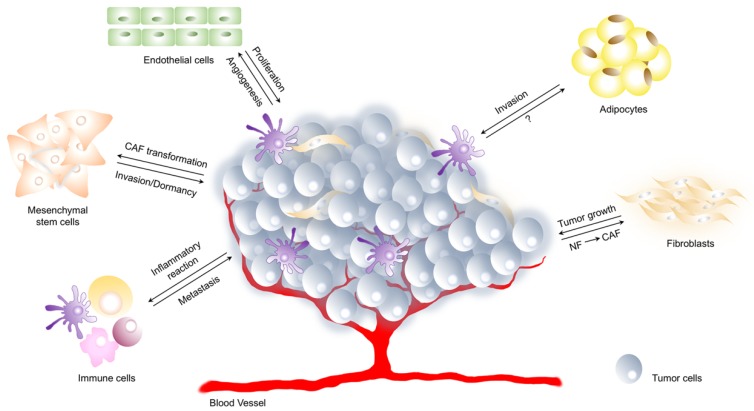
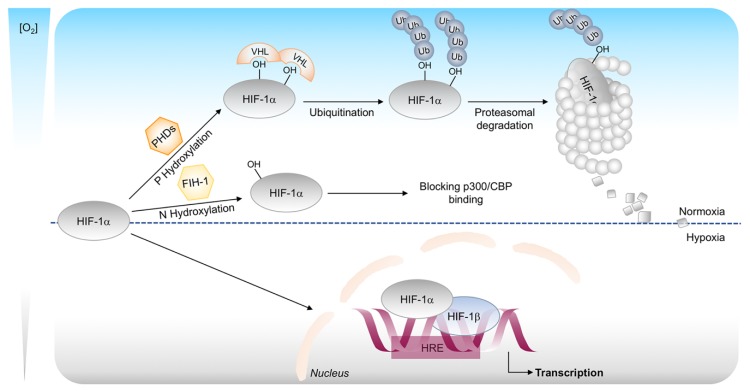
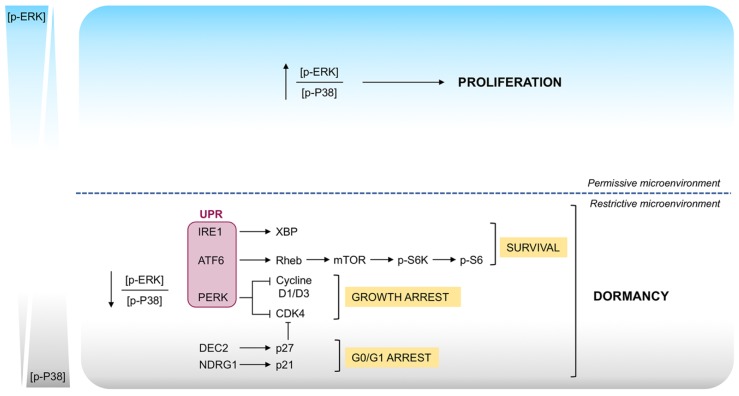
The tumor microenvironment is a key factor in disease progression, local resistance, immune-escaping, and metastasis. The rapid proliferation of tumor cells and the aberrant structure of the blood vessels within tumors result in a marked heterogeneity in the perfusion of the tumor tissue with regions of hypoxia. Although most of the tumor cells die in these hypoxic conditions, a part of them can adapt and survive for many days or months in a dormant state. Dormant tumor cells are characterized by cell cycle arrest in G0/G1 phase as well as a low metabolism, and are refractive to common chemotherapy, giving rise to metastasis. Despite these features, the cells retain their ability to proliferate when conditions improve. An understanding of the regulatory machinery of tumor dormancy is essential for identifying early cancer biomarkers and could provide a rationale for the development of novel agents to target dormant tumor cell populations. In this review, we examine the current knowledge of the mechanisms allowing tumor dormancy and discuss the crucial role of the hypoxic microenvironment in this process.
肿瘤微环境是疾病进展、局部耐药、免疫逃逸和转移的关键因素。肿瘤细胞的快速增殖和肿瘤内血管的异常结构导致肿瘤组织的灌注明显不均,出现缺氧区域。尽管大多数肿瘤细胞在这些缺氧条件下死亡,但其中一部分可以适应并在休眠状态下存活数天或数月。休眠肿瘤细胞的特征是细胞周期停滞在 G0/G1 期,代谢水平低,对常规化疗具有抗性,从而导致转移。尽管具有这些特征,但当条件改善时,细胞仍保留增殖的能力。了解肿瘤休眠的调控机制对于识别早期癌症生物标志物至关重要,并为开发针对休眠肿瘤细胞群体的新型药物提供了理论依据。在这篇综述中,我们检查了允许肿瘤休眠的机制的现有知识,并讨论了缺氧微环境在这个过程中的关键作用。