Laboratory of Neural Circuit Development and Regeneration, Department of Biology, KU Leuven, 3000 Leuven, Belgium.
Int J Mol Sci. 2019 Sep 3;20(17):4314. doi: 10.3390/ijms20174314.
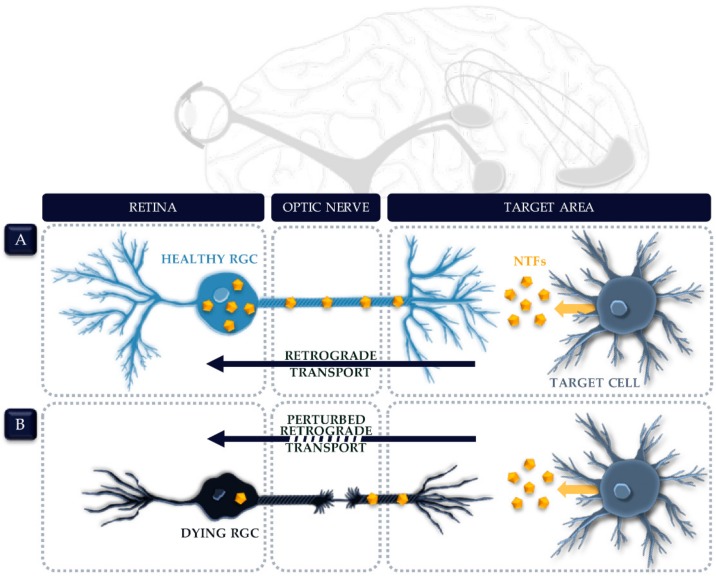
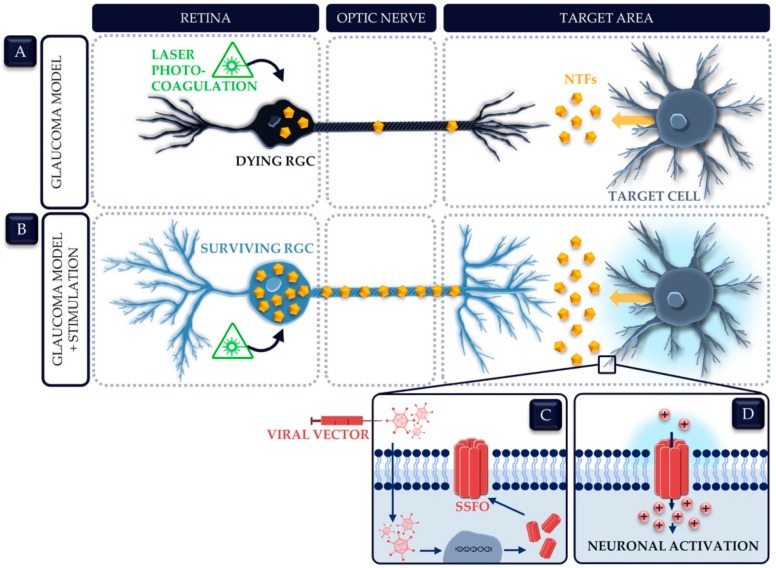
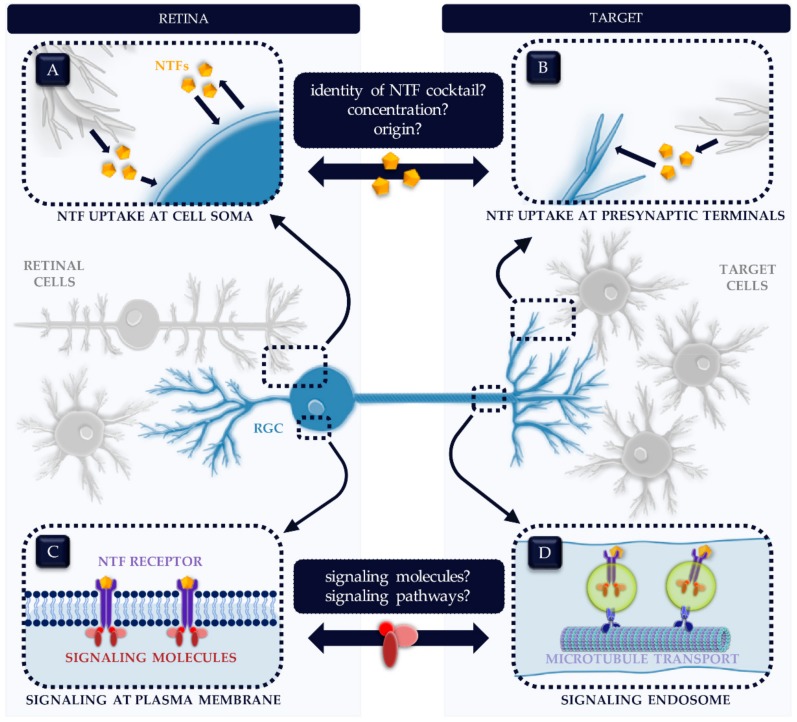
Glaucoma and other optic neuropathies are characterized by axonal transport deficits. Axonal cargo travels back and forth between the soma and the axon terminus, a mechanism ensuring homeostasis and the viability of a neuron. An example of vital molecules in the axonal cargo are neurotrophic factors (NTFs). Hindered retrograde transport can cause a scarcity of those factors in the retina, which in turn can tilt the fate of retinal ganglion cells (RGCs) towards apoptosis. This postulation is one of the most widely recognized theories to explain RGC death in the disease progression of glaucoma and is known as the NTF deprivation theory. For several decades, research has been focused on the use of NTFs as a novel neuroprotective glaucoma treatment. Until now, results in animal models have been promising, but translation to the clinic has been highly disappointing. Are we lacking important knowledge to lever NTF therapies towards the therapeutic armamentarium? Or did we get the wrong end of the stick regarding the NTF deprivation theory? In this review, we will tackle the existing evidence and caveats advocating for and against the target-derived NTF deprivation theory in glaucoma, whilst digging into associated therapy efforts.
青光眼和其他视神经病变的特征是轴突运输缺陷。轴突货物在体和轴突末端之间来回运输,这一机制确保了神经元的内稳态和存活。轴突货物中的重要分子的一个例子是神经营养因子(NTFs)。逆行运输受阻会导致视网膜中这些因子的缺乏,反过来又会使视网膜神经节细胞(RGCs)的命运向凋亡倾斜。这一假说被广泛认为是解释青光眼疾病进展中 RGC 死亡的理论之一,被称为 NTF 剥夺理论。几十年来,研究一直集中在使用 NTF 作为一种新型神经保护治疗青光眼上。到目前为止,动物模型的研究结果很有希望,但向临床转化却令人非常失望。我们是否缺乏将 NTF 治疗应用于治疗武器库的重要知识?或者我们对 NTF 剥夺理论的理解有误?在这篇综述中,我们将探讨现有的证据和注意事项,支持和反对青光眼的靶源性 NTF 剥夺理论,同时深入研究相关的治疗努力。