Sindelo Azole, Nyokong Tebello
Institute for Nanotechnology Innovation, Department of Chemistry, Rhodes University, Grahamstown, 6140, South Africa.
Heliyon. 2019 Aug 24;5(8):e02352. doi: 10.1016/j.heliyon.2019.e02352. eCollection 2019 Aug.
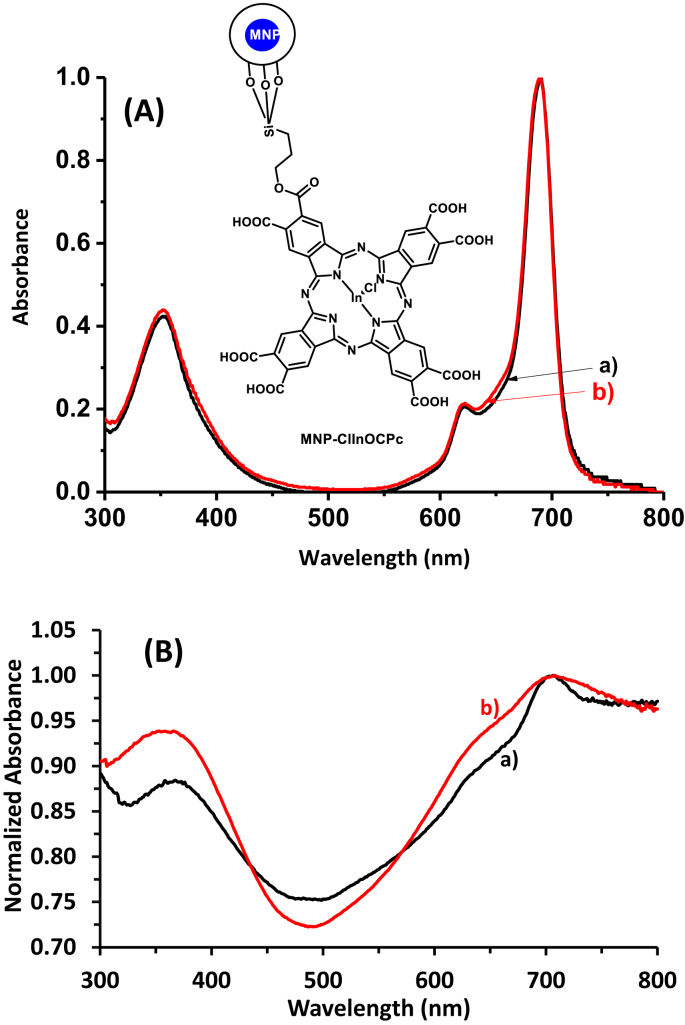
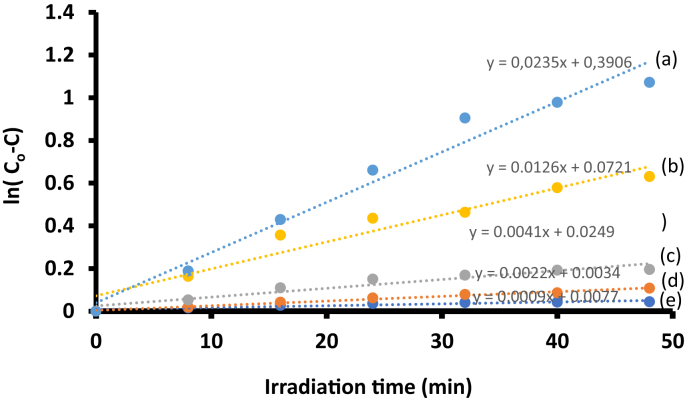
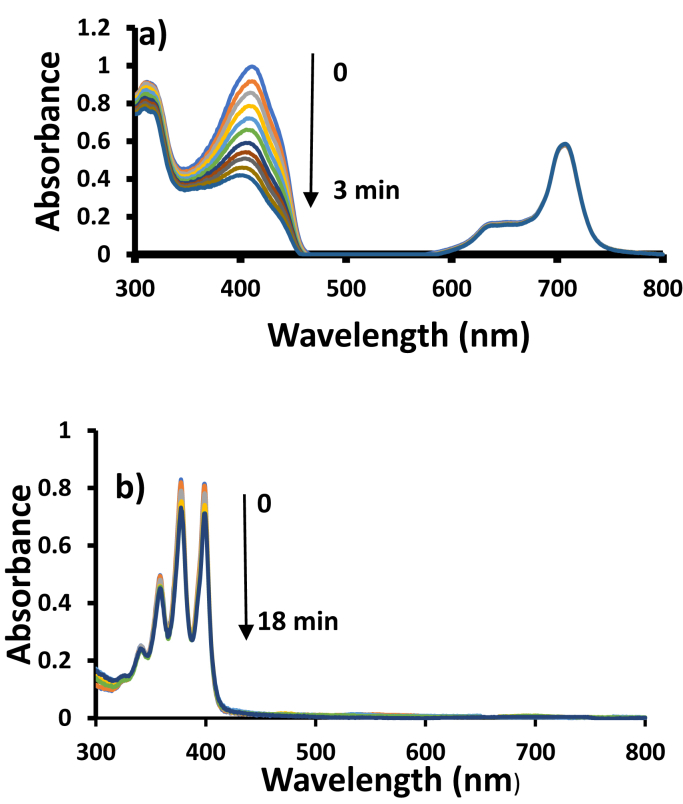
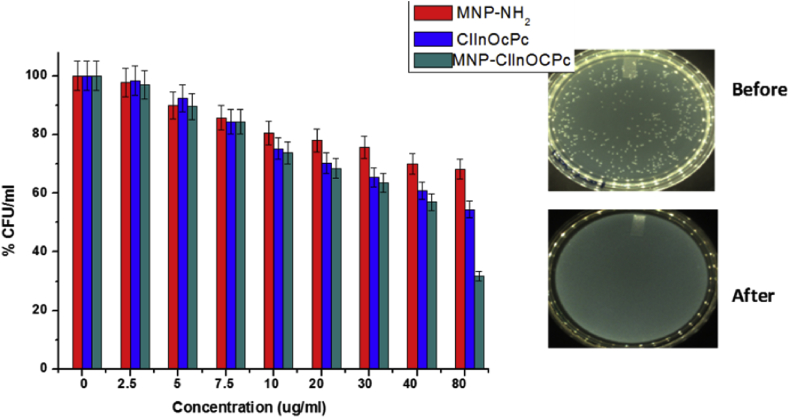
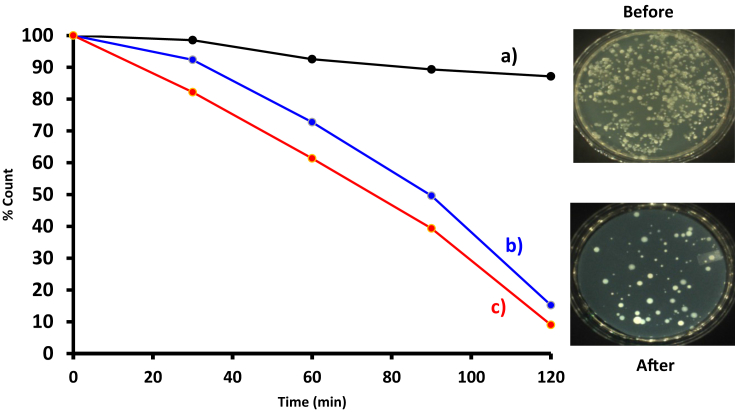
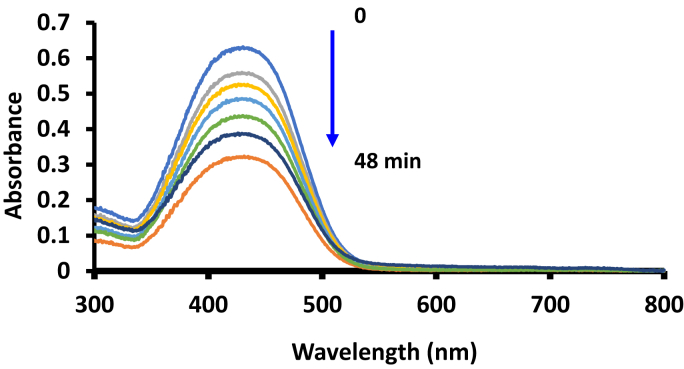
ClIn(III) octacarboxy phthalocyanine (ClInOCPc) when alone or conjugated to magnetic nanoparticles (MNP-ClInOCPc) was employed for both photodynamic antimicrobial chemotherapy of an unknown water sample and and for photo-degradation of methyl red (MR). The singlet oxygen quantum yields ( ) in water using ClInOCPc and MNP-ClInOCPc embedded in polyacrylonitrile (PAN) electrospun fibers were 0.36 and 0.22, respectively. When in solution, MNP-ClInOCPc gave 90.6% photoinactivation of microbes in a water sample from the stream and of ClInOCPc resulted in 84.8 % photoinactivation. When embedded to the polymer, there was 48.0% clearance for ClInOCPc and 63.7% clearance for MNP-ClInOCPc for the microbes in the water sample from the stream. For the photo-degradation of MR, the rate of degradation increased with decrease of the MR concentration with the MNP-ClInOCPc having the fastest rate.
八羧基酞菁铟(III)(ClInOCPc)单独使用或与磁性纳米颗粒结合(MNP-ClInOCPc),用于对未知水样进行光动力抗菌化疗以及甲基红(MR)的光降解。嵌入聚丙烯腈(PAN)电纺纤维中的ClInOCPc和MNP-ClInOCPc在水中的单线态氧量子产率( )分别为0.36和0.22。在溶液中时,MNP-ClInOCPc对溪流中的水样微生物产生了90.6%的光灭活,而ClInOCPc导致了84.8%的光灭活。当嵌入聚合物中时,对于溪流中的水样微生物,ClInOCPc的清除率为48.0%,MNP-ClInOCPc的清除率为63.7%。对于MR的光降解,降解速率随着MR浓度的降低而增加,其中MNP-ClInOCPc的降解速率最快。