School of Nursing, University of California, San Francisco, CA, USA.
School of Medicine, University of California, San Francisco, CA, USA.
Mol Pain. 2019 Jan-Dec;15:1744806919878088. doi: 10.1177/1744806919878088.
The major dose-limiting toxicity of paclitaxel, one of the most commonly used drugs to treat breast cancer, is peripheral neuropathy (paclitaxel-induced peripheral neuropathy). Paclitaxel-induced peripheral neuropathy, which persists into survivorship, has a negative impact on patient’s mood, functional status, and quality of life. Currently, no interventions are available to treat paclitaxel-induced peripheral neuropathy. A critical barrier to the development of efficacious interventions is the lack of understanding of the mechanisms that underlie paclitaxel-induced peripheral neuropathy. While data from preclinical studies suggest that disrupting cytoskeleton- and axon morphology-related processes are a potential mechanism for paclitaxel-induced peripheral neuropathy, clinical evidence is limited. The purpose of this study in breast cancer survivors was to evaluate whether differential gene expression and co-expression patterns in these pathways are associated with paclitaxel-induced peripheral neuropathy.
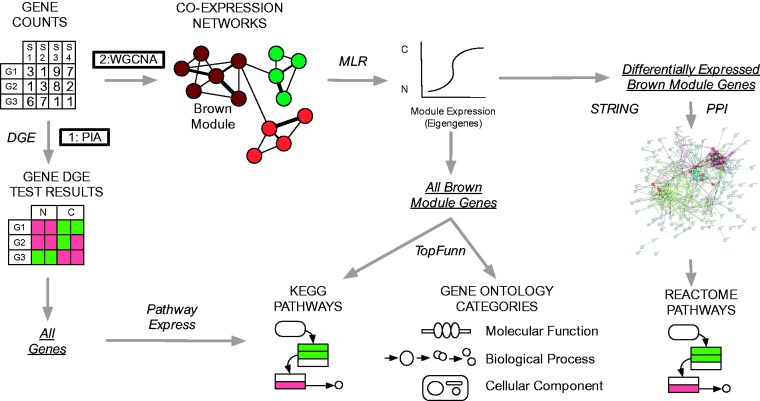
Signaling pathways and gene co-expression modules associated with cytoskeleton and axon morphology were identified between survivors who received paclitaxel and did (n = 25) or did not (n = 25) develop paclitaxel-induced peripheral neuropathy.
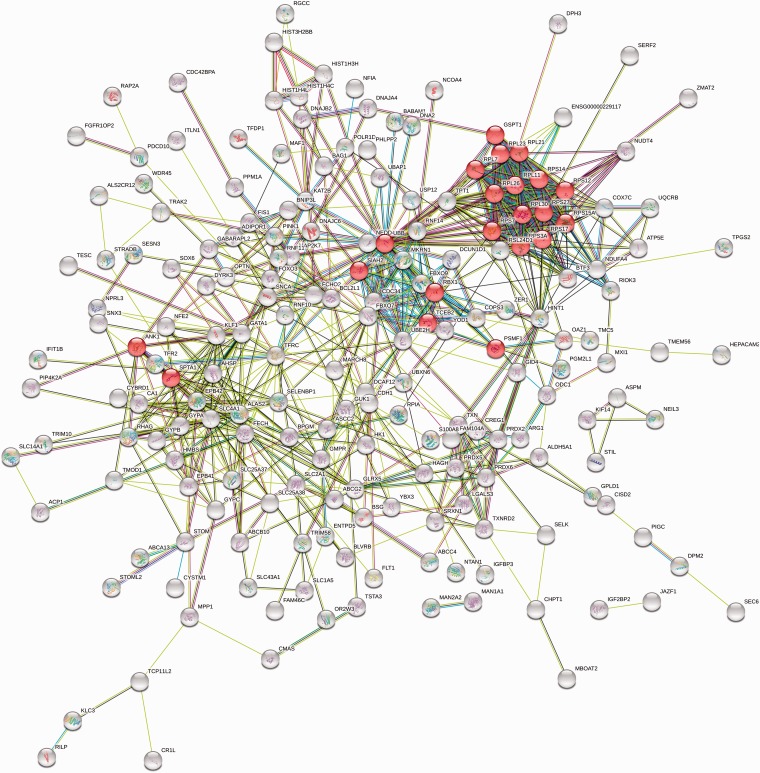
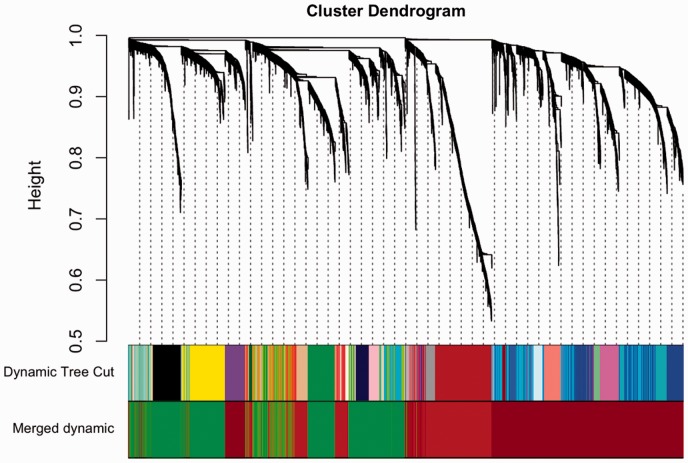
Pathway impact analysis identified four significantly perturbed cytoskeleton- and axon morphology-related signaling pathways. Weighted gene co-expression network analysis identified three co-expression modules. One module was associated with paclitaxel-induced peripheral neuropathy group membership. Functional analysis found that this module was associated with four signaling pathways and two ontology annotations related to cytoskeleton and axon morphology.
This study, which is the first to apply systems biology approaches using circulating whole blood RNA-seq data in a sample of breast cancer survivors with and without chronic paclitaxel-induced peripheral neuropathy, provides molecular evidence that cytoskeleton- and axon morphology-related mechanisms identified in preclinical models of various types of neuropathic pain including chemotherapy-induced peripheral neuropathy are found in breast cancer survivors and suggests pathways and a module of genes for validation and as potential therapeutic targets.
紫杉醇是治疗乳腺癌最常用的药物之一,其主要剂量限制毒性是周围神经病变(紫杉醇引起的周围神经病)。持续存在于生存者中的紫杉醇引起的周围神经病对患者的情绪、功能状态和生活质量有负面影响。目前,尚无干预措施可用于治疗紫杉醇引起的周围神经病。开发有效干预措施的一个关键障碍是缺乏对导致紫杉醇引起的周围神经病的机制的理解。虽然来自临床前研究的数据表明,破坏细胞骨架和轴突形态相关过程是紫杉醇引起的周围神经病的潜在机制,但临床证据有限。本研究旨在评估这些途径中的差异基因表达和共表达模式是否与紫杉醇引起的周围神经病相关。
在接受紫杉醇治疗且发生(n=25)或未发生(n=25)紫杉醇引起的周围神经病的生存者中,鉴定与细胞骨架和轴突形态相关的信号通路和基因共表达模块。
通路影响分析确定了四个显著失调的细胞骨架和轴突形态相关信号通路。加权基因共表达网络分析确定了三个共表达模块。一个模块与紫杉醇引起的周围神经病组的成员有关。功能分析发现,该模块与四个信号通路和两个与细胞骨架和轴突形态相关的本体论注释有关。
本研究首次应用系统生物学方法,使用循环全血 RNA-seq 数据,在有和没有慢性紫杉醇引起的周围神经病的乳腺癌生存者中进行分析,为细胞骨架和轴突形态相关机制提供了分子证据,这些机制在各种类型的神经病理性疼痛的临床前模型中被确定,包括化疗引起的周围神经病,并且在乳腺癌生存者中发现,并提示了验证和潜在治疗靶点的途径和基因模块。