Mammoto Tadanori, Torisawa Yu-Suke, Muyleart Megan, Hendee Kathryn, Anugwom Charles, Gutterman David, Mammoto Akiko
Department of Pediatrics, Medical College of Wisconsin, Milwaukee, WI 53226, USA.
Hakubi Center for Advanced Research, Kyoto University, Kyoto 615-8540, Japan.
Aging (Albany NY). 2019 Sep 5;11(17):7051-7069. doi: 10.18632/aging.102236.
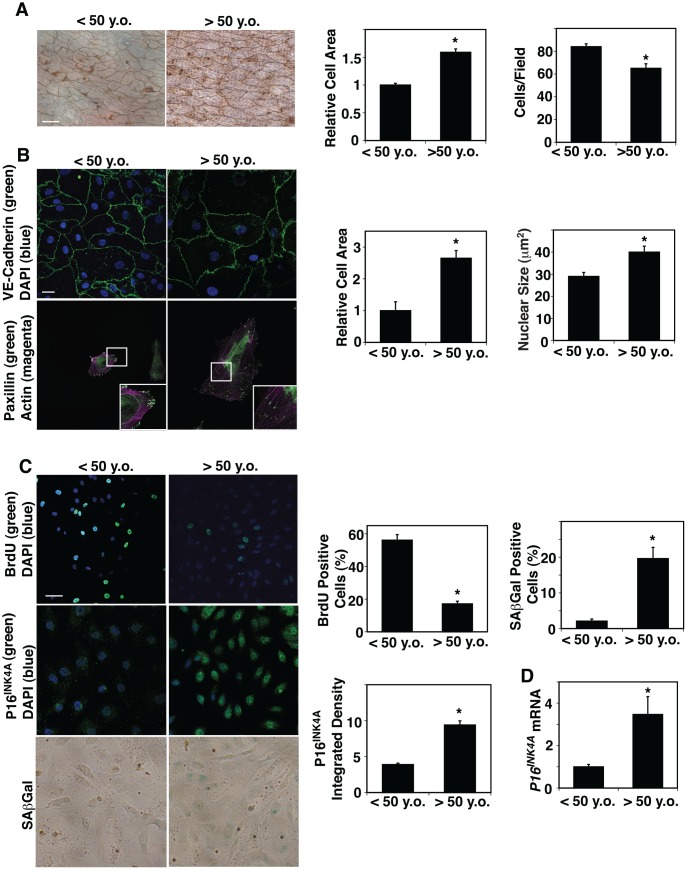
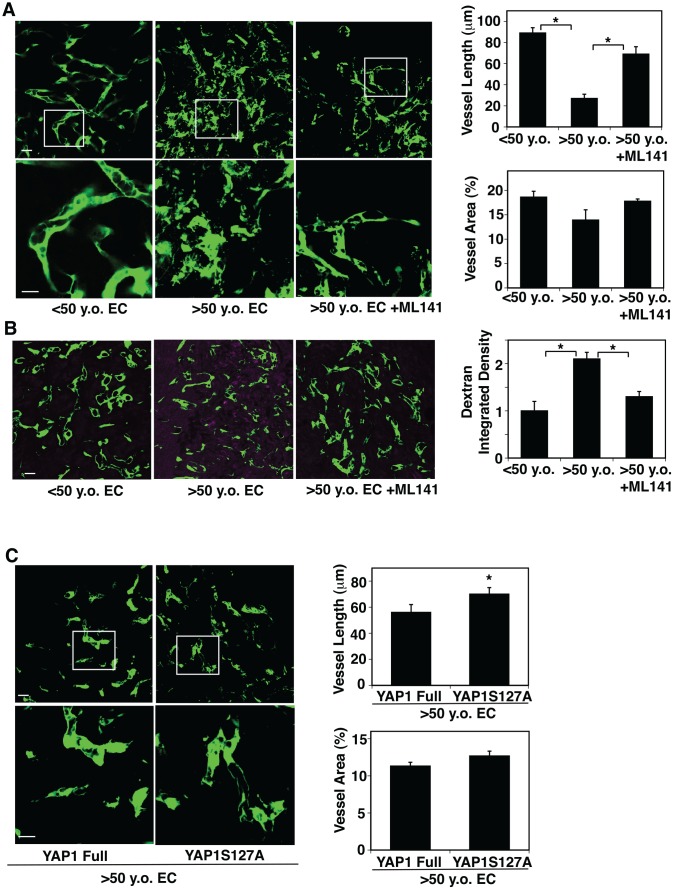
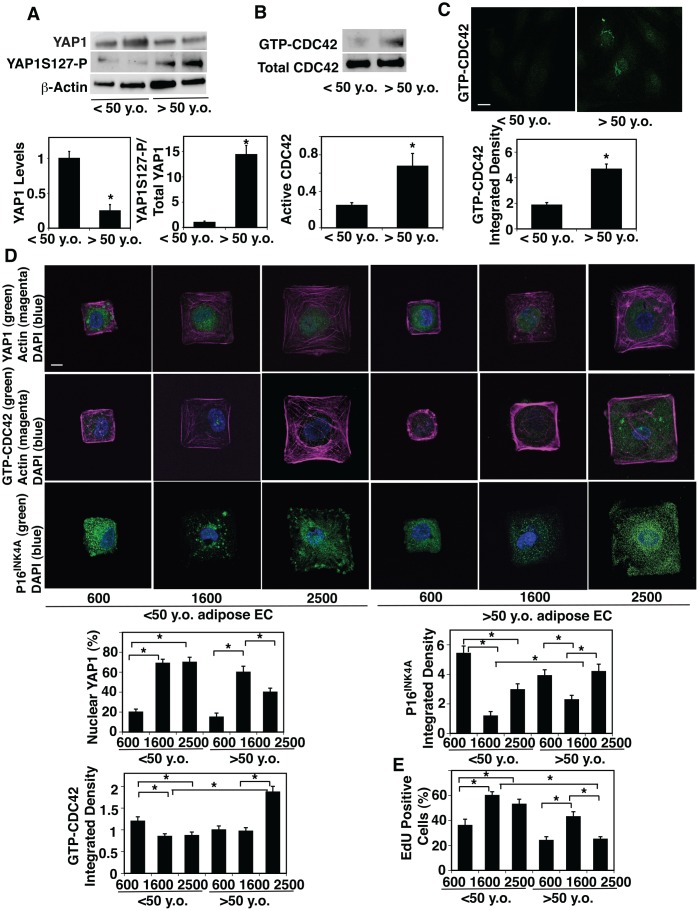
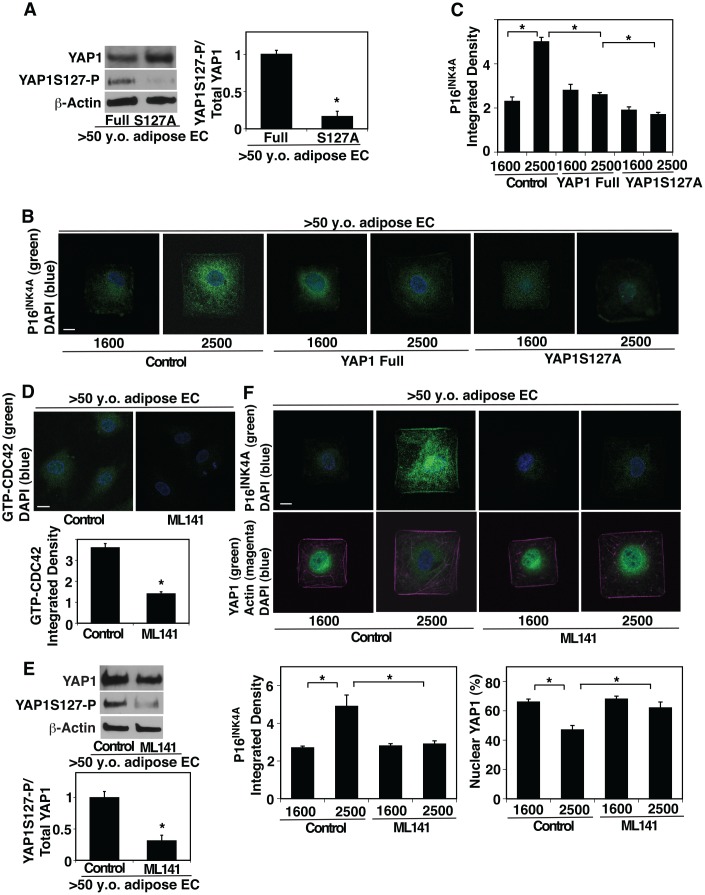
Angiogenesis - the growth of new blood capillaries- is impaired in aging animals. Biophysical factors such as changes in cell size control endothelial cell (EC) proliferation and differentiation. However, the effects of aging on EC size and the mechanism by which changes in cell size control age-dependent decline in EC proliferation are largely unknown. Here, we have demonstrated that aged ECs are larger than young ECs and that age-dependent increases in EC size control EC proliferation and senescence through CDC42-Yes-associated protein (YAP1) signaling. Reduction of aged EC size by culturing on single-cell sized fibronectin-coated smaller islands decreases CDC42 activity, stimulates YAP1 nuclear translocation and attenuates EC senescence. Stimulation of YAP1 or inhibition of CDC42 activity in aged ECs also restores blood vessel formation. Age-dependent changes in EC size and/or CDC42 and YAP1 activity may be the key control point of age-related decline in angiogenesis.
血管生成——新毛细血管的生长——在衰老动物中会受到损害。生物物理因素,如细胞大小的变化,控制着内皮细胞(EC)的增殖和分化。然而,衰老对内皮细胞大小的影响以及细胞大小变化控制内皮细胞增殖随年龄下降的机制在很大程度上尚不清楚。在这里,我们已经证明,衰老的内皮细胞比年轻的内皮细胞更大,并且内皮细胞大小随年龄增长的增加通过细胞分裂周期蛋白42(CDC42)-Yes相关蛋白(YAP1)信号通路控制内皮细胞的增殖和衰老。通过在单细胞大小的纤连蛋白包被的较小岛屿上培养来减小衰老内皮细胞的大小,会降低CDC42活性,刺激YAP1核转位并减弱内皮细胞衰老。在衰老的内皮细胞中刺激YAP1或抑制CDC42活性也能恢复血管形成。内皮细胞大小和/或CDC42以及YAP1活性随年龄的变化可能是血管生成与年龄相关下降的关键控制点。