Department of Pediatrics, Medical College of Wisconsin, Milwaukee, WI 53226, USA.
Department of Pediatrics, Medical College of Wisconsin, Milwaukee, WI 53226, USA; Department of Radiology, Medical College of Wisconsin, Milwaukee, WI 53226, USA.
Microvasc Res. 2018 Sep;119:73-83. doi: 10.1016/j.mvr.2018.04.003. Epub 2018 Apr 20.
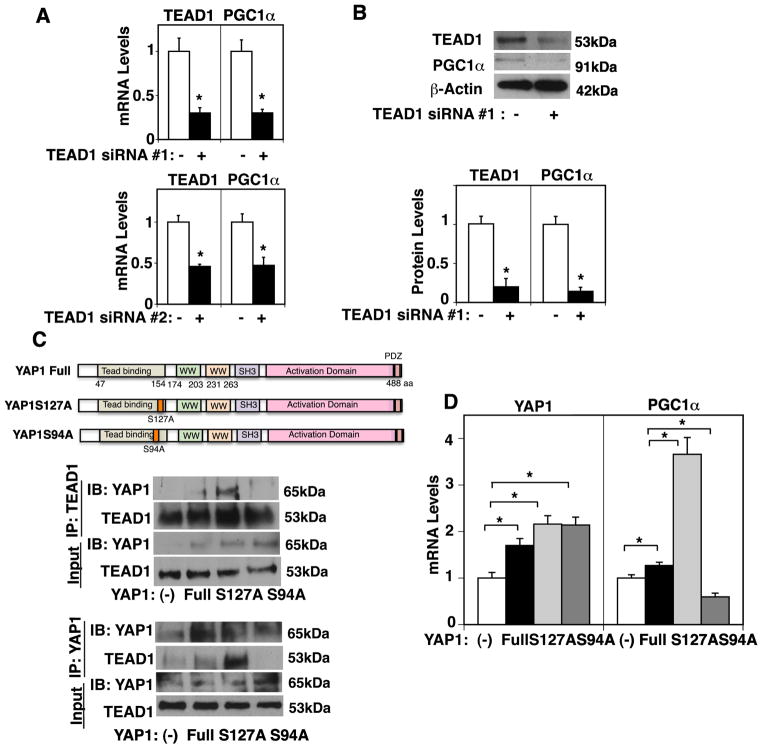
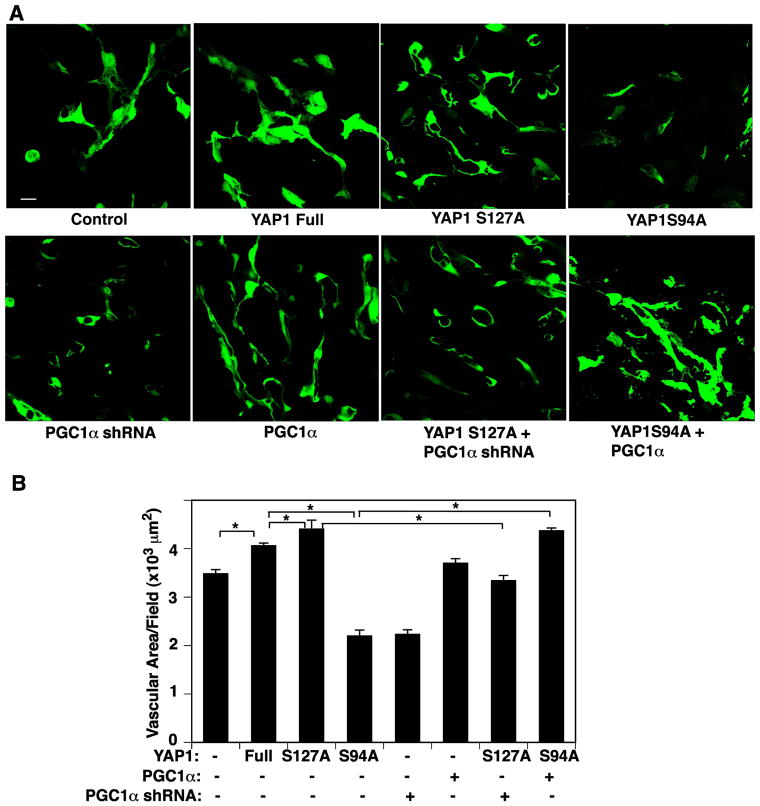
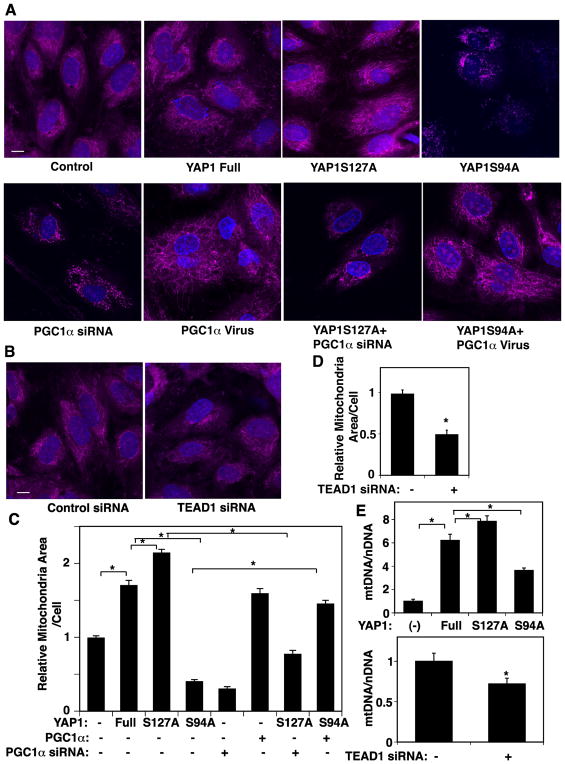
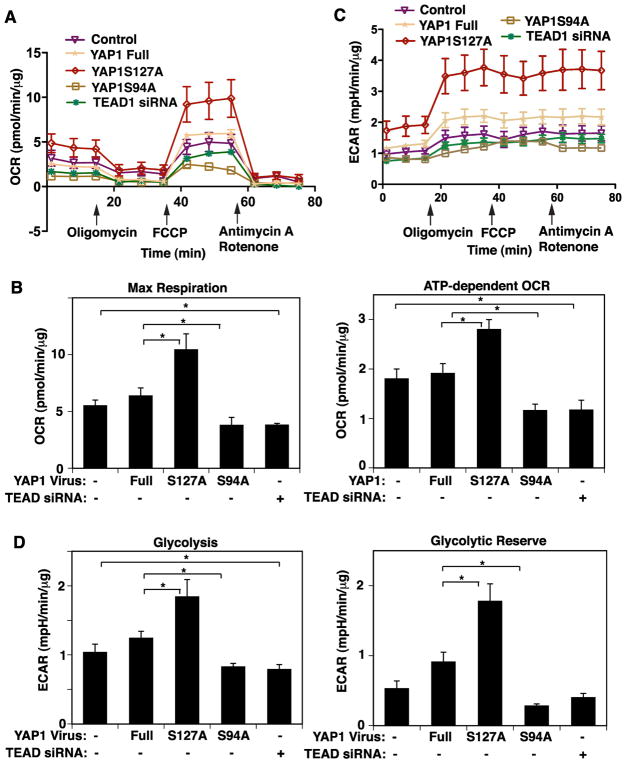
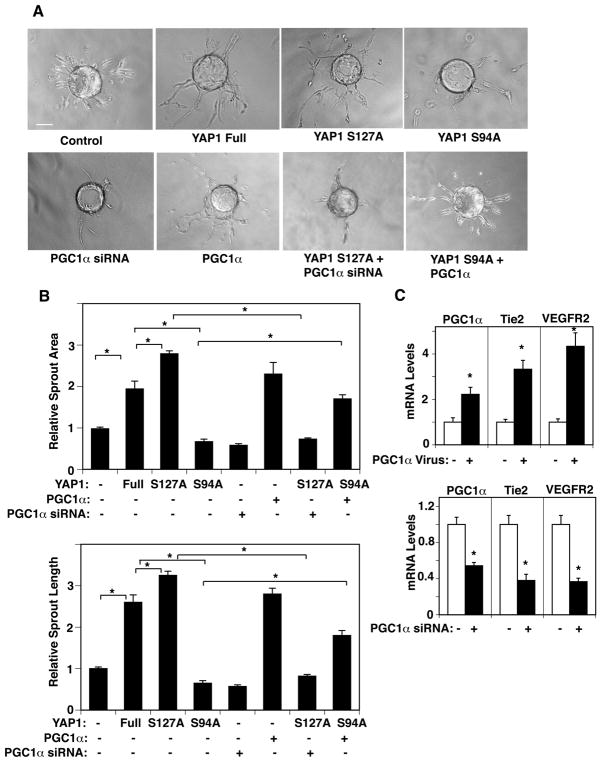
Mitochondria contribute to key processes of cellular function, while mitochondrial dysfunction is implicated in metabolic disorders, neurodegenerative diseases, and cardiovascular diseases, in which angiogenesis - the formation of new blood capillaries - is dysregulated. The Hippo signaling transducer, Yes-associated protein (YAP1) binds to the TEA domain (TEAD1) transcription factor and controls angiogenesis. YAP1 also regulates glucose metabolism through peroxisome proliferator-activated receptor gamma co-activator 1-alpha (PGC1α), a major player controlling mitochondrial biogenesis. However, the role of YAP1-TEAD1-PGC1α signaling in mitochondrial structure, cellular metabolism, and angiogenesis in endothelial cells (ECs) remains unclear. We now find that knockdown of TEAD1 decreases the expression of PGC1α and suppresses mitochondrial biogenesis, glycolysis, and oxygen consumption in ECs. A YAP1 mutant construct, YAP1S127A, which stimulates binding of YAP1 to TEAD1, upregulates the expression of PGC1α, induces mitochondrial biogenesis, and increases oxygen consumption and glycolytic flux in ECs; in contrast, YAP1S94A, which fails to bind to TEAD1, attenuates these effects. PGC1α knockdown inhibits YAP1S127A-induced EC sprouting in vitro and vascular morphogenesis in the fibrin gel subcutaneously implanted on mice, while overexpression of PGC1α reverses vascular morphogenesis suppressed by YAP1S94A. These results suggest that YAP1-TEAD1 signaling induces mitochondrial biogenesis in ECs and stimulates angiogenesis through PGC1α. Modulation of YAP1-TEAD1-PGC1α signaling in ECs may provide a novel intervention for angiogenesis-related diseases.
线粒体参与细胞功能的关键过程,而线粒体功能障碍与代谢紊乱、神经退行性疾病和心血管疾病有关,其中血管生成(新毛细血管的形成)失调。Hippo 信号转导物 Yes 相关蛋白 (YAP1) 与 TEA 结构域 (TEAD1) 转录因子结合并控制血管生成。YAP1 还通过过氧化物酶体增殖物激活受体 γ 共激活因子 1-α (PGC1α) 调节葡萄糖代谢,PGC1α 是控制线粒体生物发生的主要因子。然而,YAP1-TEAD1-PGC1α 信号在血管内皮细胞 (EC) 中线粒体结构、细胞代谢和血管生成中的作用尚不清楚。我们现在发现,TEAD1 的敲低降低了 PGC1α 的表达并抑制了 EC 中线粒体生物发生、糖酵解和耗氧量。YAP1 的突变体构建体 YAP1S127A 刺激 YAP1 与 TEAD1 的结合,上调 PGC1α 的表达,诱导线粒体生物发生,并增加 EC 的耗氧量和糖酵解通量;相比之下,不能与 TEAD1 结合的 YAP1S94A 减弱了这些作用。PGC1α 的敲低抑制了 YAP1S127A 在体外诱导的 EC 出芽和小鼠皮下植入纤维蛋白凝胶中的血管形态发生,而过表达 PGC1α 逆转了 YAP1S94A 抑制的血管形态发生。这些结果表明,YAP1-TEAD1 信号通过 PGC1α 诱导 EC 中线粒体生物发生并刺激血管生成。调节 EC 中的 YAP1-TEAD1-PGC1α 信号可能为与血管生成相关的疾病提供新的干预措施。