Department of Biology and Environment, Faculty of Natural Sciences, University of Haifa at Oranim, Tivon 36006, Israel.
Department of Human Biology, Faculty of Natural Sciences, University of Haifa, Haifa 31905, Israel.
Biomolecules. 2019 Sep 4;9(9):449. doi: 10.3390/biom9090449.
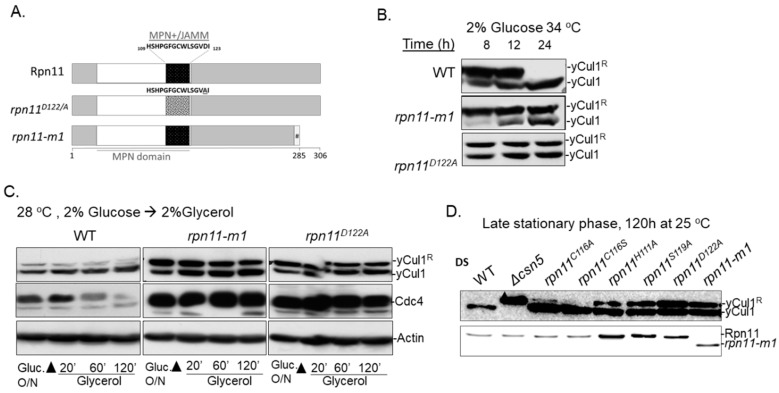
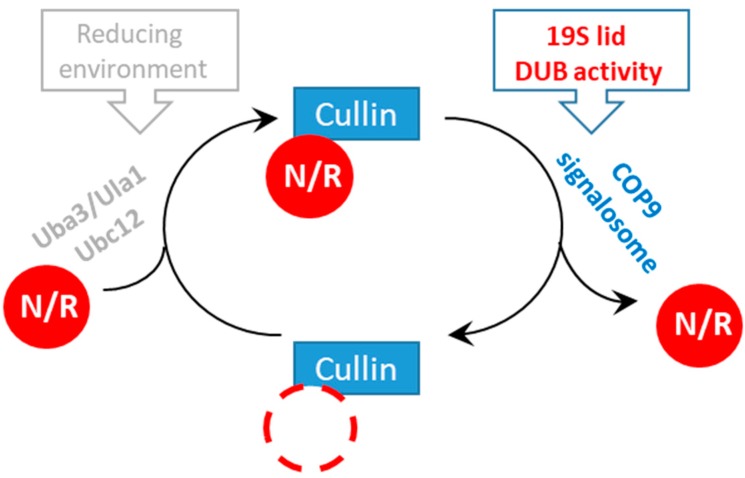
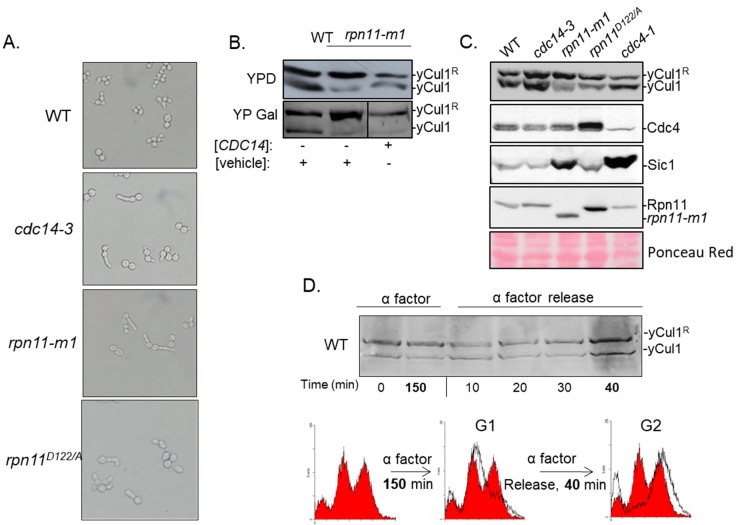
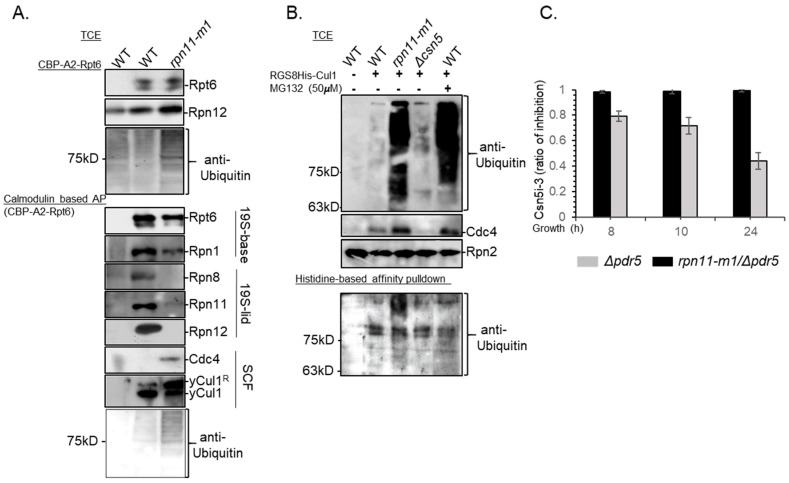
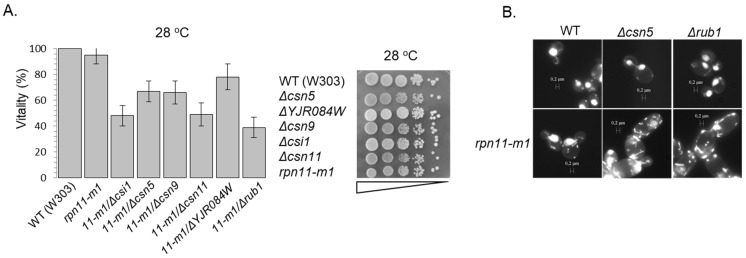
The class of Cullin-RING E3 ligases (CRLs) selectively ubiquitinate a large portion of proteins targeted for proteolysis by the 26S proteasome. Before degradation, ubiquitin molecules are removed from their conjugated proteins by deubiquitinating enzymes, a handful of which are associated with the proteasome. The CRL activity is triggered by modification of the Cullin subunit with the ubiquitin-like protein, NEDD8 (also known as Rub1 in ). Cullin modification is then reversed by hydrolytic action of the COP9 signalosome (CSN). As the NEDD8-Rub1 catalytic cycle is not essential for the viability of , this organism is a useful model system to study the alteration of Rub1-CRL conjugation patterns. In this study, we describe two distinct mutants of Rpn11, a proteasome-associated deubiquitinating enzyme, both of which exhibit a biochemical phenotype characterized by high accumulation of Rub1-modified Cdc53-Cullin1 (yCul1) upon entry into quiescence in . Further characterization revealed proteasome 19S-lid-associated deubiquitination activity that authorizes the hydrolysis of Rub1 from yCul1 by the CSN complex. Thus, our results suggest a negative feedback mechanism via proteasome capacity on upstream ubiquitinating enzymes.
Cullin-RING E3 连接酶 (CRLs) 可选择性泛素化大部分经 26S 蛋白酶体靶向蛋白水解的蛋白质。在降解之前,泛素分子通过去泛素化酶从其连接的蛋白质中去除,其中少数与蛋白酶体相关。CRL 活性是通过 Cullin 亚基与泛素样蛋白 NEDD8(在 中也称为 Rub1)的修饰触发的。然后,COP9 信号体(CSN)的水解作用逆转 Cullin 的修饰。由于 NEDD8-Rub1 催化循环对于 的存活不是必需的,因此该生物体是研究 Rub1-CRL 缀合模式改变的有用模型系统。在这项研究中,我们描述了 Rpn11 的两种不同突变体,Rpn11 是一种与蛋白酶体相关的去泛素化酶,两者都表现出生化表型,特征是在 中进入静止时 Rub1 修饰的 Cdc53-Cullin1(yCul1)高度积累。进一步的表征揭示了蛋白酶体 19S-盖相关的去泛素化活性,该活性授权 CSN 复合物从 yCul1 上水解 Rub1。因此,我们的结果表明通过蛋白酶体能力对上游泛素化酶的负反馈机制。