State Key Laboratory for Conservation and Utilization of Subtropical Agro-Bioresources/Key Laboratory of Natural Pesticide and Chemical Biology, Ministry of Education, South China Agricultural University, Guangzhou, 510642, China.
Key Laboratory of South Subtropical Fruit Biology and Genetic Resource Utilization, Ministry of Agriculture, Guangdong Academy of Agricultural Sciences, Guangzhou, 510640, China.
BMC Plant Biol. 2019 Sep 5;19(1):384. doi: 10.1186/s12870-019-1985-6.
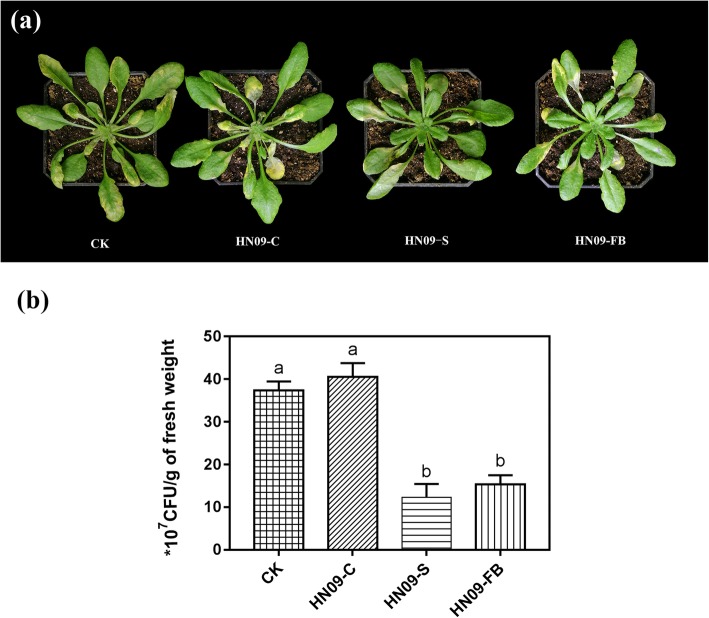
Plant immune responses can be induced by plant growth-promoting rhizobacteria (PGPRs), but the exact compounds that induce resistance are poorly understood. Here, we identified the novel natural elicitor 3,4-dihydroxy-3-methyl-2-pentanone from the PGPR Bacillus subtilis HN09, which dominates HN09-induced systemic resistance (ISR).
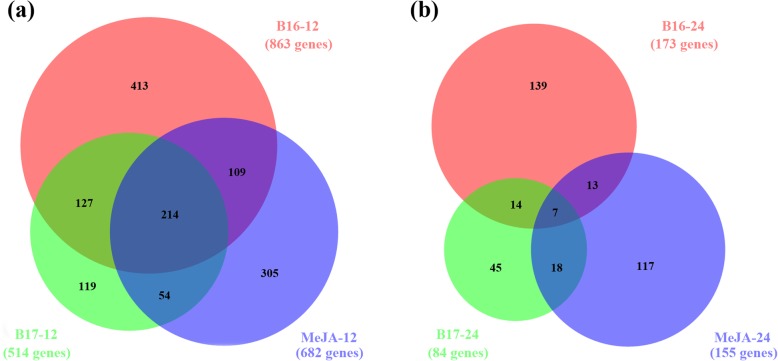
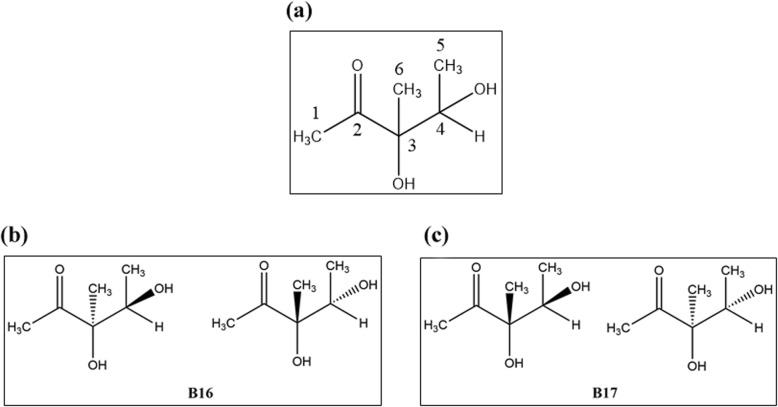
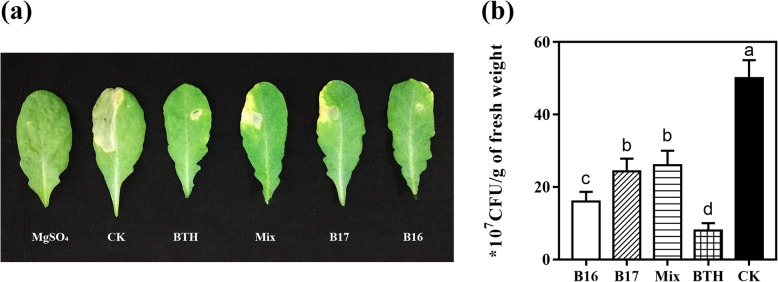
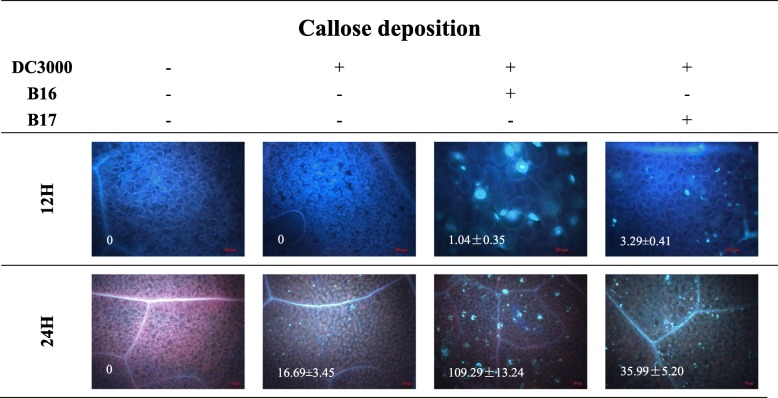
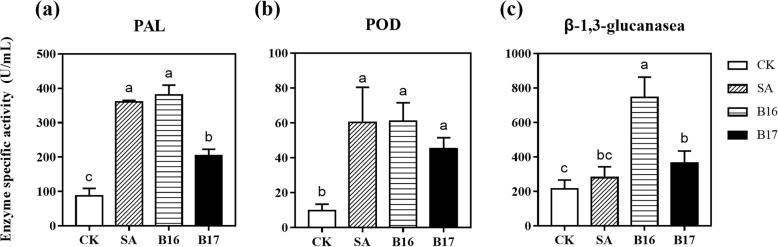
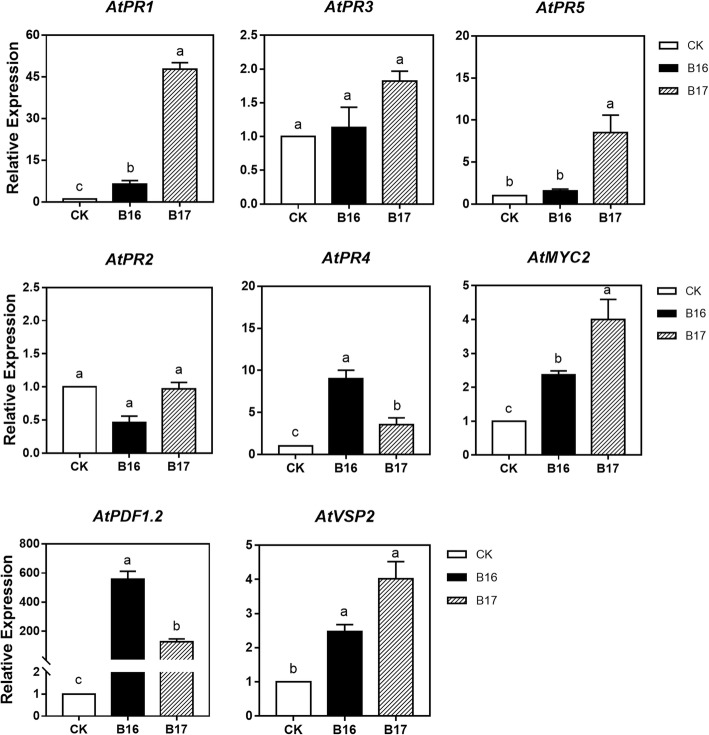
The HN09 strain, as a rhizobacterium that promotes plant growth, can induce systemic resistance of Arabidopsis thaliana plants against Pseudomonas syringae pv. tomato DC3000, and the underlying role of its metabolite 3,4-dihydroxy-3-methyl-2-pentanone in this induced resistance mechanism was explored in this study. The stereoisomers of 3,4-dihydroxy-3-methyl-2-pentanone exhibited differential bioactivity of resistance induction in A. thaliana. B16, a 1:1 mixture of the threo-isomers (3R,4S) and (3S,4R), was significantly superior to B17, a similar mixture of the erythro-isomers (3R,4R) and (3S,4S). Moreover, B16 induced more expeditious and stronger callose deposition than B17 when challenged with the pathogen DC3000. RT-qPCR and RNA-seq results showed that B16 and B17 induced systemic resistance via JA/ET and SA signalling pathways. B16 and B17 activated different but overlapping signalling pathways, and these compounds have the same chemical structure but subtle differences in stereo configuration.
Our results indicate that 3,4-dihydroxy-3-methyl-2-pentanone is an excellent immune elicitor in plants. This compound is of great importance to the systemic resistance induced by HN09. Its threo-isomers (3R,4S) and (3S,4R) are much better than erythro-isomers (3R,4R) and (3S,4S). This process involves SA and JA/ET signalling pathways.
植物促生根际细菌(PGPRs)可以诱导植物免疫反应,但诱导抗性的确切化合物知之甚少。在这里,我们从 PGPR 枯草芽孢杆菌 HN09 中鉴定出新型天然激发子 3,4-二羟基-3-甲基-2-戊酮,它主导 HN09 诱导的系统抗性(ISR)。
HN09 菌株作为一种促进植物生长的根际细菌,可以诱导拟南芥对丁香假单胞菌 pv.番茄 DC3000 的系统抗性,本研究探讨了其代谢产物 3,4-二羟基-3-甲基-2-戊酮在这种诱导抗性机制中的作用。3,4-二羟基-3-甲基-2-戊酮的立体异构体在拟南芥中表现出不同的抗性诱导活性。B16 是 threo-异构体(3R,4S)和(3S,4R)的 1:1 混合物,明显优于 B17,即类似的 erythro-异构体(3R,4R)和(3S,4S)的混合物。此外,当受到病原体 DC3000 挑战时,B16 诱导的几丁质沉积比 B17 更迅速、更强。RT-qPCR 和 RNA-seq 结果表明,B16 和 B17 通过 JA/ET 和 SA 信号通路诱导系统抗性。B16 和 B17 激活了不同但重叠的信号通路,这些化合物具有相同的化学结构,但立体构型略有不同。
我们的结果表明,3,4-二羟基-3-甲基-2-戊酮是植物中一种极好的免疫激发子。这种化合物对 HN09 诱导的系统抗性非常重要。其 threo-异构体(3R,4S)和(3S,4R)比 erythro-异构体(3R,4R)和(3S,4S)好得多。这个过程涉及 SA 和 JA/ET 信号通路。