Harvard Medical School, Boston, MA, USA.
Division of Clinical Informatics, Department of Medicine, Beth Israel Deaconess Medical Center, Boston, MA, USA.
BMC Med Inform Decis Mak. 2019 Sep 5;19(1):181. doi: 10.1186/s12911-019-0907-8.
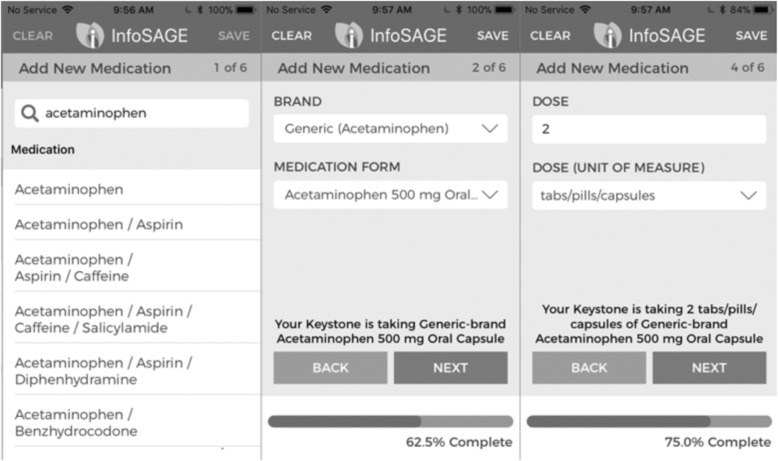
Health research apps often do not focus on usability as a design priority. This is problematic when the population of interest is disproportionately underrepresented as users of mobile apps, especially observed with aging older adults (> = 75). Challenges with the adoption of health information technology (HIT) among this group are exacerbated by poor design and user interface/experience (UI/UX) choices. This protocol describes the testing and evaluation process of one HIT app for the family-based collaboration platform InfoSAGE.
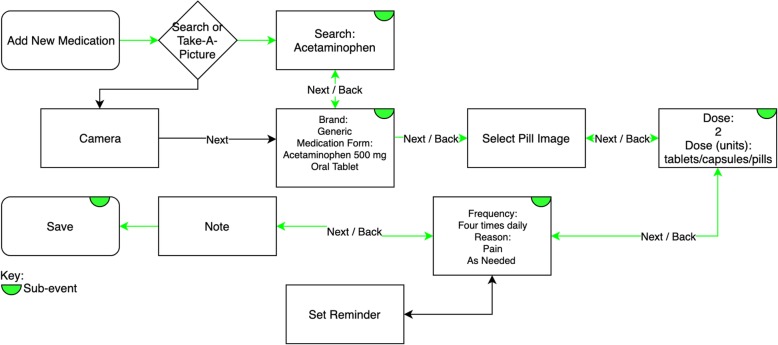
We aim to recruit twenty subjects from both informal family-caregivers and aging older adults to examine the usability of the InfoSAGE mobile medication manager. Participants will be audio and visually recorded, in addition to the use of screen capture recordings, while 'thinking aloud' as they complete eight common use-case scenarios. Multiple independent reviewers will code video and audio recordings for thematic analysis and use problems will be evaluated. Success and failure of each scenario will be determined by completion of sub-events. Time-to-complete analysis will be used to ascertain the learning curve associated with the app.
Frequently observed problem areas will be used as the basis of further evolution of the app, and will further inform generalized recommendations for the design of HIT apps for research and public use. This study aims to improve the model of development for dual user populations with dissimilar technological literacy to improve retention and use. Results of this study will form the foundation of a design framework for mobile health apps.
健康研究应用程序通常不将可用性作为设计重点。当目标人群在移动应用程序用户中不成比例地代表性不足时,这就成了问题,尤其是在老龄化的老年人(>=75 岁)中更是如此。由于设计不佳和用户界面/体验(UI/UX)选择不当,这一群体对健康信息技术(HIT)的采用面临着更大的挑战。本方案描述了 InfoSAGE 家庭协作平台的一个 HIT 应用程序的测试和评估过程。
我们计划从非正式的家庭护理人员和老龄化的老年人中招募二十名受试者,以检查 InfoSAGE 移动药物管理器的可用性。参与者将在完成八个常见用例场景时“边思考边说”,同时进行音频和视频记录,并使用屏幕录制记录。多名独立审查员将对视频和音频记录进行主题分析编码,并评估使用问题。每个场景的成功和失败将根据子事件的完成情况来确定。完成时间分析将用于确定与该应用程序相关的学习曲线。
经常观察到的问题区域将作为进一步改进应用程序的基础,并将进一步为面向研究和公共用途的 HIT 应用程序设计提供一般性建议。本研究旨在改善具有不同技术素养的双重用户群体的开发模式,以提高保留率和使用率。本研究的结果将为移动健康应用程序的设计框架奠定基础。