Department of Chemical Physics, University of Science and Technology of China, Hefei, Anhui, People's Republic of China.
Hefei National Laboratory for Physical Sciences at the Microscale, University of Science and Technology of China, Hefei, Anhui, People's Republic of China.
Appl Environ Microbiol. 2019 Oct 30;85(22). doi: 10.1128/AEM.01705-19. Print 2019 Nov 15.
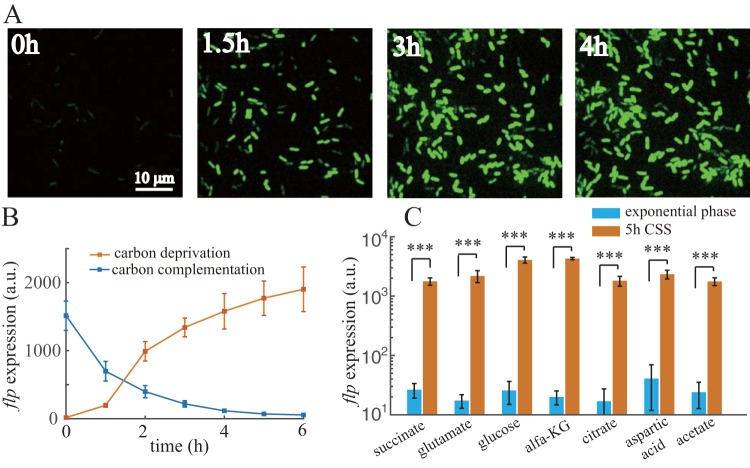
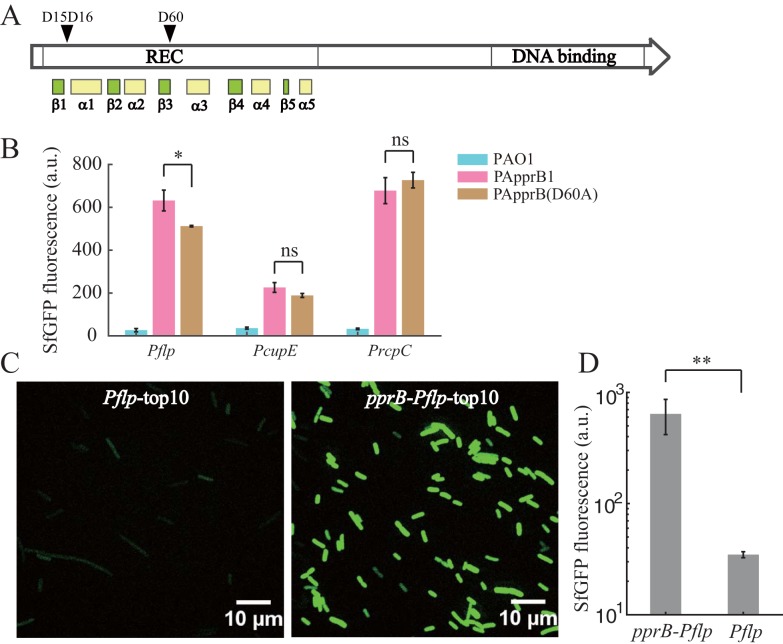
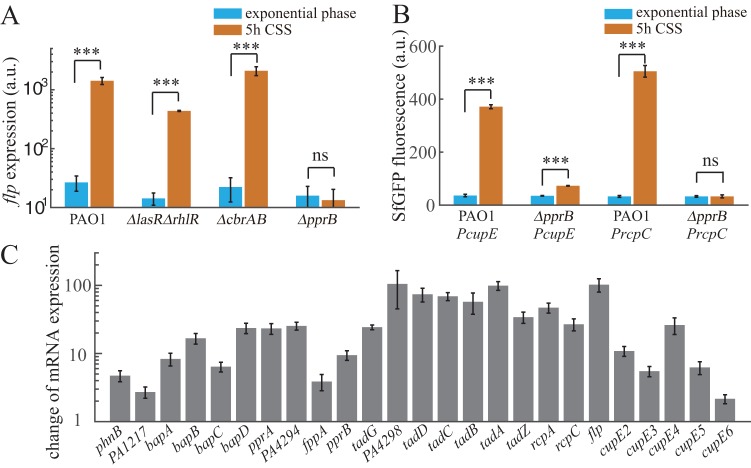
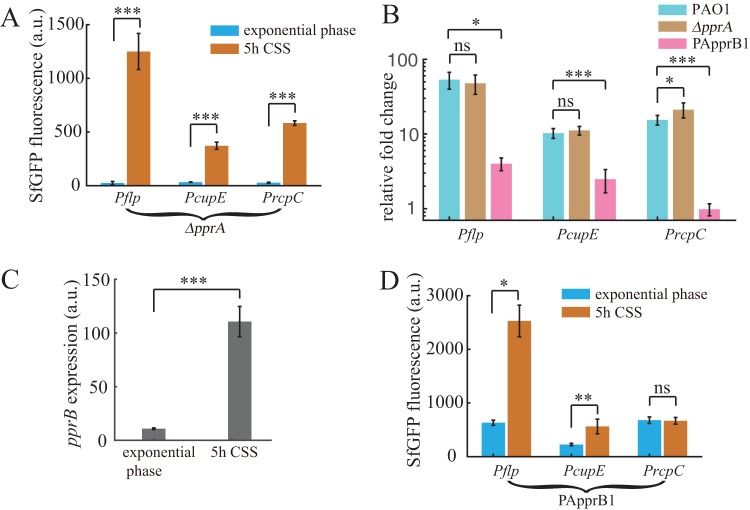
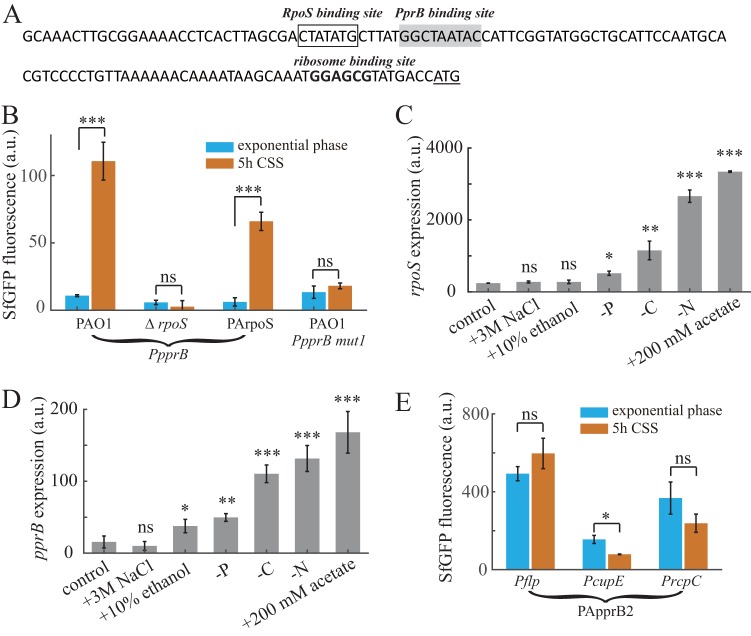
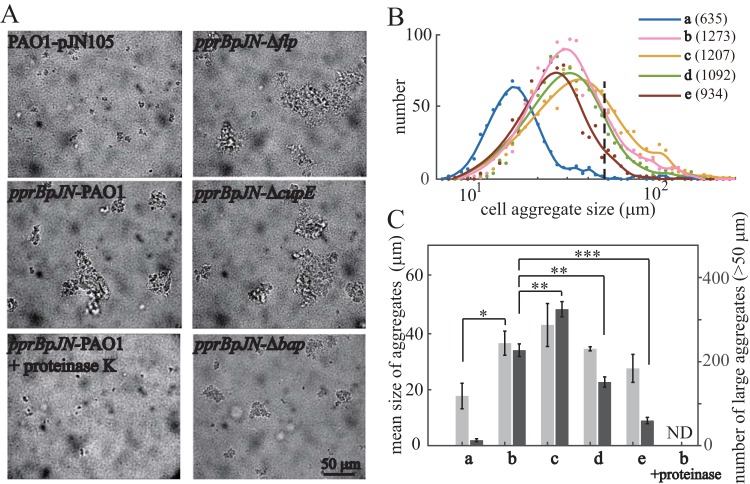
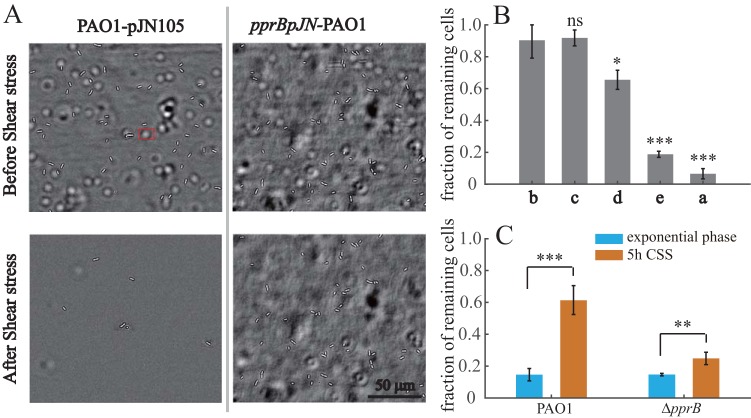
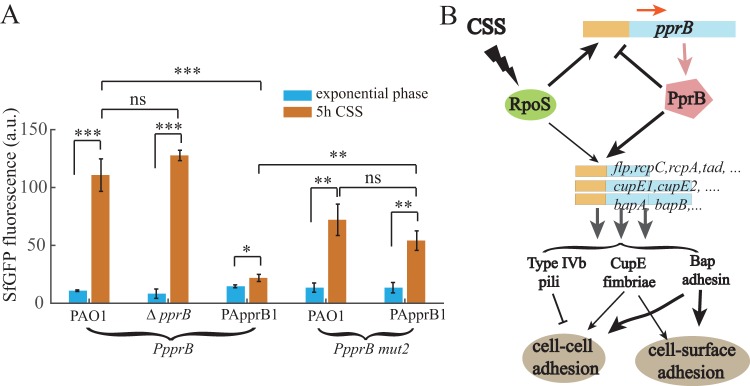
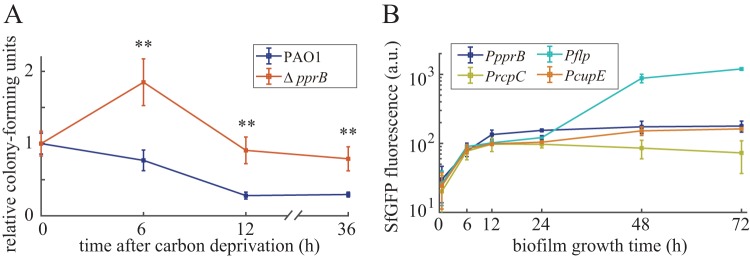
can cause severe infections in humans. This bacterium often adopts a biofilm lifestyle that is hard to treat. In several previous studies, the PprA-PprB two-component system (TCS), which controls the expression of type IVb pili, BapA adhesin, and CupE fimbriae, was shown to be involved in biofilm formation (M. Romero, H. Silistre, L. Lovelock, V. J. Wright, K.-G. Chan, et al., Nucleic Acids Res 46:6823-6840, 2018, https://doi.org/10.1093/nar/gky324; S. de Bentzmann, C. Giraud, C. S. Bernard, V. Calderon, F. Ewald F, et al., PLoS Pathog 8:e1003052, 2012, https://doi.org/10.1371/journal.ppat.1003052). However, signals or environmental conditions that can trigger the PprA-PprB TCS are still unknown, and the molecular mechanisms of PprB-mediated biofilm formation are poorly characterized. Here, we report that carbon starvation stress (CSS) can induce the expression of and genes in the PprB regulon. CSS-induced transcription is mediated by the stress response sigma factor RpoS rather than the two-component sensor PprA. We also observed a strong negative regulation of PprB on the transcription of itself. Further experiments showed that PprB overexpression greatly enhanced cell-cell adhesion (CCA) and cell-surface adhesion (CSA) in Specifically, under the background of PprB overexpression, both the BapA adhesin and CupE fimbriae displayed positive effects on CCA and CSA, while the type IVb pili showed an unexpected negative effect on CCA and no effect on CSA. In addition, expression of the PprB regulon genes were significantly increased in 3-day colony biofilms, indicating a possible carbon limitation state. The CSS-RpoS-PprB-Bap/Flp/CupE pathway identified in this study provides a new perspective on the process of biofilm formation in carbon-limited environments. Typically, the determination of the external signals that can trigger a regulatory system is crucial to understand the regulatory logic and inward function of that system. The PprA-PprB two-component system was reported to be involved in biofilm formation in , but the signals triggering this system are unknown. In this study, we found that carbon starvation stress (CSS) induces transcription of and genes in the PprB regulon through an RpoS-dependent pathway. Increased PprB expression leads to enhanced cell-cell adhesion (CCA) and cell-surface adhesion (CSA) in Both CCA and CSA are largely dependent on the Bap secretion system and are moderately dependent on the CupE fimbriae. Our findings suggest that PprB reinforces the structure of biofilms under carbon-limited conditions, and the Bap secretion system and CupE fimbriae are two potential targets for biofilm treatment.
能够在人类中引起严重感染。这种细菌通常采用生物膜生活方式,难以治疗。在之前的几项研究中,控制 IVb 型菌毛、BapA 黏附素和 CupE 纤毛表达的 PprA-PprB 双组分系统 (TCS) 被证明参与生物膜形成(M. Romero、H. Silistre、L. Lovelock、V. J. Wright、K.-G. Chan 等人,核酸研究 46:6823-6840, 2018, https://doi.org/10.1093/nar/gky324;S. de Bentzmann、C. Giraud、C. S. Bernard、V. Calderon、F. Ewald F 等人,PLoS 病原体 8:e1003052, 2012, https://doi.org/10.1371/journal.ppat.1003052)。然而,仍然不知道可以触发 PprA-PprB TCS 的信号或环境条件,并且 PprB 介导的生物膜形成的分子机制还没有很好地描述。在这里,我们报告说,碳饥饿应激(CSS)可以诱导 PprB 调节子中的 和基因的表达。CSS 诱导的 转录是由应激反应 σ 因子 RpoS 介导的,而不是由双组分传感器 PprA 介导的。我们还观察到 PprB 对自身转录的强烈负调控。进一步的实验表明,PprB 的过表达大大增强了 中的细胞-细胞粘附(CCA)和细胞表面粘附(CSA)。具体来说,在 PprB 过表达的背景下,BapA 黏附素和 CupE 纤毛都对 CCA 和 CSA 表现出积极的影响,而 IVb 型菌毛对 CCA 表现出出乎意料的负效应,对 CSA 没有影响。此外,在 3 天的菌落生物膜中,PprB 调节子基因的表达显著增加,表明可能存在碳限制状态。本研究中鉴定的 CSS-RpoS-PprB-Bap/Flp/CupE 途径为研究碳限制环境中生物膜形成过程提供了新的视角。通常,确定可以触发调节系统的外部信号对于理解该系统的调节逻辑和内在功能至关重要。据报道,PprA-PprB 双组分系统参与了 中的生物膜形成,但触发该系统的信号尚不清楚。在这项研究中,我们发现碳饥饿应激(CSS)通过依赖 RpoS 的途径诱导 PprB 调节子中 和基因的转录。PprB 表达的增加导致 中的细胞-细胞粘附(CCA)和细胞表面粘附(CSA)增强。CCA 和 CSA 在很大程度上依赖于 Bap 分泌系统,并且适度依赖于 CupE 纤毛。我们的研究结果表明,PprB 在碳限制条件下增强生物膜的结构,Bap 分泌系统和 CupE 纤毛是生物膜治疗的两个潜在靶点。