Gene Expression and Regulation Program, The Wistar Institute, Philadelphia, PA, 19104, USA.
Department of Pharmacology, Herbert Irving Comprehensive Cancer Center, Columbia University Irving Medical Center, New York, NY, 10032, USA.
Nat Commun. 2019 Sep 6;10(1):4067. doi: 10.1038/s41467-019-12037-4.
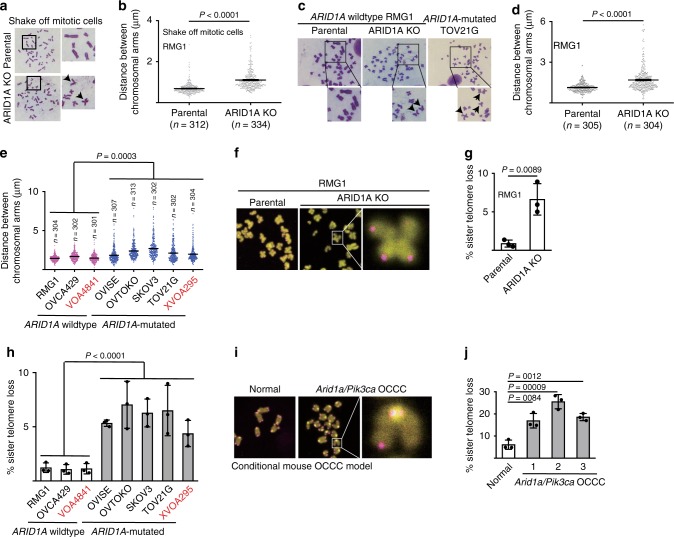
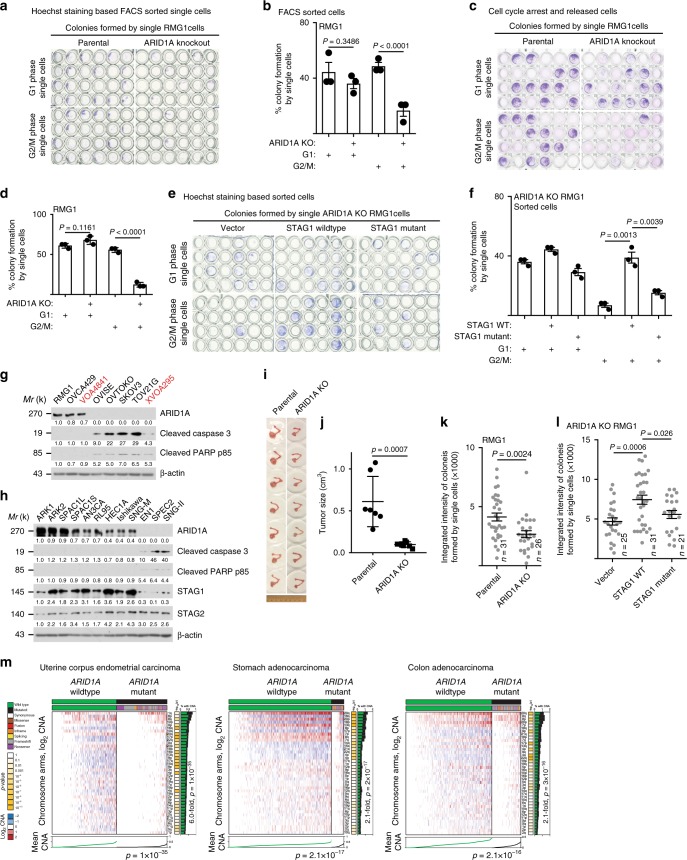
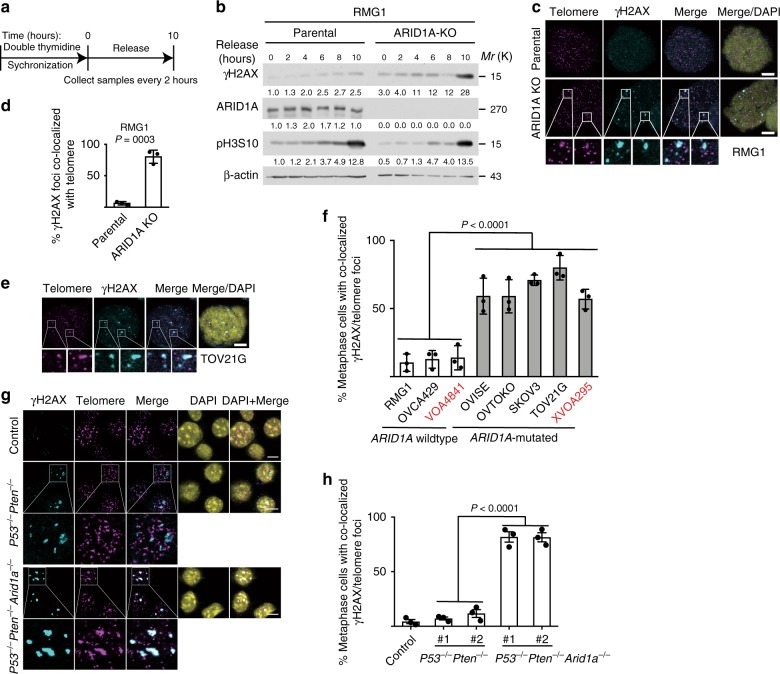
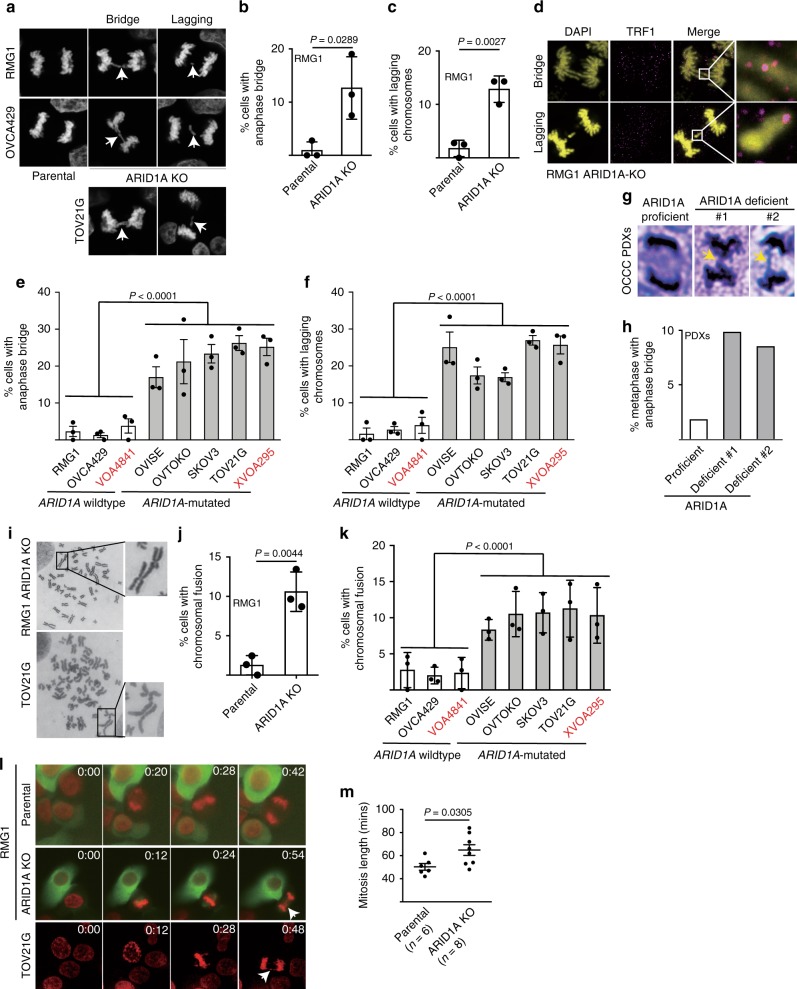
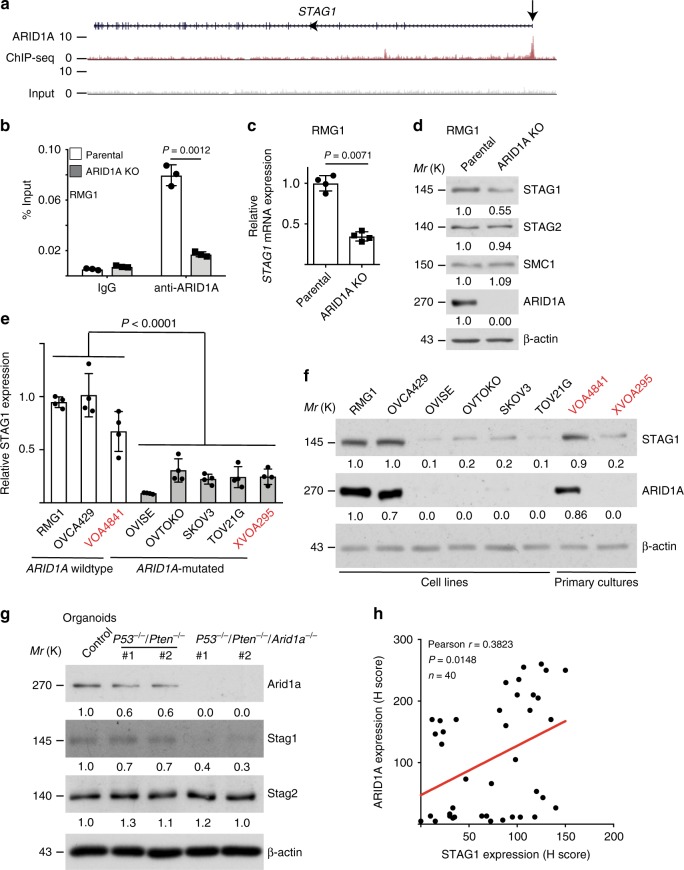
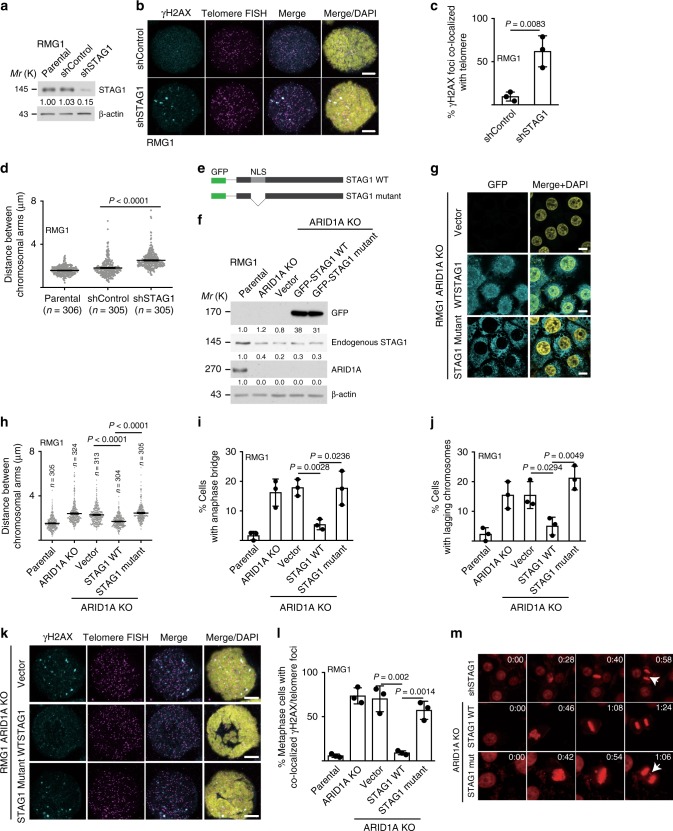
ARID1A inactivation causes mitotic defects. Paradoxically, cancers with high ARID1A mutation rates typically lack copy number alterations (CNAs). Here, we show that ARID1A inactivation causes defects in telomere cohesion, which selectively eliminates gross chromosome aberrations during mitosis. ARID1A promotes the expression of cohesin subunit STAG1 that is specifically required for telomere cohesion. ARID1A inactivation causes telomere damage that can be rescued by STAG1 expression. Colony formation capability of single cells in G/M, but not G phase, is significantly reduced by ARID1A inactivation. This correlates with an increase in apoptosis and a reduction in tumor growth. Compared with ARID1A wild-type tumors, ARID1A-mutated tumors display significantly less CNAs across multiple cancer types. Together, these results show that ARID1A inactivation is selective against gross chromosome aberrations through causing defects in telomere cohesion, which reconciles the long-standing paradox between the role of ARID1A in maintaining mitotic integrity and the lack of genomic instability in ARID1A-mutated cancers.
ARID1A 失活导致有丝分裂缺陷。矛盾的是,高 ARID1A 突变率的癌症通常缺乏拷贝数改变(CNAs)。在这里,我们表明 ARID1A 失活导致端粒黏合缺陷,这在有丝分裂过程中选择性地消除了巨大染色体畸变。ARID1A 促进着丝粒亚基 STAG1 的表达,而 STAG1 对于端粒黏合是特异性必需的。ARID1A 失活导致端粒损伤,而 STAG1 的表达可以挽救这种损伤。ARID1A 失活后,G/M 期而非 G 期的单细胞集落形成能力显著降低。这与凋亡增加和肿瘤生长减少相关。与 ARID1A 野生型肿瘤相比,ARID1A 突变型肿瘤在多种癌症类型中显示出明显较少的 CNA。综上所述,这些结果表明,ARID1A 失活通过导致端粒黏合缺陷而对巨大染色体畸变具有选择性,这调和了 ARID1A 在维持有丝分裂完整性方面的作用与 ARID1A 突变型癌症中缺乏基因组不稳定性之间的长期悖论。