Attiguppe Prabhakar, Tripathi Amrita P, Sugandhan Suriyan, Naik Saraswathi V, Deepak Bikshavathi M
Department of Pedodontics, Bapuji Dental College and Hospital, Davangere, Karnataka, India.
Department of Pedodontics and Preventive Dentistry, Bapuji Dental College and Hospital, Davangere, Karnataka, India.
Int J Clin Pediatr Dent. 2019 Jan-Feb;12(1):42-46. doi: 10.5005/jp-journals-10005-1590.
The aim of this study is to evaluate the effect of cavity disinfection with 2% chlorhexidine (CHX) and Ag-Au nanoparticles on microleakage and resin tag penetrability of composite restoration under conditions.
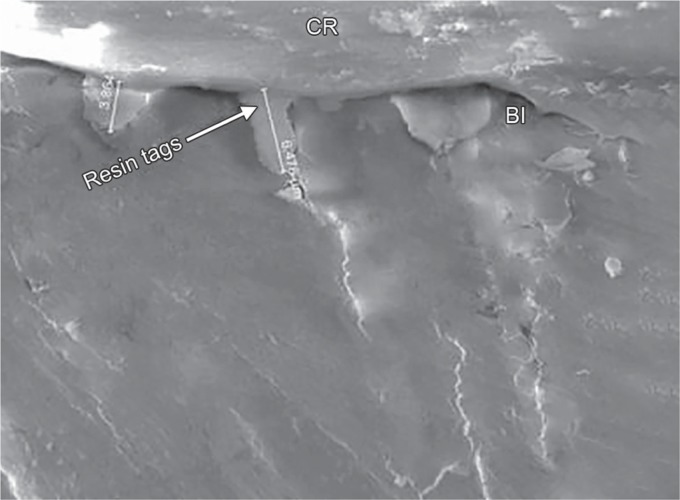
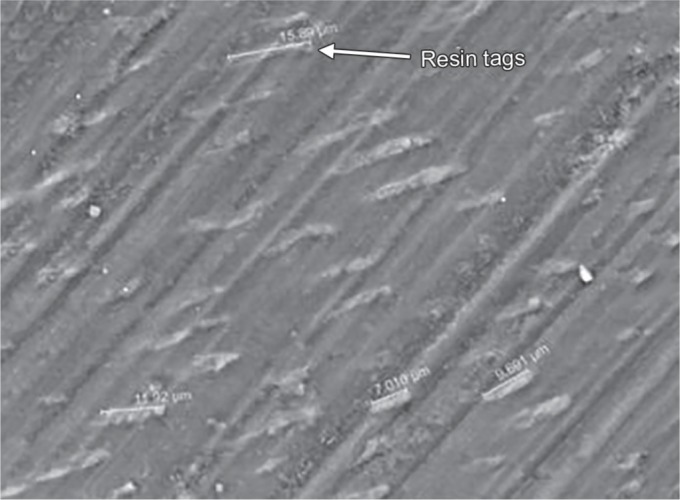
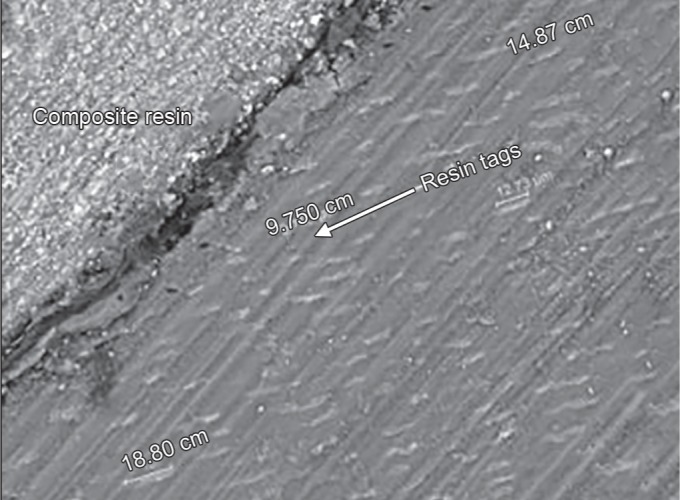
Twenty-five human permanent molars extracted for therapeutic reasons were used in the study. Class V cavity of standard dimension was prepared on the buccal and lingual surfaces of the teeth. The teeth were randomly allocated into two groups based on the cavity disinfectant used: group I being 2% CHX gluconate (chlorhexidina Friedrich and Bianca Mittelstadt (FGM)) and group II being cavity disinfectant containing Ag-Au nanoparticles (nanocare gold). In both the groups, the dentin was etched with 37% phosphoric acid and cavity disinfectants were applied following which dentine bonding agent and composite resin were applied and cured. The specimens were then viewed under a stereomicroscope and a scanning electron microscope for microleakage and resin tag formation, respectively.
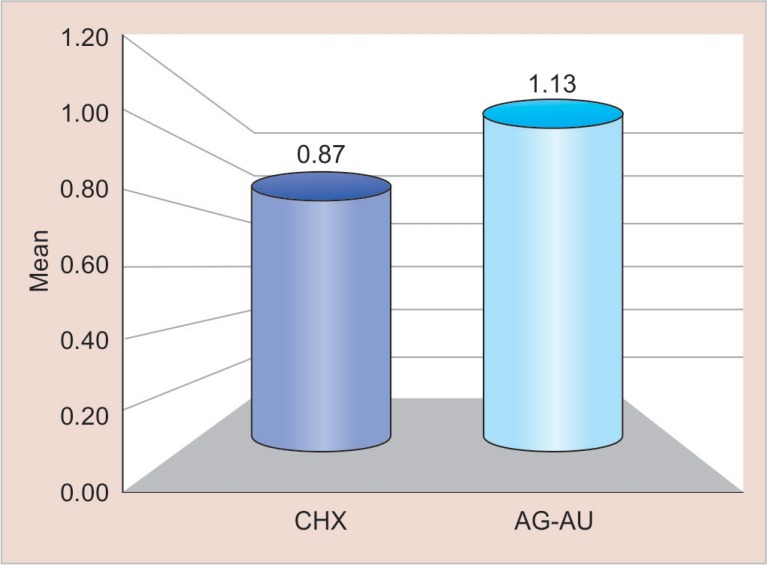
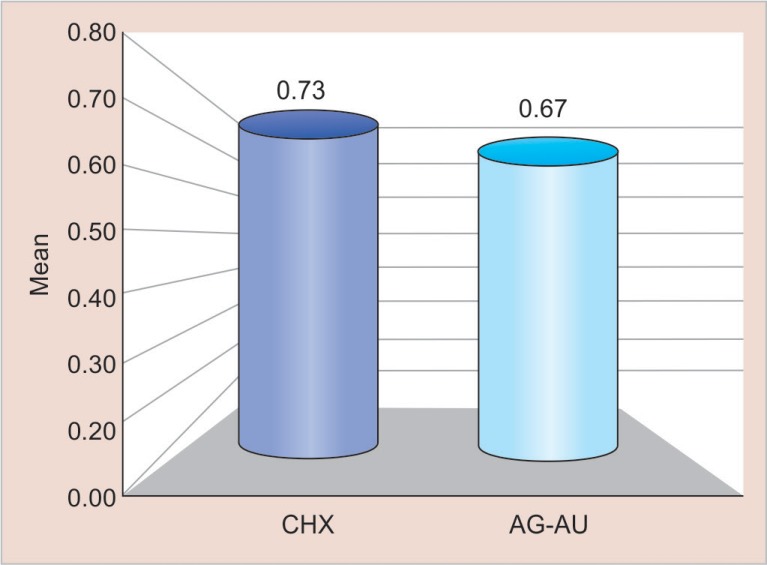
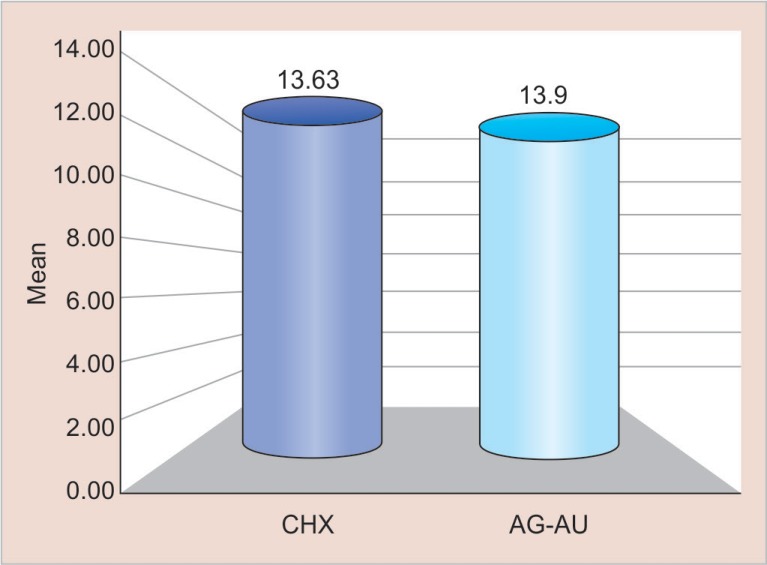
The results were statistically analyzed using an independent "" test. No significant difference was seen between the two groups with respect to both microleakage and resin tag penetration values ( > 0.05).
The cavity disinfectant containing Ag-Au nanoparticles did not affect the sealing ability and resin tag penetrability of composite resin in permanent molars when compared with 2% CHX.
Attiguppe P, Tripathi AP, Nanotechnology in Dentin Disinfection: Can We Preserve the Bond? Int J Clin Pediatr Dent 2019;12(1):42-46.
本研究旨在评估2%氯己定(CHX)和银金纳米颗粒进行窝洞消毒对复合树脂修复体在特定条件下的微渗漏及树脂突渗透性的影响。
本研究使用了25颗因治疗原因拔除的人类恒牙。在牙齿的颊面和舌面制备标准尺寸的V类洞。根据所使用的窝洞消毒剂,将牙齿随机分为两组:第一组为2%葡萄糖酸氯己定(弗里德里希和比安卡·米特尔施塔特(FGM)生产的氯己定),第二组为含银金纳米颗粒的窝洞消毒剂(纳米护理金)。在两组中,均用37%磷酸酸蚀牙本质,然后应用窝洞消毒剂,接着应用牙本质粘结剂和复合树脂并固化。然后分别在体视显微镜和扫描电子显微镜下观察标本的微渗漏和树脂突形成情况。
使用独立样本t检验对结果进行统计学分析。两组在微渗漏和树脂突渗透值方面均无显著差异(P>0.05)。
与2% CHX相比,含银金纳米颗粒的窝洞消毒剂对恒牙中复合树脂的封闭能力和树脂突渗透性没有影响。
Attiguppe P, Tripathi AP, 牙本质消毒中的纳米技术:我们能保留粘结效果吗?《国际临床儿科牙科学杂志》2019;12(1):42 - 46。