Key Laboratory for Molecular Enzymology and Engineering of Ministry of Education, School of Life Sciences, Jilin University, Changchun 130012, People's Republic of China.
Int J Nanomedicine. 2019 Aug 9;14:6371-6385. doi: 10.2147/IJN.S211744. eCollection 2019.
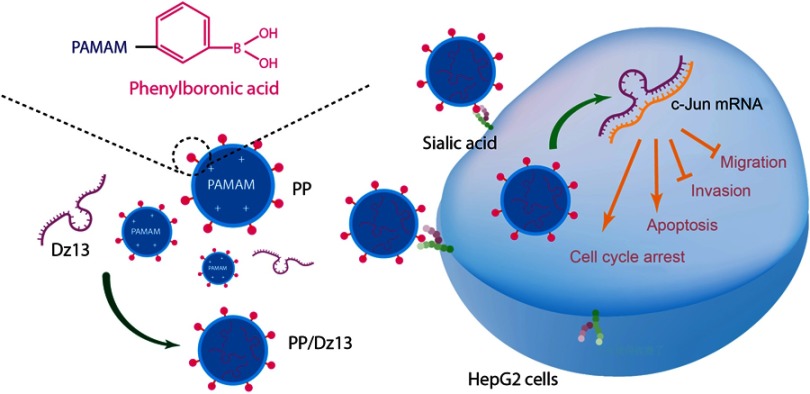
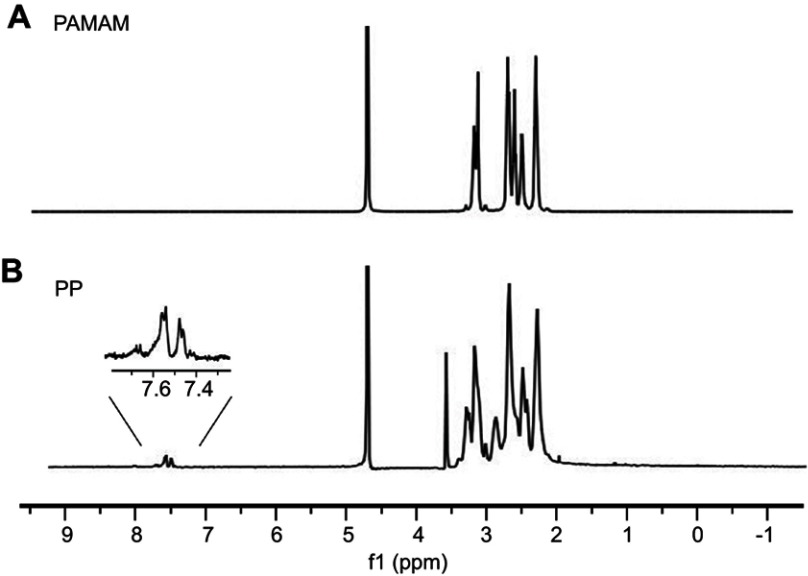
The phenylboronic acid-functionalized polyamidoamine (PP) was employed as a gene carrier for Dz13 delivery, inducing an obvious anticancer response.
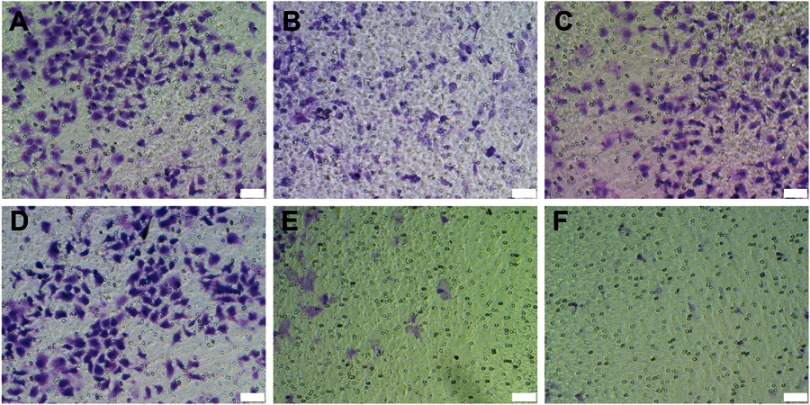
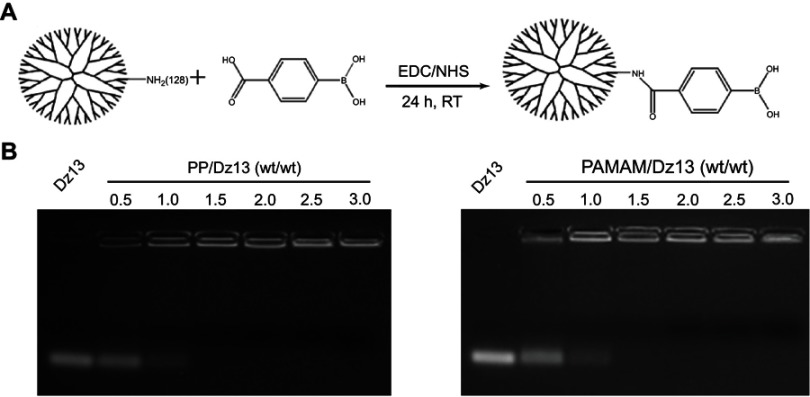
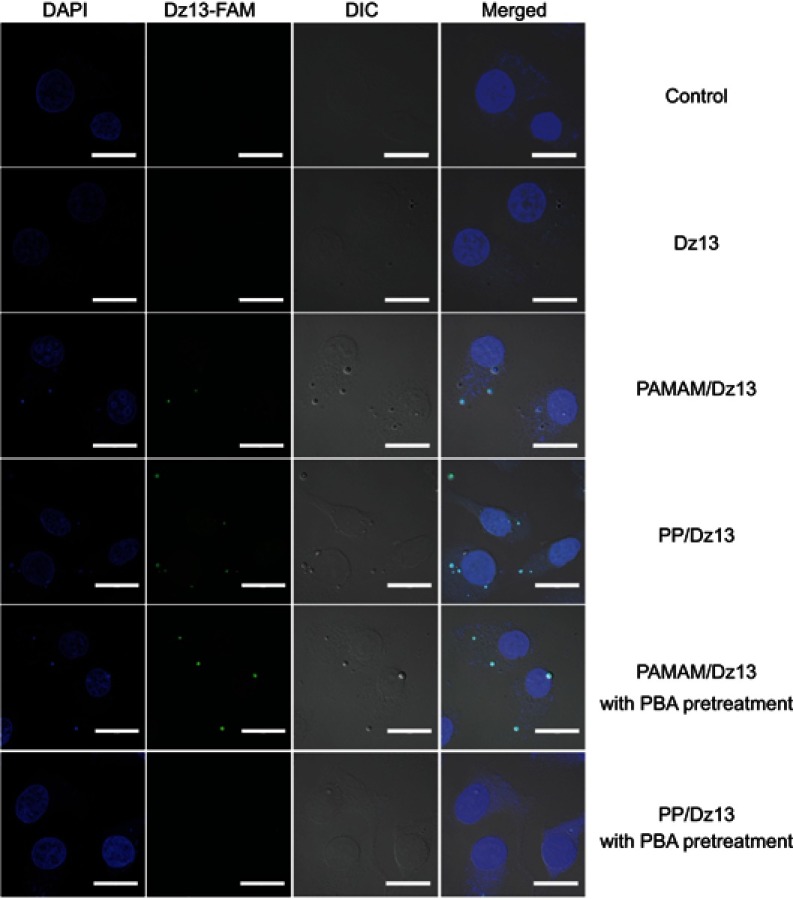
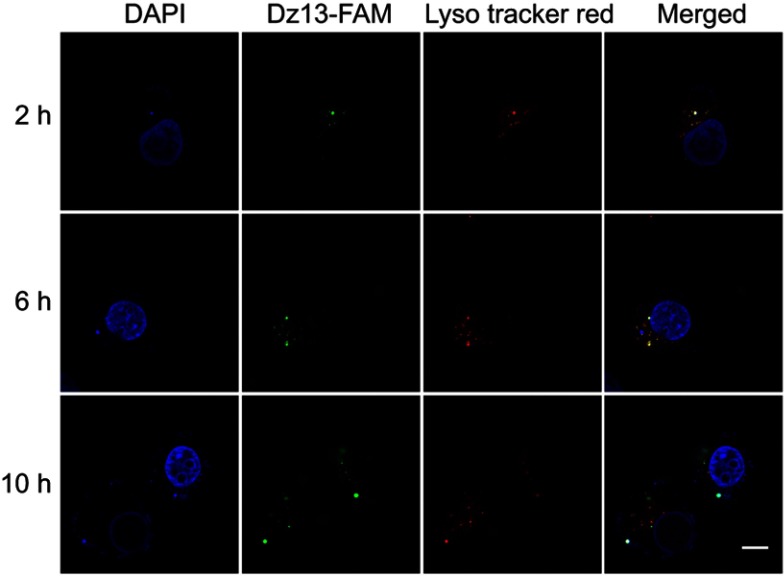
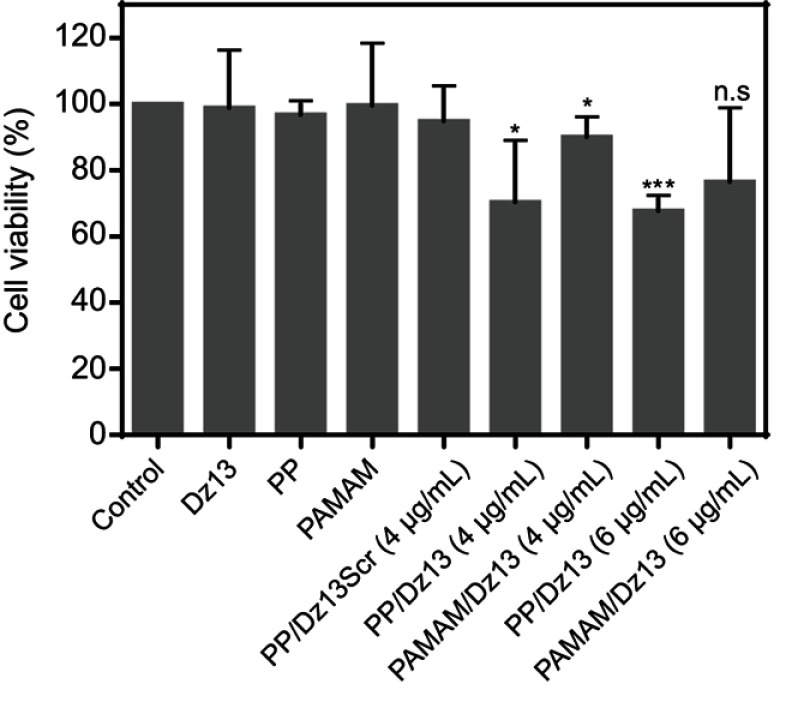
The Dz13 condensation ability of PP was evaluated through gel retardation assay. The cellular uptake mechanism of PP/Dz13 nanoparticles was studied using confocal laser scanning microscope and flow cytometer. The inhibition ability of cell proliferation, migration and invasion was investigated through MTT assay, flow cytometry, wound healing and Transwell migration assays, using hepatocarcinoma cell line HepG2 as a model. Finally, Western blotting analysis was used to detect the signaling pathway associated with the inhibition of cell apoptosis and migration induced by Dz13 delivery.
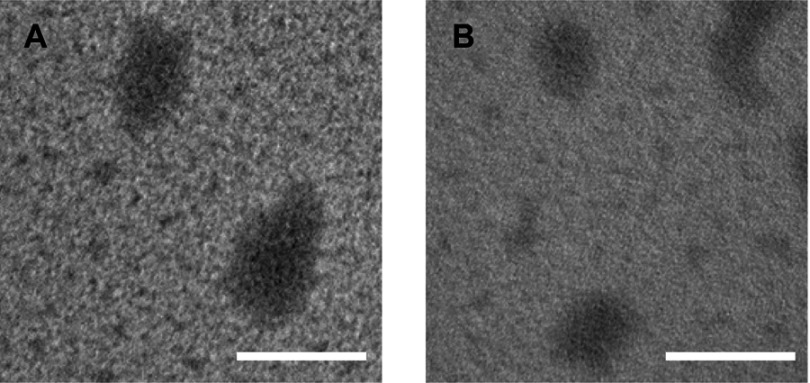
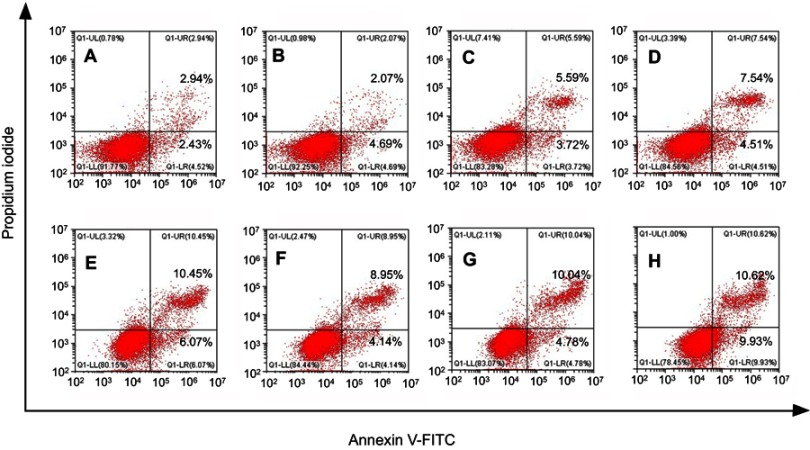
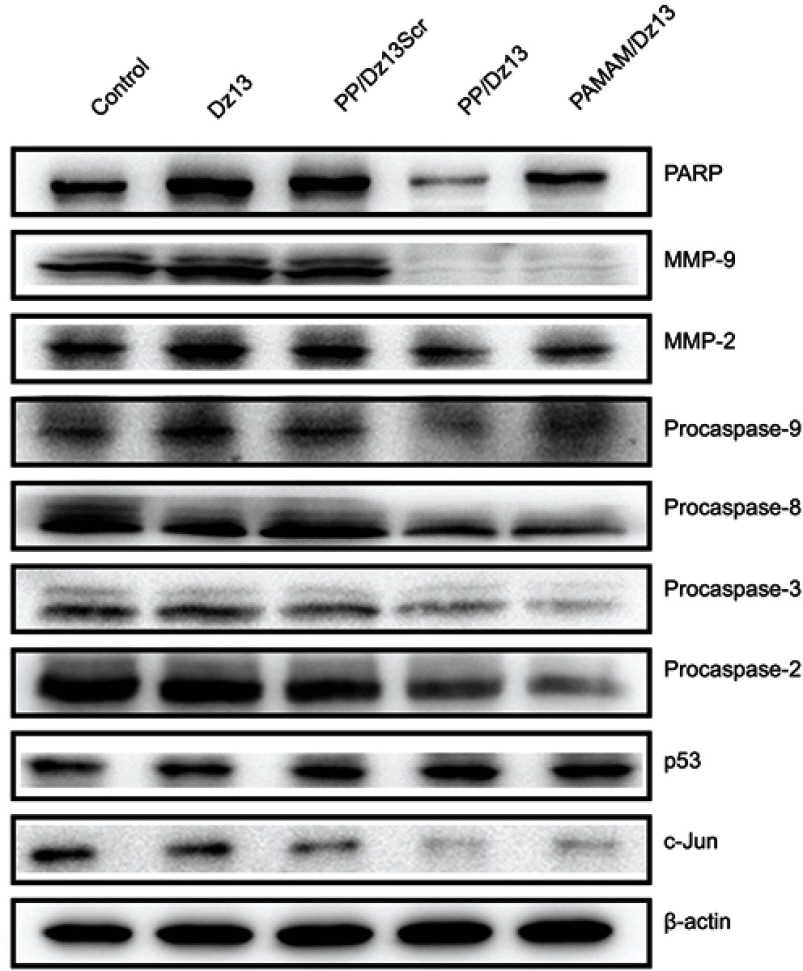
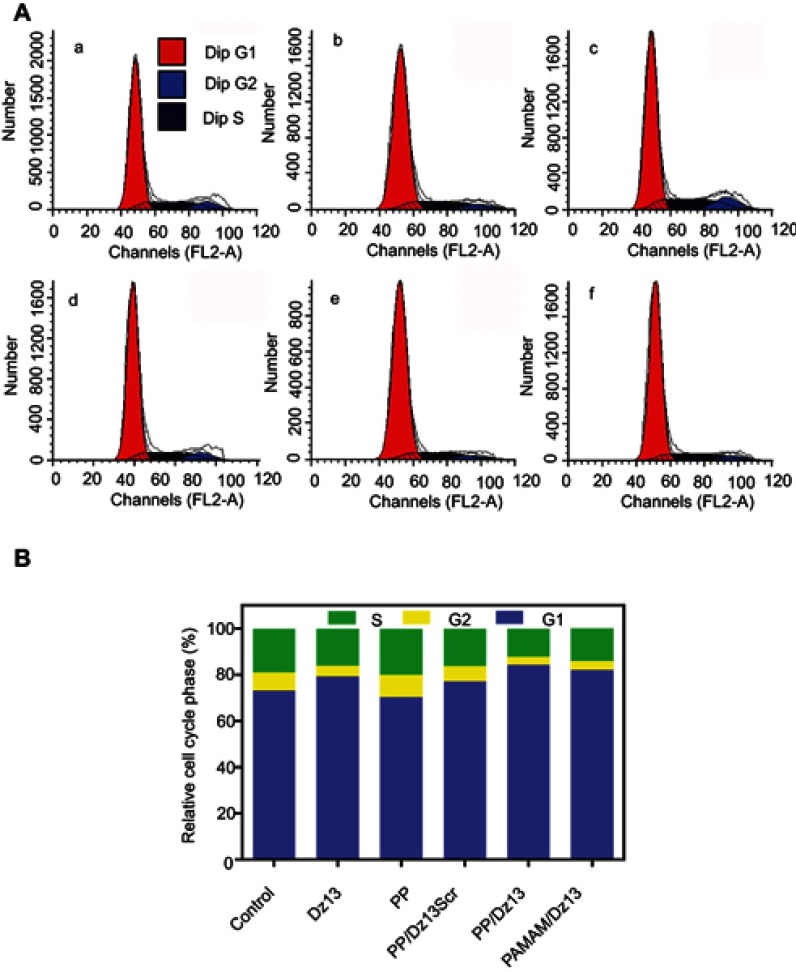
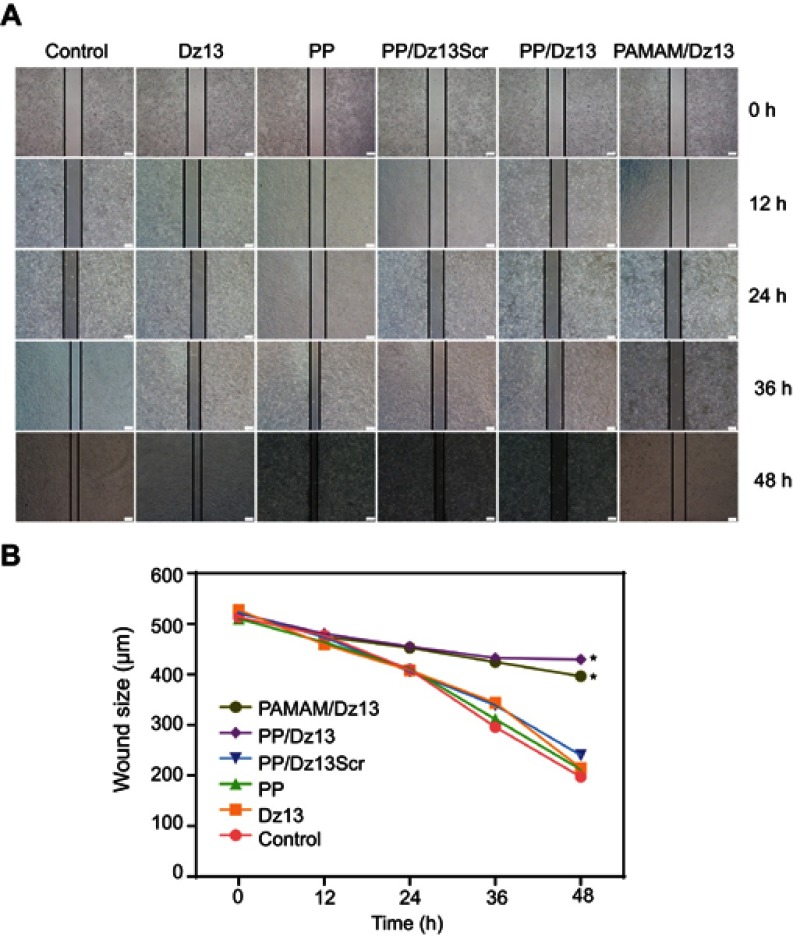
The carrier PP could efficiently condense Dz13 into stable nanoparticles at mass ratios of >1.5. The hydrodynamic diameter and zeta potential of PP/Dz13 nanoparticles were measured to be 204.77 nm and +22.00 mV at a mass ratio of 10.0, respectively. The nanoparticles could realize an efficient cellular uptake in sialic acid-dependent endocytosis manner. Moreover, the nanoparticles exhibited an obvious antiproliferation effect through the induction of cell apoptosis and cell cycle arrest due to the cleavage of mRNA. Besides, the suppression of cell migration and invasion could be achieved after the PP/Dz13 transfection, attributing to the decreased expression level of and .
The PP provided a potential delivery system to achieve the tumor-targeting gene therapy.
苯硼酸功能化聚酰胺胺(PP)被用作 Dz13 的基因载体,诱导明显的抗癌反应。
通过凝胶阻滞实验评估 PP 对 Dz13 的凝聚能力。使用共聚焦激光扫描显微镜和流式细胞仪研究 PP/Dz13 纳米颗粒的细胞摄取机制。通过 MTT 测定、流式细胞术、划痕愈合和 Transwell 迁移实验,以肝癌细胞系 HepG2 为模型,研究细胞增殖、迁移和侵袭的抑制能力。最后,通过 Western blot 分析检测与 Dz13 递送诱导的细胞凋亡和迁移抑制相关的信号通路。
载体 PP 可以在质量比大于 1.5 时有效地将 Dz13 凝聚成稳定的纳米颗粒。在质量比为 10.0 时,PP/Dz13 纳米颗粒的水动力直径和 zeta 电位分别为 204.77nm 和+22.00mV。纳米颗粒可以通过依赖唾液酸的内吞作用实现有效的细胞摄取。此外,由于 mRNA 的切割,纳米颗粒通过诱导细胞凋亡和细胞周期停滞表现出明显的抗增殖作用。此外,PP/Dz13 转染后可以抑制细胞迁移和侵袭,这归因于 和 的表达水平降低。
PP 提供了一种潜在的递送系统,可实现肿瘤靶向基因治疗。