Key Laboratory for Molecular Enzymology and Engineering of the Ministry of Education, College of Life Science, Jilin University, Changchun, 130012, China.
Protein Cell. 2018 Jun;9(6):568-579. doi: 10.1007/s13238-018-0513-z. Epub 2018 Mar 5.
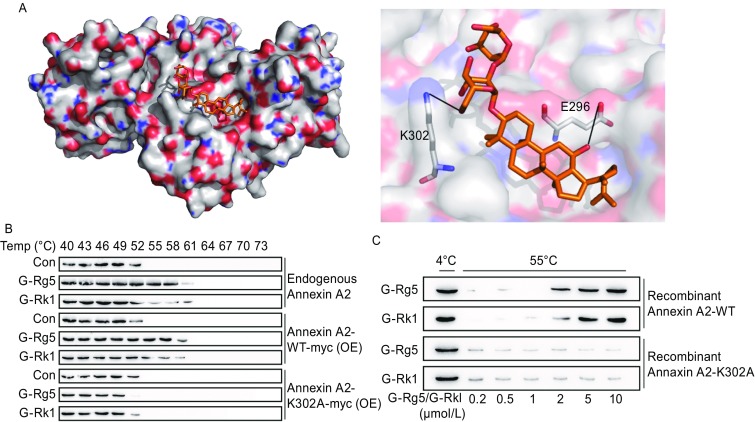
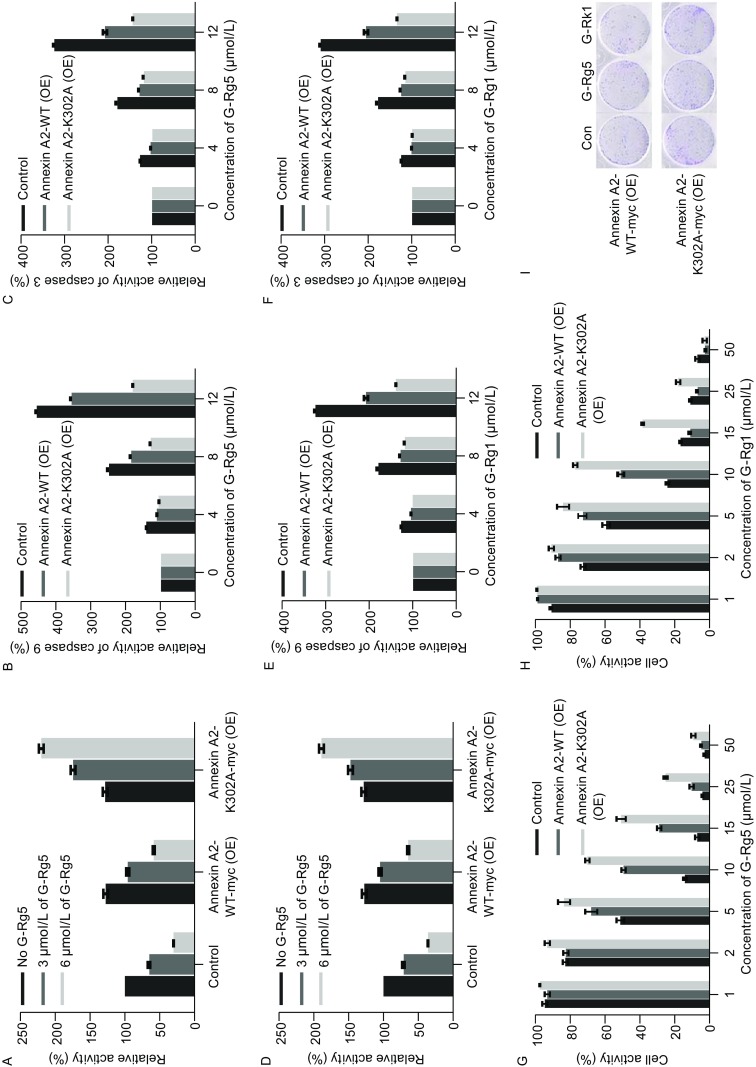
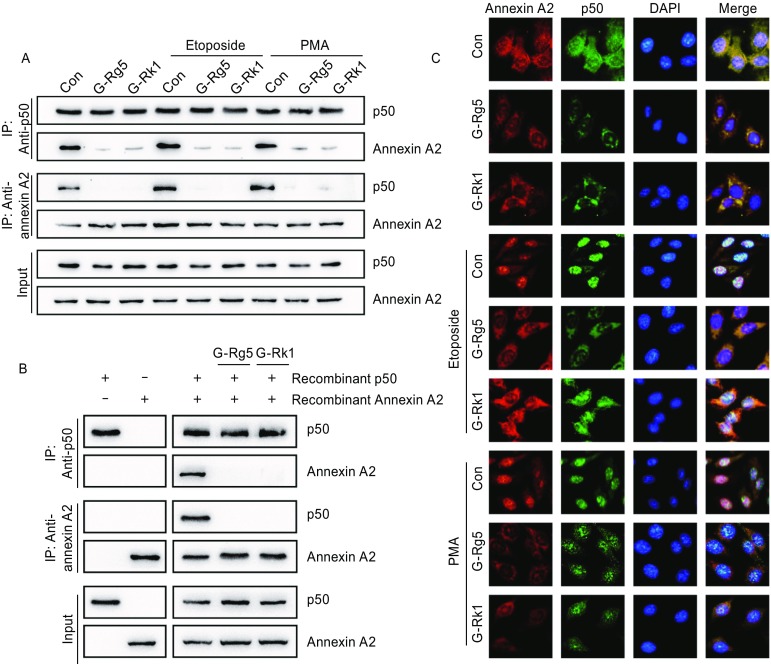
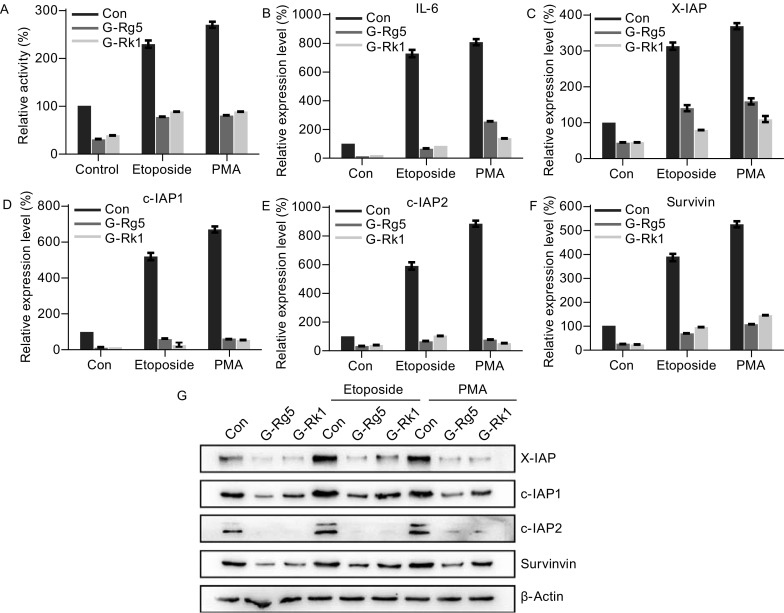
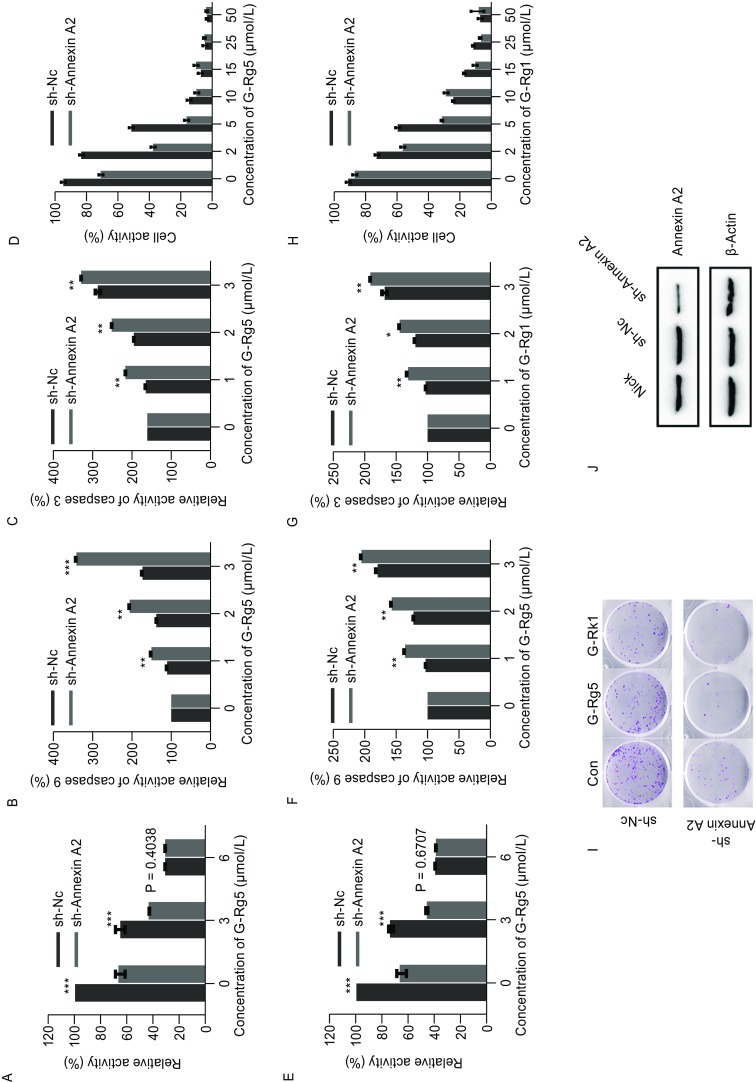
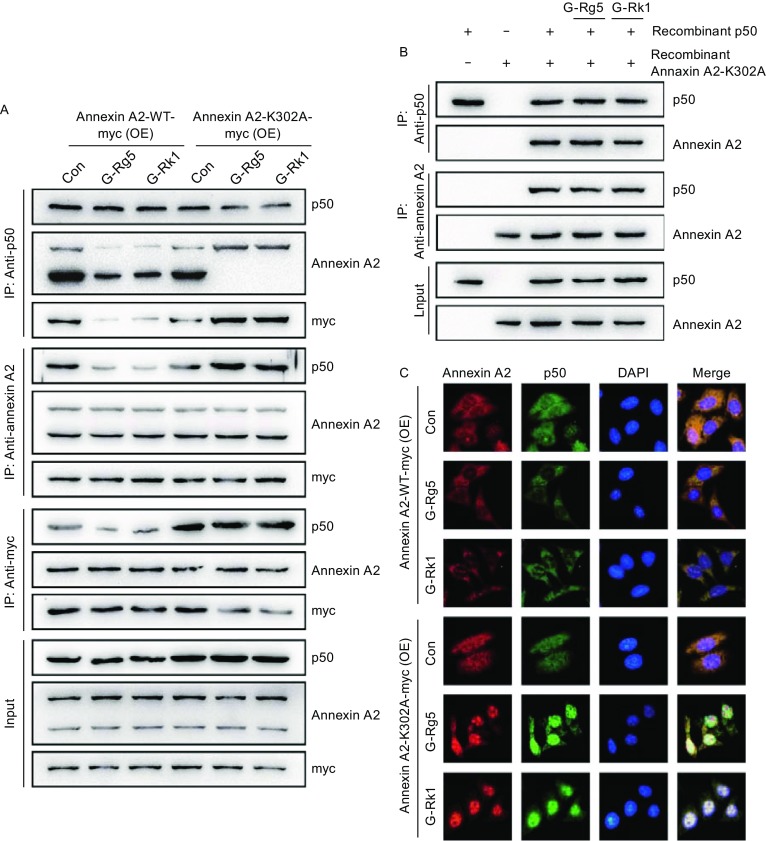
Annexin A2, a multifunctional tumor associated protein, promotes nuclear factor-kappa B (NF-κB) activation by interacting with NF-κB p50 subunit and facilitating its nuclear translocation. Here we demonstrated that two ginsenosides Rg5 (G-Rg5) and Rk1 (G-Rk1), with similar structure, directly bound to Annexin A2 by molecular docking and cellular thermal shift assay. Both Rg5 and Rk1 inhibited the interaction between Annexin A2 and NF-κB p50 subunit, their translocation to nuclear and NF-κB activation. Inhibition of NF-κB by these two ginsenosides decreased the expression of inhibitor of apoptosis proteins (IAPs), leading to caspase activation and apoptosis. Over expression of K302A Annexin A2, a mutant version of Annexin A2, which fails to interact with G-Rg5 and G-Rk1, effectively reduced the NF-κB inhibitory effect and apoptosis induced by G-Rg5 and G-Rk1. In addition, the knockdown of Annexin A2 largely enhanced NF-κB activation and apoptosis induced by the two molecules, indicating that the effects of G-Rg5 and G-Rk1 on NF-κB were mainly mediated by Annexin A2. Taken together, this study for the first time demonstrated that G-Rg5 and G-Rk1 inhibit tumor cell growth by targeting Annexin A2 and NF-κB pathway, and G-Rg5 and G-Rk1 might be promising natural compounds for targeted cancer therapy.
膜联蛋白 A2 是一种多功能肿瘤相关蛋白,通过与 NF-κB p50 亚基相互作用并促进其核易位,从而促进核因子-κB(NF-κB)的激活。在这里,我们证明了两种结构相似的人参皂苷 Rg5(G-Rg5)和 Rk1(G-Rk1)通过分子对接和细胞热转移实验直接与膜联蛋白 A2 结合。Rg5 和 Rk1 均抑制膜联蛋白 A2 与 NF-κB p50 亚基的相互作用、它们向核内的易位以及 NF-κB 的激活。这两种人参皂苷通过抑制 NF-κB 减少凋亡抑制蛋白(IAPs)的表达,导致半胱天冬酶的激活和细胞凋亡。表达不能与 G-Rg5 和 G-Rk1 相互作用的 K302A 膜联蛋白 A2 的突变体,有效降低了 G-Rg5 和 G-Rk1 诱导的 NF-κB 抑制作用和细胞凋亡。此外,膜联蛋白 A2 的敲低大大增强了这两种分子诱导的 NF-κB 激活和细胞凋亡,表明 G-Rg5 和 G-Rk1 对 NF-κB 的作用主要通过膜联蛋白 A2 介导。总之,这项研究首次表明,G-Rg5 和 G-Rk1 通过靶向膜联蛋白 A2 和 NF-κB 通路抑制肿瘤细胞生长,G-Rg5 和 G-Rk1 可能是有前途的靶向癌症治疗的天然化合物。