Man Xiaojun, Liu Tao, Jiang Yuanjun, Zhang Zhe, Zhu Yuyan, Li Zhenhua, Kong Chuize, He Jiani
Department of Urology, The First Hospital of China Medical University, Shenyang 110001, People's Republic of China.
Institute of Urology, Department of Urology, China Medical University, Shenyang 110001, People's Republic of China.
Onco Targets Ther. 2019 Aug 9;12:6309-6322. doi: 10.2147/OTT.S191502. eCollection 2019.
Bladder cancer (BC) is the ninth most common cancer and the fourteenth leading death worldwide. CARD-containing MAGUK 3 (CARMA3) protein is a novel scaffold protein known to activate NF-κB pathway and is overexpressed in BC tissues.
The objective of this study was to identify how CARMA3 affects the metastasis of BC cells via the β-catenin signaling pathway.
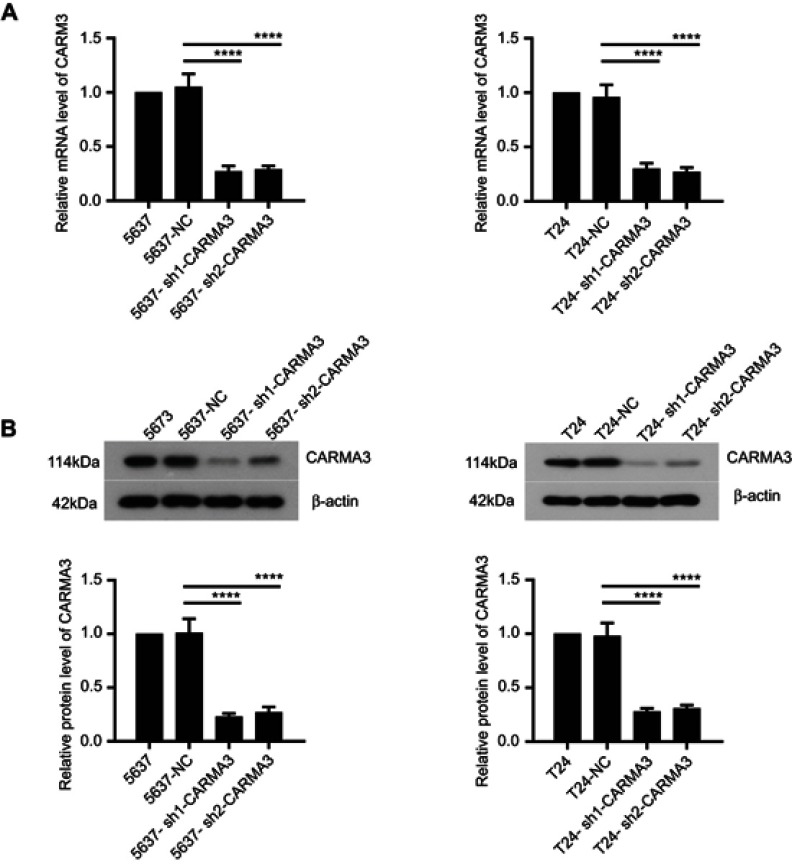
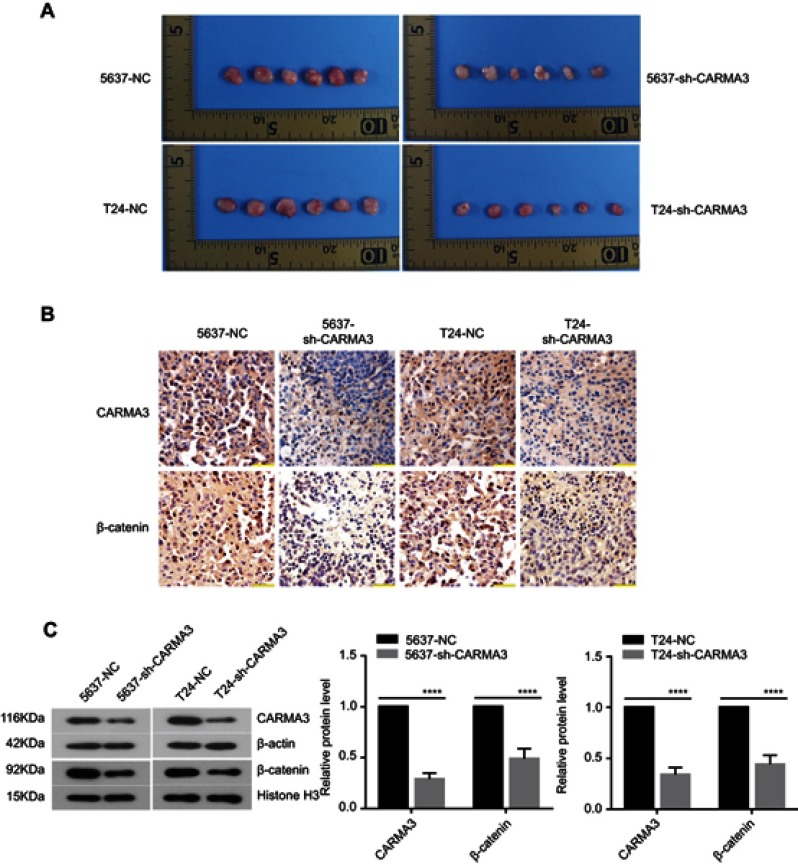
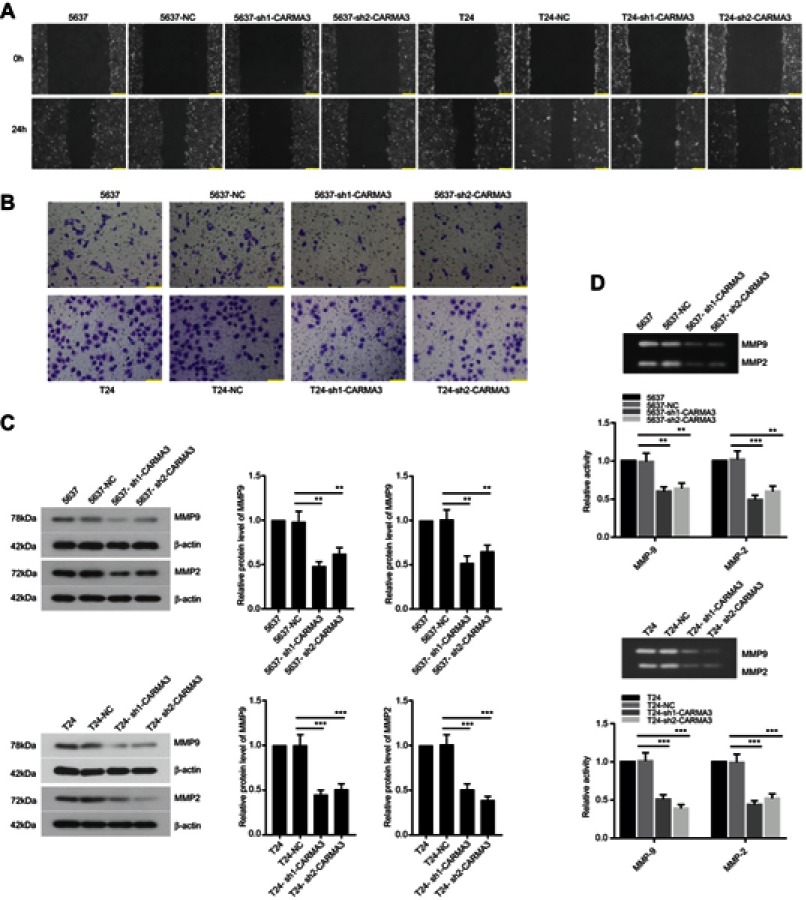
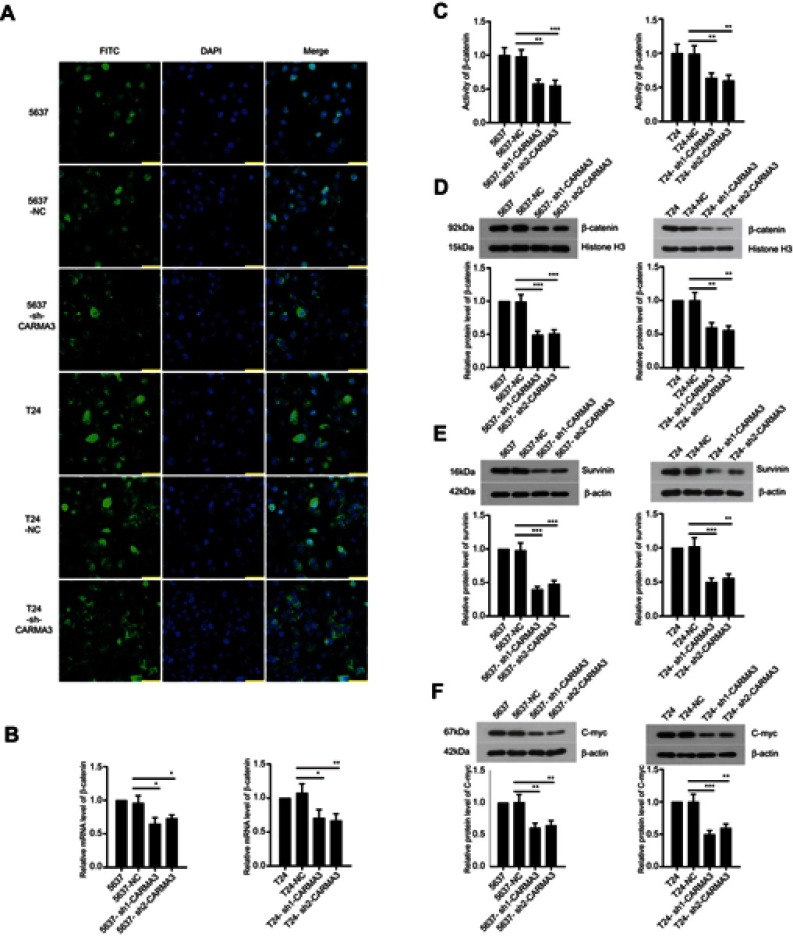
In the present study, 5637 and T24 BC cells with stable low expression of CARMA3 were established, and their migratory and invasive capabilities were further evaluated by wound-healing and transwell assay. The activity and expression of β-catenin were determined by Luciferase assay and immunofluoresence staining. The mRNA and protein expression levels of CARMA3, matrix metallopeptidase (MMP) 9 and MMP2 were detected by quantitative real-time PCR (qRT-PCR) and Western blot analysis. The nude mouse tumor xenograft model was established for in vivo study.
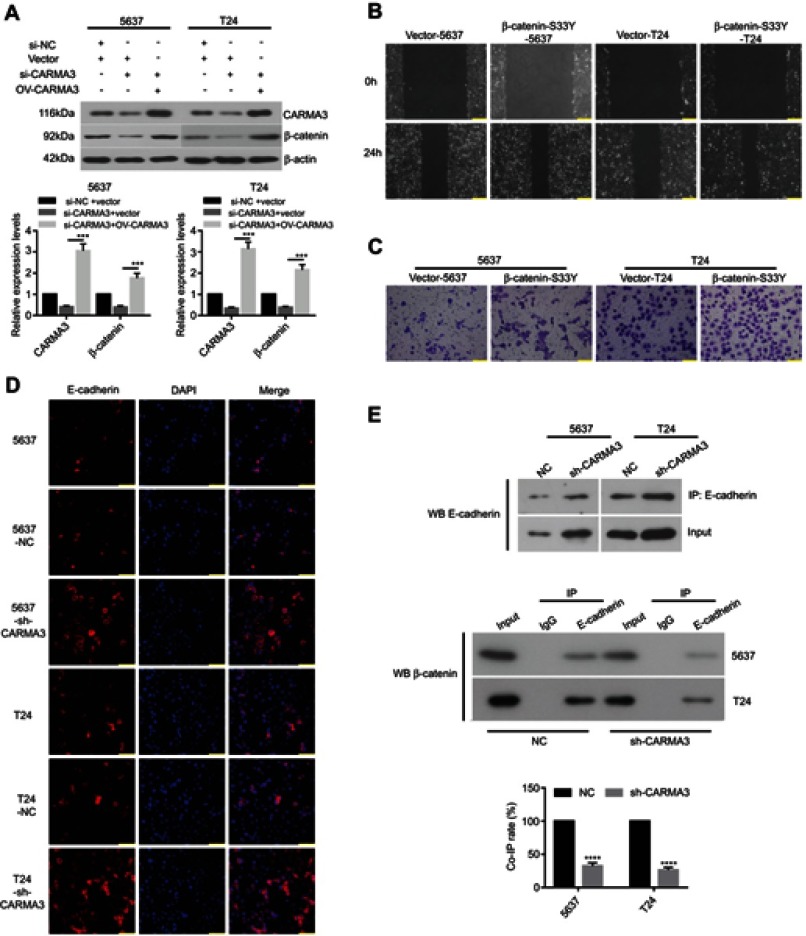
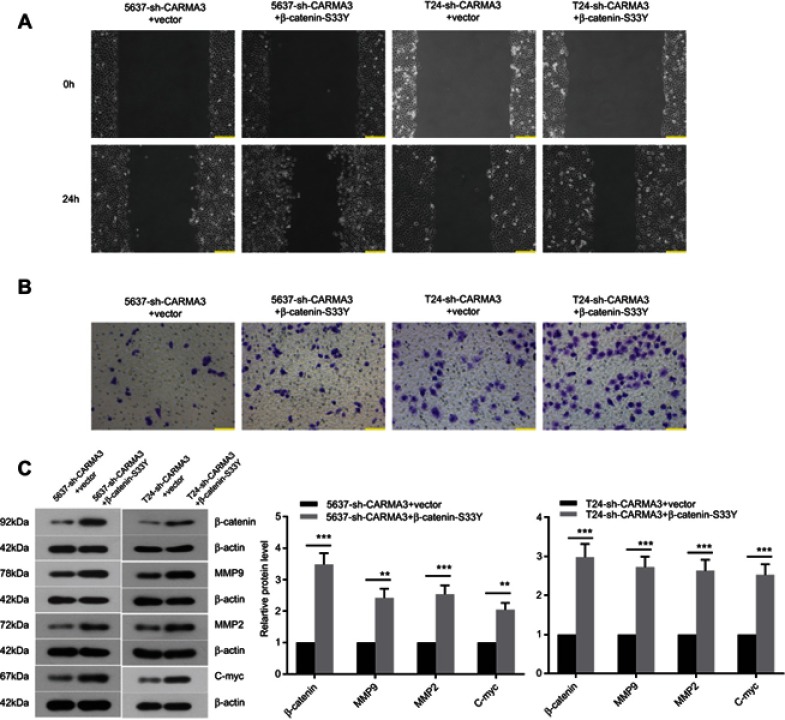
By comparison to the control cells, CARMA3-silenced cells acquired a less aggressive phenotype: decreased migration and invasion. More importantly, we confirmed that CARM3 knockdown could inhibit β-catenin mRNA and protein expression and activity, and reduce the expression and/or activity of matrix metallopeptidase (MMP) 9, MMP2 and C-myc. Also, CARM3 silencing increased E-cadherin expression and attenuated the expression of β-catenin. Moreover, we demonstrated that β-catenin overexpression reversed the inhibiting effect of CARMA3 silencing on cell invasion and migration. Furthermore, our study illustrated that knockdown of CARMA3 suppressed BC cells xenograft tumor growth in nude mice.
We demonstrated that CARMA3 contributes to the malignant phenotype of BC cells at least by activating β-catenin signaling pathway, and it may serve as a therapeutic target for clinic treatment in BC.
膀胱癌(BC)是全球第九大常见癌症和第十四大致死癌症。含CARD的膜相关鸟苷酸激酶3(CARMA3)蛋白是一种新型支架蛋白,已知可激活核因子κB(NF-κB)信号通路,且在BC组织中过表达。
本研究的目的是确定CARMA3如何通过β-连环蛋白信号通路影响BC细胞的转移。
在本研究中,建立了CARMA3稳定低表达的5637和T24 BC细胞系,并通过伤口愈合实验和Transwell实验进一步评估其迁移和侵袭能力。通过荧光素酶报告基因检测和免疫荧光染色测定β-连环蛋白的活性和表达。采用定量实时聚合酶链反应(qRT-PCR)和蛋白质免疫印迹分析检测CARMA3、基质金属蛋白酶(MMP)9和MMP2的mRNA和蛋白表达水平。建立裸鼠肿瘤异种移植模型进行体内研究。
与对照细胞相比,CARMA3沉默的细胞获得了侵袭性较低的表型:迁移和侵袭能力降低。更重要的是,我们证实敲低CARM3可抑制β-连环蛋白的mRNA和蛋白表达及活性,并降低基质金属蛋白酶(MMP)9, MMP2和C-myc的表达和/或活性。此外,CARM3沉默增加了E-钙黏蛋白的表达并减弱了β-连环蛋白的表达。而且,我们证明β-连环蛋白过表达逆转了CARMA3沉默对细胞侵袭和迁移的抑制作用。此外,我们的研究表明敲低CARMA3可抑制裸鼠体内BC细胞异种移植肿瘤的生长。
我们证明CARMA3至少通过激活β-连环蛋白信号通路促成BC细胞的恶性表型,并且它可能成为BC临床治疗的一个治疗靶点。