Kuthati Yaswanth, Goutham Davuluri Venkata Naga, Yang Chih-Ping, Chang Hsiao-Cheng, Chang Chih-Peng, Wong Chih Shung
Department of Anesthesiology, Cathy General Hospital, Taipei, Taiwan.
Department of Microbiology & Immunology, College of Medicine, National Cheng Kung University, Tainan, Taiwan.
J Pain Res. 2019 Aug 8;12:2473-2485. doi: 10.2147/JPR.S214671. eCollection 2019.
In recent years, several melatonin (MLT) receptor agonists have been approved by FDA for the treatment of sleep disorders and depression. Very few studies have shed light on their efficacy against neuropathic pain (NP). IIK-7 is an MT-2 agonist known to promote sleep. Whether IIK-7 suppresses NP has not been reported, and the signaling profile is unknown.
To investigate the effect of melatonin type 2 receptor agonist IIK-7 on partial sciatic nerve transection-induced NP in rats and elucidate the underlying molecular mechanisms.
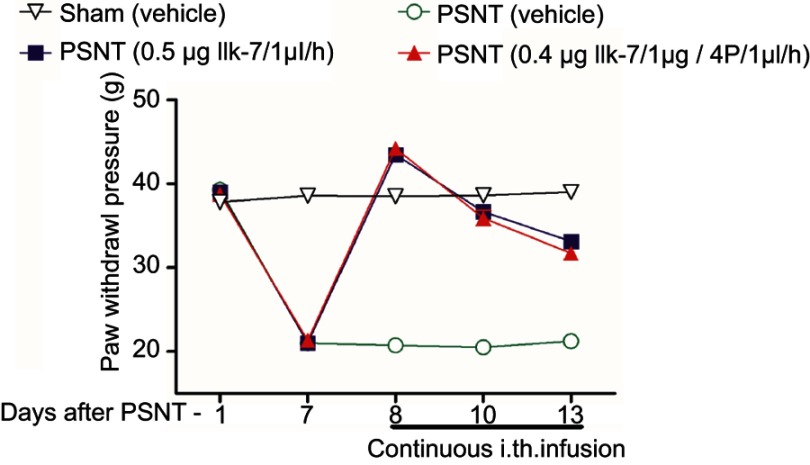
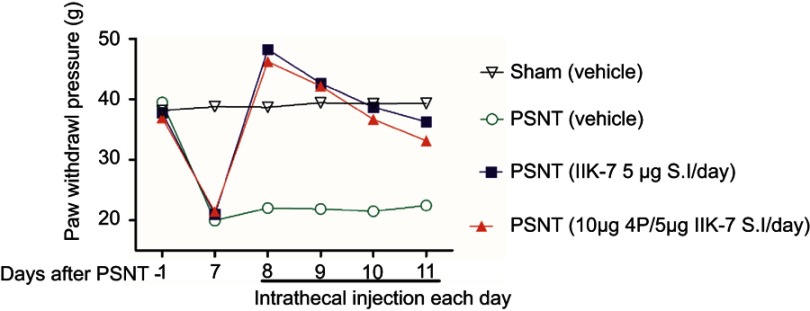
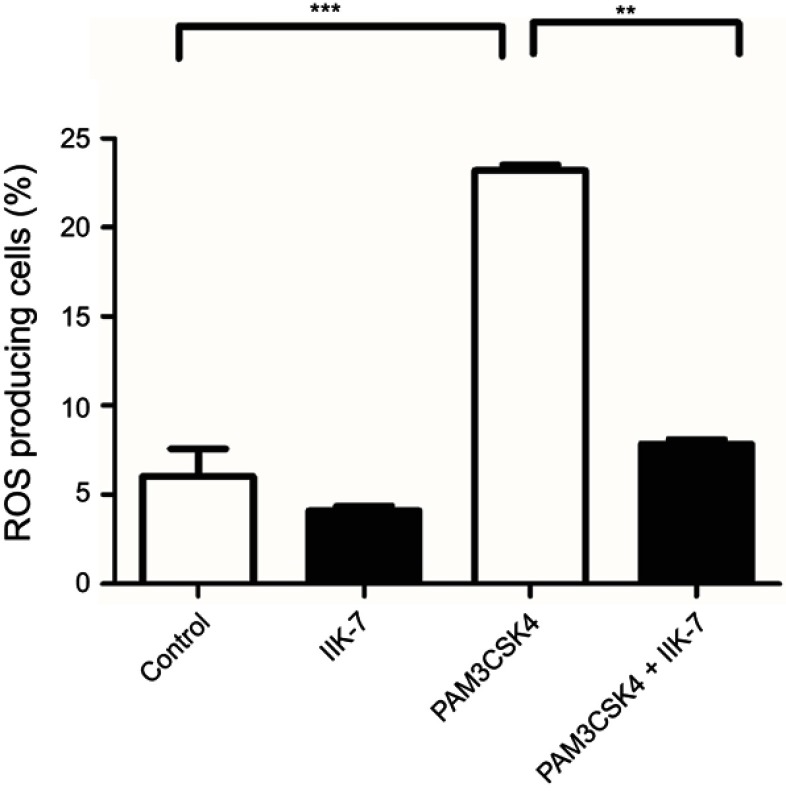
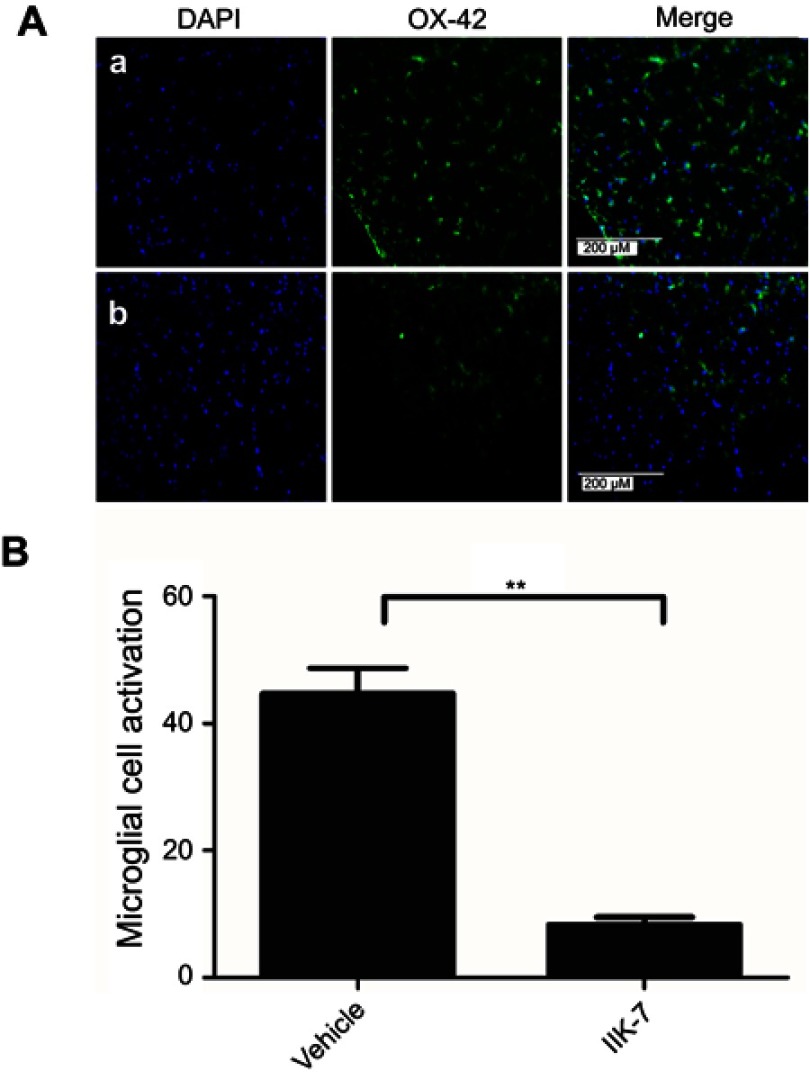
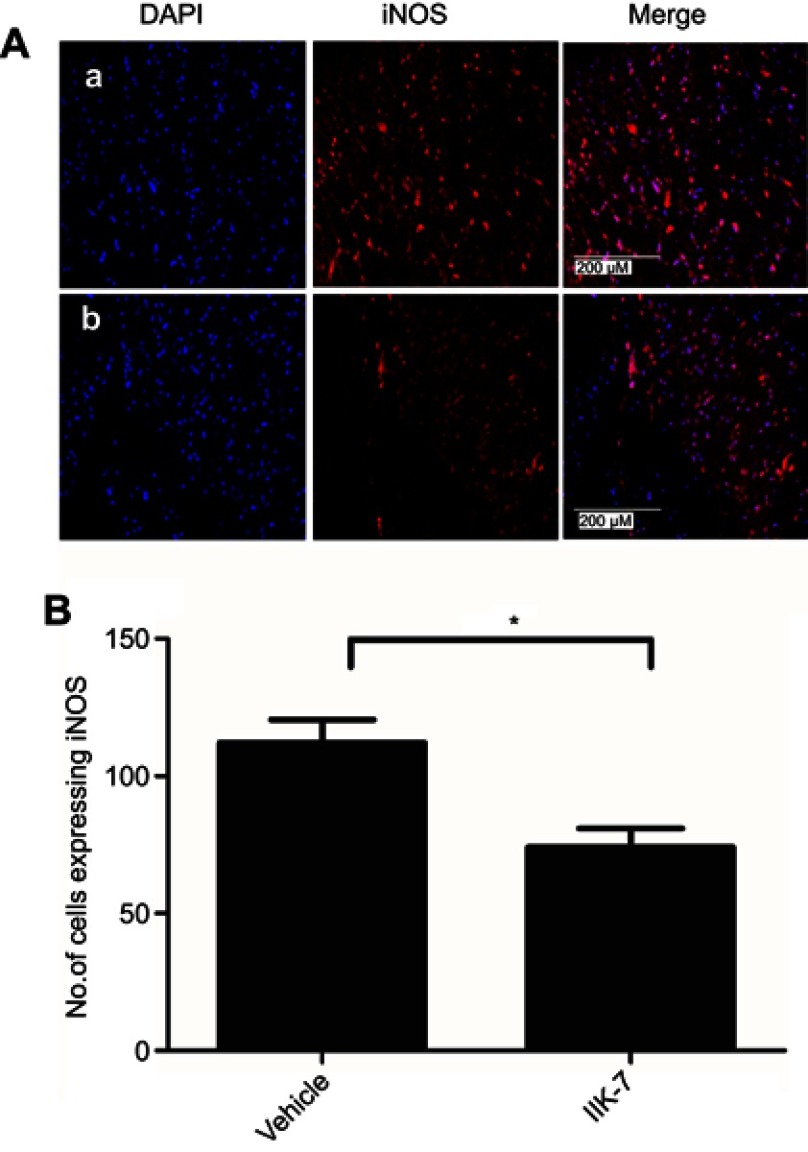
NP was induced by the PSNT in the left leg of adult male Wistar rats. On post-transection day 7, rats were implanted with intrathecal (i.t) catheter connected to an infusion pump and divided in to four groups: sham-operated/vehicle, PSNT/vehicle, PSNT/0.5 μg/hr IIK-7 and PSNT/0.5 μg IIK-7/1 μg 4-p/hr. To test the MT-2 dependence on IIK-7 activity, the animals were implanted with a single i.t catheter and injected MT-2 antagonist 4-Phenyl-2-propionamidotetralin (4-p) 20 mins prior to IIK-7 injection on day 7 after PSNT. The antinociceptive response was measured using a mechanical paw withdrawal threshold. Activation of microglial cells and the expression of NP-associated proteins in the spinal cord dorsal horn was assessed by immunofluorescence assay (IFA) and Western blotting (WB). Reactive oxygen species (ROS) scavenging ability of IIK-7 was evaluated by using bone marrow-derived macrophages (BMDM).
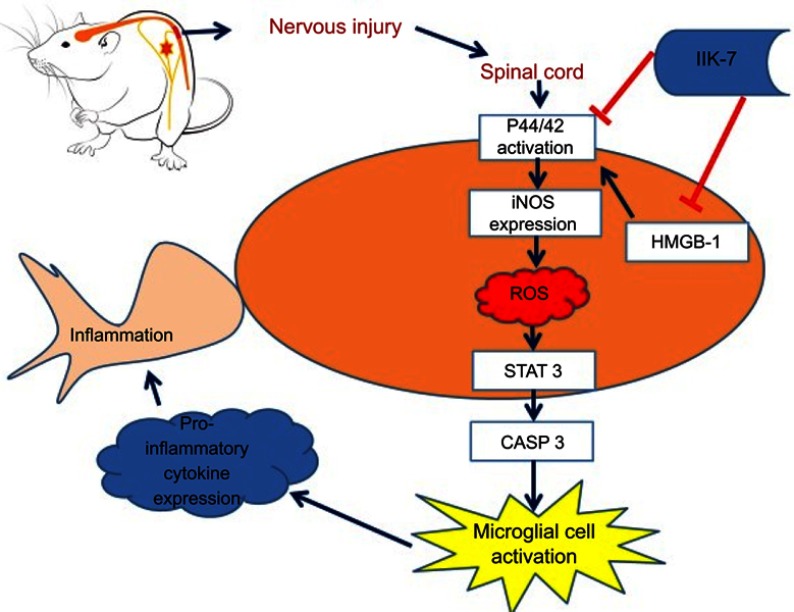
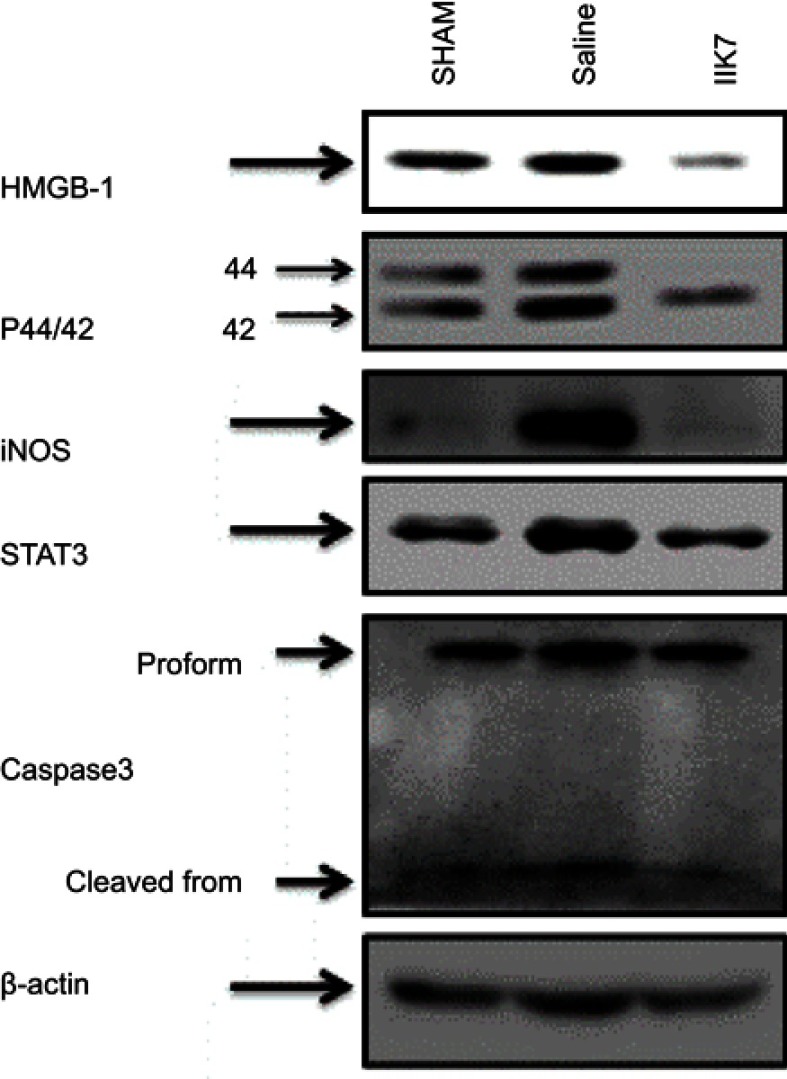
Treatment with the MT-2 agonist IIK-7 significantly alleviated PSNT-induced mechanical allodynia and glial activation along with the inhibition of P44/42 MAPK, HMGB-1, STAT3, iNOS and casp-3 proteins.
IIK-7 attenuates NP through the suppression of glial activation and suppression of proteins involved in inflammation and apoptosis. MT-2 receptor agonists may establish a promising and unique therapeutic approach for the treatment of NP.
近年来,几种褪黑素(MLT)受体激动剂已获美国食品药品监督管理局(FDA)批准用于治疗睡眠障碍和抑郁症。关于它们对神经性疼痛(NP)疗效的研究极少。IIK-7是一种已知可促进睡眠的MT-2激动剂。IIK-7是否能抑制NP尚未见报道,其信号传导情况也未知。
研究褪黑素2型受体激动剂IIK-7对大鼠坐骨神经部分横断诱导的NP的影响,并阐明其潜在的分子机制。
成年雄性Wistar大鼠左腿通过坐骨神经部分横断(PSNT)诱导NP。在横断后第7天,给大鼠植入连接输液泵的鞘内(i.t)导管,并分为四组:假手术/载体组、PSNT/载体组、PSNT/0.5μg/小时IIK-7组和PSNT/0.5μg IIK-7/1μg 4-p/小时组。为测试MT-2对IIK-7活性的依赖性,在PSNT后第7天,给动物植入单个i.t导管,并在注射IIK-7前20分钟注射MT-2拮抗剂4-苯基-2-丙酰胺基四氢萘(4-p)。使用机械性缩爪阈值测量抗伤害感受反应。通过免疫荧光分析(IFA)和蛋白质免疫印迹法(WB)评估脊髓背角小胶质细胞的激活情况以及NP相关蛋白的表达。使用骨髓来源的巨噬细胞(BMDM)评估IIK-7的活性氧(ROS)清除能力。
用MT-2激动剂IIK-7治疗可显著减轻PSNT诱导的机械性异常性疼痛和胶质细胞激活,同时抑制P44/42丝裂原活化蛋白激酶(MAPK)、高迁移率族蛋白B1(HMGB-1)、信号转导和转录激活因子3(STAT3)、诱导型一氧化氮合酶(iNOS)和半胱天冬酶-3(casp-3)蛋白。
IIK-7通过抑制胶质细胞激活以及参与炎症和凋亡的蛋白来减轻NP。MT-2受体激动剂可能为NP的治疗建立一种有前景且独特的治疗方法。