Kuthati Yaswanth, Wong Chih-Shung
Department of Anesthesiology, Cathay General Hospital, Taipei 106, Taiwan.
Graduate Institute of Medical Sciences, National Defense Medical Center, Taipei 280, Taiwan.
Pharmaceuticals (Basel). 2024 Dec 5;17(12):1638. doi: 10.3390/ph17121638.
Morphine analgesic tolerance (MAT) limits the clinical application of morphine in the management of chronic pain. IIK7 is a melatonin type 2 (MT2) receptor agonist known to have antioxidant properties. Oxidative stress is recognized as a critical factor in MAT. This study sought to assess the impact of IIK7 on the progression of MAT and its potential to reverse pre-existing MAT.
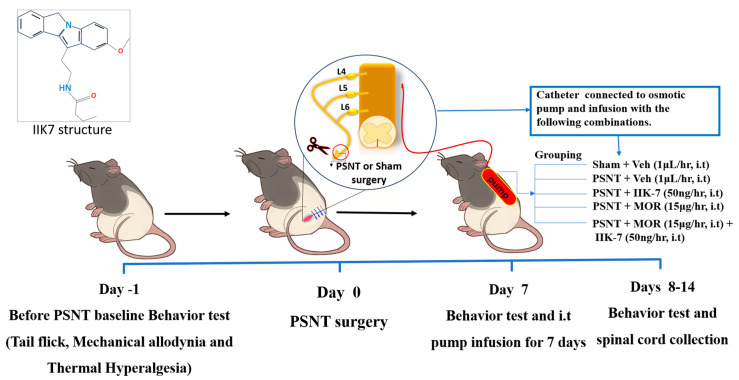
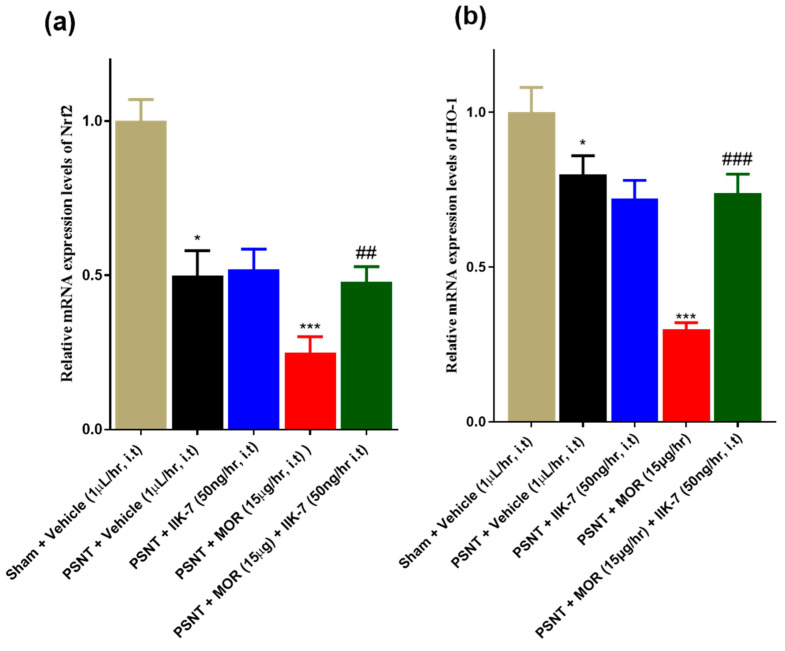
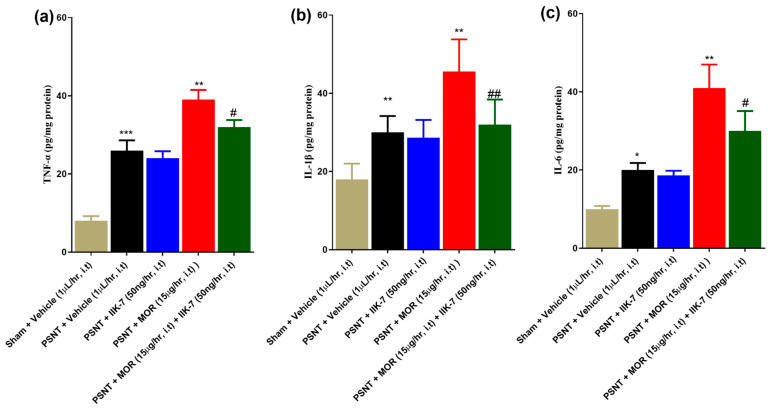
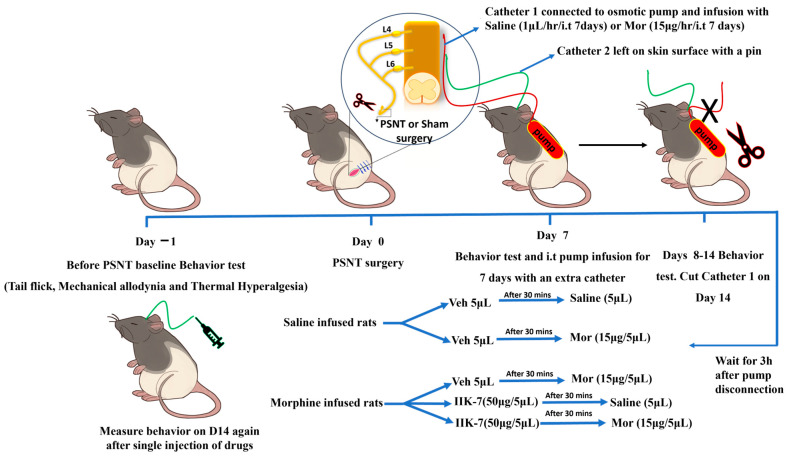
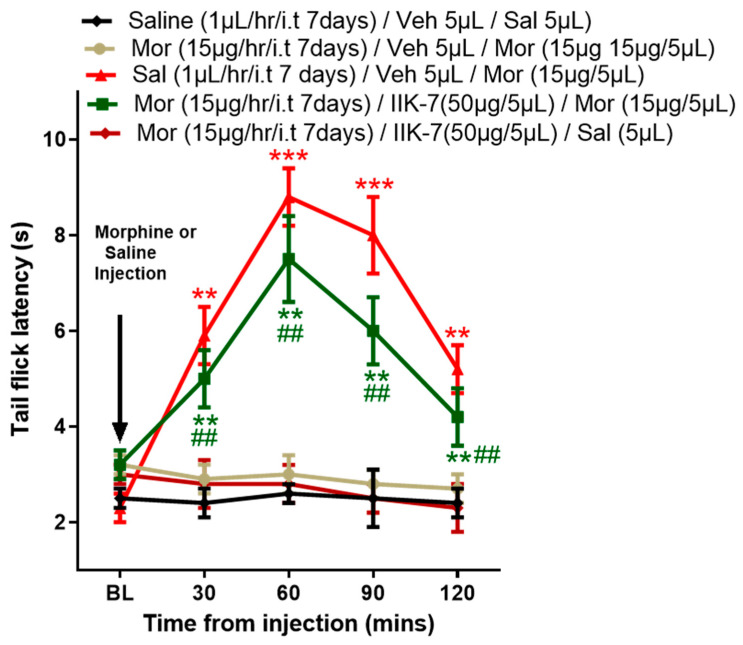
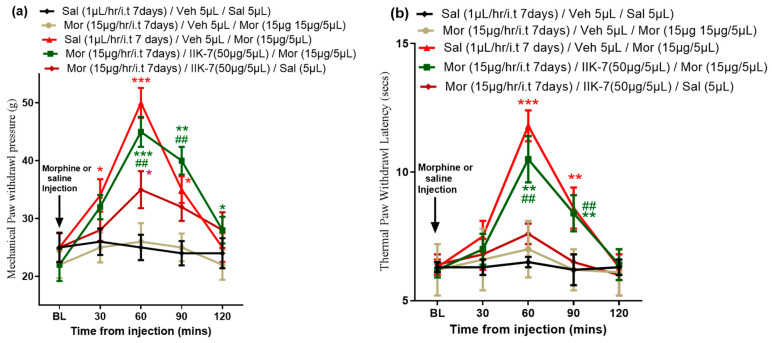
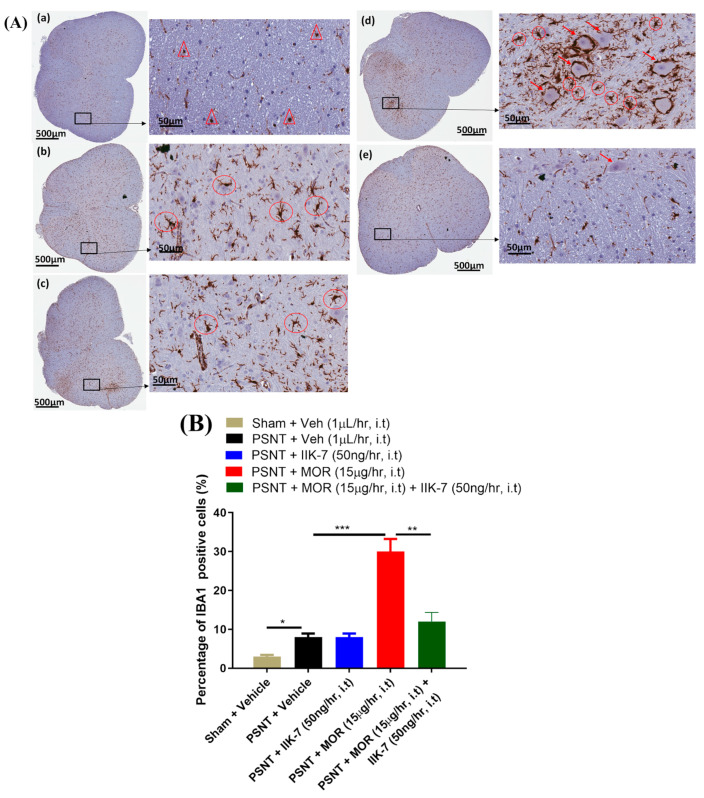
Wistar rats underwent partial sciatic nerve transection (PSNT) surgery to induce neuropathic pain (NP). Seven days post nerve transection, we implanted an intrathecal (i.t.) catheter and linked it to an osmotic pump. Rats were randomly divided into the following groups: sham-operated/vehicle, PSNT/vehicle, PSNT/IIK7 50 ng/h, PSNT/MOR 15 g/h, and PSNT/MOR 15 g + IIK7 50 ng/h. We implanted two i.t. catheters for drug administration and the evaluation of the efficacy of IIK7 in reversing pre-established MAT. We linked one to an osmotic pump for MOR or saline continuous i.t. infusion. On the 7th day, the osmotic pump was disconnected, and 50 μg of IIK7 or the vehicle was administered through the second catheter. After 3 h, 15 μg of MOR or saline was administered, and the animal behavior tests were performed. We measured the levels of mRNA for Nrf2 and HO-1, pro-inflammatory cytokines (PICs), and the microglial and astrocyte activation in the spinal cord.
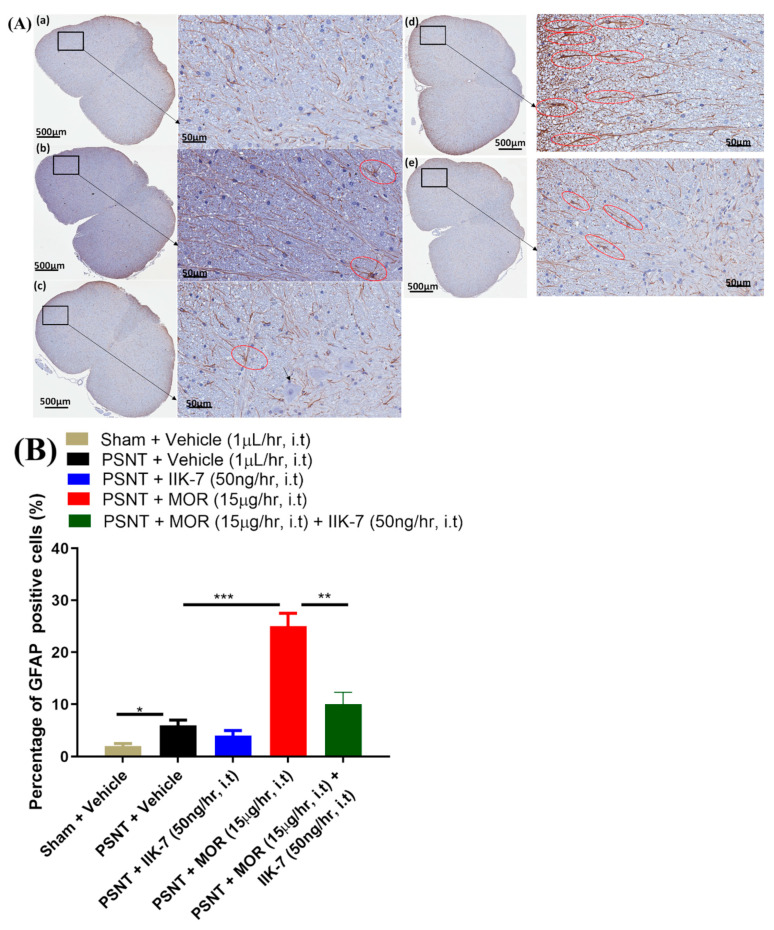
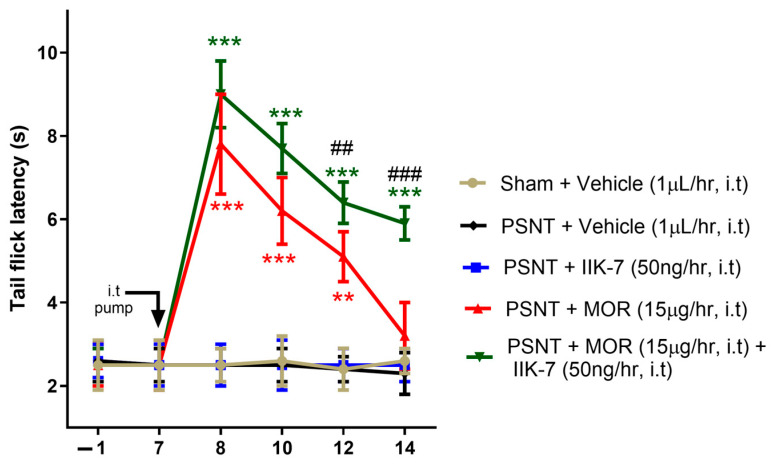
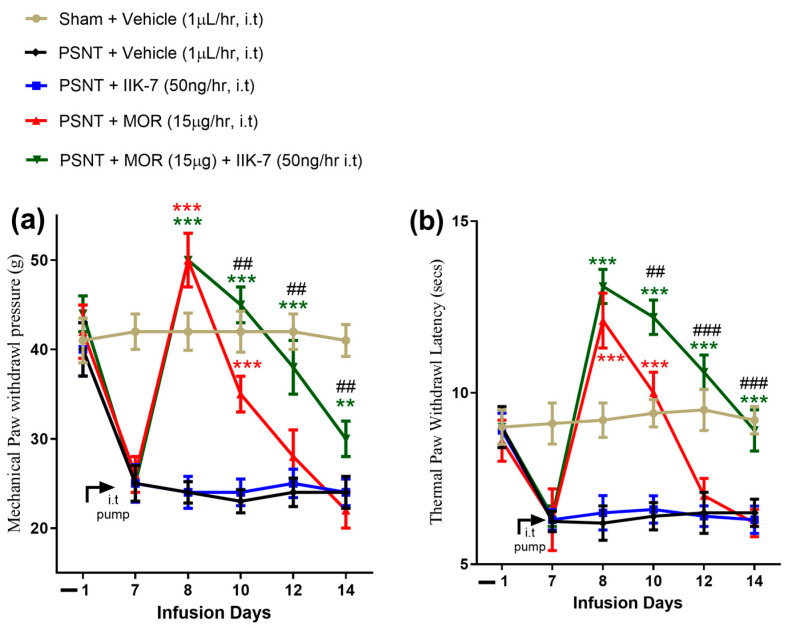
The co-administration of IIK7 with MOR delayed MAT development in PSNT rats by restoring Nrf2 and HO-1 while also inhibiting the microglial-cell and astrocyte activation, alongside the suppression of PICs. Additionally, a single injection of high-dose 50 μg IIK7 was efficient in restoring MOR's antinociception in MOR-tolerant rats.
Our results indicate that the co-infusion of ultra-low-dose IIK7 can delay MAT development and a high dose can reverse pre-existing MAT.
吗啡镇痛耐受性(MAT)限制了吗啡在慢性疼痛管理中的临床应用。IIK7是一种褪黑素2型(MT2)受体激动剂,已知具有抗氧化特性。氧化应激被认为是MAT的一个关键因素。本研究旨在评估IIK7对MAT进展的影响及其逆转已存在的MAT的潜力。
Wistar大鼠接受坐骨神经部分横断(PSNT)手术以诱导神经性疼痛(NP)。神经横断后7天,植入鞘内(i.t.)导管并将其连接至渗透泵。大鼠随机分为以下几组:假手术/载体、PSNT/载体、PSNT/IIK7 50 ng/h、PSNT/MOR 15 μg/h以及PSNT/MOR 15 μg + IIK7 50 ng/h。我们植入两根i.t.导管用于给药以及评估IIK7逆转已建立的MAT的效果。将一根导管连接至渗透泵以进行MOR或生理盐水的连续鞘内输注。在第7天,断开渗透泵,并通过第二根导管给予50 μg的IIK7或载体。3小时后,给予15 μg的MOR或生理盐水,并进行动物行为测试。我们测量了脊髓中Nrf2和HO-1、促炎细胞因子(PICs)的mRNA水平以及小胶质细胞和星形胶质细胞的活化情况。
IIK7与MOR联合给药通过恢复Nrf2和HO-1,同时抑制小胶质细胞和星形胶质细胞活化以及抑制PICs,延缓了PSNT大鼠中MAT的发展。此外,单次注射高剂量50 μg的IIK7可有效恢复MOR耐受性大鼠中MOR的镇痛作用。
我们的结果表明,超低剂量IIK7的联合输注可延缓MAT的发展,高剂量可逆转已存在的MAT。